










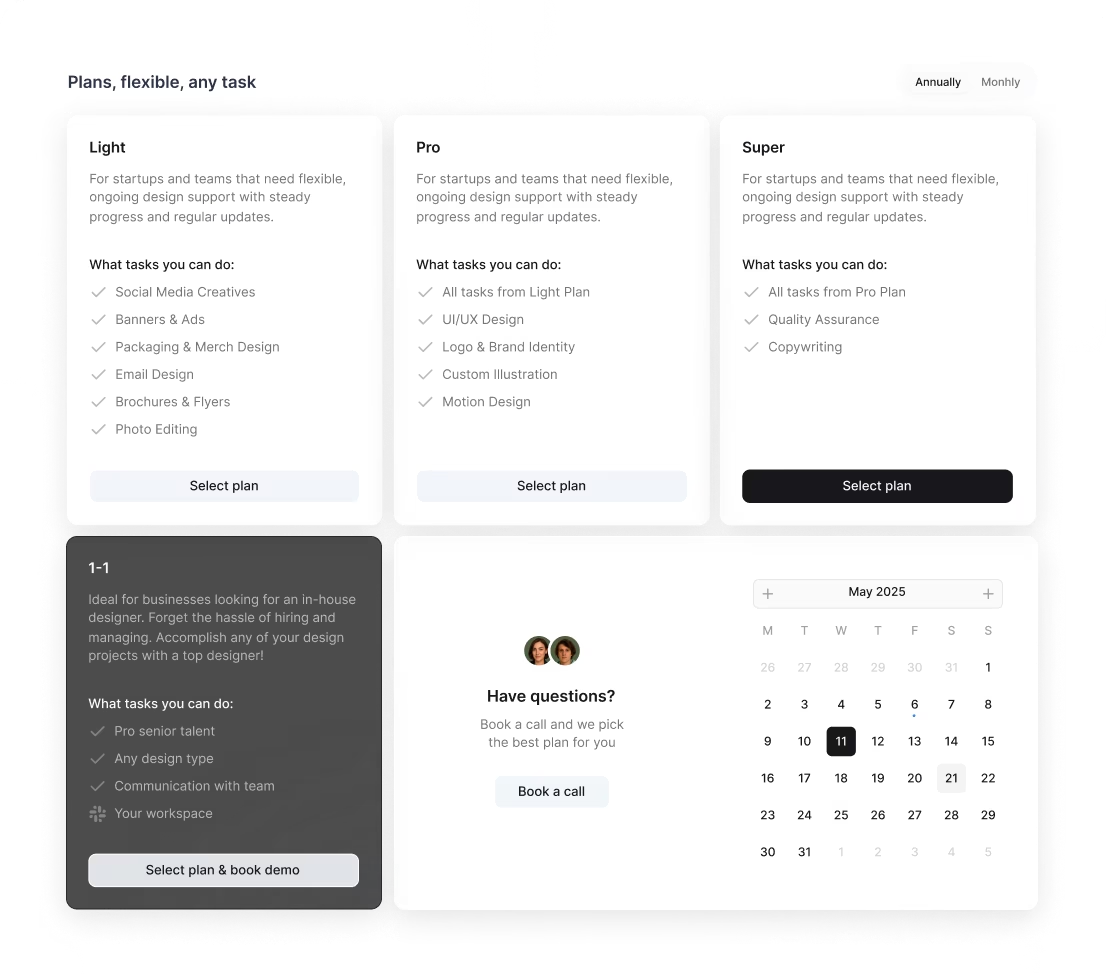
/ month


/ month


/ month
quarterly commitment
A better way to hire a brand designer now




4,000+ companies onboard
































Why awesomic




0.82% talent





One subscription and your hiring problems solved

We accept just 0.82% of brand designers




FAQ


How quickly can I start working with a brand designer for hire?
You can start working with a brand designer for hire within 24 hours of subscribing. Submit your project details and get matched to vetted experts ready to begin delivering high-quality brand identity work fast, with daily updates and unlimited revisions.
Can I hire a brand designer for short-term or one-off projects?
Yes, you can hire brand designers through Awesomic for short-term or one-off projects. With our vetted talent pool, you get matched within 24 hours, enjoy daily progress updates, and unlimited revisions to ensure top-quality deliverables quickly and hassle-free.
Are brand designers experienced in startups, SaaS, or enterprise teams?
Absolutely. Our brand designers have 10-15 years of experience working with startups, SaaS companies, and enterprise clients. They use proven design frameworks, deliver brand identities, logos, and guidelines, and collaborate daily to refine your project, ensuring fast, high-quality results trusted by 4,000+ companies.
Can I switch designers if my needs change?
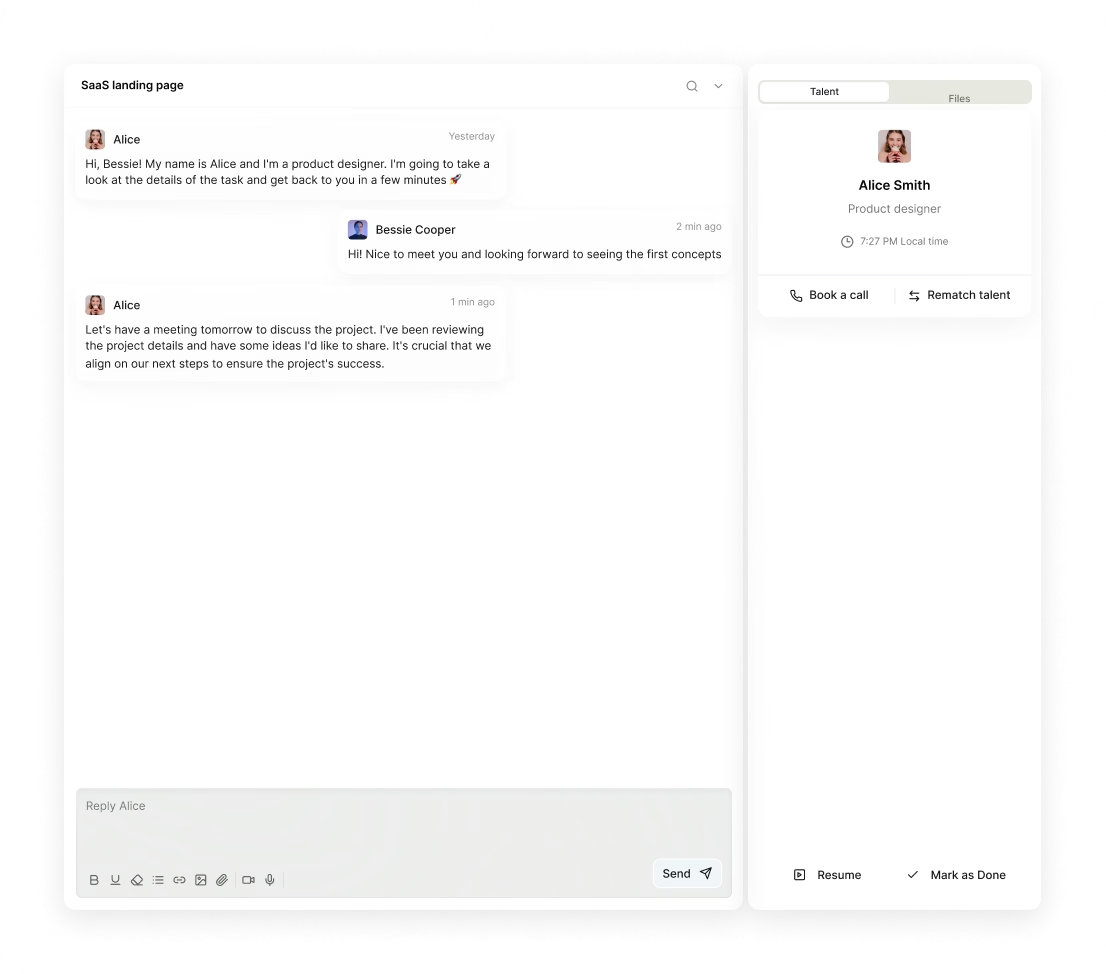
Yes, you can switch brand designers anytime without extra cost. Our subscription model lets you request a talent rematch whenever your project scope or style shifts. Stay flexible, get matched quickly, and keep your design work moving smoothly with Awesomic. This is perfect when you hire brand consultant designer through us.
What does "top 1% brand designers" actually mean?
Top 1% brand designers have passed a strict multi-step vetting process, including portfolio review, test projects, and peer evaluations. They bring 10+ years of experience working with leading brands and deliver expert, fast results on your brand identity design projects. Hire brand identity designer with proven skill and reliability.
How many revisions are included?
With every brand designer for hire subscription, you get unlimited revisions. Daily progress updates let you request tweaks anytime through the app. This ensures your project reaches the exact outcome you want, with fast turnaround and no extra fees.
Is this cheaper than hiring a full-time brand designer?
Yes, subscribing to Awesomic costs less than a full-time hire. Plans start at $500/month, offering part-time brand designers who deliver high-quality work, unlimited revisions, and daily progress in 24 hours. It`s fast, flexible, and hassle-free compared to the $60K+ yearly salary plus overhead of an in-house hire. Hire digital brand designer talent without hiring headaches or long commitments.
Can I pause or cancel my brand designer subscription at any time?
Yes, you can pause or cancel your brand designer subscription anytime with no penalties or hidden fees. Our flexible plans let you scale up or down quickly, ensuring you only pay for what you need without long commitments or complicated contracts.
Do brand designers work in my time zone?
Yes, when you hire brand consultant designer through our platform, you get matched with vetted professionals worldwide. They provide daily updates in your preferred communication tools like Slack or email. Expect deliverables within 24 hours and seamless collaboration across any time zone.
Can I work with the same brand designers long-term?
Yes. With Awesomic`s hire brand identity designer plans, you get matched to top vetted brand designers fast, often within 24 hours. Choose 1-to-1 options for dedicated part-time or full-time designers. Unlimited revisions and daily updates ensure consistent quality over months. Switch or pause anytime.

Related roles you may need


Hiring guide:


Your brand is not your logo. It's the sum of every visual experience a customer has with your company – your website, your packaging, your email design, your social posts, your pitch deck, the way your product looks the first time someone opens it. A brand designer is the person who makes all of those experiences feel like they came from the same place.
That coherence is harder to build than most companies realise until they've tried to do it without one. This guide explains exactly what a brand designer does, when to hire one, and how to find someone who can build a brand system that lasts.
What does a brand designer actually do?
A brand designer builds and maintains the visual identity of a company – the comprehensive system that governs how a brand looks across every touchpoint. This goes significantly beyond creating a logo. A brand designer is responsible for the entire visual language.
Core responsibilities include:
- Brand strategy input → Working with leadership to articulate brand positioning, personality, and values before any design decisions are made.
- Visual identity development → Designing the logo, colour palette, typography system, iconography, illustration style, and photography direction.
- Brand guidelines creation → Documenting the full identity system in a brand guide that governs how all visual elements are used, combined, and applied.
- Template system design → Creating master templates for presentations, social media, email, print materials, and web components so the brand scales without inconsistency.
- Brand application design → Applying the identity across real-world touchpoints: website, packaging, stationery, signage, advertising, and digital products.
- Brand governance → Reviewing ongoing creative output to maintain consistency as the company grows and more people contribute to the brand.
- Brand evolution → Refreshing or evolving the visual identity as the company's positioning, audience, or market changes.
Brand designers work across the full Adobe Creative Suite – Illustrator for logo and icon work, InDesign for print and layout, Photoshop for image treatment – plus Figma for digital applications and brand system documentation. Experience with motion design tools (After Effects) is increasingly valuable for brands operating in digital-first environments.
Through Awesomic, you can hire a brand designer who has built identity systems from scratch and maintained them at scale – not just someone who has designed logos.
When do you need to hire a brand designer?
A brand designer's work is most valuable before your brand fragments – but that moment often comes earlier than companies recognise.
You need a brand designer when:
- You're launching a new company and need more than a logo – you need a visual identity system that covers every channel from day one.
- Your visual identity was assembled informally – a freelance logo, some colours picked by a founder, fonts chosen by a developer – and it looks like it.
- You're about to raise a funding round, enter a new market, or launch a major product, and your brand needs to be credible at the level of ambition you're pursuing.
- You're going through a rebrand: new positioning, new audience, new name, or post-acquisition integration that requires a new identity.
- You're expanding to new channels or formats and discovering that your current identity doesn't adapt – it works on the website but not on packaging or signage.
- Multiple designers or teams are contributing to your visual output and the results are starting to diverge.
- You want to grow brand equity over time – and that requires a system, not ad hoc design decisions.
Warning signs: your marketing materials look like they come from different companies, your team has to manually recreate brand elements because there's no template system, or new design hires can't maintain consistency without constant review.
Awesomic matches you with a brand designer based on your industry, current brand maturity, and scope of work – whether you need a full identity system built from scratch or an existing identity extended and governed.
What skills should a great brand designer have?
Hard skills:
- Adobe Illustrator mastery for logo, icon, and vector identity design.
- Adobe InDesign for brand guidelines, print collateral, and layout-intensive applications.
- Figma for digital brand applications, design system documentation, and web component design.
- Typography expertise: the ability to build a functional type system with primary and secondary typefaces that work across print and screen.
- Colour system design: building primary, secondary, and functional colour palettes with accessibility consideration – including print and digital specifications (CMYK, Pantone, RGB, Hex).
- Brand application design: the ability to take an identity system and apply it accurately to diverse real-world formats.
- Photography and art direction: defining a visual style for imagery that extends the brand identity into photography and creative direction.
Soft skills:
- Brand strategic thinking: understanding how visual decisions connect to audience perception, positioning, and competitive differentiation.
- Stakeholder management: brand decisions often involve strong opinions from founders, CMOs, and leadership – the ability to facilitate alignment around visual direction is essential.
- Systems thinking: designing an identity that scales to hundreds of applications, not just the primary logo.
- Brief precision: interpreting and clarifying vague brand briefs before starting design, not after.
- Long-term ownership mindset: thinking about how the brand will evolve over five years, not just how it looks in the current deliverable.
Industry knowledge:
- Brand identity conventions by sector: what reads as credible in fintech versus consumer goods versus B2B SaaS.
- Current brand design trends: knowing when to follow a trend (because it signals category membership) and when to resist it (because it erodes distinctiveness).
- Print production: preparing brand assets for accurate colour reproduction across different print processes and materials.
- Accessibility standards: ensuring colour contrasts, type sizes, and visual hierarchies meet WCAG requirements – increasingly a legal requirement for brands operating in digital spaces.
- Trademark basics: understanding how design choices affect distinctiveness and registerability.
What types of brand designers can you hire?
| Type | Pros | Cons | Best for |
|---|---|---|---|
| Freelancers | Specialised, cost-effective, flexible scope | Inconsistent breadth, single point of failure | Focused identity projects |
| In-house | Deep brand knowledge, consistent application | High fixed cost, slow to hire | Large brand teams with sustained output |
| Brand agencies | Full strategy + identity + application | Expensive, longer timelines | Full rebrands with positioning strategy |
| Subscription / TaaS | Senior quality, fast start, scalable | Less embedded than in-house | Companies building or evolving their identity |
Within brand design, there are distinct specialisations worth distinguishing:
- Identity designers → Specialists in logo, visual system, and brand guidelines – the core identity layer.
- Brand application designers → Stronger at applying an existing system across formats (packaging, advertising, web) than building new identities.
- Brand strategists → More focused on the positioning and messaging layer than visual execution – often work alongside, not instead of, a visual brand designer.
For most companies hiring a brand designer, you need the identity designer type – someone who can build the visual system first and then apply it.
Awesomic helps you distinguish what you actually need and matches accordingly.
How much does it cost to hire a brand designer?
Typical rates
- Freelancers → $80–$150/hr for experienced identity designers; full brand identity projects typically $5,000–$25,000.
- Brand agencies → $20,000–$150,000+ for full brand strategy + identity + guidelines + application system.
- In-house salaries → $85,000–$140,000/year depending on seniority and location.
What a full brand identity engagement includes
- Discovery and competitive audit.
- Brand strategy input (positioning, personality, archetype).
- Logo design: primary mark + responsive variants.
- Colour system with print and digital specifications.
- Typography system: primary and secondary typefaces, usage rules.
- Brand guidelines document: comprehensive, production-ready.
- Core asset templates: presentation deck, social media, email header, letterhead.
- Brand application samples showing the identity in context.
What drives the price up
- Scope of applications: more formats and touchpoints require more design and testing time.
- Whether brand strategy is included or provided by the client.
- Whether the engagement includes ongoing brand governance or just delivery.
- Number of revision rounds and concept directions explored.
- Speed of delivery.
Through Awesomic, you access senior brand designers on the 1 to 1 plan – flat monthly subscription, unlimited requests and revisions. For a full identity project, you scope the deliverables and work through them in an ongoing subscription without per-project billing surprises.
Where can you find the right brand designer?
- Behance → Deep portfolio documentation – ideal for finding brand designers who show their full process, from discovery through application.
- Dribbble → Strong for visual inspiration and finding designers by style, but portfolios tend to be output-only.
- The Brand Identity → A curated showcase of professional brand identity work – the quality filter is high.
- Brand New (UnderConsideration) → The editorial standard for brand identity work – designers who appear there have been publicly evaluated by the industry.
- Vetted talent platforms → Awesomic for pre-screened brand designers matched to your industry and scope.
Cold sourcing brand designers is notoriously time-intensive because the most important work is often confidential – client NDA restrictions mean the best portfolio pieces can't be publicly shown. Awesomic's vetting process evaluates designers directly and confidentially, giving you access to talent quality that Behance browsing won't reveal.
How do you evaluate a brand designer's portfolio?
- Look for identity systems, not just logos → Does the portfolio show how the logo connects to the full system – type, colour, iconography, photography, templates?
- Review the brand guidelines documents → A designer who produces genuinely useful brand guidelines (clear usage rules, real application examples, edge case guidance) is a systems thinker, not just a logo maker.
- Check the application work → How does the identity translate to packaging, digital, and environmental? Identity systems that only work well on a white background are incomplete.
- Ask about process → How did they arrive at the direction? How many concepts did they present? How did client feedback shape the final system?
- Test distinctiveness → Put their logo samples next to competitors in the same category. Does the mark feel distinctive, or does it read as "generic industry"?
- Look at the documentation quality → A brand guide that requires interpretation is a failure. Clear, specific, and unambiguous documentation is a hard skill, not a nice-to-have.
What questions should you ask before hiring?
- Walk me through a full brand identity project – from the initial brief to the final guidelines handoff. What decisions were hardest?
- How do you distinguish between what you personally like and what's right for the brand?
- How do you handle stakeholders with conflicting opinions about visual direction?
- What does your process look like when a brand brief is vague – do you run a discovery session, or do you start designing?
- What deliverables will be included in the brand guidelines, and how long will they be?
- How do you think about the longevity of an identity – designing for the next five years, not just today?
- Can you show me a brand guidelines document from a previous project?
- Have you worked in my industry? What do you know about how brands in this space are typically positioned visually?
How do you brief a brand designer effectively?
The brief determines the quality of the output more than any single design decision. A well-prepared client gets significantly better results.
Your brand brief should include:
- Company description and current state → What you do, who you serve, what stage you're at.
- Positioning statement → What makes you different from alternatives, in plain language.
- Brand personality and tone → Adjectives that describe how you want the brand to feel – ambitious but approachable, rigorous but not cold, etc.
- Target audience → Who needs to trust you most, and what visual cues signal credibility to them.
- Scope of applications → Every channel and format the identity needs to cover: web, app, print, packaging, social, signage, etc.
- Competitive context → What other brands in your space look like, and how you want to differentiate visually.
- References → Brands whose visual identity you admire (and why) – including examples from outside your category.
- Existing assets to keep → If anything from the current identity is locked (a particular mark or colour), say so explicitly.
Awesomic includes a structured brief intake and a dedicated PM who reviews the brief with you before the designer starts – preventing the most expensive brief failures from reaching the design phase.
How do you know you hired the right brand designer?
A great brand system is self-evident over time – more than in the initial presentation.
Signs you hired the right brand designer:
- New designers joining your team can apply the identity accurately using the guidelines alone, without asking for clarification.
- The brand scales coherently across new channels and formats without requiring a redesign.
- Brand recognition increases – people start associating visual elements with your company without being told who they belong to.
- The guidelines document gets used, not filed – it's specific enough to be a practical tool, not just a ceremonial deliverable.
- Stakeholder disagreements about "what we should look like" decrease, because the system provides clear answers.
If the brand system your designer delivered feels incomplete – missing key applications, lacking real guidance, or breaking down when you try to apply it – address that before the project closes. An incomplete identity system is significantly more expensive to finish than to complete during the initial engagement.
When you hire a brand designer through Awesomic, you're matched with someone who has built identity systems that work in the real world – through reviews, manufacturing, development, and scale. The result is a brand that holds together long after the initial project ends.


