










/ month


/ month


/ month
quarterly commitment
Finally, a scalable way to hire a healthcare designer




4,000+ companies are scaling with us.
































Why awesomic





0.82% talent





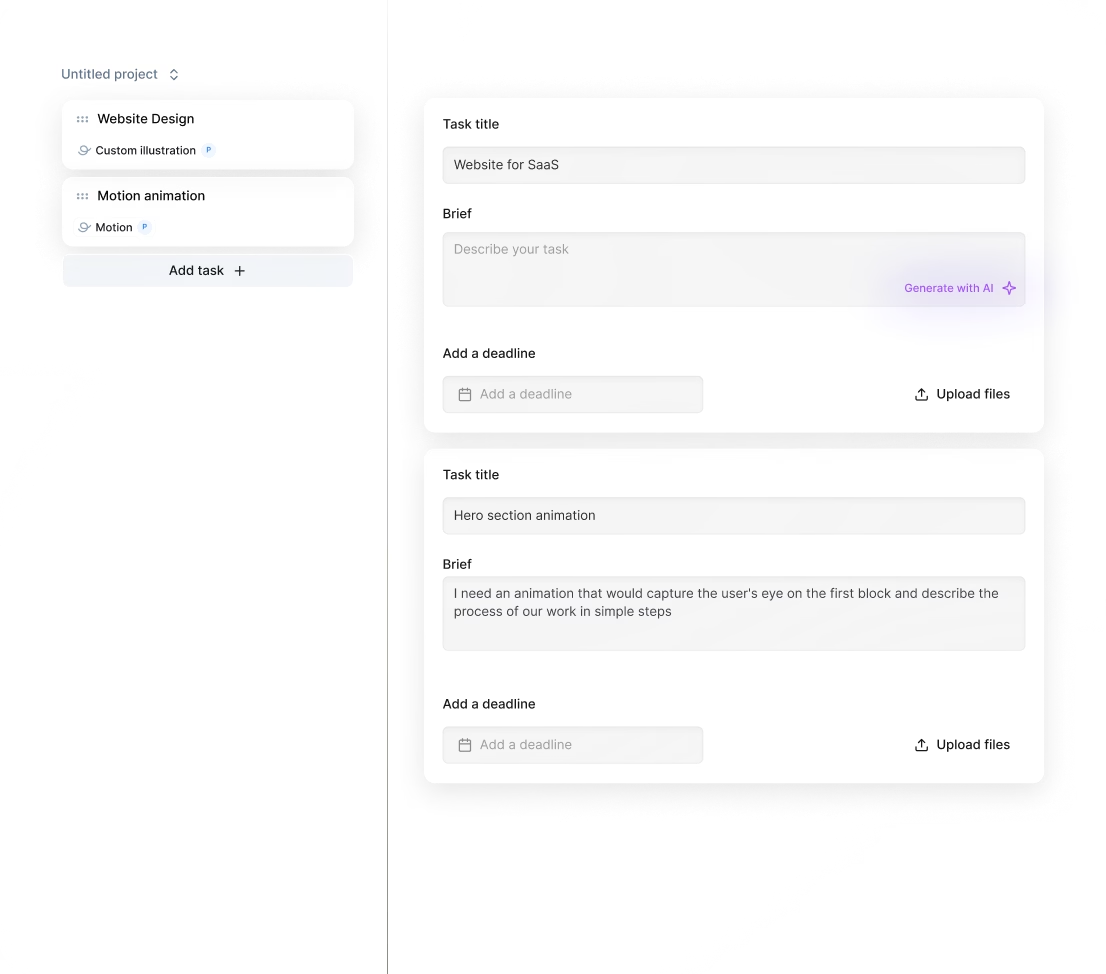
One subscription and your hiring problems solved

We reject 99.18% of healthcare designers. Only the best stay.



FAQ


How quickly can I start working with a healthcare designer?
You can start working with a healthcare designer within 24 hours of subscribing. Submit your project details through our platform, and we’ll match you with a vetted healthcare designer skilled in UX designer healthcare tasks, ensuring fast, expert deliverables and daily progress updates.
Can I hire a healthcare designer for short-term or one-off projects?
Yes, you can hire healthcare designers for short-term or one-off projects through our subscription service. Get matched with vetted professionals who deliver high-quality designs within 24 hours, with unlimited revisions and daily updates until your project is perfect.
Are healthcare designers experienced in startups, SaaS, or enterprise teams?
Absolutely. Our healthcare designers have 7-15+ years of experience working with startups, SaaS, and enterprise companies. They deliver fast, high-quality designs using proven tools and processes, ensuring your projects move quickly from concept to completion with clear daily updates.
Can I switch healthcare designers if my needs change?
Absolutely. With Awesomic, you can switch healthcare designers anytime at no extra cost. Our subscription lets you adapt quickly as your projects evolve. Expect seamless talent rematches within 24 hours to keep your deliverables on track and high-quality.
What does “top 1% healthcare designers” actually mean?
It means these healthcare designers passed a tough 4-step vetting process: portfolio review, test task, blind peer evaluation, and final leadership approval. Only 0.82% make it through. They deliver fast, high-quality results trusted by industry leaders and scale your projects efficiently.
How many revisions are included?
Every subscription with healthcare designers includes unlimited revisions. You get daily progress updates and can request changes as often as needed to perfect your UX designer healthcare projects. If you want a different approach or expert, you can rematch talent anytime at no extra cost.
Is this cheaper than hiring a full-time healthcare designer?
Yes. Our subscription starts at $500/month giving you part-time healthcare designers without salary or overhead costs. Hiring full-time takes 4–8 weeks and includes salary, benefits, and management. We deliver fast daily updates, unlimited revisions, and results in as little as 24 hours.
Can I pause or cancel my healthcare designers subscription at any time?
Yes, you can pause or cancel your healthcare designers subscription anytime with no hassle. Our flexible monthly plans start at $500, letting you scale up or down as needed. No long-term contracts, no hidden fees, and you keep full control over your projects.
Do healthcare designers work in my time zone?
Yes. Our healthcare designers are based worldwide and work across multiple time zones. We match you with designers who can collaborate during your business hours, ensuring fast turnarounds and daily progress updates via Slack, email, or video calls.
Can I work with the same healthcare designer long-term?
Yes, you can. Our platform matches you with vetted healthcare designers who fit your project needs. You get daily updates and unlimited revisions, with the option to keep the same healthcare designer for ongoing projects or switch anytime for fresh expertise.

Related roles you may need





Hiring guide:


Hiring a healthcare designer can transform your healthcare projects, making them easier to use, safer, and more efficient.
Whether you’re launching a new health service or updating digital tools, having the right designer on your team saves you time, money, and headaches.
In this guide, you’ll learn exactly what a healthcare designer does, when to bring one on board, what skills to look for, and where to find them.
Plus, I’ll share insider tips to make working with one smooth and successful.
What does a healthcare designer actually do?
Imagine the hectic environment of a hospital, clinic, or telehealth app. A healthcare designer’s job is to make that experience better for everyone involved: patients, doctors, nurses, and support staff.
They create solutions that put users first while meeting strict safety and regulatory rules.
You might wonder, what exactly does this look like day to day? Here’s a quick snapshot of their role:
-
Conduct user research by interviewing patients and medical staff to understand pain points.
-
Develop design concepts that balance clinical workflows with technological usability.
-
Create prototypes and run usability tests to catch issues early.
-
Ensure designs meet accessibility and safety standards.
-
Collaborate closely with architects, IT teams, compliance officers, and clinicians to build practical, compliant solutions.
-
Manage human factors so designs help reduce errors and improve patient care.
In a typical project, a healthcare designer fits into an interdisciplinary team, making sure everyone’s needs are reflected: from regulatory compliance to seamless clinical workflows.
For example, when designing a new patient portal, they ensure it’s intuitive for elderly users and secure for sensitive health data.
If you want to skip long hiring cycles and still find the right fit, our platform offers a quick way to hire healthcare designer experts, particularly for healthcare UX/UI roles, through a vetted network.
You get access to specialists without the usual hassle, great for projects needing fast and reliable design input.
When do you need to hire a healthcare designer?
Knowing when to hire healthcare graphic designer talent can be tricky. But there are clear signs and typical business moments when their expertise is invaluable.
Here are some common scenarios:
-
Launching a new healthcare service or product where user experience is critical.
-
Redesigning key patient experience touchpoints like appointment booking or patient education portals.
-
Integrating new medical technologies that need smooth workflow incorporation.
-
Updating systems or products to meet new healthcare regulations or compliance standards.
-
Facing patient complaints about difficult-to-use tools.
-
Noticing inefficiencies in staff workflows or poor adoption of digital health solutions.
Often, early phases like product development, pilot testing, or expansion are prime moments to bring in a healthcare designer. Their involvement can reduce costly mistakes and make adoption easier across the board.
Plus, for fast-moving projects, you don’t want to wait weeks to find the right talent.
Thanks to our platform’s fast matching system, you can hire healthcare designer professionals within 24 hours, perfect for tackling urgent needs with experienced healthcare graphic designer skills.
What skills should a great healthcare designer have?
Finding the perfect healthcare web designer means knowing what skills truly matter.
Hard skills:
-
Expertise in healthcare UX/UI design focused on user needs.
-
Deep understanding of medical terminology and clinical workflows.
-
Proficiency in design tools like Figma, Sketch, Adobe XD, and prototyping with InVision or Axure.
-
Knowledge of regulatory standards like HIPAA, FDA rules, and IEC 62366 for medical devices.
Soft skills:
-
Strong empathy to understand patients and healthcare workers.
-
Clear communication for cross-team collaboration.
-
Sharp problem-solving to navigate complex challenges.
-
Effective stakeholder management and adaptability for shifting needs.
Industry knowledge:
-
Familiarity with healthcare environments such as hospitals, telehealth, clinics.
-
Applying patient-centered design principles and human factors engineering.
-
Using frameworks like Design Thinking, Lean UX, and healthcare-specific usability heuristics.
To cut through the noise and find healthcare web designer talent who meet these standards, our platform uses a rigorous vetting process.
This includes portfolio reviews, practical skills tests, and leadership approval to ensure clients like you work with top-tier professionals.
What types of healthcare designers can you hire?
Choosing the right UX designer healthcare depends on your project’s size, budget, and timeline.
Generally, you’ll see four main hiring options:
| Type | Pros | Cons | Best for |
|---|---|---|---|
| Freelancers | Flexible, specialized expertise | Limited long-term commitment | Short-term, specialized tasks |
| In-house | Deep organizational knowledge | Higher overhead, slower hiring | Ongoing projects, culture-driven teams |
| Agencies | Multidisciplinary teams, easy scalability | Expensive, less direct oversight | Large, multi-deliverable projects |
| Contract-based | Flexible with partial team integration | Moderate commitment duration | Mid-sized projects, defined timelines |
Each has its place. Freelancers can jump in quickly for specific issues but may lack deep healthcare experience you need long term. Agencies bring many hands but at much higher costs. In-house teams offer stability but take time to build.
Our platform offers a sweet spot: access to vetted, senior-level healthcare design talent that works part-time under a subscription model.
You get the flexibility of freelance with consistency and the ease of switching talents if your project needs change.
How much does it cost to hire a healthcare designer?
Budgeting for a healthcare website designer means understanding different pricing models and what drives cost.
Here’s a quick overview:
-
Hourly rates → Usually range from $50 to $150+, depending on experience and location.
-
Fixed project fees → Used for well-defined scopes.
-
Retainer arrangements → Monthly fees for ongoing access.
-
Project-based pricing → Covers all deliverables for a defined timeline.
Costs vary based on:
-
Complexity of healthcare regulations compliance.
-
Level of technical expertise.
-
Project duration and scope.
-
Additional usability testing and post-launch support needs.
Don’t forget to budget for testing, iterations, and feedback loops driven by pilot users, that’s where many projects succeed or fail.
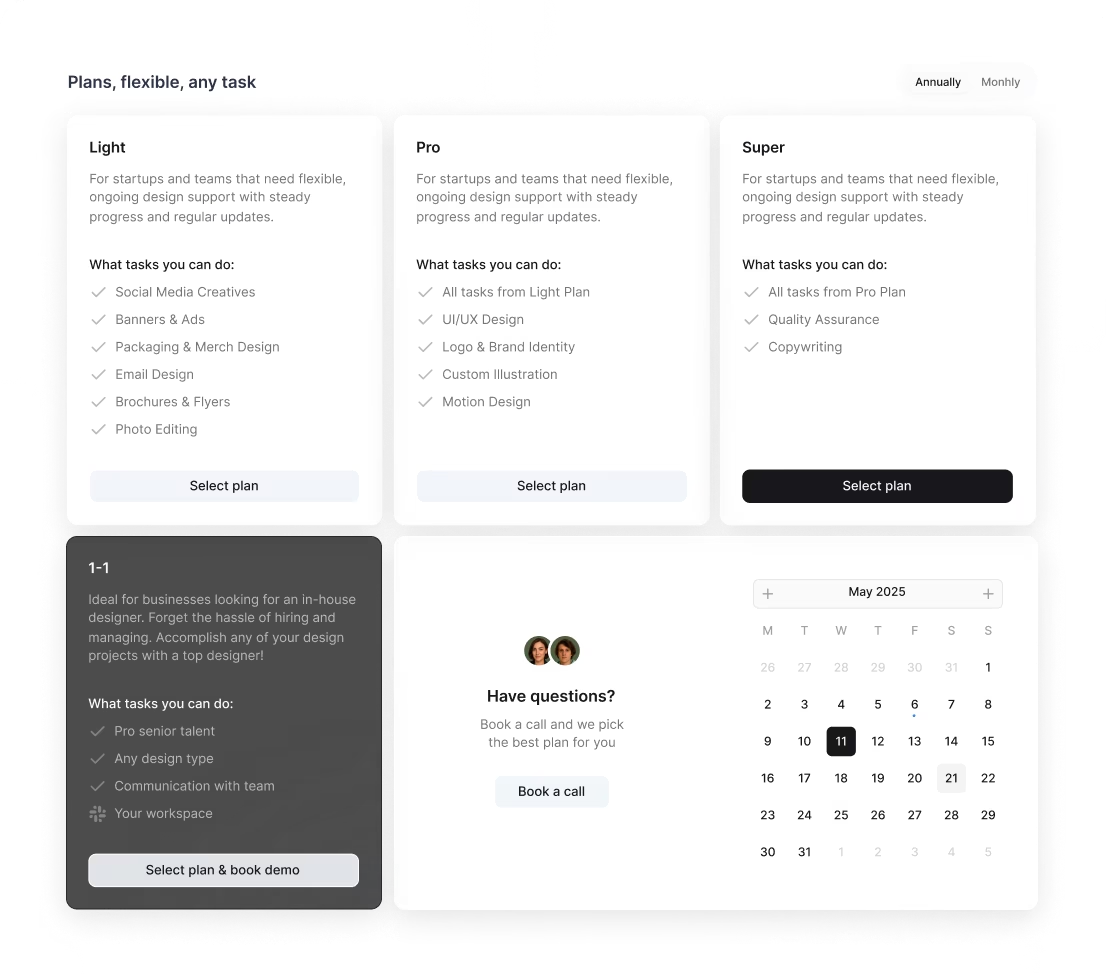
To make costs predictable, our platform offers flexible plans starting with an All-in-One $2,995/month option for a part-time team covering design, Webflow, copywriting, QA, and marketing, a 1–1 Plan with a dedicated full-time specialist plus PM from around $5,000/month, and Awesomic Studio providing AI landing pages starting at $500.
This cuts down hidden fees and project management overhead, something you often face with traditional hiring or freelance contracts.
Where can you find the right healthcare designer?
Finding the right healthcare graphic designer goes beyond simply posting a job.
Here are the best places to look:
-
Specialized job boards like Healthcare Design Jobs, Dribbble, and Behance.
-
Active LinkedIn groups focused on healthcare UX/UI.
-
Professional communities such as the Healthcare Information and Management Systems Society (HIMSS).
-
Industry-specific design agencies and consulting firms.
-
Referrals from clinicians and healthcare professionals.
-
Healthcare conferences like HIMSS or UX Healthcare Conference.
-
Online forums or Slack groups dedicated to healthcare design.
Instead of juggling all these options yourself, think about using our centralized talent marketplace.
It quickly matches you with vetted healthcare graphic designer professionals worldwide, backed by a structured vetting process and daily progress updates, cutting out the usual recruiter headaches.
How do you evaluate a healthcare designer’s portfolio?
When looking at portfolios, don’t just focus on pretty pictures. You want to see problem-solving skills and process clarity.
Here’s what to check:
-
Case studies showing user research methods and pain points identification.
-
Examples of ideation, prototyping, and usability testing.
-
Work done with real healthcare clients or systems, highlighting compliance and accessibility approaches.
-
Clear storytelling to understand how they tackled challenges.
-
Collaboration with multidisciplinary teams like clinicians and engineers.
-
Measurable impacts such as improved patient satisfaction or reduced errors.
-
Adaptability across different healthcare contexts hospital software, patient apps, or medical devices.
Our platform’s vetting process includes detailed portfolio reviews focused on real-world healthcare experience to make sure designers meet compliance and usability standards crucial for your projects.
What questions should you ask before hiring?
Interviewing healthcare website designer candidates? Use questions that reveal how they handle real healthcare challenges:
-
Tell me about a healthcare project you managed from start to finish.
-
How did you navigate compliance and regulatory requirements?
-
Can you give an example where user feedback caused you to pivot your design?
-
How do you work with clinicians and engineers during a project?
-
What tools do you use for usability testing, and how do you run those tests?
-
How do you stay current with healthcare design trends and regulations?
-
How do you manage conflicting demands from stakeholders?
-
Tell me about a time when you improved accessibility based on feedback.
-
How do you handle tight deadlines and unexpected project changes?
If you find interviewing time-consuming, consider our platform’s vetting and matching services, which save you from the initial screening. Still, these questions help during final discussions after onboarding.
How do you work successfully with a healthcare designer?
Collaborating well with your healthcare graphic designer is key to project success.
Here’s how to set it up:
-
Start with a thorough onboarding. Share project briefs, regulatory documents, user personas, and technical limits right away.
-
Set up clear communication channels using tools like Slack, Microsoft Teams, or project managers like Jira, Asana, Trello.
-
Align early on timelines and milestones. Build in buffers for testing and revisions.
-
Give constructive feedback focused on user needs and clinical realities, not just aesthetics.
-
Use collaborative design reviews and shared prototyping tools.
-
Include end-users in validation to catch issues early.
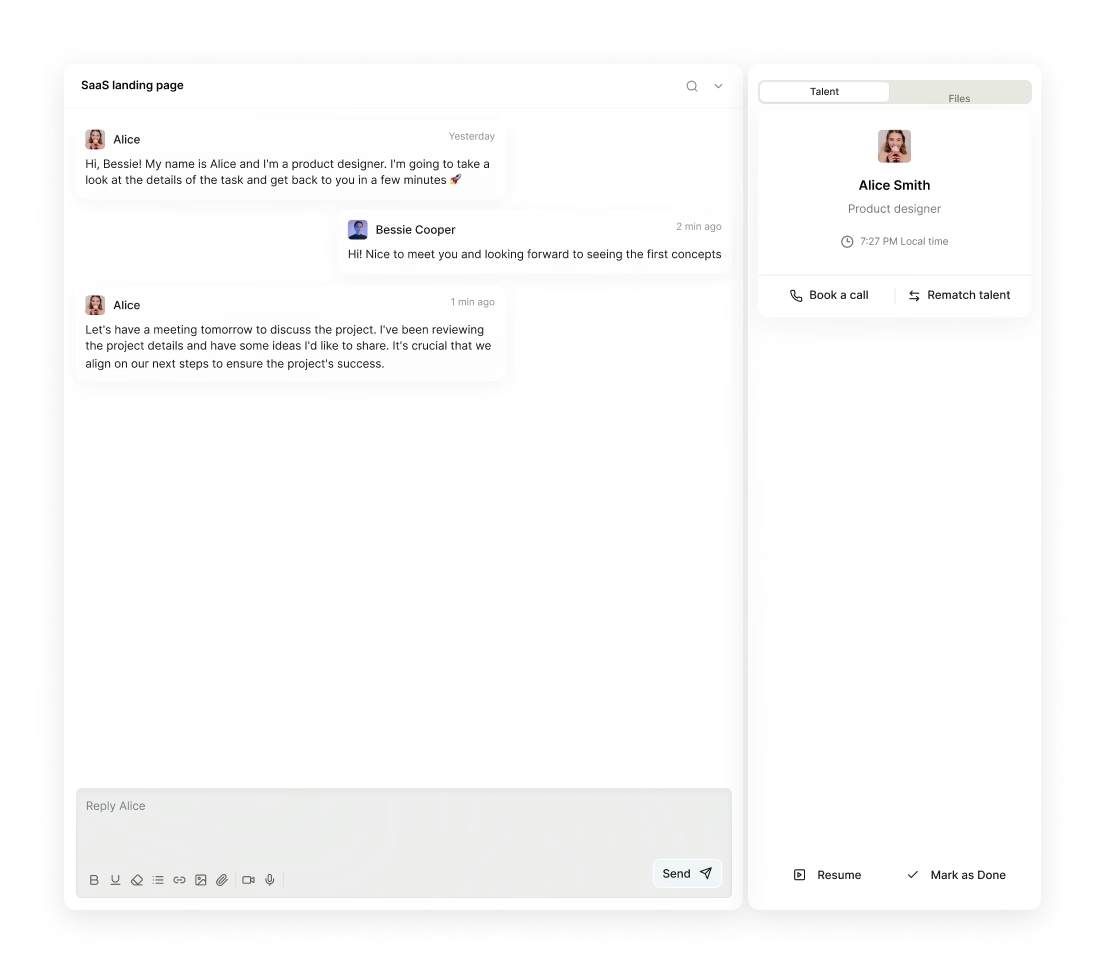
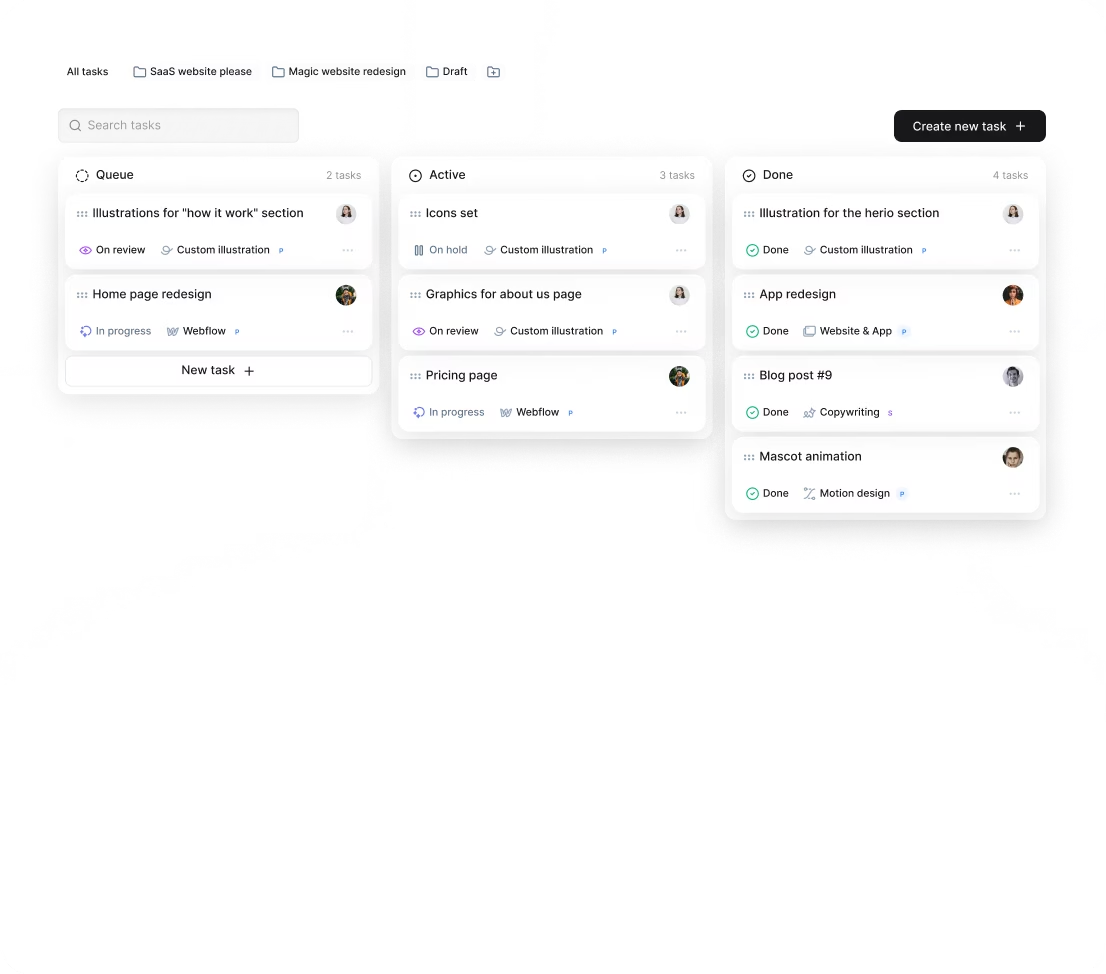
Our platform supports this by providing daily progress updates through its app, integrates with Slack for seamless communication, offers unlimited revisions, and lets you switch designers when needed.
This keeps your workflow smooth and cuts down management headaches.
How do you know you hired the right healthcare designer?
Knowing your healthcare UX designer is the right fit comes down to concrete results and fit.
Look for these signs:
-
Improved patient satisfaction scores related to design changes.
-
Decreased user errors or faster staff onboarding.
-
Positive feedback from clinicians and users.
-
Smooth project delivery within budgets and timelines.
-
The designer adapts quickly to feedback and integrates well with your team.
Review goals and performance regularly. Be ready to scale your relationship up or down, or even pivot if project needs change.
With our platform’s subscription model, you can easily adjust your talent pool anytime. You can scale experts up or down or request a new match if the project direction shifts, ensuring you always have the right healthcare UX designer when you need one.
Final thoughts
With these practical insights and tools, you’re now ready to confidently hire healthcare designer talent that fits your needs perfectly.
Whether you’re improving patient portals, integrating new tech, or needing compliance-savvy design, remember that the right healthcare designer makes all the difference.
Our platform stands ready to help you find them quickly and work together smoothly every step of the way.


