




Top 5 Design Service Models in 2026: Pros, Cons, and Costs


Key takeaways:
- Subscription design services like Awesomic offer fast talent matching (within 24 hours) and clear costs from $200 to $2,995 monthly.
- Freelancers cost $25–$150 per hour, agencies $5,000–$100,000+, and in-house teams $150k–$400k yearly for small groups.
- Effective pricing pages use 3–4 clear plans, show annual savings, highlight popular choices, and include FAQs to reduce confusion.
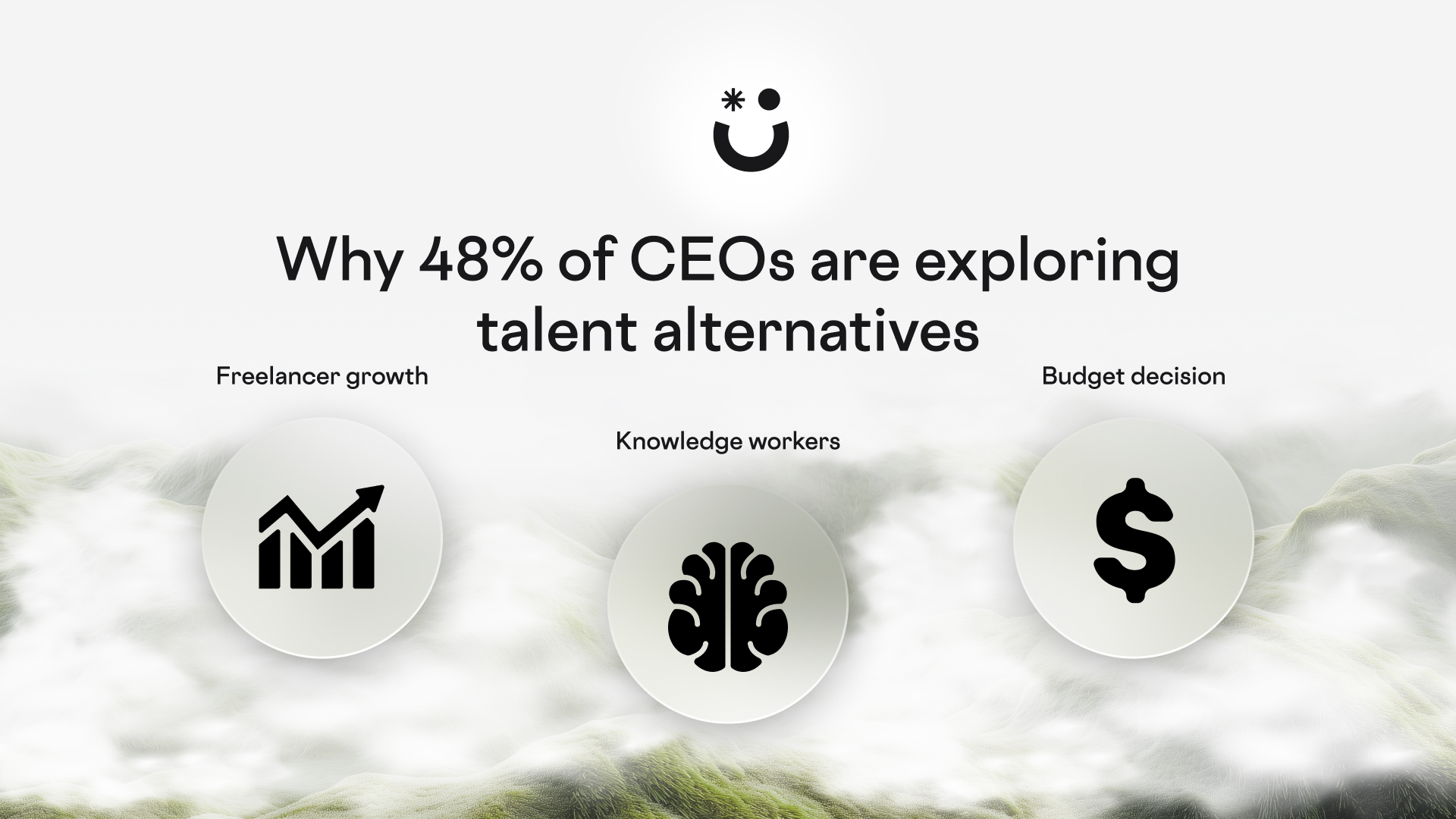
In 2026, startups and scaleups will have more options than ever to get quality design work done. The old binary choice of hiring a full-time designer versus outsourcing to an agency has expanded into many models. Nearly half of all knowledge workers now engage in freelance work, and 48% of CEOs plan to increase freelance hiring in the coming years.
New approaches like subscription-based design services have emerged as viable alternatives alongside traditional freelancers and agencies. Choosing the right model is a critical decision that impacts your speed to market and budget efficiency. The wrong choice, say, spending 6 weeks hiring an employee only to miss a launch window, can hurt a lot.
Why design service models matter in 2026
Choosing the right design service model is more strategic than ever. With budget pressure, remote teams, and the subscription economy shaping the market, your choice directly affects speed, cost predictability, and product-market fit. Good organization design models help you move faster and scale smarter.
Here’s what’s shaping design pricing today:
- Remote work keeps teams flexible and global
- AI tools speed up workflows
- On-demand subscriptions cut costs and improve predictability
- Conversion-focused pricing design boosts results on pricing pages
In this guide, you’ll learn the top five design models, real cost ranges, and exact tools and UX patterns to apply.
For example, with Awesomic, our subscription talent marketplace matches vetted experts in 24 hours, starting at $990/month. This flat monthly plan supports fast onboarding and simpler budgeting, helping your team deliver on time and on budget.
In-house design team
When you hire an in-house designer, you’re bringing a full-time employee onto your team. This person works exclusively for your company. In-house was the default approach for a long time, and it still offers unique benefits in terms of control and integration. However, it’s also the most expensive and commitment-heavy option. Here are the key pros and cons:
Pros of in-house designers
- Deep brand and product knowledge over time: An in-house designer lives and breathes your brand and product. Over time, they develop an intuitive understanding of your style, guidelines, and customer mindset. They become “guardians of the brand” with insider knowledge that’s hard to replicate externally. For example, an in-house UI designer will know all your UX patterns by heart, ensuring new screens fit seamlessly. Even those who may have skipped a redesign or who are fidgety on some devices.
- Immediate collaboration and availability: Since they’re on staff, in-house designers can respond quickly during work hours and join impromptu meetings or brainstorming sessions. You can iterate in real-time – walk over to their desk (or ping them on Slack) for quick feedback. Miscommunications can be resolved faster. Essentially, they’re part of your day-to-day, which streamlines communication.
- Long-term capacity building: Over the long run, an in-house design team accumulates domain knowledge and can even evolve into leadership roles. In-house teams can also develop unique processes or proprietary design assets for your brand. In essence, you’re investing in internal IP and talent development, which can pay off if design is core to your business.
Cons of in-house designers
- Highest cost commitment: In-house is typically the priciest model. You’re paying a full salary plus benefits, taxes, equipment, and office overhead. For example, a mid-level graphic designer making around $62k/year actually costs the company roughly $80k+ after 20–30% benefits (healthcare, payroll taxes, etc.). That’s about $8,000 per month per designer, regardless of workload. Smaller companies often struggle to fully utilize that capacity – if you only have occasional design tasks, that salary can be an overinvestment.
- Hiring and turnover challenges: Recruiting good designers takes time and money. On average, it takes ~36 days to hire a new employee in the US, and costs about $4,700 in hiring costs (recruiting ads, HR time, interviews, etc.) per hire. If your in-house designer leaves, all that knowledge walks out the door, and you must spend potentially months to re-hire. Employee tenure has been declining in recent years, so turnover is a real risk – and during any vacancy, projects stall. In short, maintaining an in-house team requires continuous HR effort.
- Limited skill range: A given designer – no matter how talented – has a finite skill set. Your one in-house graphic designer might be awesome at branding and web graphics, but not experienced in motion graphics or 3D rendering. To cover multiple disciplines, you’d need to hire multiple people (e.g., one for UX, one for illustration, etc.), which multiplies costs. Many startups can’t afford a full roster of specialized designers, meaning an in-house team could still have skill gaps.
Cost snapshot – In-house
To put numbers on the in-house investment:
- Salary: Average base salary for a mid-level graphic designer is around $56k–$65k per year (about $5k/month). Junior designers might be ~$50k, while senior designers (or specialized roles like UX designers) can be $80k–$100k+ in high-cost areas. For instance, UI/UX designers with several years of experience often command $90k+ salaries in the US.
- True cost with benefits: Add roughly 20–30% on top of salary for benefits and payroll taxes. So that $60k salary actually costs ~$75k–$80k. Plus factor in equipment (e.g., a high-end Mac, software licenses like Adobe Creative Cloud), and possibly office space overhead if on-site. On average, benefits cost adds about 25% – e.g, healthcare, retirement plan, paid leave.
- Hiring cost: There’s a one-time cost to recruit. The Society for Human Resource Management (SHRM) estimates ~$4,700 on average per new hire in the U.S. This accounts for advertising the job, HR/recruiter time, interviews, and maybe agency fees. It’s essentially a “startup cost” to build your team.
Freelance designers (On-demand talent)
“Freelance designers” refers to hiring independent contractors for design projects or tasks. This could mean posting a job on Upwork and engaging a graphic designer for a one-time project. Freelancing is hugely popular: the global gig economy produces ~$761 billion in output and counts tens of millions of professionals.
Let’s look at the pros and cons of using freelancers for design:
Pros of using freelancers
- Cost flexibility: Perhaps the biggest advantage of freelancers is that you incur direct costs only when work is done. There’s no salary when you have no projects. If this quarter you just need one logo designed, you can hire a freelancer for a one-off fee (maybe a few hundred dollars) and that’s it. For small businesses or startups on a tight budget, this on-demand cost structure is very attractive.
- Large talent pool & specialization: Online platforms have thousands of designers worldwide at your fingertips. Need a very specific skill or style? There’s likely a freelancer who specializes in exactly that (e.g., an expert in infographic design, or a 3D packaging mockup specialist). You can tap talent from anywhere, including regions with lower rates. If one project requires an illustrator who draws in a comic style, you can find that niche easily in the freelance market. This breadth of choice is something an in-house team or small agency might not offer.
- Scalable on demand: If you suddenly need more hands, you can hire multiple freelancers in parallel. For instance, during a big marketing push, you might contract one freelancer to design social media graphics while another designs a brochure. You’re limited only by budget and management bandwidth, not by a fixed team headcount. Once the surge is over, you simply don’t renew those contracts. This elasticity is great for handling short-term spikes in workload without long-term commitments.
Cons of using freelancers
- Variable quality and reliability: The freelance market can be hit-or-miss. There are stellar freelancers who deliver agency-quality work, and there are less experienced ones who might disappoint. It’s not always easy to tell upfront. You might have to sift through many portfolios or do small trial projects to find “your” go-to person. And even a great freelancer can have an off project. If a freelancer underdelivers or disappears mid-project (it happens), you’ve lost time and money and must scramble for a replacement. In surveys, companies often cite inconsistent quality as a drawback of freelance engagements.
- Management & coordination overhead: Hiring a freelancer is not a “set and forget” solution. You are the project manager. You need to write clear briefs, communicate revisions, and keep the project on track. If you hire multiple freelancers to cover different needs, you’re responsible for coordinating them, maintaining design consistency across their work, and merging their outputs. All this oversight is an “invisible” cost of your time and management effort. Some companies underestimate this. The hourly rate might look cheap until you factor in hours spent providing feedback, doing QA, or aligning multiple contractors.
- Administrative and legal considerations: When working with many independent contractors, you have to handle contracts, NDAs, payment terms, and sometimes tax forms (e.g., issuing a 1099 for US freelancers). Platforms ease the payment part (escrow, etc.), but issues can still arise, such as disputes about scope or late deliveries. There’s also a compliance angle: if you rely heavily on one freelancer for a long time, there’s a risk of misclassifying an employee as a contractor in some jurisdictions. And remember, unlike an agency or subscription service, a solo freelancer typically won’t have a backup if they fall sick or go on vacation. You’re dealing with individuals, so there’s a bit more fragility in the arrangement.
Cost snapshot – freelancers
Freelance pricing can vary dramatically by skill level, location, and project type, but here are some representative figures:
- Typical hourly rates: Many mid-level freelance graphic designers charge around $35–$60 per hour, which aligns with surveys showing average competent freelancer rates in that range. Platforms like Upwork list a wide span (some newbies at $15/hr, top talent $100+). For specialized skills (UI/UX design with front-end coding, 3D animation, etc.), rates skew higher, and you might pay over $100/hr for a certain expertise.
- Flat project fees: Many freelancers prefer or offer project-based pricing instead of hourly. For example, logo design might be priced at $100–$500 for the complete project, brand identity packages (logo + brand guide, etc.) could be $1,000+, and a small website design could be several thousand dollars. These prices vary widely, but as a reference point, they often shake out such that the freelancer is targeting an effective hourly rate within the ranges above (e.g., a $300 logo might assume ~10 hours of work, implying ~$30/hour). The benefit of flat fees is that you know the cost upfront, just make sure the scope and deliverables are clearly defined.
- Monthly cost for ongoing work: If you were to use a freelancer as a near full-time resource, say ~40 hours a week, what would that cost? At $40/hour, 160 hours in a month is ~$6,400. At $60/hour, it’s $9,600. This is why, beyond a certain volume of work, hiring full-time or using a flat-rate service can become more cost-effective. Freelancers are excellent for ad-hoc tasks and moderate workloads; if you find yourself effectively paying a freelancer $8k+ per month regularly, it might be time to evaluate other models (in-house or subscription). But for occasional needs, freelancers often beat the other options on salary cost.

Design agencies
Design agencies are firms that offer creative services with a dedicated team. When you hire an agency, you’re essentially outsourcing a project to an organization that will assign multiple professionals to deliver it. Agencies are often chosen for high-stakes projects or when a broad range of skills is needed. They bring a lot of expertise and polish.
Here are the pros and cons:
Pros of hiring a design agency
- Multi-disciplinary expertise in one package: Agencies come with a team of talent. A typical creative agency might have graphic and UI designers, illustrators, copywriters, art directors, and account/project managers. This means if your project spans various skills, an agency can handle all of them under one roof. You don’t have to separately find a web designer, a brand designer, etc., since the agency coordinates those experts for you. It’s essentially like hiring a whole design department for your project, which ensures a cohesive result.
- Strategic insight and high-quality output: Reputable agencies pride themselves on delivering top-tier work. They often have established processes for research, strategy, and quality assurance. For example, they might start with discovery workshops, deliver a creative brief, iterate through review rounds, and conduct QA on final files. The result is usually polished, on-brand, and consistent across assets. You’re paying not just for pixels, but for creative direction and strategic thinking. This often leads to a more impactful final product.
- Project management and reliability: A big selling point of agencies is that they manage the project for you. You will typically have an account manager who is your point of contact. They handle internal coordination – ensuring timelines are met, feedback is implemented, etc. You’re relieved from micro-managing designers day-to-day. Also, agencies have reputations to uphold; if something goes wrong, you have recourse. They can’t ghost you. There are contracts and an expectation of professionalism. This reliability (in theory) reduces the risk of non-delivery. Essentially, the agency structure adds accountability to deliver a final product that meets the agreed scope.
Cons of hiring a design agency
- Layered processes can mean slower turnaround: Agencies have more structured workflows, which ensure quality but can slow things down. There might be formal kickoff meetings, design reviews, and multiple stakeholders providing feedback. Each iteration might take a few days. If you need something super urgent or very iterative day-to-day, an agency’s process might feel too slow or cumbersome. It’s not that agencies are always slow, but the built-in project management layers add time.
- Scope creep and change orders: When you engage an agency, you’ll typically agree on a scope of work. If your needs change mid-project, the agency will usually charge for it. They operate as a business, but it means less flexibility if you’re indecisive or the project evolves. Agencies will usually require a formal change order for out-of-scope requests. Also, if you burn through the allotted revision rounds, additional changes may incur extra fees. This can lead to cost overruns if you’re not careful in defining the scope up front.
- Less hands-on control: If you are a founder or manager who likes to be deeply involved in the creative process, the arm’s-length arrangement can be frustrating. There’s also the possibility of creative differences if the agency’s vision diverges from yours; it can take effort to course-correct since you’re not steering the ship directly. Good agencies will listen and adapt, but you do have to trust their process to an extent.
- Potential “juniorization” of work: A known caveat with some agencies: the big pitch meeting might feature a creative director and senior designers wowing you with ideas, but once you sign the contract, much of the execution could be done by junior talent. This is sometimes referred to as “juniorization”. You pay for the A-team, but get the B-team for actual production. This isn’t universally true as reputable agencies staff appropriately, but it happens. It’s something to be aware of.
Cost snapshot – Agencies
Agency pricing can take different forms (project-based, hourly, or monthly retainer). Here’s an idea of ranges:
- Project fees: Even relatively small projects from an agency often start in the low thousands of dollars. For instance, a logo + basic brand guideline project might be $5,000–$10,000. A more comprehensive brand identity or website redesign can easily run $15k–$30k or more, depending on complexity. Agencies will quote based on scope; complex projects (like a full app design, or multi-faceted campaign) can be tens of thousands.
- Hidden costs: There can be some extras. If your project requires travel (say you want the agency team to come on-site for a workshop or a photoshoot), you might be billed for travel expenses. Rush fees can apply if you compress timelines. Also, remember that lots of agencies will bake things like project management hours, presentation prep, etc., into the cost. It’s usually all in the quote, but it underscores that you’re paying for a process, not just final art files. Finally, if your feedback cycles are slow or you change direction mid-project, that can inadvertently raise costs.
- Comparative value: If you just need a quick flyer or a single ad, then paying an agency rate can be considered overkill. Agencies tend to shine when the project is critical enough to justify the investment (e.g., a brand-defining campaign) or when you need a full-service approach (strategy + design + production in one).

Subscription-based design services
What is a design subscription? It’s a relatively new model (popularized in the late 2010s) where you pay a flat monthly fee for ongoing design work. Companies like Awesomic (a talent matching app), Design Pickle, ManyPixels, Superside, etc., offer plans where you can submit design requests and a designer (or team) works on them one by one. It’s often pitched as “unlimited design,” which means you can queue up an unlimited number of tasks and they are handled sequentially (usually one at a time per designer).
Think of it like having a part-time or full-time designer on retainer, but through an external service and without hourly billing. Need to hire a 3D artist for a product visualization sprint? That's the kind of specialized request a subscription handles without a separate hiring process.This model aims to combine the reliability of an agency with the flexibility of freelancing, at a fixed cost. Here’s how it breaks down:
Pros of subscription design services
- You know exactly what you will pay every month with predictable, fixed pricing. For example, the All-in-one plan is $2,995 per month for a team that handles your design, copy, and Webflow tasks daily. The fee is the same whether you submit five small requests or 50 tasks in a month.This predictability is great for budgeting because there are no surprise invoices or scope creep. For companies with consistent creative needs, a subscription saves money compared to paying hourly or per project. You are effectively buying a chunk of a team’s time at a bulk rate.
- Fast turnaround and daily output: These services pride themselves on speed. Typically, once you sign up and submit your first request, you’ll get a designer assigned within 24–48 hours (Awesomic matches in under 24h in many cases). After that, you receive designs or revisions on a daily cycle, often 1–2 business days per task, for many tasks like social media graphics, simple web page designs, etc. This means a steady stream of output. If you use it fully, you could be getting, for example, 20–30 design deliverables in a month for one flat fee. It’s much faster than waiting weeks for an agency project to conclude, and more consistent than ad-hoc freelancers who might disappear for days.
- Access to vetted talent without the search: Subscription services usually curate their design teams. You’re not picking from thousands of freelancers; the service already picked them. For example, Awesomic hand-picks experienced designers and pairs clients with the best fit. Other competitors also vet their designers for skill. This means you skip the time of sifting through resumes or portfolios, as the service ensures a baseline quality. And if you’re ever not happy with the output or working style, some of these services often will swap in a different designer upon request at no extra cost. That built-in backup plan and quality control is a big plus compared to hiring a freelancer blind.
- Scalability and flexibility: Need more design output in parallel? With many subscriptions, you can add an extra subscription (or “seat”) to run multiple tasks concurrently. For instance, if one designer can only do one task at a time and you have a rush, you spin up a second designer for that month, or you need multiple disciplines (Social media design and UI/UX, for instance). Conversely, if you’re entering a slow period, you can usually pause or cancel the subscription with relatively short notice (most are month-to-month or have a minimum of 1-3 months). This is far easier than hiring or laying off staff. You get a lot of the benefit of an in-house team (dedicated people who learn your brand) but on demand. As your needs grow, you can just increase your plan tier instead of recruiting new employees.
- No HR or legal hassle: Because you’re engaging a service, not hiring individuals, you avoid issues like worker classification or providing benefits. The designers are employees or contractors of the service provider, not you. So you skip things like payroll taxes, liability if someone quits, etc. If “your” designer goes on vacation, the service typically has someone to step in so your work continues. Essentially, the subscription provider handles all the people management; you just interface with an account manager or the designer for the work itself. For companies worried about compliance or those that don’t have an HR apparatus to manage multiple freelancers, this is a stress reliever.
Cons of subscription design services
- However, subscriptions are not cost-effective for very low needs. Paying $200 or $2,995 for a subscription is overkill if you only need one small graphic that month. In that case, you effectively pay the full monthly price for a single design.
- Scope limitations: Most subscription services focus on graphic design and UI/UX tasks. They typically do things like logos, branding, marketing materials, simple illustrations, web/app design, etc. But they often do not cover more complex or unusual services. For instance, very few (if any) cover video motion graphics, 3D modeling, high-end illustration, or copywriting as part of the plans as Awesomic does. The key is that you might still need to outsource certain specialized tasks elsewhere. Always check the service’s list of included task types.
- Onboarding and communication style: Using a subscription service requires getting used to their workflow. In the beginning, you’ll need to onboard the designer with your brand assets, style guides, and communicate your preferences. The first couple of requests might require more back-and-forth to nail the style. Also, communication is mostly asynchronous (via the app or email) and not real-time calls every day. If you prefer daily stand-up meetings or spontaneous brainstorms, this model might feel a bit “ticket-based”. So, clear that up before proceeding with a subscription and ask if they can accommodate your preferences.
Cost snapshot – Subscription services
Subscription plans have a range, typically based on the level of service:
- Monthly pricing tiers are now based on specific capabilities and outcomes.The AI Designer plan starts at $200 per month for production-ready landing pages and web apps. The All-in-one plan at $2,995 offers full-stack design, no-code, and copywriting with Slack integration. Higher tiers, like the 1-to-1 part-time plan, provide a dedicated talent and a PM for personal, fast-track delivery.
- Value vs alternatives: If you consistently have ~20–40 hours of design work each month, a $1k subscription equates to paying about $25–$50 per hour for that work, which is on par with a decent freelancer but with the added benefit of a managed service. If you fully load, say, 80 hours worth of tasks in a month, you’re getting an incredible bargain (like $12/hr effective). The ROI is directly tied to usage volume.
- No extra fees (usually): One nice aspect is that things like revisions, source files, etc., are typically included. There’s also no fee per additional project; you just add it to your queue. The only way you’d pay more is if you choose to add another concurrent task or upgrade your plan for more output. So, budgeting is straightforward. Compared to freelancers (who might charge extra for more revisions or formats) or agencies (who meter every hour), the plug-n-play simplicity is a selling point.
- Examples of cost savings show why this model is catching on. One All-in-one subscription can deliver a full website, branding style guide, and copywriting for a single fixed cost. This model hits a sweet spot of quality and speed at a fixed lower cost for common workloads.
Specialized talent networks (Curated marketplaces)
The last model in our top five is what we’ll call specialized talent networks or curated marketplaces. Examples include Toptal, MarketerHire, Gigster, or even “Pro” tiers of general marketplaces. These services vet and maintain a network of top freelance professionals, then match them to clients quickly. In practice, hiring through Toptal (for instance) means you get a freelancer, but one who has been screened for quality and is often in the top percentile of their field. The network typically handles the matchmaking, and sometimes administers payments or compliance. Let’s break down the pros and cons:
Pros of talent networks
- High-quality talent, vetted for you: Networks like Toptal advertise that they accept only the “top 3%” of freelancers who apply. While the exact percentage may be a marketing point, the idea is you’re much more likely to get a senior, experienced designer through this route. They typically have a rigorous screening (portfolio review, skill tests, interviews). So instead of gambling on an untested freelancer, you get someone who has proven themselves to the network.
- Administrative ease and compliance: The network platform typically handles a lot of the admin details. They will handle payments (you pay the platform, they pay the freelancer), and often they manage international compliance (contracts, NDAs, tax forms). Toptal also covers IP protection and other legalities in its contracts. The bottom line: you get the benefit of a top freelancer without having to deal with all the paperwork, which is especially helpful if hiring cross-border contractors. It’s a more enterprise-friendly way to leverage freelancers.
- Scalable and team-building: If needed, you can build a whole team of contractors quickly via networks. Let’s say a company needs to staff a design team of 3 for a project – they could get multiple vetted designers (e.g., one UX, one UI, one graphic) from a network within a week, rather than spending 2-3 months hiring FTEs or coordinating multiple agencies.
Cons of talent networks
- Cost: These networks are not the cheapest route. You’re often getting senior-level contractors, many of whom are U.S./Europe-based, plus the network’s markup. Hourly rates through networks can rival agency rates.
- Not a fully managed solution: When you hire via a talent network, you’re still managing that designer directly on a day-to-day basis. The network usually doesn’t provide project management or creative direction. In that sense, it’s closer to having a contract employee than an outsourced project. The flip side is that they usually are senior talent with enough experience to help you along the way.
- Availability in niche areas: If you need a really niche skill set, there might be only a handful of people in the network who fit, and they could be booked. Open marketplaces like Upwork tend to have a larger volume of freelancers. For example, if you need an expert in AR/VR interface design with healthcare experience, a network might not have someone immediately free, whereas a broad search might find a match.
- Overlap with subscription model in use-case: In some ways, a talent network fills a similar niche as a high-end subscription: both can provide you with a near-dedicated designer quickly. Also, the cost structure differs: networks usually bill hourly or monthly for the contractor at high rates, while subscriptions bill a flat rate. If you need a full-time level effort and want someone integrated with your team culture, a network contractor is like renting an employee. If you just need output and don’t care who on the other end does it, a subscription might yield more output per dollar.
Cost Snapshot – Talent networks
It’s hard to generalize since each network and role is different, but here are some indicative numbers:
- Monthly cost: If a network placement is, say, $5k/month for a part-time designer, that likely translates to around 60-80 hours of work in a month (so ~$60–$80/hr effective). A full-time (160-hour) month of a high-end network designer could easily be $10k+. But remember, $8k in-house is usually for mid-level; a talent network designer might be equivalent to a very experienced specialist you might pay six figures to if you hired directly, so it can still be a good value in that sense.

Pricing and behavioral frameworks that guide smart design models
When choosing the right design pricing approach, it helps to have a clear, practical framework. You'll learn how a well-structured design thinking process and smart pricing strategies come together to create successful graphic design pricing that works for your customers and your business.
First, the design thinking process is your roadmap. It breaks down into simple stages:
- Empathize: Talk directly with your users. For example, we interview marketing managers and founders to understand their exact needs, like quick landing pages or steady design output.
- Define: Pinpoint what your users truly value. We test value ideas like “start work in 24 hours plus a flat monthly fee” for startups.
- Ideate: Brainstorm different pricing page layouts or offers.
- Prototype: Build real pricing page versions in tools like Figma that we can quickly tweak.
- Test: Run A/B tests on pricing words and buttons, then check how many sign up or churn.
Alongside this process are value-based pricing principles. Price matches how much users think your service is worth. This value splits into three parts: economic (cost savings), emotional (peace of mind), and community (social proof). For example, we highlight that our service saves up to 70% compared to freelancers and agencies. Then, price segments adjust by user type or use case, so different groups pay what fits them best.
Behavioral economics helps too, by nudging choices in your favor. Here are some powerful tactics:
- Anchoring: Put a high-priced plan next to a mid-tier one to make the middle option feel like a smart deal.
- Framing: Show savings clearly, such as “Save 20% when you pay annually” or focus on what users lose if they don’t switch.
- Loss Aversion & Present Bias: Offer free trials or time-limited discounts to lower hesitation.
- Social Proof: Display that over 4,000 customers already trust the service.
Thinking about pricing design gets even smarter with game theory. Remember, your pricing affects competitors, resellers, and even procurement cycles at big companies. For example, bundling plans or gating premium features can protect your high-value offerings from cannibalization.
Testing pricing ideas matters a lot. Run A/B tests on price points and page setups. Watch how metrics like customer lifetime value or churn change. Keep iterating pricing based on real user behavior.
Here’s a quick list of practical experiments you can try right now:
- Switch between monthly and annual billing options, with and without savings displayed. Measure which drives more sales.
- Add a “most popular” badge to mid-tier versus top-tier plans. See how plan choices shift.
- Create an FAQ section about refunds and cancellations. Track if support requests drop.
- Test different call-to-actions, like “Start a free consultation” versus “Book a 15-minute intro call.” Check which gets faster sign-ups.
Using our own design pricing experience helps bring these ideas to life. We focus on clear messages like “Work starts in 24 hours,” and “Flat monthly rate with unlimited revisions.” Anchoring with our highest plan priced at $2,995 makes the $1,490 plan pop as a smart value. Offering a 14-day risk-free trial reduces doubts and boosts conversions. And showing 20,000+ completed projects builds trust right on our pricing pages.
Finally, keep measuring operational KPIs such as time to start work or average revisions. They’re as important as pricing metrics like conversion or churn.
By mixing design thinking with value-based pricing and behavioral science, you unlock powerful org design models for your pricing design. This practical approach helps you get pricing right, delight customers, and grow your business steadily.
Finding the right fit for your needs
There is no universal “best” model for getting design work done. The optimal choice hinges on your company’s unique context: your design workload, quality expectations, budget, timeline, and desire for hands-on control. For instance, a startup might begin by outsourcing to freelancers, then move to a subscription service as design needs pick up, and eventually blend in an in-house art director for strategic oversight.
Models like Awesomic’s subscription talent app were virtually nonexistent a few years ago, but are now proven alternatives as companies like to move fast without breaking the bank. The fact that an Awesomic designer contributed to an award-winning Red Dot campaign in 2022 shows that these new models aren’t just for trivial tasks; they can deliver top-notch results traditionally expected from agencies.
You can start lean, stay agile, and only invest big when you need to. If you’re unsure, you might even experiment: try a month of a subscription service or a small project with a freelancer and compare the experience. The right choice might become clear once you see the output relative to the cost and effort.
If you’re interested in building your design team or need creative support for the upcoming season, book a demo with Awesomic, and we’ll find you the deal that makes the most sense for your business and growth, as we did for 4,000+ companies in the past, many of which were acquired or received the funding they needed.
FAQs
What factors help choose the right design model for a small startup?
Startups need flexibility and speed. Freelancers or subscription design models often suit tight budgets and fast turnarounds. Consider your need for ongoing work and control. Also, think about how much you want to manage vs outsourcing fully.
How can organization design models improve team collaboration remotely?
Using clear models shapes roles and expectations. They help teams focus on tasks, even when remote. Subscription services or hybrid models often give predictable support. This reduces confusion and makes scaling easier.
What hidden costs should I watch for in graphic design pricing?
Look beyond the base price: revisions, extra features, integrations, or technical setup add up. Maintenance or updates also cost time or money. Understanding these keeps your budget realistic and avoids surprises after signing.
How do pricing design choices affect customer trust and sales?
Simple, clear pricing reduces doubt and speeds decisions. Showing savings or usage limits helps buyers compare plans easily. Transparency about terms builds trust. Confusing or hidden fees can scare visitors away before buying.
Why is value-based pricing important for design services?
It ties price to what customers actually gain, not just cost. This helps match prices with different buyer needs. When done right, it can improve satisfaction and reduce churn because clients see clear benefits tied to what they pay.
One subscription and your hiring problems solved

FAQ


Awesomic is a revolutionary app that matches companies with vetted professionals across 30+ skill sets, from design and development to marketing and product. Based in San Francisco with a global core team, we offer a faster and more flexible alternative to traditional hiring through a subscription-based model. Awesomic delivers high-quality talent on demand, without the delays of recruiting.
We function as a subscription-based service that matches you to top-tier, vetted talent. Submit a project in just a few clicks and start receiving deliverables in as little as 24 hours. Scale your Awesomic plan up or down as your business needs change.
Every Awesomic subscription comes with unlimited revisions. You receive daily progress updates via the app, and you can provide feedback or request iterations as needed. If your project requires a different approach, you can request a talent rematch at any time, at no extra cost. You can also add teammates to collaborate and streamline feedback
A talent marketplace is a platform that utilizes data and intelligent matching algorithms to connect professionals with projects based on their skills, experience, and availability. While often used internally by large companies, Awesomic applies this model at scale, matching vetted global talent to your most critical business needs.
Hiring is time-consuming, expensive, and risky. Awesomic eliminates that problem. We rigorously vet all talent for technical ability, communication, and soft skills, ensuring only senior-level professionals work on your projects. You skip the job posts, interviews, and delays, and get straight to results.
No, Awesomic goes beyond design. While many clients utilize us for branding, UI/UX design, or motion graphics, we also provide vetted talent in no-code web development, product design, marketing, and more. Think of us as an extension of your team. A flexible, high-performing creative partner from planning to execution, whether you're building awesome products or scaling your team.
You can talk directly with your matched talent via the Awesomic app, connect via Slack, email, or schedule video calls. No matter the plan, you’ll receive daily updates in the app for every active task. You can also tag us in for any issues through our in-app customer chat.


