










/ month


/ month


/ month
quarterly commitment
Finally, a better way to hire a website designer




4,000+ companies are building with us.
































Why awesomic





0.82% talent





One subscription and your hiring problems solved


Out of 100 website designers, fewer than 1 get in.




FAQ


How quickly can I start working with a website designer?
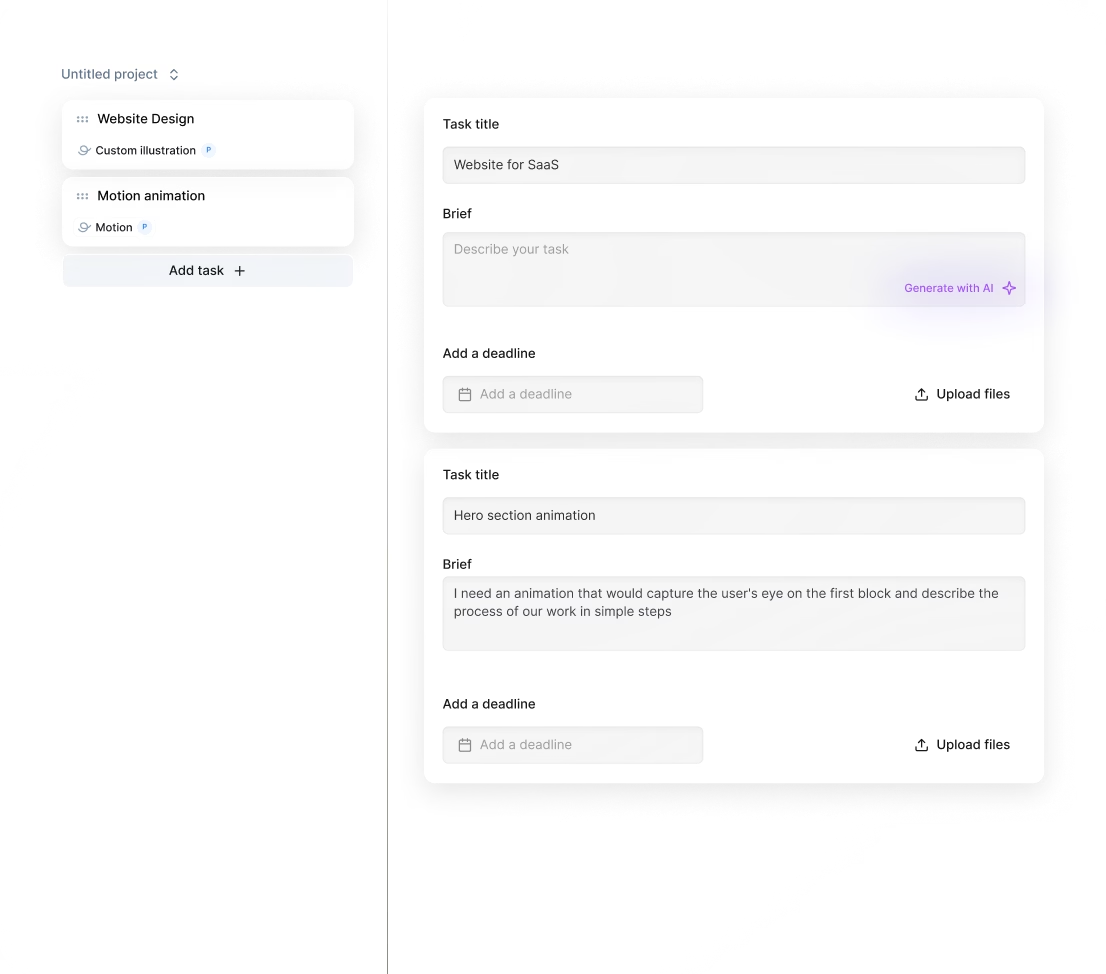
You can start working with a professional website designer within 24 hours of subscribing. Submit your project details in minutes, and get matched with vetted experts who deliver fast, high-quality results with daily updates and unlimited revisions.
Can I hire a website designer for short-term or one-off projects?
Yes, you can hire website designers for one-off or short-term projects through Awesomic. Get matched with vetted experts within 24 hours, receive daily updates, and enjoy unlimited revisions until your design is perfect. Flexible plans start at $500/month.
Are website designers experienced in startups, SaaS, or enterprise teams?
Yes. Our website designers average 7-15 years` experience, having designed for startups, SaaS, and enterprise clients like Coca-Cola, Disney, and Udemy. They specialize in rapid delivery, daily updates, unlimited revisions, and use tools like Webflow, Framer, and No-code development to boost growth efficiently.
Can I switch designers if my needs change?
Absolutely. With Awesomic, you can switch website designers anytime to fit your evolving needs. Our vetted pros deliver updates daily and offer unlimited revisions. You avoid delays and extra costs common in traditional hiring or freelancers, all for a clear monthly rate. This flexibility helps you control the cost to hire a website designer while scaling your project without hassle.
What does "top 1% website designers" actually mean?
It means our freelance website designers pass a tough 4-step vetting process: portfolio review, multi-step skills test, blind peer review, and final approval. Only 0.82% get in, ensuring you work with proven pros delivering fast, high-quality websites.
How many revisions are included?
When you hire a professional website designer with us, you get unlimited revisions. Daily progress updates let you fine-tune design details until it`s perfect. You can request talent rematches anytime at no extra cost, ensuring your project hits the mark every time.
Is this cheaper than hiring a full-time website designer?
Yes. Our subscription starts at $500 per month with vetted, part-time website designers ready in 24 hours. Compared to $15,000+ monthly salary plus overhead for a full-time hire, you save over 70% while getting unlimited revisions and daily progress updates. How much does it cost to hire a website designer? Significantly less with us.
Can I pause or cancel my website designer subscription at any time?
Yes, you can pause or cancel your subscription anytime with no penalties. Whether you`re scaling up or down, manage your plan hassle-free as your business needs evolve. With Awesomic, get matched to vetted website designers fast and stay agile.
Do website designers work in my time zone?
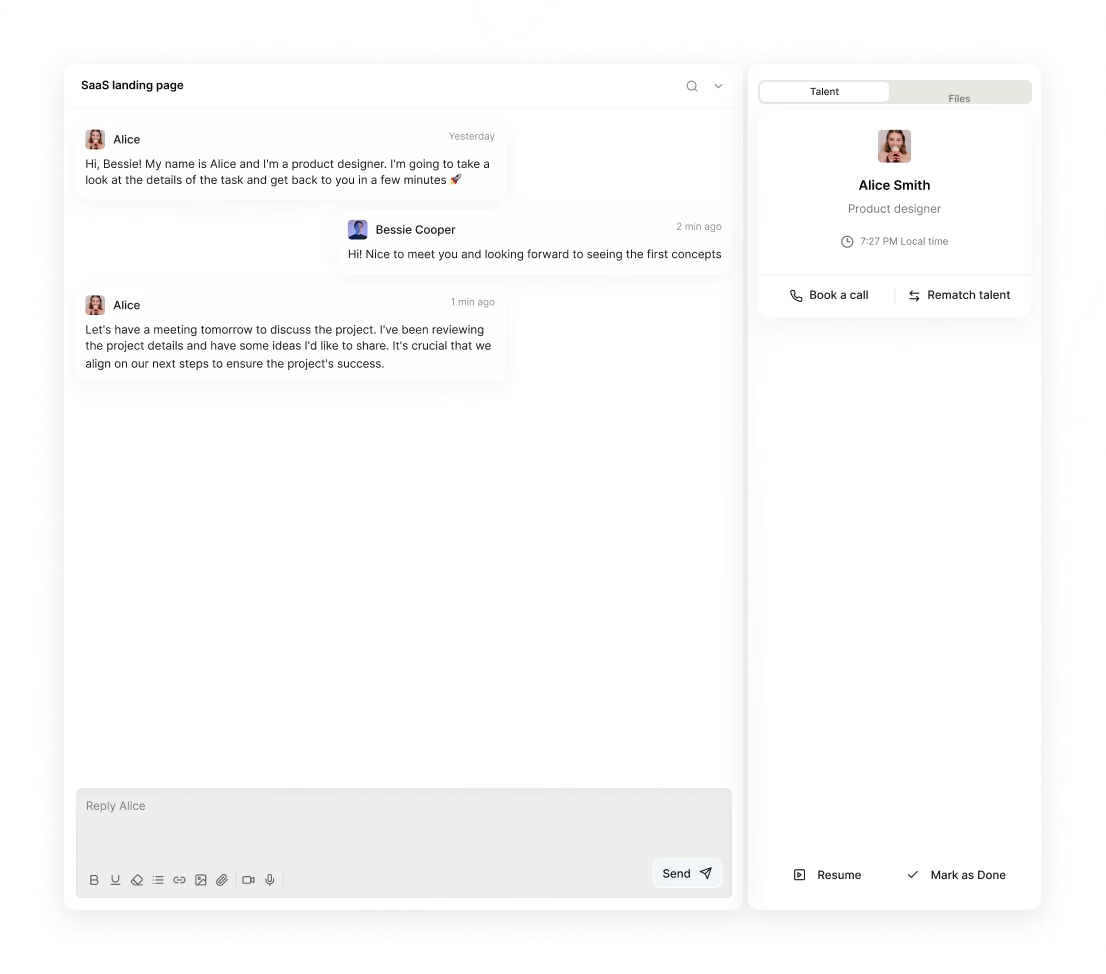
Yes, our website designers start working on your project within 24 hours, matched by skill and availability. They communicate daily via Slack or the app, ensuring quick revisions and smooth feedback, no matter your time zone. This beats the cost to hire a website designer elsewhere with delays.
Can I work with the same website designers long-term?
Yes. With Awesomic, you can subscribe and work consistently with the same freelance website designer or switch anytime. Our platform matches you with vetted professionals delivering fast, high-quality work, with daily updates, unlimited revisions, and task management, all for a flat monthly rate.

Related roles you may need



Hiring guide:


Your website is often the first serious impression a potential customer gets of your business. Not a social post, not an ad – your site. And the design of that site communicates more in three seconds than most copy does in three paragraphs.
Hiring a website designer who can make that impression count is not as simple as finding someone with a good-looking portfolio. This guide will show you what to look for, when to hire, and how to find the right person without wasting months on the wrong fit.
What does a website designer actually do?
A website designer is responsible for how a website looks, feels, and guides visitors toward action. Their work lives at the intersection of visual design and user experience – they're not building the backend, but they're making every decision that shapes what users see and how they move through the site.
Core responsibilities include:
- Visual layout and composition → Defining the structure, hierarchy, and spatial relationship of elements on every page.
- Responsive design → Ensuring the site looks and functions properly across desktop, tablet, and mobile.
- Typography and colour systems → Selecting and applying typefaces, colour palettes, and visual rhythm consistently.
- Conversion-focused design → Structuring pages to reduce friction and guide visitors toward CTAs, sign-ups, or purchases.
- Component design → Creating reusable UI elements like buttons, cards, forms, and navigation patterns.
- Design handoff → Preparing and documenting designs in Figma or Adobe XD so developers can build accurately.
- Collaboration → Working with developers, copywriters, marketing teams, and brand stakeholders throughout the process.
Website designers typically work in Figma as their primary tool – it's the current industry standard for web design due to its collaboration and prototyping features. Some also use Adobe XD or Sketch. Experienced website designers understand responsive grid systems, CSS constraints, and what is and isn't feasible to implement cleanly in code.
Through Awesomic, you can hire a website designer who has been vetted for both visual quality and practical delivery – someone who understands the difference between a beautiful design and a buildable one.
When do you need to hire a website designer?
The need to hire a website designer is usually obvious by the time it becomes urgent – but it's smarter to recognise it earlier.
Common triggers:
- You're launching a new product or company and need a site that makes the right first impression.
- Your existing website looks outdated, loads slowly, or doesn't convert visitors into leads or customers.
- You're rebranding and the current site no longer reflects who you are.
- Your site works on desktop but breaks on mobile, or vice versa.
- Your marketing team is running campaigns, but the landing pages are weak and hurting performance.
- You've outgrown your template and need a custom design that scales with your content and product.
- You're about to raise a funding round and your site needs to reflect the ambition of your company.
Warning signs: high bounce rates, low time-on-page, low conversion on pages where traffic is strong, or consistent internal embarrassment about sending prospects to your URL.
Awesomic's subscription model is particularly useful for companies that need ongoing website design work – landing pages for campaigns, redesigned sections, new feature announcements – rather than a single one-time project. You get a dedicated website designer matched to your brand, with daily delivery and no re-hiring every time a new brief comes in.
What skills should a great website designer have?
Hard skills:
- Mastery of Figma: components, auto-layout, variants, prototyping, and developer handoff specs.
- Strong grasp of responsive design principles: breakpoints, fluid grids, flexible images.
- Visual design fundamentals: typography hierarchy, colour theory, spacing, contrast, and whitespace.
- Conversion design: understanding of above-the-fold principles, CTA placement, trust signals, and page flow.
- Knowledge of web constraints: what renders consistently across browsers, what CSS can and can't do, image optimisation basics.
- Component-based thinking: designing in reusable blocks that scale across a design system.
- Basic HTML/CSS awareness – not required to code, but required to understand implications of design decisions.
Soft skills:
- Asking the right questions before starting: who is the audience, what is the goal, what does success look like?
- Ability to justify visual decisions with reasoning, not just taste.
- Receptiveness to feedback and ability to iterate quickly and without defensiveness.
- Proactive communication about constraints, tradeoffs, or technical concerns flagged by developers.
- Project management discipline: understanding dependencies and sequencing across a full site.
Industry knowledge:
- Familiarity with analytics tools like Google Analytics, Hotjar, or Microsoft Clarity to understand how users actually behave on pages.
- Awareness of accessibility standards (WCAG 2.1) and how to apply them in web design.
- Platform familiarity: whether the site runs on Webflow, WordPress, or a custom stack shapes design decisions.
- Current best practices in landing page design, visual storytelling, and conversion rate optimisation.
What types of website designers can you hire?
| Type | Pros | Cons | Best for |
|---|---|---|---|
| Freelancers | Cost-effective, flexible scope | Inconsistent quality, availability gaps | Single projects, tight budgets |
| In-house | Deep brand knowledge, always available | High fixed cost, slow to hire | Product companies with ongoing design needs |
| Agencies | Full-service, strong processes | Expensive, slower turnaround | Complex site builds with strategy + design |
| Subscription / TaaS | Consistent quality, fast starts, scalable | Less control than in-house | Companies with ongoing campaign and site needs |
It's also worth distinguishing between types of website designer specialisation:
- Marketing-focused website designers optimise for conversion and campaign landing pages.
- Product website designers handle SaaS and app sites with complex UI components and feature showcases.
- eCommerce website designers specialise in product pages, shopping flow, and purchase conversion.
Awesomic matches you with the right specialisation for your use case – not just the nearest available designer.
How much does it cost to hire a website designer?
Typical rates
- Freelancers → $50–$100/hr mid-level; $100–$150/hr senior.
- Agencies → $150–$300/hr; full website projects typically $8,000–$40,000+.
- In-house salaries → $65,000–$110,000/year depending on seniority and location.
Pricing models
- Hourly → Flexible, but can escalate without clear scope management.
- Fixed project fee → Best for a defined deliverable like a full homepage or landing page system.
- Monthly retainer → Ideal for ongoing needs: new landing pages, section updates, seasonal campaigns.
What drives the price up
- Number of unique page templates.
- Whether the project includes a design system or component library.
- Mobile and responsive complexity.
- Number of revision rounds included.
- Speed of delivery.
Budget guidance
- Separate the cost of design from the cost of development – scope them independently.
- Insist on source files (Figma) with organised layers – you'll need them for every future update.
- A well-designed landing page pays for itself quickly if it improves conversion even slightly.
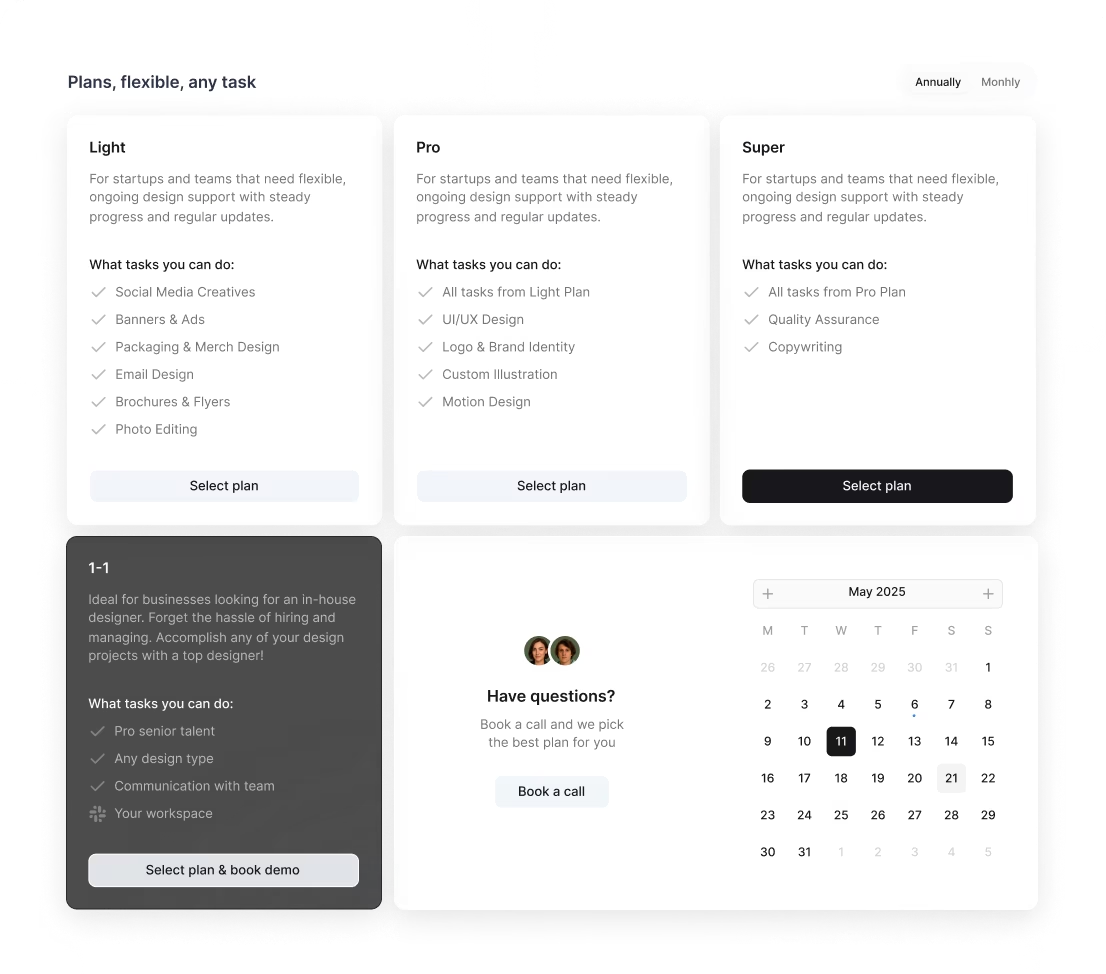
Through Awesomic, you access senior website designers on the 1 to 1 plan – flat monthly subscription, unlimited requests and revisions, no project-by-project negotiation.
Where can you find the right website designer?
- Portfolio platforms → Dribbble, Behance, and Awwwards are the best places to find website designers by style and quality level.
- Figma Community → Designers who publish files there often have a strong grasp of tool depth and systems thinking.
- Freelance platforms → Toptal and Contra for vetted freelancers; Upwork for broader search with more screening required.
- Design job boards → Dribbble Jobs, Authentic Jobs, and We Work Remotely for experienced professionals.
- Vetted talent platforms → Awesomic for fast access to pre-screened website designers matched to your brief.
Awesomic's matching process means you're not reviewing 40 portfolios. You describe your project and the type of site you need, and you're matched with a qualified website designer within 24 hours.
How do you evaluate a website designer's portfolio?
Don't just look at whether the sites look attractive. Ask harder questions:
- Does the design serve the business goal? A beautiful site that doesn't convert is a design failure.
- How does it behave on mobile? Open portfolio links on your phone. If the mobile experience is weak, that tells you something.
- Is there a visible design system? Consistent components, spacing, and typography signal rigour and scalability.
- Can they explain their decisions? Ask the designer to walk you through one project: brief, constraints, tradeoffs.
- Have they worked with a similar site type? SaaS, eCommerce, and marketing sites have very different design requirements.
- Are the handoff files clean? Request a sample Figma file or ask about their handoff process – messy files slow development and create expensive back-and-forth.
What questions should you ask before hiring?
- What's your process from brief to final handoff?
- How do you approach mobile-first design?
- How do you handle conflict between visual design preferences and conversion goals?
- What tools do you use and what does your handoff to developers look like?
- Have you designed for [your platform – Webflow, WordPress, custom stack]?
- Can you share a project where you improved conversion or user engagement through design?
- How do you incorporate feedback without scope expanding beyond the original brief?
- What's your typical turnaround for a homepage or landing page?
How do you work successfully with a website designer?
The quality of your brief determines the quality of the first draft. Before handing over a project:
- Define the goal in business terms → "Increase trial sign-ups by 20%" is more useful than "make it look more modern."
- Share analytics → If you have Hotjar recordings or conversion data, share them. Your designer can make better decisions with real data.
- Clarify the audience → Detailed personas or real customer feedback help designers make the right visual choices.
- Gather references → Identifying three to five sites you admire (and why) is worth more than a lengthy written description.
- Define success criteria → What does a good first draft look like? Establish this before work starts, not after.
- Consolidate feedback rounds → One thorough review is better than five rounds of single comments.
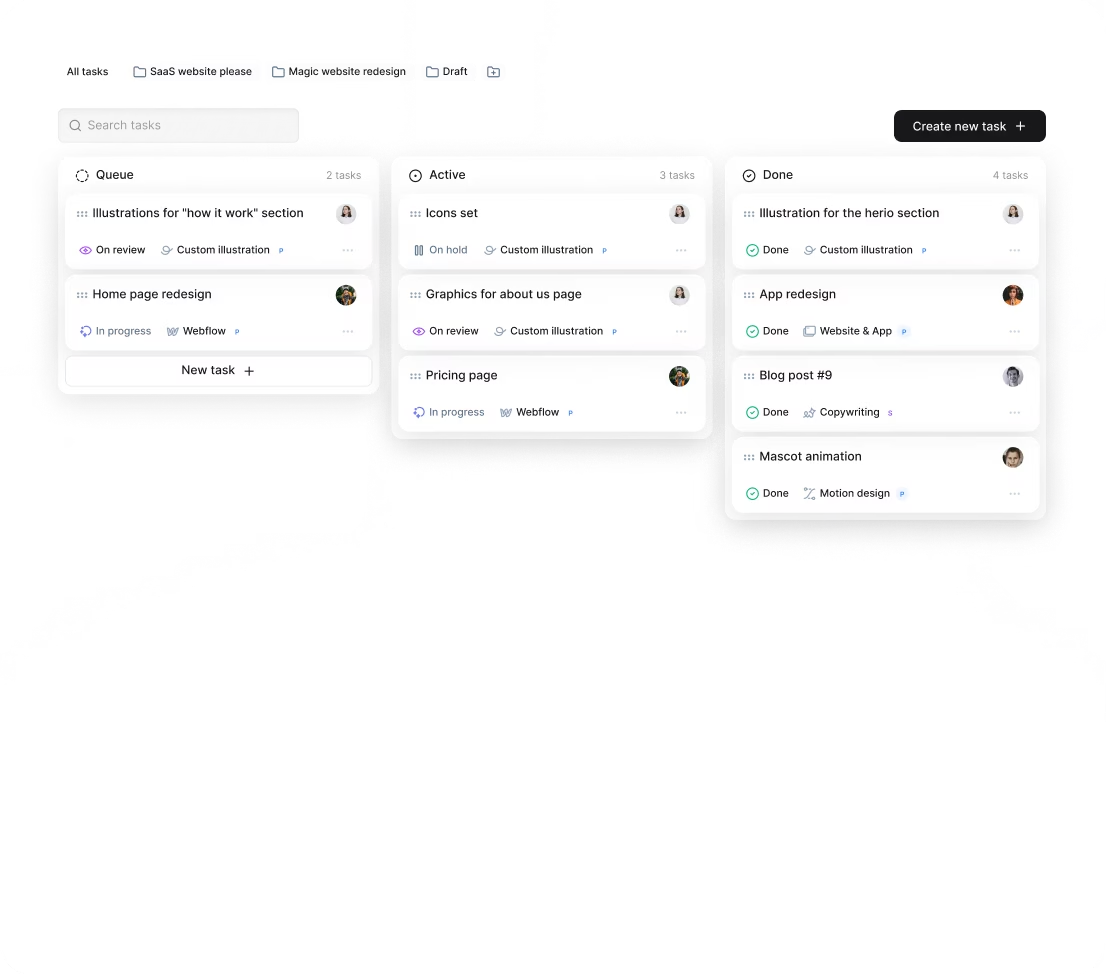
Awesomic builds a structured feedback loop into every engagement – daily delivery, a dedicated PM, and clear revision tracking so nothing falls through the gaps.
How do you know you hired the right website designer?
The right website designer makes themselves evident through outcomes, not just aesthetics.
Signs you made the right call:
- The first draft requires minimal revision because the brief was interpreted accurately.
- Stakeholders notice the quality improvement without being shown a side-by-side comparison.
- The design system they produce makes future updates faster, not slower.
- Your developers spend less time clarifying specs and more time building.
- Conversion metrics on redesigned pages move in the right direction.
- Your team starts referring prospects to the site with confidence rather than apologising for it.
If a designer is producing work that looks good but isn't converting – or is strong visually but weak on mobile or accessibility – surface those issues early. The right designer will investigate the problem and iterate, not defend the original work.
When you hire a website designer through Awesomic, you have the option to rematch if the first fit isn't right – no additional cost, no restarting from zero. But the more typical outcome is a long-term working relationship where the designer builds deep familiarity with your site, your audience, and your brand – and each new deliverable gets faster and more accurate as a result.


