










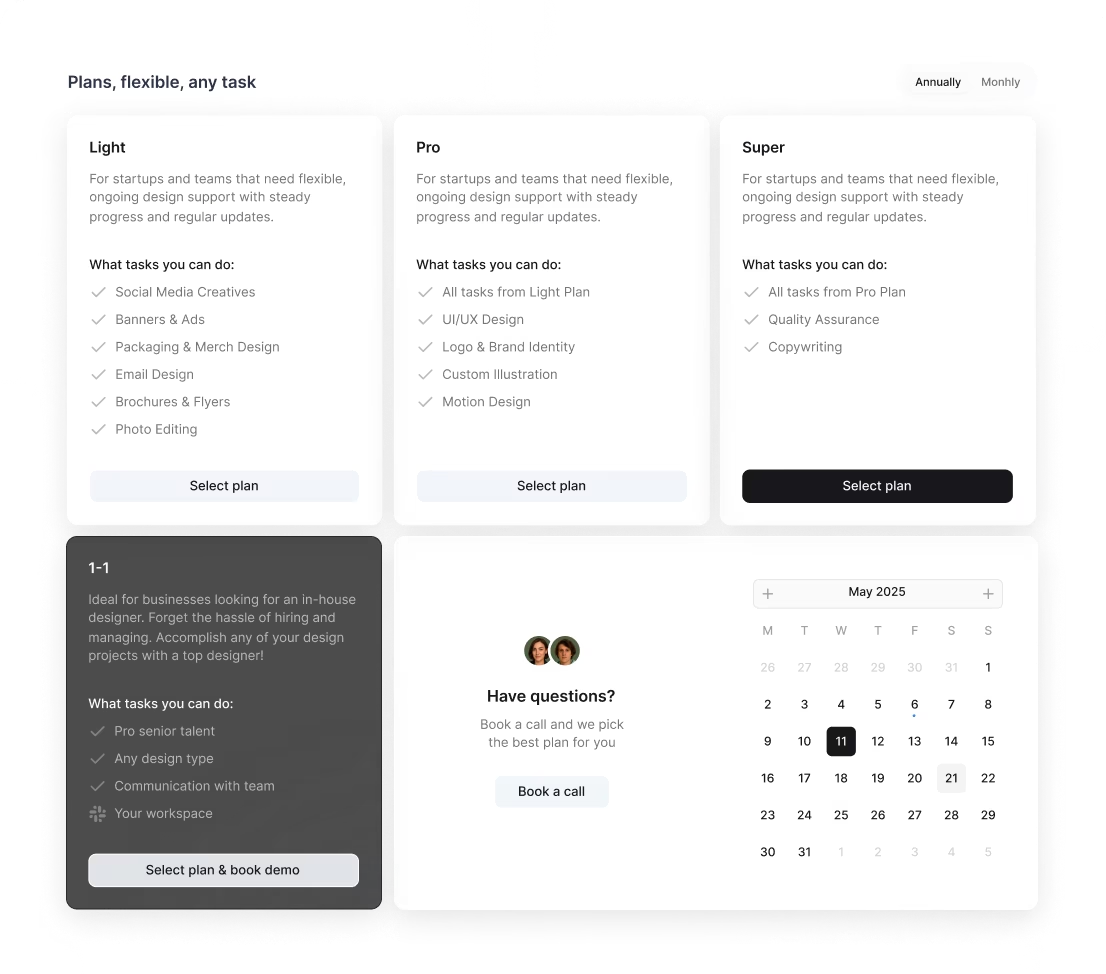
/ month


/ month


/ month
quarterly commitment
Because there's a better way to hire an experience designer




The choice of 4,000+ growing companies.
































Why awesomic




0.82% talent





One subscription and your hiring problems solved

0.82%. That's how many experience designers we accept.




FAQ


How quickly can I start working with an experience designer?
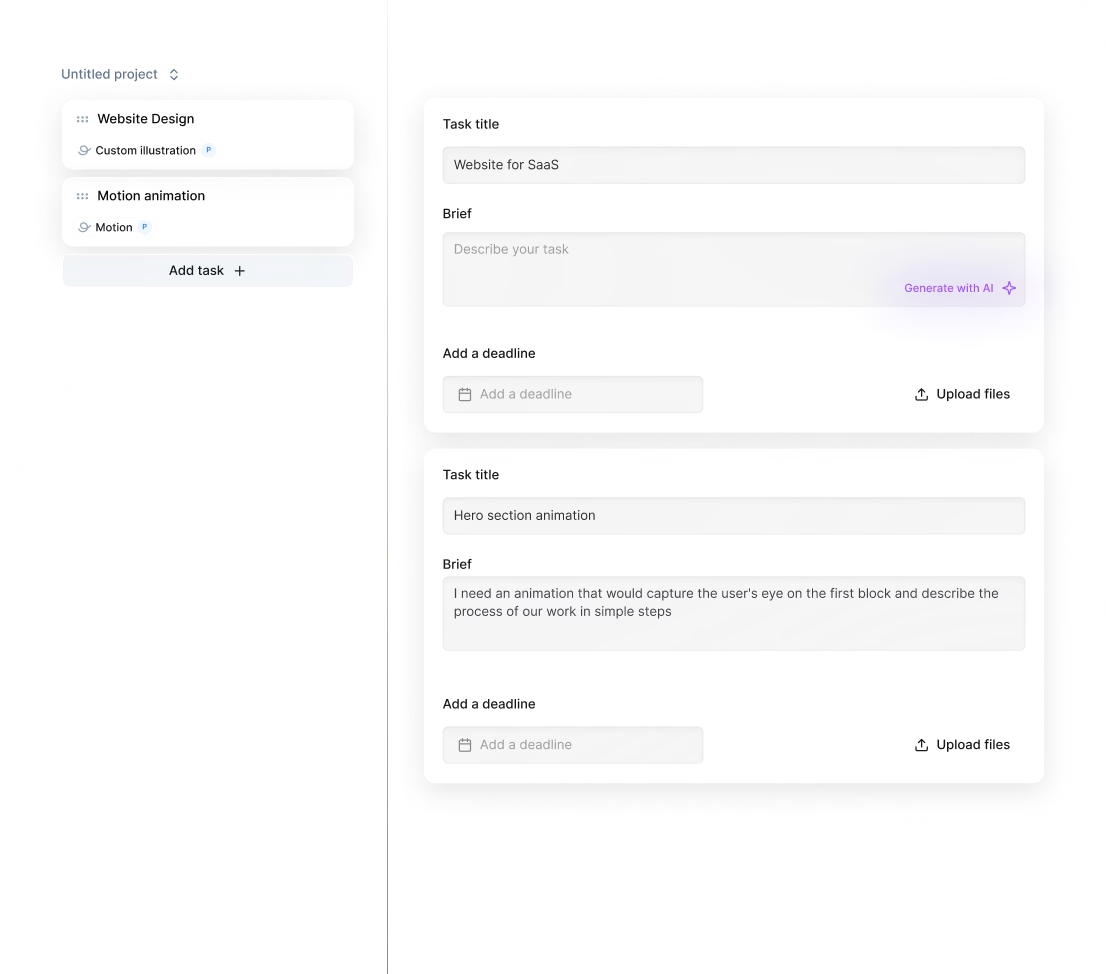
You can start working with an experience designer within 24 hours after subscribing. Submit your project details, and we match you with a vetted expert skilled in tools like Webflow, Framer, and UI/UX design. Expect fast daily updates and unlimited revisions.
Can I hire an experience designer for short-term or one-off projects?
Yes, you can hire experience designers for short-term or one-off projects through Awesomic’s subscription plans. Get matched within 24 hours to vetted experts who handle your design, no-code, or marketing tasks with daily updates and unlimited revisions until you’re satisfied.
Are experience designers experienced in startups, SaaS, or enterprise teams?
Yes. Our experience designers bring 7 to 15+ years of proven work in startups, SaaS, and enterprise projects. They’ve delivered UX/UI, product designs, and brand identities for companies backed by Y Combinator and clients like Coca-Cola and Disney. Expect faster turnarounds and results-driven deliverables.
Can I switch experience designers if my needs change?
Yes, with our experience design studio subscription, you can switch experience designers anytime at no extra cost. We match you quickly—within 24 hours—to vetted experts in design, no-code, marketing, and more. Unlimited revisions and seamless talent rematches keep your projects on point.
What does “top 1% experience designers” actually mean?
It means we handpick only the sharpest talent — less than 1% of applicants pass strict portfolio reviews, multi-step test tasks, and final leadership approval. Our brand experience designers deliver fast, high-quality work trusted by startups and brands raising millions, with daily updates and unlimited revisions.
How many revisions are included?
Every subscription with our experience designers includes unlimited revisions. Expect daily progress updates and fast iterations until the design perfectly fits your needs. If you need a different approach, you can switch talents anytime at no extra cost.
Is this cheaper than hiring a full-time experience designer?
Yes. For a flat monthly fee starting at $500, you get vetted experience designers delivering daily updates with unlimited revisions. It’s 70% cheaper than freelancers or agencies, avoids hiring delays, and handles your design needs without the salary or overhead of a full-time experience design consultant.
Can I pause or cancel my designer subscription at any time?
Yes, you can pause or cancel your digital experience designer subscription anytime without hassle. There are no long-term commitments, hidden fees, or notice periods. Your tasks are managed for you, making it easy to scale your design team as your project needs evolve.
Do experience designers work in my time zone?
Yes. Our experience designers operate globally and can match your time zone for smooth collaboration. Whether you’re in San Francisco, London, or anywhere else, we ensure daily updates and quick turnarounds aligned with your business hours through our experience design studio.
Can I work with the same experience designer long-term?
Yes, you can work with the same experience designer long-term. Our subscription plans, including 1 to 1, connect you with dedicated, vetted brand experience designers who deliver daily updates and unlimited revisions. This ensures consistent quality and strong collaboration on all projects.

Related roles you may need

Hiring guide:


What does an experience designer actually do?
When you hire an experience designer, you’re bringing on someone who shapes how users interact with your product or service at every point. Experience design is about creating meaningful, seamless interactions across all touchpoints. Think of it as the invisible hand that guides users effortlessly from start to finish.
In practice, the experience designer’s work spans user research like interviews, surveys, and usability testing. They dive deep into understanding what users want and need. Then, they map the user journey to spot pain points and opportunities. From there, they create wireframes and prototypes that visualize design ideas before a single line of code gets written. They also organize information architecture to help users find what they need quickly.
Interaction design is a big part of their job too. They focus on how users behave with the product and make sure every click, swipe, or tap feels just right. Throughout all this, experience designers work closely with UI designers, developers, product managers, and stakeholders to keep everything aligned.
Typically, they start working during discovery and concept validation, continue through design iterations, and stay involved until final implementation and post-launch analysis. That makes them a bridge between technical teams and end-users, ensuring solutions are user-centered and meet business goals.
Our platform, Awesomic, offers access to vetted, senior-level experience designers who cover these core responsibilities. This way, you can hire an experience designer without long hiring waits while tapping into top expertise that drives real results.
When do you need to hire an experience designer?
Knowing when to hire an experience designer can save you time and money. You often need one when launching a new product or service, redesigning an existing user experience, or scaling digital platforms where user behavior is unfamiliar. Entering new markets also calls for this expertise to understand different user needs.
Here are some typical business stages where hiring an experience design consultant makes sense:
- Early-stage startups needing product-market fit validation
- Growth-stage companies aiming to improve onboarding or retention
- Mature businesses addressing customer satisfaction or complex multi-channel experiences
If you notice warning signs like low user engagement, high customer support volume, poor conversion rates, usability complaints, or inconsistent brand interactions, it’s time to bring in a pro.
Awesomic makes it easy to find the right match quickly. Our flexible subscription talent marketplace connects you with experienced UX professionals perfect for these critical moments, speeding up your project and cutting risks.
What skills should a great experience designer have?
When you hire an experience designer, it’s crucial to look for a balance of hard and soft skills. Here's what a digital experience designer needs to bring to the table:
Hard skills These are the technical tools and knowledge that help get the job done:
- UX research methods like contextual inquiry and ethnographic studies
- Wireframing and prototyping tools such as Figma, Sketch, Adobe XD, Axure, InVision
- Information architecture frameworks to organize content logically
- Usability testing platforms like UserTesting and Lookback
- Data analysis using Google Analytics and Hotjar
- Familiarity with accessibility standards like WCAG
Soft skills These make collaboration smooth and results impactful:
- Empathy for truly understanding users
- Problem-solving to tackle tough design challenges
- Communication to keep all teams aligned
- Collaboration and teamwork
- Critical thinking to evaluate solutions effectively
- Adaptability to changing needs and feedback
Industry knowledge matters too: a great experience designer understands trends in human-computer interaction (HCI), mobile and web UX best practices, principles of behavioral psychology, and agile or scrum methods for iterative design collaboration.
The designers on our platform are rigorously vetted for all these skills and also rated on communication and reliability. This ensures when you hire an experience designer through Awesomic, you're working with top-tier talent who can hit the ground running.
What types of experience designers can you hire?
Choosing the right type of experience designer depends on your project needs, budget, and timeline. Here are the common options you’ll find:
- Freelancers: Flexible and project-based. They often specialize in specific areas, making them ideal for short-term tasks or niche skills. The downside is less ongoing support and possibly less integration into your team.
- In-house designers: Full-time, deeply embedded in company culture and product roadmaps. They provide continuity and deep understanding but come with higher costs and slower scaling.
- Agencies: Offer broad team expertise and scalable resources. You get a full experience design studio but pay premium rates and might sacrifice some control.
- Contract-based designers: Mid-term commitment balancing flexibility and deeper integration than freelancers. Good for projects that need continuity without permanent hires.
Here’s a quick comparison to help you decide:
| Type | Cost | Control | Speed | Support | Product Knowledge |
|---|---|---|---|---|---|
| Freelancers | Low | Medium | High | Low | Variable |
| In-house designers | High | High | Medium | High | Deep |
| Agencies | Very High | Low-Medium | Medium | Very High | Broad |
| Contract-based | Medium | Medium | Medium | Medium | Medium |
Many startups lean toward freelancers or contractors for budget flexibility. Enterprises prefer agencies or in-house teams for long-term projects.
Our platform blends the best of both worlds by offering the flexibility of freelancers and the reliability and quality assurance of an experience design studio. Through Awesomic, you get vetted experience designers who scale easily and integrate well without the typical hassle.
How much does it cost to hire a experience designer?
Cost is always on your mind when you hire an experience designer. Pricing varies widely based on experience, location, and project complexity. Here’s a simple breakdown by level and typical hourly rates:
- Junior designers: $30 to $60/hour
- Mid-level designers: $60 to $100/hour
- Senior/lead designers: $100 to $200+/hour
Agencies usually charge significantly more due to team size, overheads, and broader services.
Besides these rates, cost depends on factors like:
- Complexity of the project
- Specific skill sets required
- How urgent the timeline is
- Need for ongoing support after launch
Don’t forget to budget for multiple rounds of user research, prototyping, and post-launch tweaks. Underestimating these can lead to surprises later.
Our platform offers flexible options including the All-in-One plan at $2,995/month with a part-time team covering design, Webflow, copywriting, QA, and marketing, a 1–1 Plan featuring a dedicated full-time specialist and PM starting around $5k/month, and Awesomic Studio providing AI landing pages from $500; this makes hiring a brand experience designer through Awesomic a budget-friendly, transparent alternative to traditional models.
Where can you find the right experience designer?
Finding the right talent can be a long hunt, but it doesn’t have to be. Here are the best places to look when you want to hire an experience designer:
- Professional networks like LinkedIn
- Creative portfolios on Dribbble and Behance
- Freelance platforms like Upwork and Toptal
- Specialized UX communities such as UX Design.cc and Designer Hangout
- Slack groups dedicated to UX/UI pros
Don’t overlook the power of referrals from your network and attending UX meetups or conferences like UXDX or the NN/g UX Conference. Once you find potential candidates, send thoughtful outreach messages and review portfolios carefully before interviewing.
Still, searching and vetting can take a lot of time. Our platform simplifies this by providing a pool of rigorously tested, vetted experience designers ready to start within 24 hours. When you hire an experience designer through Awesomic, you skip the endless searching and cold outreach, saving time and stress.
How do you evaluate a experience designer’s portfolio?
A portfolio is more than beautiful designs. To really evaluate an experience design consultant, look for evidence of their process. Here’s what to focus on:
- Clear explanation of research methods like interviews or surveys
- Problem framing that shows they understand the challenge
- User personas created to tailor solutions
- Ideation techniques and brainstorming methods used
- Rationale behind design choices
- Iterative testing and refinement cycles
- Collaboration with stakeholders and teams
- Measurable business or usability results, e.g., higher conversion or reduced errors
A good portfolio tells a story, showing challenges faced and the impact delivered. This goes beyond “pretty pictures” to real-world success.
Screening portfolios can be tough, but our platform curates talent profiles where portfolios reflect verified skills and experience. This reduces the chance of overpromising or mismatched expertise and helps you confidently hire an experience designer who fits your needs.
What questions should you ask before hiring?
When interviewing to hire an experience designer, your goal is to gauge skills, communication, and reliability. Here’s a list of practical questions to ask:
- Can you walk me through a project where you solved a complex UX problem?
- How do you handle feedback and disagreement with stakeholders?
- Describe a time you missed a deadline and how you managed it.
- How do you collaborate with developers and product managers?
- What methods would you use to understand a new user base?
- How would you improve the user experience of our current product?
These questions reveal not just technical know-how but also teamwork, adaptability, and problem-solving ability.
Using our platform speeds up this process by matching you with digital experience designers who have proven track records. Plus, you get direct communication channels before you start, so there’s transparency from day one.
How do you work successfully with an experience designer?
To get the most from a hire an experience designer, clear onboarding is key. Here’s a quick checklist to help you collaborate smoothly:
- Start with a clear brief covering business goals, product background, user data, and technical constraints
- Set up regular feedback loops like design reviews or sprint demos using tools like Jira, Trello, or Asana
- Agree on realistic timelines with buffers for revision and testing
- Keep communication open and frequent through platforms like Slack or Microsoft Teams
- Define expectations around documentation, decision-making, and teamwork
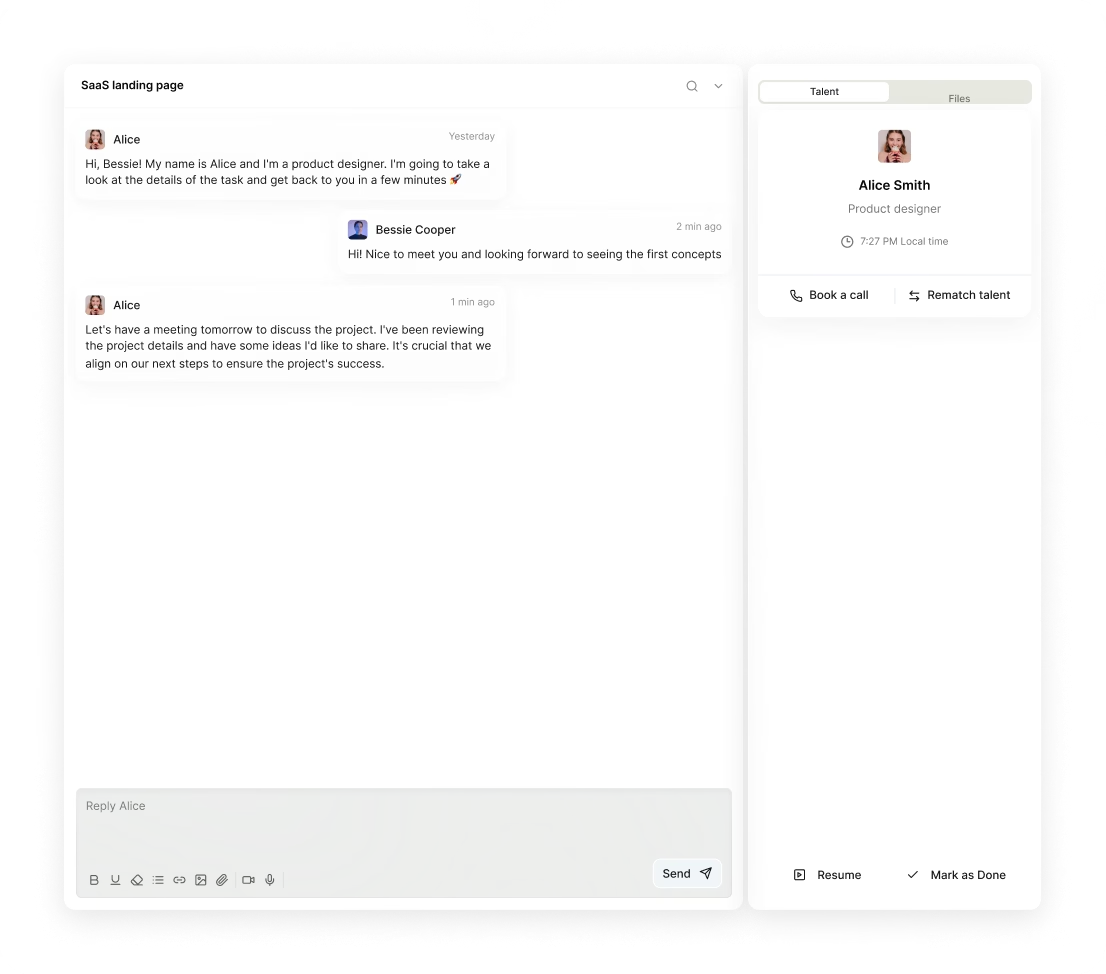
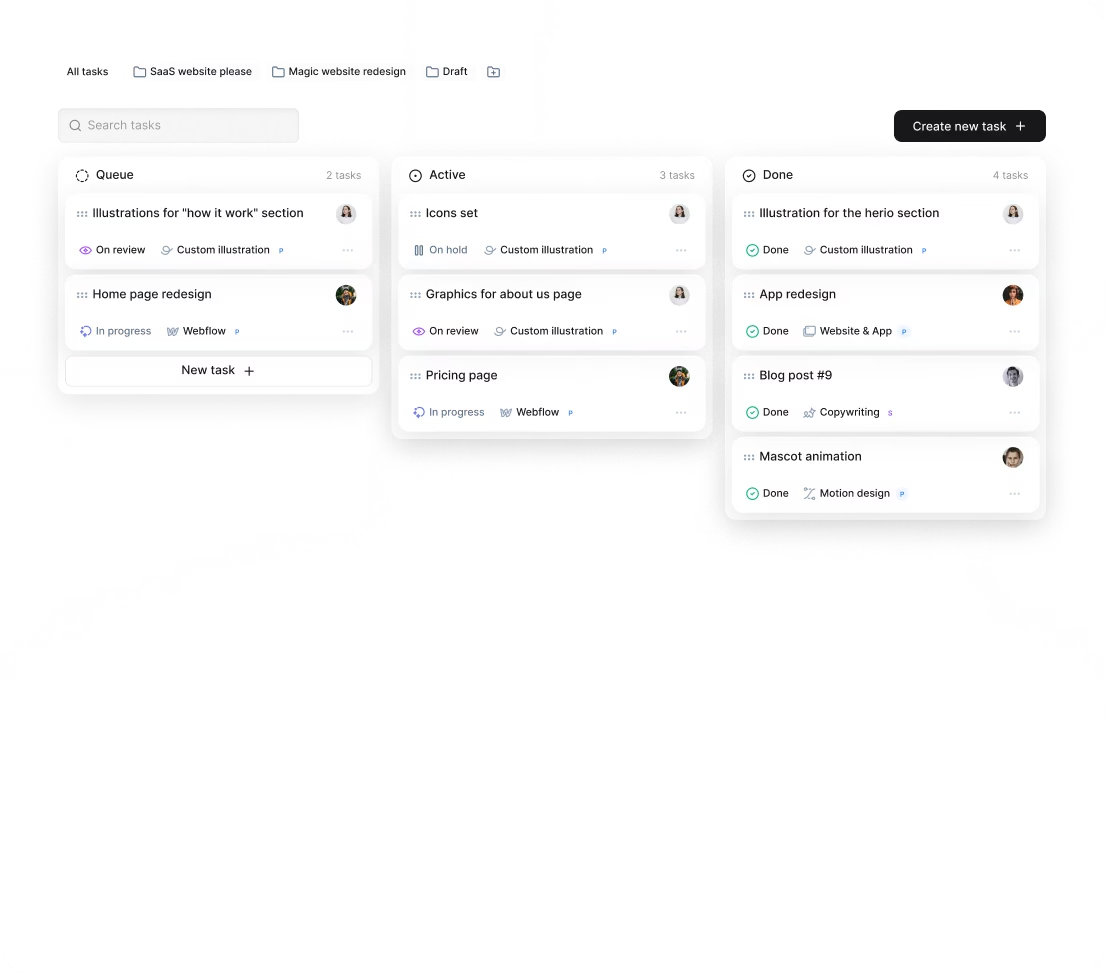
Our experience design studio at Awesomic includes an integrated platform where daily updates, easy feedback submission, and even talent rematches happen without extra fees. This keeps your project on track and your team aligned.
How do you know you hired the right experience designer?
How can you tell if your hire was a success? Look for these signs:
- Measurable improvements in usability metrics such as higher task success rates and lower error rates
- Increased user satisfaction scores like NPS or SUS
- Fewer customer support tickets related to usability
- Delivered designs that align well with your business strategy
- Positive feedback from cross-functional teams on collaboration and creativity
- Meeting project deadlines and being responsive to feedback
- Proactive contributions that shape your product vision
If you’re not seeing these, it may be time to adjust the relationship or scale the team.
At Awesomic, our subscription model and expert talent pool make it easy to scale up or switch brand experience designers as your business needs evolve. Our dedicated customer success team supports your journey to keep experience design aligned with growth.
By following these practical steps, you’ll not only know when to hire an experience designer but also how to find, evaluate, and work successfully with one. Using our platform makes the whole process simpler and faster, so you focus on building great products your users love.


