










/ month


/ month


/ month
quarterly commitment
A better way to hire a military tech designer now




4,000+ companies onboard
































Why awesomic





0.82% talent





One subscription and your hiring problems solved


We accept just 0.82% of military tech designers




FAQ


How quickly can I start working with a military tech designer?
You can start working with a military tech designer within 24 hours. Submit your project details, and we’ll match you with a vetted expert skilled in the latest defense tech tools and frameworks. Expect daily updates and fast, high-quality deliverables from day one.
Can I hire a military tech designer for short-term or one-off projects?
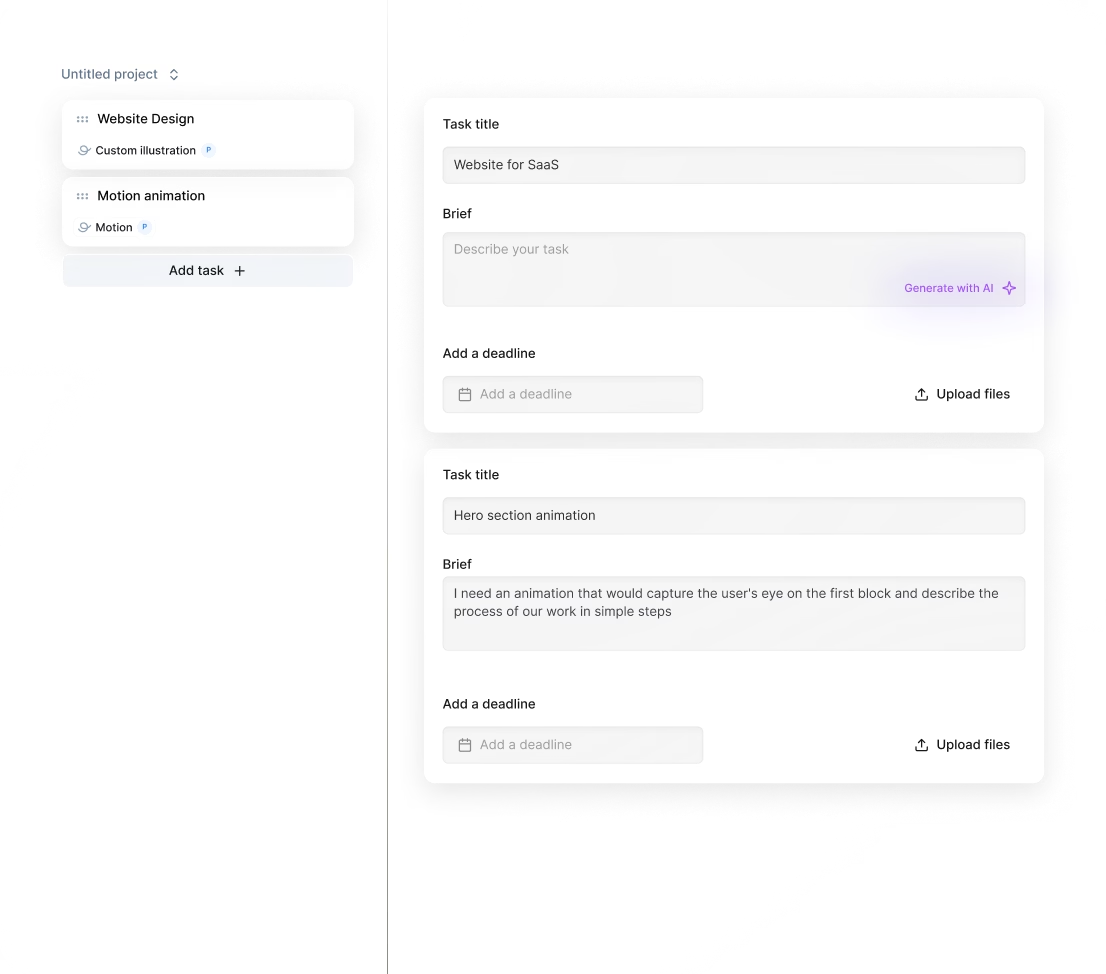
Yes, you can engage military tech designers for short-term or one-off projects via our subscription plans starting at $500/month. Submit your task and get matched within 24 hours to vetted experts skilled in specialized tools and fast, high-quality delivery with unlimited revisions.
Are military tech designers experienced in startups, SaaS, or enterprise teams?
Yes. Our military tech designers bring over 7-15 years of experience working with startups, SaaS, and enterprise clients like Coca-Cola, Disney, and PandaDoc. They excel in rapid prototyping, UI/UX, branding, and scalable design systems, delivering results that fuel growth and funding.
Can I switch military tech designers if my needs change?
Absolutely. You can request a talent rematch anytime at no extra cost. We match you to vetted military tech designers based on your latest project scope and skill needs. Switching is fast, so your projects stay on track without downtime or added hassle.
What does “top 1% military tech designers” actually mean?
Top 1% military tech designers are elite professionals who pass rigorous vetting: only 0.82% get approved after portfolio checks, skill tests, peer reviews, and final leadership approval. They deliver fast, expert solutions tailored to complex military technology projects with proven results.
How many revisions are included?
With Awesomic, every subscription includes unlimited revisions with your military tech designer. You get daily updates and can request changes as needed until the project is perfect. If you want a different approach, switching your military tech designer is free anytime.
Is this cheaper than hiring a full-time military tech designer?
Yes. Our subscription costs $500 to $5,000 monthly for vetted, part-time military tech designers, cutting hiring time from 4-8 weeks to 24 hours. You get unlimited revisions, daily updates, and no overhead, saving up to 70% compared to full-time hires.
Can I pause or cancel my military tech designers subscription at any time?
Yes. You can pause or cancel your military tech designers subscription anytime with no commitments. Our flexible plans start at $500/month and match you with vetted experts fast, so you control your costs and team without hassle or hidden fees.
Do military tech designers work in my time zone?
Yes. Our military design engineers work across multiple time zones to match your schedule. With daily updates and flexible communication via Slack, email, or video calls, they ensure fast, real-time collaboration regardless of your location, so your project stays on track.
Can I work with the same military tech designer long-term?
Yes, you can subscribe to work with the same military tech designer long-term. Our platform offers flexible monthly plans with daily updates, unlimited revisions, and quick matching. Scale your projects smoothly with consistent support from top vetted military designers.

Related roles you may need




Hiring guide:


What does a military tech designer actually do?
Hiring a military tech designer might seem straightforward, but once you dive into their world, you’ll see how unique and critical their role is. Simply put, a military tech designer shapes how military hardware and software interact with users like soldiers, analysts, and commanders. They ensure interfaces are not only functional but secure and compliant with strict military standards.
You’ll find military tech designers focusing on creating user interface (UI) and user experience (UX) designs that suit military operations. This means their work is never just about making things look good—they integrate security protocols, follow guidelines like MIL-STD-1472 (which deals with human factors engineering), and collaborate closely with systems engineers, defense contractors, and project managers.
From the start of a project, military tech designers help interpret often classified or sensitive requirements and translate them into usable designs. They’re the bridge between technical teams and end-users. Their involvement doesn’t stop at the drawing board. They work through prototypes, field testing, and then use feedback to improve the final product, whether the project uses agile or waterfall methodologies.
At our platform Awesomic, we understand these complexities well. That’s why we offer access to vetted professionals skilled in UI/UX and product design who are ready to fit seamlessly into your team. When you hire a military tech designer through Awesomic, you get someone who can deliver high-quality military-focused designs that meet strict standards without a hitch.
When do you need to hire a military tech designer?
Knowing when to hire a military tech designer can save your project time and money. There are common moments when bringing in military design expertise is crucial. For example, if you’re developing new military hardware or software interfaces, it’s a clear sign to get a specialist involved. The same goes when you’re updating legacy systems to make them more user-friendly or need to meet specific compliance or certification rules.
Military projects often go through stages like research and development (R&D), prototyping, pre-deployment testing, or scaling production. At any of these points, the insight of a military designer can prevent costly mistakes. Often, warning signs such as usability problems in field tests, integration failures with existing military systems, repeated redesigns due to misunderstanding user needs, or missed project deadlines show you need their expertise.
Subscribing to Awesomic can be a game-changer here. Our platform lets defense tech companies quickly onboard top-tier design talent exactly when they need it. So, when unexpected talent gaps arise or scaling demands hit, you won’t lose time with traditional hiring delays. You get immediate access to expert military designers, keeping your project on course.
What skills should a great military tech designer have?
You want to hire a military tech designer who’s not just good on paper but brings real value. Here’s a list to help you judge what a great candidate should bring to the table.
First, hard skills:
- Proficiency in CAD software like AutoCAD and SolidWorks for hardware design.
- Mastery of UI/UX tools such as Figma and Adobe XD for interfaces.
- Deep knowledge of military standards like MIL-STD-1472 and MIL-STD-810 to ensure compliance in design and environmental testing.
- Understanding of cybersecurity principles related to defense technology.
- Experience using simulation tools like MATLAB or Simulink to model system performance.
- Basic coding skills, especially in C++ and Python.
Soft skills are just as important:
- Clear communication for working with engineers, contractors, and end-users.
- Attention to detail to catch compliance or usability issues early.
- Problem-solving mindset when facing tight constraints in classified environments.
- Adaptability to shifting project needs or security protocols.
- Integrity, because they’ll deal with sensitive or classified data.
Industry knowledge rounds off the profile:
- Familiarity with defense acquisition regulations like DFARS and ITAR.
- Understanding the operational environment where military tech will be used.
- Experience in human factors engineering to improve user interactions.
- Use of design frameworks such as Design Thinking tailored to defense needs or lean UX adapted for compliance.
When you hire a military tech designer through Awesomic, you tap into talent rigorously vetted to meet these high standards. We use multi-step testing and community reviews to ensure you get reliable, technically strong, and trustworthy military design engineers.
What types of military tech designers can you hire?
There are several ways you can bring military tech designers onto your project, and knowing the right fit can save you headaches later. Here’s a quick look at options available:
- Freelancers: Flexible and cost-effective, great for short-term or specific tasks. However, freelancers might not always have the necessary security clearance or be available long-term.
- In-house designers: Embedded in your company culture and projects. They handle full product lifecycles and sensitive info well but come with higher fixed costs.
- Agencies: These offer a broad range of expertise and scalability. They know defense work but can be pricier and less embedded in your company culture.
- Contract-based designers: Offer a middle ground between freelancers and full-time hires, good for phased projects or filling temporary gaps.
Security clearance is a big factor no matter which type you choose. Clearance processes and vetting are complex but essential in defense projects.
Our platform, Awesomic, offers a hybrid solution. Through our subscription model, you get vetted, reliable, and senior-level military graphic designers and tech designers fast — often within 24 hours. We manage tasks, communications, and compliance. You can scale, pause, or switch talent easily, cutting down onboarding headaches and management overhead.
How much does it cost to hire a military tech designer?
Cost can vary widely depending on your needs. Here"s a practical look at typical pricing models and what influences cost.
Pricing models:
- Hourly rates for freelancers or contractors.
- Fixed-price contracts for specific projects.
- Retainer agreements for ongoing support.
- Salaries for full-time in-house positions.
Typical rates:
| Option | Rate Range | Notes |
|---|---|---|
| Freelancers | $50 to $150 per hour | Depends on experience and security clearance level |
| Agencies | $125 to $250 per hour | May also charge project fees in tens to hundreds of thousands |
| In-house designers | $80,000 to $140,000 annually | Varies by region and expertise |
Cost factors:
- Level of required security clearance (Secret, TS, TS/SCI).
- Geographic location and local salary norms.
- Project urgency and complexity.
- Tools and licenses required.
- Scope and scale of deliverables.
Don’t forget to budget for onboarding, security training, and compliance activities.
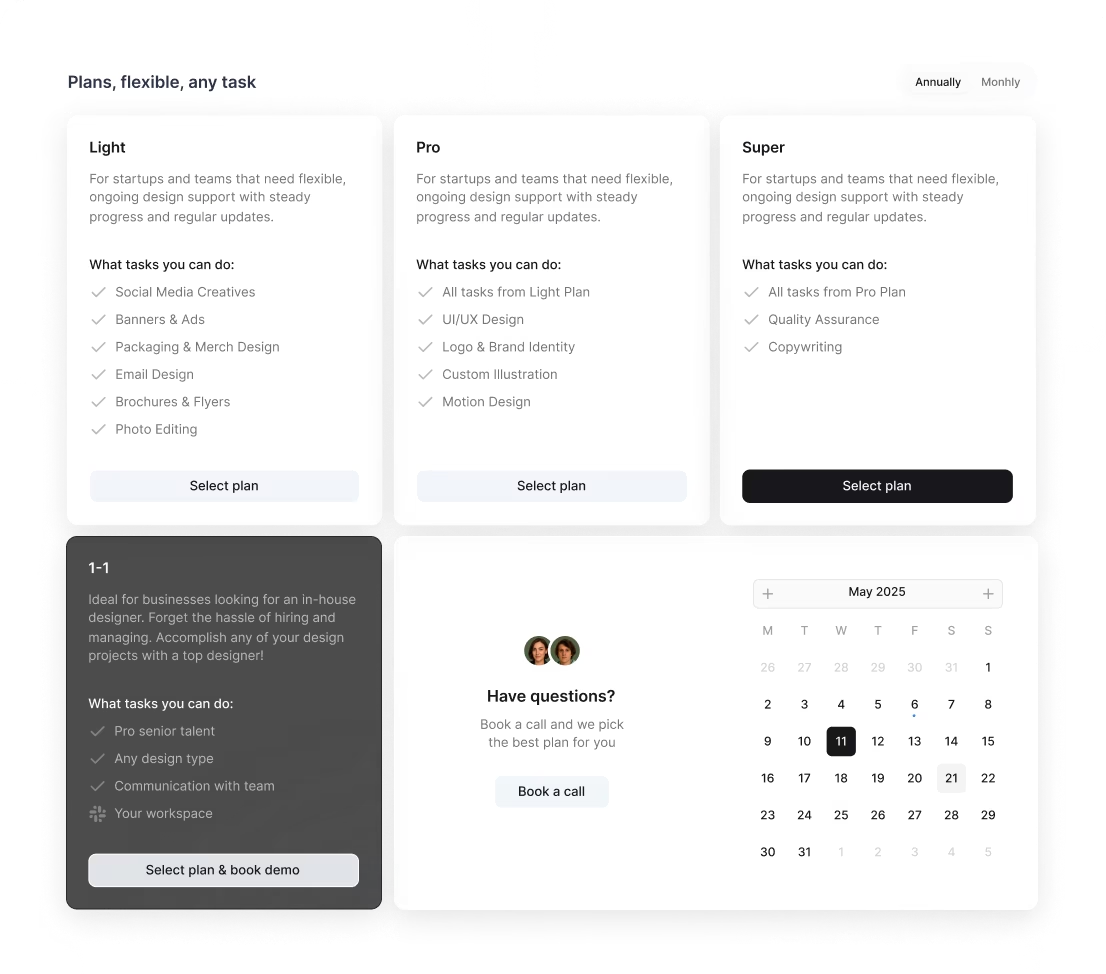
At Awesomic, we offer an All-in-One plan at $2,995/month which includes a flexible part-time team covering all design, Webflow, copywriting, QA, and marketing, plus a 1–1 Plan featuring a dedicated full-time specialist and PM starting at around $5k/month, as well as Awesomic Studio providing AI landing pages from $500—these flat fees cover unlimited revisions, managed support, and fast turnaround times—up to 40% quicker than traditional hires. Our clients often save about 70% compared to agencies or direct hires. This pricing transparency makes budgeting simple and predictable.
Where can you find the right military tech designer?
Finding the right military designer isn’t just about posting a job and hoping for the best. Here are the best places to start your search:
- Platforms: Specialized job boards like ClearanceJobs and Dice are great for tech talent with security clearance. LinkedIn’s military veteran groups and Upwork for vetted freelancers are also useful. Defense-focused freelancing platforms can yield solid candidates too.
- Referrals: Tap into military contractor networks, defense industry meetups, veteran organizations, and employee referrals within defense companies.
- Communities: Join LinkedIn groups like Military Design Network, defense tech forums, or professional groups like the defense chapter of the Human Factors and Ergonomics Society (HFES).
- Agencies: Defense-focused staffing firms like The Judge Group or recruitment divisions of General Atomics specialize in clearance screening and military roles.
Alternatively, our platform Awesomic offers a fresh way to find vetted military design talent quickly. We provide senior-level designers matched to your needs with managed tasks and fast onboarding. This reduces your reliance on slow traditional methods and lengthy referral chains, which is especially helpful for defense companies needing quick, reliable hires.
How do you evaluate a military tech designer’s portfolio?
The portfolio review isn’t just about how pretty the designs look. You want to see depth and relevance to military work. Here’s how to do it right:
- Check technical complexity and military relevance. Are the projects similar to your needs?
- Look for clear explanations of challenges and constraints (security, reliability, operational environment).
- Evaluate the design process: user research, prototypes, testing phases, and iteration.
- Look for results: improved usability, compliance certifications, or successful field use.
- See diversity in their work—software interfaces, hardware layouts, system integration.
- Assess teamwork evidence: case studies, testimonials showing clear communication.
- Review documentation quality and adherence to military standards.
- Spot innovative solutions created with limited resources.
Awesomic’s vetting includes thorough portfolio reviews, test tasks, and community leadership approvals. This means the designers you see on our platform demonstrate these qualities, making your evaluation easier and more reliable. Hiring a military graphic designer or tech expert becomes less guesswork and more confidence.
What questions should you ask before hiring?
Interviews are your chance to dig deeper and see if a military design engineer fits your needs. Here are nine practical questions to guide you:
- Describe a military tech design project where you had to integrate strict security protocols. How did you approach balancing usability and compliance?
- How do you ensure your designs meet MIL-STD requirements? Can you give an example?
- What’s your process for gathering user requirements in a classified or restricted environment?
- Tell us about a time when you faced challenges working with cross-functional defense teams. How did you handle communication?
- How do you stay updated on emerging military technology trends and standards?
- Describe a situation where you had to revise designs based on field testing feedback.
- What experience do you have with simulation or modeling tools relevant to military systems?
- How do you manage confidentiality and sensitive information in your projects?
- Can you provide references who can speak to your reliability and integrity in military projects?
When you hire a military tech designer through Awesomic, this whole process streamlines. Our experts are pre-screened for technical skills, communication, and ethics. So, you spend less time grilling candidates and more time focusing on the project.
How do you work successfully with a military tech designer?
Bringing a military tech designer on board is just the start. Success depends on how you work together. Here are five practical tips to keep things smooth:
-
Onboarding: Before work begins, complete all security clearances and give access to classified documents and tools. Make sure your designer fully understands your defense protocols and compliance needs.
-
Feedback: Set up structured review cycles aligned with project phases. Use tools like Jira or Confluence for tracking feedback and changes. Keep communication open but secure, relying on NDAs to protect info.
-
Timelines: Plan realistic milestones. Defense projects often include unexpected testing or approval delays, so build in buffer time.
-
Communication: Use secure, encrypted channels. Schedule regular syncs via video or in-person meetings, and always supplement verbal updates with written summaries to prevent misunderstandings.
-
Expectations: Define clear deliverables with operational goals in mind. Clarify who has design authority and where engineering constraints limit changes. Also, establish escalation paths if issues arise, especially in handling classified info.
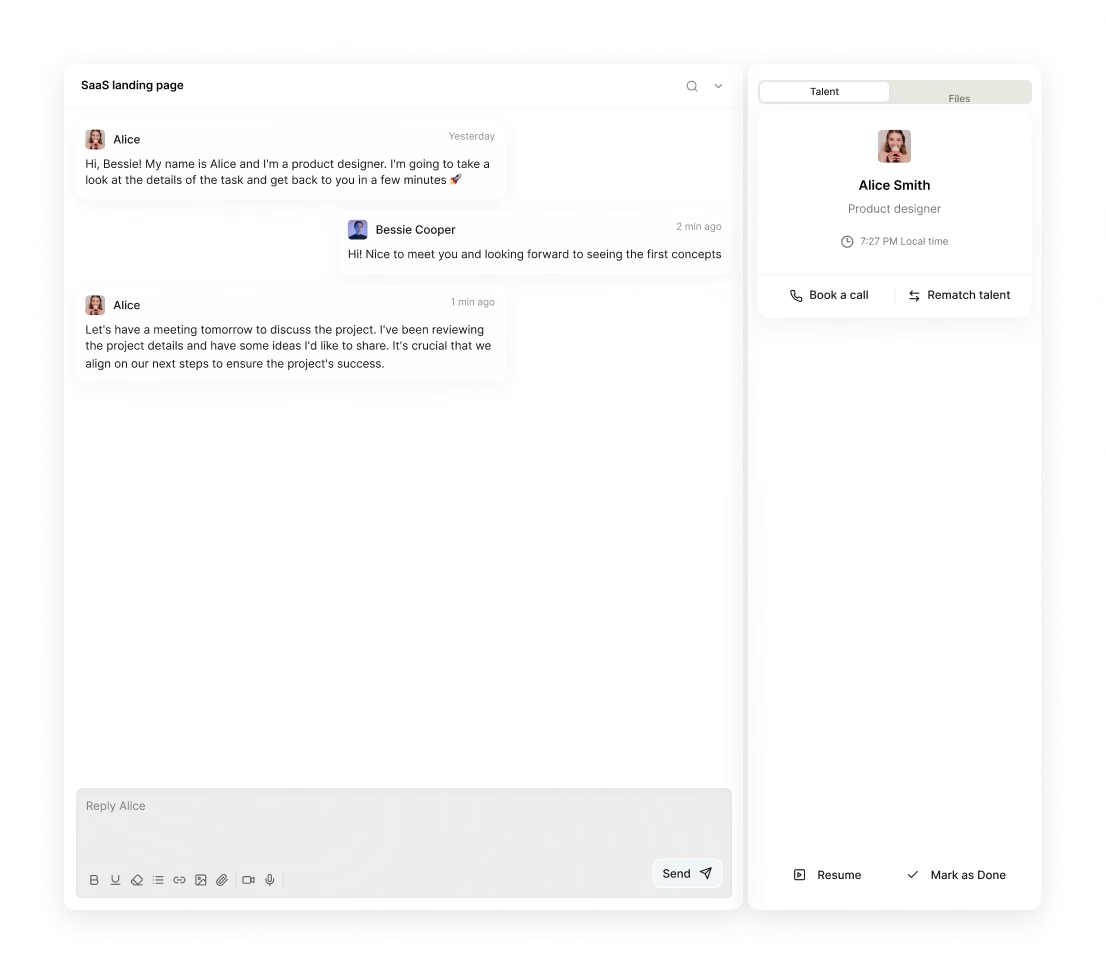
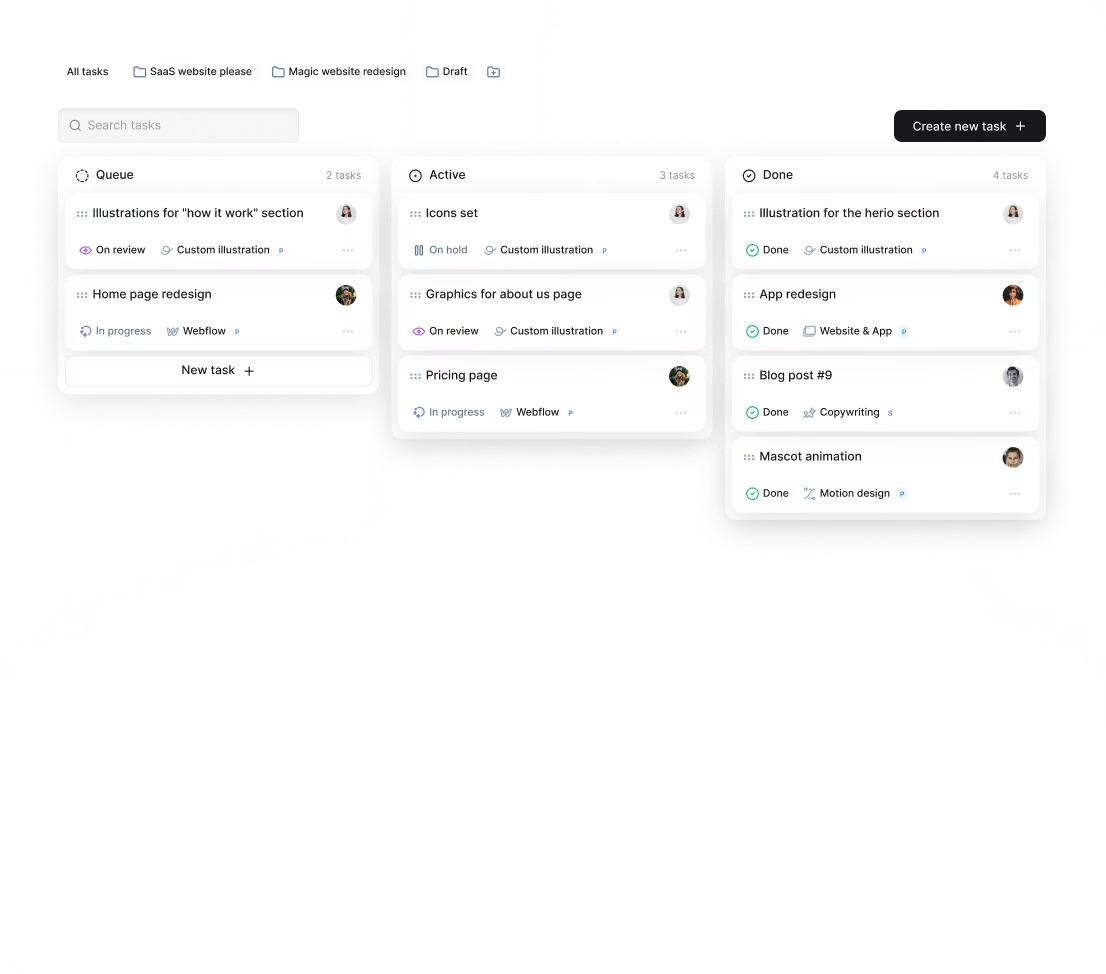
Our platform Awesomic supports this collaboration perfectly. With daily updates, secure messaging options like Slack integration, and transparent task management, you can track progress in real-time. This setup suits iterative development and ensures everyone stays on the same page.
How do you know you hired the right military tech designer?
After hiring, how do you tell if you’ve truly found the right military designer? Look for these success signs:
- Designs meet or exceed usability benchmarks under real operational conditions.
- Smooth integration with existing military hardware or software systems.
- Positive feedback from actual end-users like soldiers and analysts.
- On-time delivery within budget limits.
- Full compliance with military standards and security protocols.
Here are key performance metrics you should track:
- Number of design iterations needed after field tests (lower is better).
- User error rates linked to the design.
- Speed of prototype development.
- Quality audit results focusing on compliance and usability.
If your designer consistently performs well and fits culturally, consider expanding their role—maybe long-term contracts or leadership in design innovation. If gaps surface, schedule performance reviews, offer training, or adjust to more defined contract work.
Finally, Awesomic’s subscription service keeps top talent always at your fingertips. You can quickly scale your team or adjust as projects evolve. The platform’s collaboration and reporting tools let you monitor performance easily, ensuring success over the long haul.
Hiring a military tech designer may seem daunting at first, but with the right knowledge and trusted platforms like Awesomic, the process becomes straightforward. You’ll get skilled professionals who not only design well but understand the unique demands of military projects. So, whenever your defense tech projects need that special touch, you’ll know exactly when and how to bring in the expert help you need.


