










/ month


/ month


/ month
quarterly commitment
Finally, a scalable way to hire a Web3 designer




4,000+ companies are scaling with us.
































Why awesomic




0.82% talent





One subscription and your hiring problems solved

We reject 99.18% of Web3 designers. Only the best stay.



FAQ


How quickly can I start working with a Web3 designer?
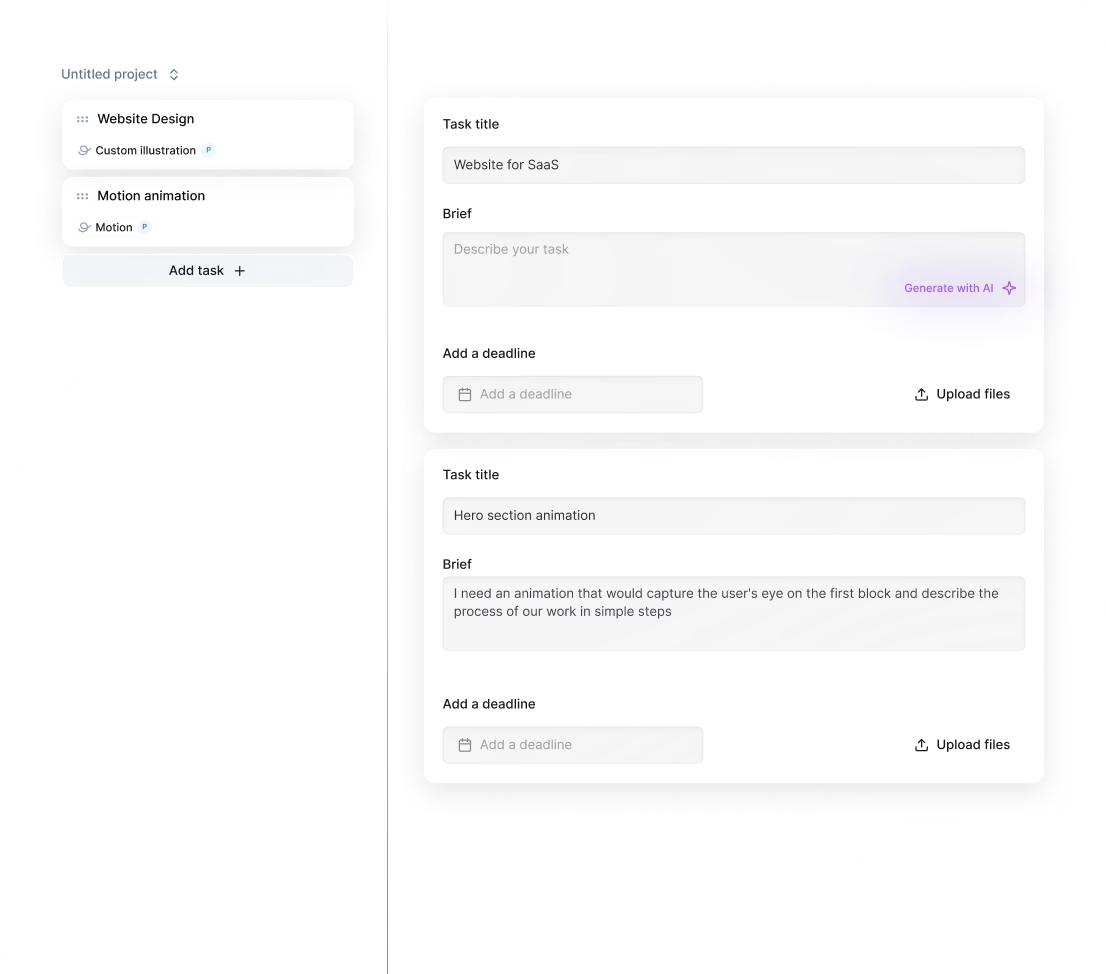
You can start working with a Web3 designer within 24 hours after subscribing. Just submit your project, and we’ll match you to a vetted expert skilled in blockchain design. Expect daily progress updates and unlimited revisions until your project is perfect.
Can I hire a Web3 designer for short-term or one-off projects?
Yes, you can. Awesomic matches you with vetted Web3 designers ready to start in 24 hours. While subscriptions offer continuous access, our 1-to-1 plan provides full-time talent for focused, short-term projects with daily progress updates and unlimited revisions.
Are Web3 designers experienced in startups, SaaS, or enterprise teams?
Yes, our Web3 designers have 7 to 15+ years of experience working with startups, SaaS platforms, and enterprise companies. They deliver fast, high-quality designs using agile workflows and tools like Webflow, Framer, and Slack, ensuring rapid iterations and seamless collaboration.
Can I switch Web3 designers if my needs change?
Absolutely. With Awesomic, you can switch Web3 UI UX designers anytime at no extra cost. Our platform matches you to top-tier talent within 24 hours, allowing you to adapt your team as project scopes evolve. Unlimited revisions and seamless rematches keep your deliverables sharp and on target.
What does “top 1% designers” actually mean?
Top 1% Web3 designers mean only about 0.82% pass our rigorous vetting. They excel in portfolio review, multi-step skill tests, community approval, and leadership sign-off. These pros deliver fast, high-quality Web3 product design, proven in real projects with major clients like Coca-Cola and Y Combinator startups.
How many revisions are included?
With any Web3 designer subscription, you get unlimited revisions. Provide clear feedback daily via the app, and your designer refines until the deliverable fits your exact needs. If needed, you can also request a talent rematch at no extra cost.
Is this cheaper than hiring a full-time Web3 website designer?
Yes. Subscribing to Awesomic’s Web3 website designer service costs $500–$5,000 per month with no hiring hassles, benefits, or overhead. You get vetted, senior-level talent, daily updates, and unlimited revisions, all in under 24 hours—faster and up to 70% cheaper than full-time hires.
Can I pause or cancel my designer subscription at any time?
Yes, you can pause or cancel your Web3 designer subscription anytime with no penalty. Our subscription is hassle-free—scale up, down, or stop as your project demands. Get matched with vetted talent fast, with all tasks managed for you, delivering results in 24 hours.
Do Web3 designers work in my time zone?
Yes, our Web3 UI UX designers operate globally, ensuring coverage across multiple time zones. We match you with vetted talent ready to start within 24 hours, providing daily updates and fast turnaround to fit your schedule seamlessly.
Can I work with the same Web3 product designer long-term?
Yes, you can. Awesomic lets you work on a subscription basis with vetted Web3 product designers, offering daily updates, unlimited revisions, and quick turnaround. Match once, scale projects, and keep your designer as long as you need. Switch or pause anytime.

Related roles you may need
Hiring guide:


What does a Web3 designer actually do?
If you’re new to Web3, you might wonder what exactly a Web3 designer does. Simply put, a Web3 designer specializes in creating user interfaces (UI) and experiences (UX) that work well for decentralized applications (dApps), blockchain platforms, NFT marketplaces, and crypto wallets. They’re the bridge between complex blockchain concepts and everyday users, making sure the product is easy to use, secure, and trustworthy.
Their core job includes UX/UI design, interaction design, and visual storytelling that fits blockchain ideas like decentralization and trustlessness. For example, they design smooth wallet connections or clear token exchange flows that keep users confident about their security. They work closely with blockchain developers, product managers, marketers, and legal teams.
A Web3 designer joins the product journey early on—idea stages, prototyping, testing. They understand the importance of meeting expectations around transparency and accessibility while dealing with tricky parts like smart contracts or token economies. This means simplifying complex blockchain mechanics without losing their essence.
You might want to hire a Web3 designer if you need someone who gets these subtle but important details. On our platform Awesomic, you get access to vetted professionals who combine deep design skills with blockchain knowledge. We connect you quickly to senior Web3 product designers through a flexible subscription model, cutting down your hiring headaches and saving time. This way, your design process gains experts who really understand the Web3 space from start to finish.
When do you need to hire a Web3 designer?
Knowing when to bring in a Web3 designer can save you a lot of trouble. You’ll want to consider hiring one if you’re launching a new dApp, moving a traditional web product into Web3, or creating NFT collections.
Think about your business stage. Is it early prototyping, building an MVP, scaling up, or rebranding for blockchain users? These moments often call for expert design help. Other signs include low user engagement, users feeling confused about blockchain actions, messy UI/branding, or product delays caused by unclear user paths.
Also, if your project uses wallet integrations, token systems, or governance models, getting a designer experienced in these elements early can prevent costly rewrites or users jumping ship. That’s really important in Web3 where trust and clarity matter.
At Awesomic, we’ve seen many startups and larger companies face these exact challenges. That’s why our platform offers a wide pool of skilled Web3 website designers ready to join your team at any phase. We provide fast onboarding and daily updates, so you can pivot your design quickly as your Web3 project evolves. This flexibility means you’re never stuck waiting or guessing about what design needs next.
Here’s a quick checklist to see if it’s time to hire a Web3 designer:
- You’re launching or redesigning a dApp or NFT marketplace.
- Your users are confused by blockchain interactions.
- You’re integrating crypto wallets or token systems.
- Your project is stalled due to unclear design or branding.
- You want to build trust with a blockchain-savvy audience.
If any of these apply, it’s a smart move to bring in a specialist early on.
What skills should a great Web3 designer have?
Finding a great Web3 UI UX designer means looking for a mix of hard and soft skills that cover both design and blockchain. Here’s what to look for:
- Design tools: Skilled with Figma, Sketch, Adobe XD for UI, plus prototyping tools like Framer or InVision.
- Blockchain knowledge: Understand smart contracts, decentralized identity (DID), tokenomics, and crypto principles.
- Web3 frameworks: Familiar with Ethereum, Solana, or Polkadot to design with platform context.
- Communication: Can explain designs clearly to both developers and non-tech team members.
- Problem-solving: Able to simplify complex blockchain user flows.
- Empathy: Knows the typical Web3 users and their needs.
- Adaptability: Keeps up with rapidly changing blockchain tech.
- Design systems: Experienced with Material UI or custom blockchain UI kits.
- User research: Uses Web3 specific research methods to gather feedback from crypto communities.
At Awesomic, we rigorously vet talent for exactly these skills. Our clients get access to designers with portfolios, test tasks, and community-approved quality. When you hire a Web3 designer through us, you’re guaranteed a blend of top design expertise and solid blockchain knowledge. This makes your product not only beautiful but also usable and secure in the Web3 world.
Let me give you five skill areas to watch for in a Web3 UI UX designer:
- Mastery of modern design tools and prototyping software.
- Deep understanding of blockchain tech and token economics.
- Ability to communicate complex ideas simply.
- Strong problem-solving abilities for tricky user flows.
- Experience with Web3 user research and testing.
This mix ensures a designer who can handle both the art and science behind Web3 products.
What types of Web3 designers can you hire?
When you decide to hire a Web3 designer, you’ll quickly find several options. Each comes with pros and cons depending on your budget, timeline, and team setup:
- Freelancers: Flexible and often budget-friendly, great for startups with clear projects. But availability can fluctuate and they might lack long-term commitment.
- In-house designers: Best for deep integration with your product and ongoing iterations. This can be costly and time-consuming to hire.
- Agencies: Provide a full team including researchers and strategists, ideal for large projects. Usually expensive and less flexible.
- Contract designers: Good for filling skill gaps temporarily during peak phases. Offers some flexibility but can lead to frequent onboarding needs.
Some Web3 designers specialize in areas like DeFi, NFT ecosystems, or metaverse projects. Knowing your niche helps choose right.
Our platform Awesomic offers a subscription marketplace combining best of freelancers and agencies. You get reliable, vetted top-tier Web3 designers with monthly predictable pricing. Plus, you can switch designers or scale talent quickly without the hassle of traditional hiring.
Here’s a handy comparison table:
| Designer Type | Cost | Flexibility | Integration | Best for |
|---|---|---|---|---|
| Freelancers | Low to medium | High | Medium | Startups, small tasks |
| In-house | High | Low | High | Long-term projects |
| Agencies | Very high | Low | High | Large complex projects |
| Contract | Medium | Medium | Medium | Temporary needs |
| Awesomic | Medium (fixed) | High | High | Flexible scaling |
This breakdown can help you decide which path fits your Web3 project and budget. Remember, having access to diverse Web3 designers with various specializations adds value, something Awesomic ensures on its platform.
How much does it cost to hire a Web3 designer?
Pricing can be tricky, but knowing typical rates and models helps you budget better. Web3 UI designers usually charge based on hourly rates, fixed project fees, or retainer agreements.
Hourly rates often go between $50 to $150 depending on experience, location, and project complexity. Higher rates come with designers who deeply understand blockchain tech and complex token models.
Other cost factors to consider:
- How complicated is your blockchain product?
- Do you need rounds of user research and testing?
- How many design iterations will be required?
- Collaboration time with developers and architects.
To give you rough numbers by project size:
- Small MVPs: $5,000 – $15,000
- Mid-sized product launches: $20,000 – $50,000
- Enterprise blockchain solutions: $50,000+
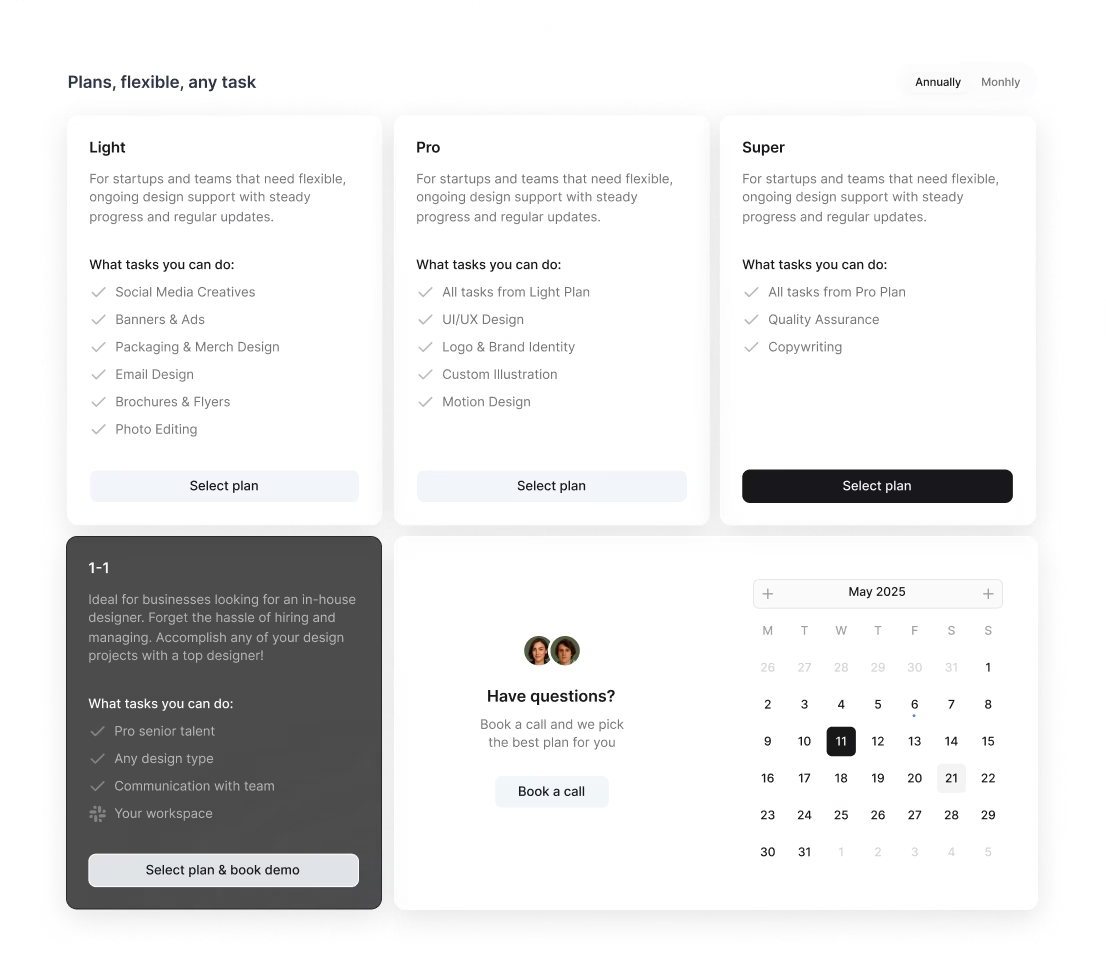
Our platform Awesomic offers flexible plans starting with our All-in-One $2,995/month option that covers a part-time team handling design, Webflow, copywriting, QA, and marketing, alongside the 1–1 Plan with a dedicated full-time specialist plus PM from about $5,000/month, and Awesomic Studio providing AI landing pages starting at $500. The subscription covers unlimited revisions and managed task workflows, helping you avoid surprises or costly overruns sometimes seen in traditional hires or agencies.
Here’s a quick cost overview:
| Pricing model | Description | Typical Range |
|---|---|---|
| Hourly | Pay for time spent | $50–$150/hour |
| Fixed fee | Set price per project | Varies by scope |
| Retainer | Monthly fee for ongoing work | $500–$5K/month (Awesomic) |
With Awesomic, you get the benefits of clear budgets, quality control, and flexibility rolled into one.
Where can you find the right Web3 designer?
Finding the right Web3 UX designer takes exploring various channels. Here are some places to start:
- Portfolio sites: Behance, Dribbble—great for checking style and past work.
- Freelance platforms: Upwork, Toptal—offer vetted blockchain specialists.
- Professional networks: LinkedIn for direct outreach and connections.
- Web3 communities: Discord servers tied to blockchain projects, GitHub repos with design contributions, forums like CryptoDesigners or Web3Design subreddit.
- Specialized agencies: ConsenSys Design, IDEO CoLab for blockchain-focused design.
- Events: Web3 design hackathons and meetups to find passionate designers.
While all these are helpful, the searching and vetting process takes time and effort. That’s why our platform Awesomic stands out. We combine all these discovery sources with rigorous vetting. This means you get instant matches to Web3 designers who are approved for quality, communication, and project management skills. You save time, avoid flaky freelancers, and get right to work.
Try checking out Awesomic if you want a curated, reliable pool of Web3 design talent right at your fingertips.
How do you evaluate a Web3 designer's portfolio?
Evaluating portfolios is more than admiring cool images. For a Web3 UI UX designer, you want to see how they solve blockchain-specific challenges. For example:
- How do they handle wallet onboarding flows?
- Do they provide clear gas fee explanations?
- Can they simplify token interactions?
- Are wireframes and user flows shared that clarify the design process?
- How do they balance security (like trustless elements) with usability?
- Do they show adaptability to multiple blockchains?
- Is accessibility considered?
- Are there results or impact metrics like better user retention or fewer errors?
Look for case studies detailing their steps: research, ideation, iteration, and final results. Good designers clearly communicate their thinking in writing and visuals.
Our platform Awesomic lets you explore designer profiles packed with verified portfolios, case studies, and client reviews. Plus, each talent undergoes community and leadership approval before matching. This gives confidence that the portfolios you see are genuine and high-quality.
When you hire a Web3 designer through our platform, you get professionals who’ll bring these thoughtful insights to your product, not just pretty screens.
Here’s a practical checklist to assess portfolios:
- Clear blockchain-related problem-solving examples.
- Detailed design process with visuals and narrative.
- Evidence of balancing security and usability.
- Demonstrated results or impact metrics.
- Good communication through writing and presentation.
These points ensure you pick someone who’s a real fit for Web3 complexities.
What questions should you ask before hiring?
Interviewing a Web3 product designer can be smoother if you know what to ask. Here are key questions to guide you:
- Can you explain a complex Web3 design problem you solved and how?
- How do you keep up with fast blockchain technology changes?
- What design and prototyping tools do you prefer for blockchain features?
- How do you design user onboarding for dApps?
- Can you share a time working with blockchain developers? What challenges came up?
- How do you measure success of your designs in Web3?
- How do you handle design feedback?
- What’s your typical workflow, especially remotely or asynchronously?
- What’s your availability and favorite project management approach (Agile, Scrum, Kanban)?
- Have you faced security or privacy challenges in your designs? How did you solve them?
These questions help you understand their technical skills, collaboration style, and reliability.
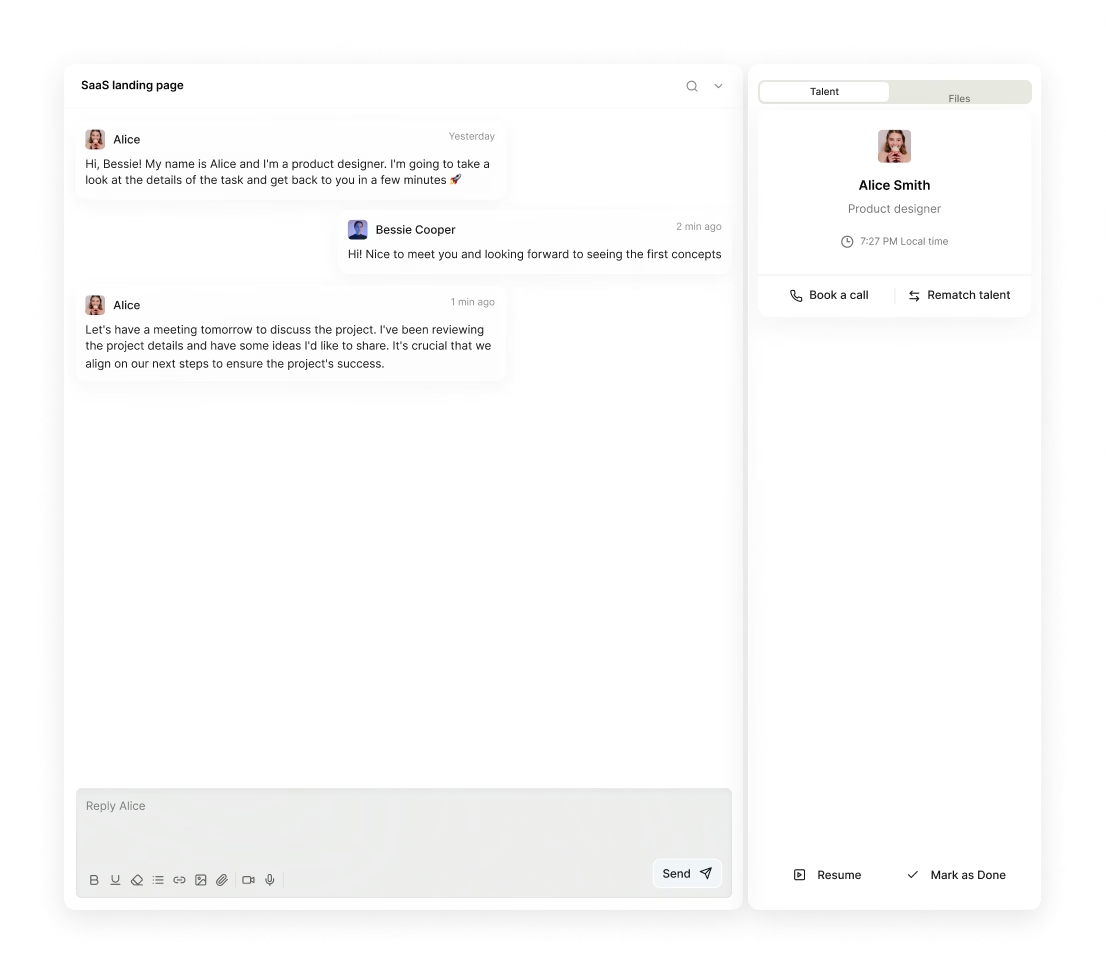
One big plus of working with Awesomic is that all these aspects are pre-vetted. Our platform sorts for communication skills and dependability, so you get trustworthy matches upfront. Yet, you can still chat directly with designers inside Awesomic or your own tools, and easily request quick switches if needed.
How do you work successfully with a Web3 designer?
Working well with a Web3 designer needs clear communication, tools, and realistic expectations. Here’s how to make it work:
- Onboarding: Share detailed briefs including blockchain context and smart contract specs. Provide user personas familiar with your Web3 audience.
- Feedback: Use collaboration tools like Figma comments, Slack, or Notion to keep feedback clear and organized.
- Timeline: Align design milestones with blockchain development sprints. Expect longer iterations due to testing on blockchains’ testnets.
- Expectations: Discuss upfront any limits you face from blockchain tech such as latency, transaction fees, or wallet compatibility.
- Check-ins: Regularly sync up to adjust plans as Web3 needs shift.
- User testing: Involve real users from crypto communities for usability testing to validate design decisions.
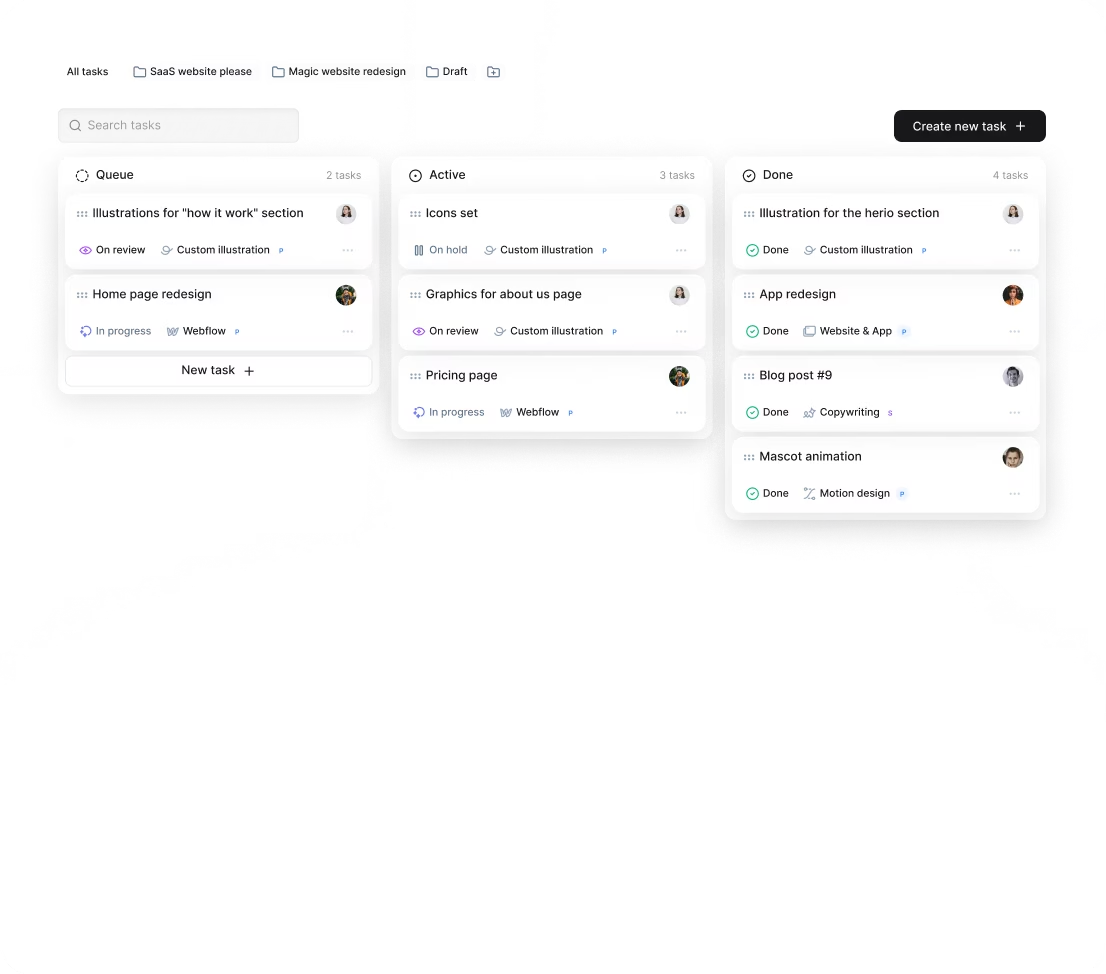
Our platform Awesomic supports these best practices with integrated task management, daily progress updates, and smooth feedback loops. You can add collaborators, scale talent up or down, and switch designers easily as your project grows. All this with minimal overhead means focusing more on building and less on managing.
Following these steps makes working with a Web3 designer productive and stress-free.
How do you know you hired the right Web3 designer?
You’ll feel confident you hired the right Web3 UI designer when you see clear positive signs like:
- Better user onboarding rates with fewer drop-offs.
- Reduction in support tickets related to UI confusion.
- Meeting design milestones and deadlines reliably.
- Positive feedback from your Web3 community or users.
- Metrics show higher engagement or transaction success.
- Designers and developers collaborate smoothly.
- The designer proactively solves problems and adapts to changes.
It’s also smart to keep evaluating as your Web3 product evolves. Needs change fast, and your designer should keep up. If things don’t click, consider adjusting scope, adding design resources, or switching talent early.
Our platform Awesomic makes this easy with flexible monthly subscriptions. You can scale design resources or swap designers without the hassle of traditional contracts. The managed service and ongoing support ensure your design stays aligned as your product grows, helping you succeed long-term in the complex Web3 space.
In sum, hiring a Web3 designer is about finding someone who understands both the technical Blockchain world and how to make products usable and appealing. Using a platform like Awesomic not only connects you to experienced designers but makes the entire journey smoother, faster, and less risky. Whether starting small or scaling up, you’ll be set with experts who help bring your Web3 vision to life.


