










/ month


/ month


/ month
quarterly commitment
The unfair advantage when you hire an ecommerce designer this way




4,000+ companies made the switch.
































Why awesomic





0.82% talent





One subscription and your hiring problems solved

Less than 1% of ecommerce designers earn approval here.




FAQ


How quickly can I start working with an ecommerce website designer?
You can start working with an ecommerce website designer in as little as 24 hours. After subscribing, submit your project details, and you’ll be matched with vetted experts who deliver daily updates and unlimited revisions until you’re satisfied.
Can I hire a ecommerce designer for short-term or one-off projects?
Yes, you can hire ecommerce designers for short-term or one-off projects through our subscription service. Get matched with vetted designers in 24 hours, submit tasks easily, and enjoy unlimited revisions until your landing page or design is perfect.
Are ecommerce designers experienced in startups, SaaS, or enterprise teams?
Yes. Our ecommerce designers have 7 to 15+ years of hands-on experience with startups, SaaS, and enterprise clients. They use proven frameworks and tools like Webflow, Framer, and Shopify to deliver scalable designs fast, driving $15K+ MRR and 40%-50% monthly growth for clients.
Can I switch ecommerce designers if my needs change?
Absolutely. With Awesomic, you can switch ecommerce designers anytime at no extra cost. Our vetted talents cover all skills and tools you might need, so as your projects evolve, just request a new match and get results fast—usually within 24 hours.
What does “top 1% ecommerce designers” actually mean?
It means we rigorously test and approve only 0.82% of applicants. These ecommerce designers have proven skills through portfolio checks, multi-step tasks, community reviews, and leadership approval. You hire ecommerce UX designer talent who delivers fast, high-impact, and reliable results.
How many revisions are included?
Every subscription with our ecommerce website designer includes unlimited revisions. You get daily progress updates and can request changes as often as needed until the design fits your vision perfectly. Need a different approach? You can also switch designers anytime at no extra cost.
Is this cheaper than hiring a full-time ecommerce web designer?
Absolutely. With Awesomic, you pay a flat monthly rate starting at $500 for part-time ecommerce web designer access, saving up to 70% compared to hiring full-time. Enjoy faster delivery, unlimited revisions, and daily updates without overhead or management hassles.
Can I pause or cancel my ecommerce designers subscription at any time?
Yes, you can pause or cancel your ecommerce designers subscription anytime with no hassle. Awesomic offers flexible monthly plans starting at $500, providing fast matching, daily updates, and unlimited revisions. Scale your retail ecommerce web designer needs without long-term commitment.
Do ecommerce designers work in my time zone?
Yes, our ecommerce designers work globally and adapt to your time zone. With daily updates and flexible communication via Slack, email, or video calls, you’ll get fast, reliable service. Projects start delivering in as little as 24 hours, so time zones won’t hold you back.
Can I work with the same ecommerce designers long-term?
Yes, you can! Awesomic matches you to vetted ecommerce designers quickly, often within 24 hours. You get daily updates and unlimited revisions, plus the option to keep the same designer for months. This ensures consistent quality and faster turnaround for your projects. Hire ecommerce UX designer services that scale with your business.

Related roles you may need



Hiring guide:


If you run an online store, you know how crucial a good design is. The look and feel of your ecommerce site can make or break your sales. But hiring the right ecommerce designer can feel overwhelming.
Where do you start? What should you expect? In this guide, I’ll walk you through everything you need to know to hire the perfect ecommerce website designer for your business.
You’ll learn how to spot great talent, when to bring a designer on board, and how to work together smoothly.
What does an ecommerce designer actually do?
Think of an ecommerce designer as the person who builds the look and feel of your online store. They make sure your website doesn’t just look pretty but drives sales by making it easy and enjoyable for customers to shop.
They focus on several key tasks:
-
Designing product pages that highlight your items clearly.
-
Creating smooth checkout flows to reduce cart abandonment.
-
Organizing navigation so users find what they want quickly.
-
Ensuring the site is mobile responsive, important as most people shop from phones.
-
Keeping branding consistent to build trust and recognition.
Besides visuals, ecommerce designers often do wireframes and prototypes. This means they sketch out early versions of pages and workflows before the final design. They usually work side by side with UX designers, developers, marketers, and product managers.
Together, they research user behavior, tweak designs based on feedback, deliver the finished product, and optimize post-launch.
Most ecommerce designers follow design methods like user-centered design (UCD) and design thinking. These approaches put the customer first and solve problems step-by-step.
If you're wondering where to find reliable ecommerce experts, let me share something I’ve found useful. Our platform connects businesses to vetted ecommerce designers on a subscription basis.
This means you can hire ecommerce designer talent that’s already tested for ecommerce UI/UX, branding, and web design skills, without waiting weeks or juggling freelancers. The matching is fast, so you get right to work accelerating your site’s delivery.
When do you need to hire an ecommerce designer?
You might ask yourself, Is now the right time to hire ecommerce web designer help? Let’s look at common scenarios when having a pro designer on board makes a big difference:
-
Launching a brand-new ecommerce site.
-
Redesigning an old, outdated store that isn’t converting well.
-
Migrating your shop to a different platform like Shopify or Magento.
-
Expanding your product lines and needing better navigation and visuals.
-
Adding complex features like personalized product recommendations or multi-currency support.
You’ll also spot warning signs telling you it’s time:
-
High bounce rates, meaning visitors leave without exploring.
-
Poor conversion rates despite good traffic.
-
Customer complaints over confusing checkout or slow load times.
-
Stagnant sales even as visitor numbers rise.
At different business stages, your needs vary too:
| Business stage | Ecommerce design need |
|---|---|
| Startup | MVP design or minimum viable product setup |
| Growth | Scaled UX and feature optimization |
| Established | Brand refresh and advanced optimization |
If your ecommerce needs are urgent or ongoing, subscribing to expert support on our platform is a great way to hire ecommerce designer quickly.
It gives you flexible access to specialists who know exactly how to fix your specific problems, no long hiring delays required.
What skills should a great ecommerce designer have?
Now that you know when you might need a retail ecommerce web designer, it’s important to know what skills separate great ones from good ones.
Hard skills:
-
Mastery in design software (think Adobe XD, Figma, Sketch).
-
Understanding popular ecommerce platforms like Shopify, WooCommerce, Magento.
-
Basic HTML/CSS knowledge for easy developer collaboration.
-
Experience with Conversion Rate Optimization (CRO), A/B testing, and analytics tools like Google Analytics or Hotjar.
Soft skills:
-
Clear communication to share ideas easily.
-
Problem-solving to tackle design challenges.
-
Adaptability when priorities change.
-
Teamwork and empathy toward user needs.
Industry knowledge:
-
Awareness of current ecommerce trends.
-
SEO basics to help your site get found.
-
Mobile-first and accessibility standards (WCAG).
-
Familiarity with frameworks such as Atomic Design and agile workflows.
Our platform only vets ecommerce designers who blend these skills perfectly.
That way, when you hire ecommerce designer through us, you get senior talent ready to deliver smart, impactful projects quickly.
What types of ecommerce designers can you hire?
When it comes to options, you have several choices:
-
Freelancers → Flexible and usually affordable, but availability and reliability can vary.
-
In-house designers → Full-time employees with deep brand knowledge, but higher fixed costs.
-
Agencies → Multidisciplinary teams who offer strategy and scalability but come with a bigger price tag.
-
Contract or part-time designers → A middle ground for specific needs or seasonal bursts.
The best fit depends on your size, budget, project complexity, and timeline.
Here’s a quick comparison table to guide you:
| Type | Pros | Cons | Best for |
|---|---|---|---|
| Freelancers | Cost-effective, flexible | Variable reliability | Small projects, tight budgets |
| In-house | Deep brand knowledge, full control | Higher fixed costs | Ongoing, complex projects |
| Agencies | Full services, scalable teams | Expensive | Large projects, strategic needs |
| Contract / part-time | Flexible, focused expertise | Limited availability | Seasonal or short-term projects |
Our platform blends the best of freelancing and contracts into a subscription marketplace. We offer vetted part-timers and full contractors on flexible monthly plans.
This lets you hire ecommerce designer talent without the headaches of hiring, with instant talent swaps and managed workflows that beat freelancers and agencies in cost and speed.
How much does it cost to hire an ecommerce designer?
Cost is always a sticking point. Common pricing methods include:
-
Hourly rates.
-
Fixed project fees.
-
Retainer agreements.
Hourly rates typically fall into these ranges depending on experience and location:
-
Junior → $25-$50 per hour.
-
Mid-level → $50-$100 per hour.
-
Senior → $100-$200+ per hour.
Factors that influence cost include:
-
The complexity of the project.
-
Whether you want a full website or just a single feature.
-
Number of revision rounds.
-
Need for usability testing or prototyping tools like InVision or Marvel.
-
Post-launch support commitments.
Always budget some wiggle room for unexpected changes.
Cost should be weighed against the return on investment (ROI) you get from higher sales, better user satisfaction, and fewer cart abandons.
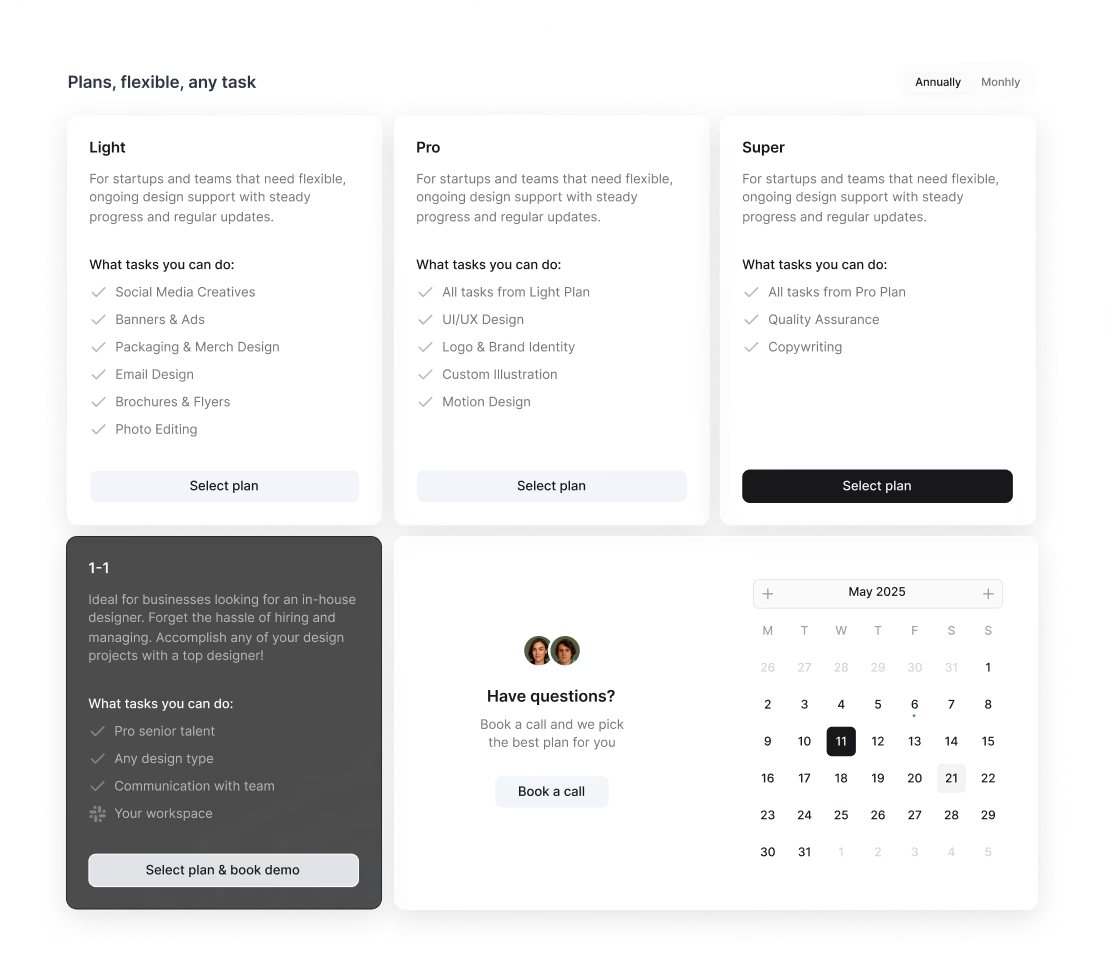
If you want predictable budgeting and great value, we offer transparent subscription plans including an All-in-One flexible part-time team plan at $2,995/month covering all design, Webflow, copywriting, QA, marketing; a 1–1 Plan with a dedicated full-time specialist plus PM starting around $5k/month; and Awesomic Studio for AI landing pages from $500.
Compared to traditional hiring, you could save up to 70% and enjoy faster delivery times. So if you want to hire ecommerce designer or hire ecommerce UX designer affordably and without fuss, this is a smart way to go.
Where can you find the right ecommerce designer?
Searching for a good ecommerce website designer can be a maze.
Here are the top places I recommend checking:
-
Portfolio sites → Dribbble and Behance to see design samples.
-
Freelance marketplaces → Upwork, Toptal for vetted freelancers.
-
Professional networks → LinkedIn to connect directly.
-
Agency review sites → Clutch to compare agency reputations.
-
Community forums → EcommerceFuel or Shopify Community for specialized advice.
-
Job boards → AngelList for startups, WeWorkRemotely for remote roles.
-
Referrals → Tap into your industry contacts.
-
Educational institutions → Local design schools for fresh talent.
-
Events → Ecommerce conferences and meetups for face-to-face hires.
All these can work, but they require time and effort to vet candidates.
That’s why our platform is a real game-changer. It instantly matches you with top vetted ecommerce designers in less than 24 hours, eliminating the tedious search and screening process.
You access designers with proven skills on a subscription basis, making it easier and faster to hire ecommerce designer without losing time.
How do you evaluate an ecommerce designer’s portfolio?
Looking at a designer’s portfolio? Don’t just be wowed by shiny visuals.
Here’s what you should dig for:
-
Design process → Do they show research, wireframes, prototyping, and user testing?
-
Ecommerce focus → Check for features like clear product filters, effective Calls to Action, and a smooth checkout path.
-
Results → Have their designs improved conversion rates or lowered cart abandonment?
-
Brand consistency → Is their work aligned with client brand guidelines?
-
Technical quality → Responsive layouts, clean assets, and cross-device compatibility.
Using a simple scoring rubric can help compare options fairly.
If you want a shortcut, our platform offers portfolios from pre-vetted ecommerce web designers who pass thorough skills tests and experienced reviews. Plus, you can read verified client feedback and detailed case studies.
This takes the guesswork out, helping you hire ecommerce designer that delivers measurable business impact.
What questions should you ask before hiring?
Before you commit, ask your ecommerce designer questions that reveal their approach and reliability:
-
How do you approach designing for ecommerce conversion?
-
Can you walk me through your design process on a recent ecommerce project?
-
How do you use user feedback and data in your designs?
-
Which ecommerce platforms and tools are you experienced with?
-
How do you handle tight deadlines or shifting priorities?
-
Tell me about a time your design solved a business problem.
-
What’s your experience collaborating with developers and marketers?
-
How do you ensure accessibility and mobile responsiveness?
-
What communication tools do you prefer (Slack, Zoom, Teams)?
Also ask scenario or problem-solving questions to test how they adapt.
On our platform, all retail ecommerce web designer talent is pre-screened for communication and professionalism.
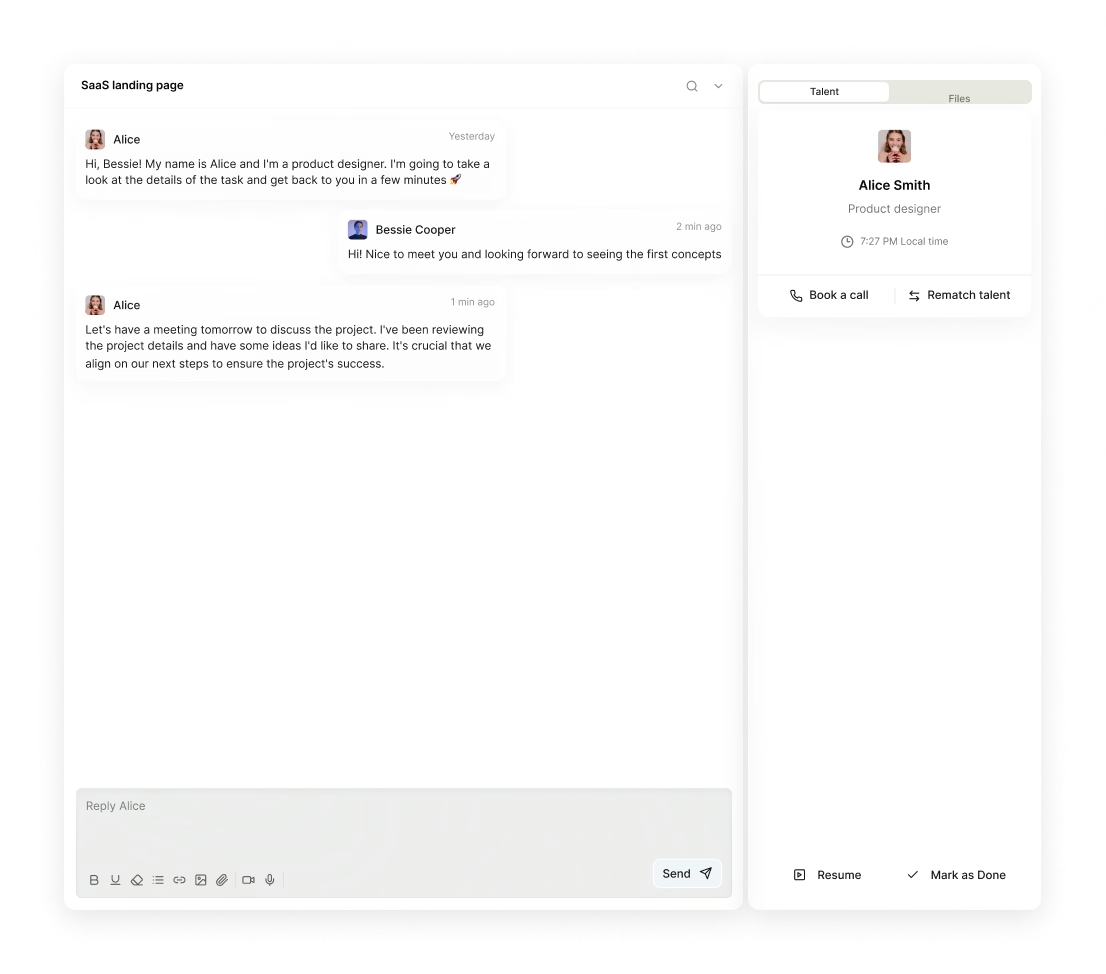
Still, you control the process through direct chats and video calls, plus you can request unlimited revisions or even rematches if needed, giving you extra peace of mind.
How do you work successfully with an ecommerce designer?
Once you’ve hired, collaboration is key. Here’s how to keep it smooth:
-
Start with a clear brief → Business goals, competitor analysis, audience insights, brand guidelines.
-
Set expectations → Define timelines, milestones, deliverables.
-
Use project management tools → Jira, Trello, Asana to track progress.
-
Schedule regular check-ins → Provide constructive, timely feedback.
-
Use visual collaboration tools → Figma comments, InVision boards for annotations.
-
Agree on communication channels → Ensure fast, transparent problem-solving.
-
Balance creative freedom → Align design exploration with business needs.
-
Document changes and approvals → Keep records for accountability.
-
Work iteratively → Use trial phases or sprints, optimize as you learn.
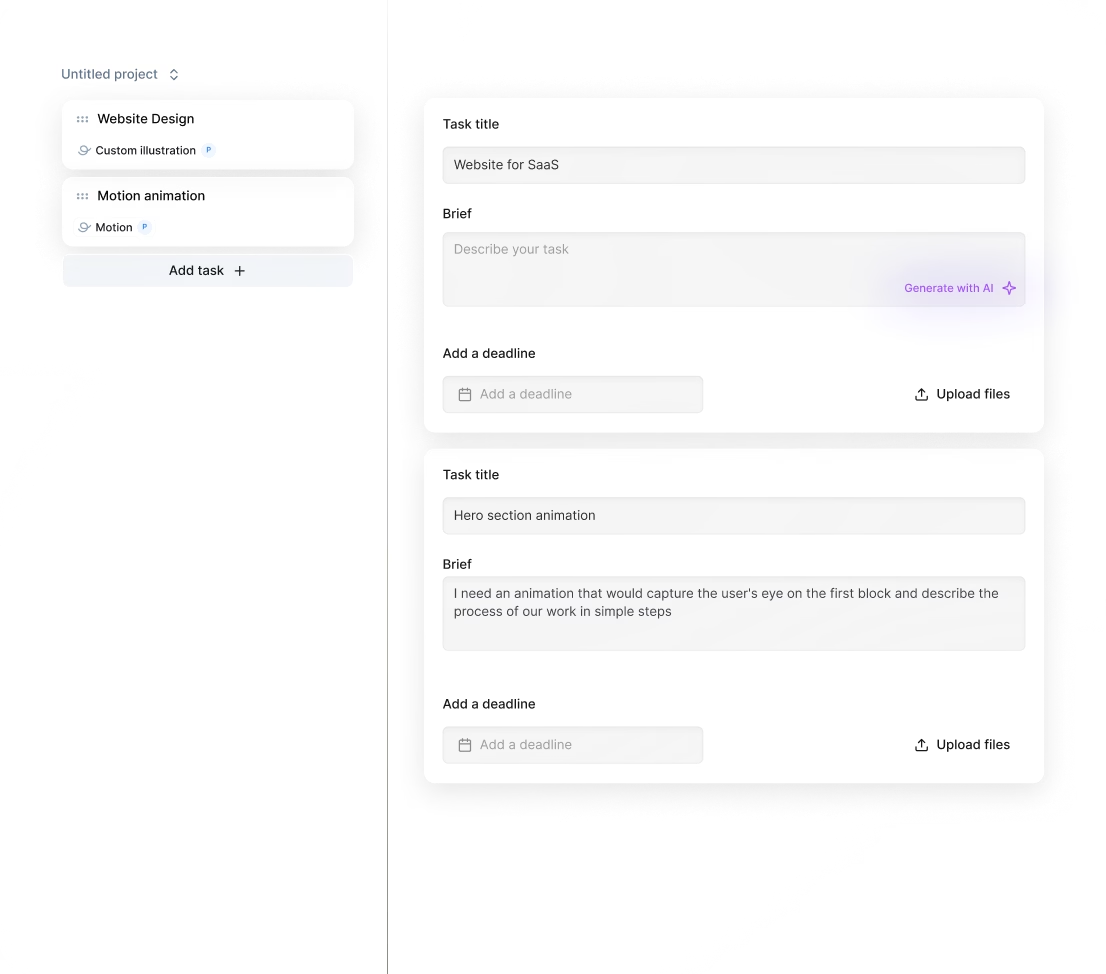
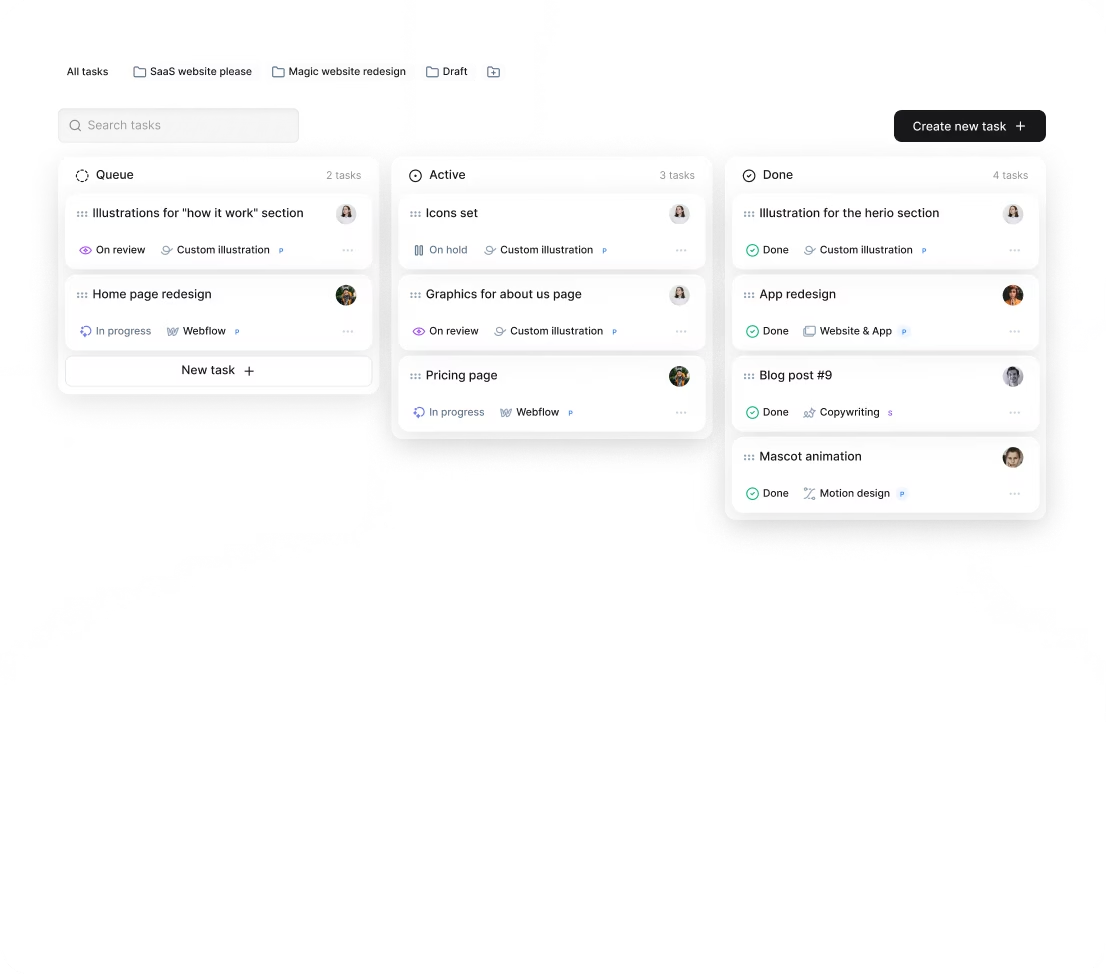
Our platform makes this even easier by offering a unified app where you submit tasks, track progress, share feedback, and get unlimited revisions with fast turnaround.
No micromanagement needed because project managers help keep things on track. You’ll find working with a web designer for ecommerce feels frictionless.
How do you know you hired the right ecommerce designer?
Finally, how do you know you made the right choice? Watch for these success signs.
Your website shows better metrics:
-
Higher conversion rates.
-
Longer session duration.
-
Reduced bounce rates.
-
Increased average order value.
-
Users leave positive feedback about ease of use.
-
Your brand identity feels sharp and consistent.
-
Collaboration flows without constant headaches.
-
Your designer proactively solves problems and meets deadlines.
Set clear KPIs early and review progress regularly. If things are going well, consider scaling up your partnership for more projects. If not, pivot or explore other options.
Our platform helps by delivering measurable impact with vetted experts. Client reviews prove their ability to drive results, and fast iterative workflows mean you can hit your business goals faster.
As your ecommerce needs grow, you can easily scale subscriptions or hire full-time designers through us.
Wrap-up
Hiring the right ecommerce website designer doesn’t have to be complicated. By understanding their role, knowing when to hire, spotting key skills, and choosing the right type of designer, you’ll set your online store up for success.
Use smart strategies to evaluate portfolios and ask the right questions. Once hired, clear communication and tools make collaboration smoother than ever.
And if you want a trustworthy, fast, and flexible way to hire ecommerce designer without lengthy searches or hiring headaches, consider our platform.
We’ll connect you with top talent ready to boost your business in 2026 and beyond.


