










/ month


/ month


/ month
quarterly commitment
Finally, a better way to hire an AI product designer




4,000+ companies are building with us.
































Why awesomic




0.82% talent





One subscription and your hiring problems solved

Out of 100 AI product designers, fewer than 1 get in.



FAQ


How quickly can I start working with a AI product designer?
You can start working with a AI product designer within 24 hours. Just subscribe, submit your first task, and get matched with vetted experts instantly. Expect daily updates and unlimited revisions, powered by AI in design process for faster, high-quality results.
Can I hire AI product designers for short-term or one-off projects?
Yes, you can match with expert AI product designers for short-term or one-off projects through Awesomic’s subscription. Get fast, quality work with daily updates and unlimited revisions. Scale easily by adding subscriptions, no long-term contracts or hidden fees.
Are AI product designers experienced in startups, SaaS, or enterprise teams?
Yes. AI product designers at Awesomic have 7 to 15+ years of experience working with startups, SaaS, fintech, healthcare, and enterprise clients. They deliver polished UI/UX, branding, and product designs, proven by 20,000+ completed projects and clients like Coca-Cola, Disney, and Y Combinator-backed startups.
Can I switch AI product designers if my needs change?
Yes, you can switch AI product designers anytime with zero friction. Awesomic lets you scale AI product designer support up or down as needed, ensuring the perfect match for your evolving projects, all while managing tasks and revisions effortlessly.
What does “top 1% designers” actually mean?
It means only the best 0.82% of AI digital product designers pass our strict vetting process that includes portfolio reviews, multi-step skill tests, community evaluations, and leadership approval. These pros deliver fast, high-quality results with unlimited revisions, every business day.
How many revisions are included?
Every Awesomic subscription includes unlimited revisions. AI product designers deliver daily progress updates via the app, so you can provide feedback or request changes anytime. This constant iteration ensures your project evolves fast with AI in design process, delivering exactly what you need.
Is this cheaper than hiring a full-time AI product designer?
Yes. At $499 per month, the AI-driven product designer plan delivers high-quality landing pages and websites instantly—no hiring delays or overhead. Compared to full-time salaries plus management costs, this saves around 70% while providing daily updates, unlimited revisions, and scalable output.
Can I pause or cancel my AI product designer subscription at any time?
Yes, you can pause or cancel your AI product designer subscription anytime without penalties. There are no long-term contracts, so you stay flexible. Just manage your subscription through the platform, and changes take effect immediately—no hassle, no hidden fees.
Do AI product designers work in my time zone?
Yes, AI product designers at Awesomic work across multiple time zones to fit your schedule. With daily updates and fast 24-hour turnaround, you get seamless communication and real-time progress no matter where you are. Scale AI product designer resources instantly to meet your deadlines.
Can I work with the same AI digital product designer long-term?
Absolutely. With Awesomic, you get matched to a vetted AI digital product designer who can stay on your projects full-time or part-time. You receive daily updates, unlimited revisions, and can scale or switch talent anytime. No long-term contracts, flexible subscription models.

Related roles you may need


Hiring guide:


What does an AI product designer actually do?
Hiring an AI product designer might sound like hiring a magician. But it’s really about adding someone who makes AI useful, clear, and easy for users to interact with. You’ll learn how they blend AI with human needs, turning complex algorithms into smooth user experiences.
An AI-driven product designer’s core job revolves around a few key activities. First, they define AI use cases that align directly with business goals and user needs. They do this by digging into research and talking with stakeholders. This helps avoid building AI features just for the sake of AI and instead creates real value.
Next up is shaping user flows that tuck AI-driven decisions or interactions naturally inside the overall user journey. The goal is to make navigation intuitive and minimize confusion. For example, when designing a recommendation engine, the AI product designer ensures suggestions feel personal yet transparent, rather than mysterious or intrusive.
They work closely with data scientists and engineers too. It’s critical to understand data sources, what AI models can and can’t do, and any limitations. This collaboration keeps the design grounded in what’s achievable and ensures the final product handles AI uncertainty gracefully.
Designing interfaces that communicate AI outputs clearly is another vital job. The output shouldn’t be a wall of jargon. Instead, good AI product designers simplify, using explainability tools like SHAP values or confidence scores to make results clear, actionable, and meaningful.
They don’t stop at the first design. Iteration is key. Prototypes get tested by real users to refine how AI results show up and are interpreted. This iterative approach often includes A/B testing and digging into usage analytics to see what really works.
Here’s a quick list to summarize what an AI product designer does:
- Define AI use cases aligned to both business and user needs
- Design user flows integrating AI smoothly
- Collaborate with engineers and data teams on capabilities and constraints
- Create clear, jargon-free interfaces showing AI outputs with explainability
- Iterate designs using prototypes, A/B testing and user feedback
For example, when building an adaptive user interface that changes based on user behavior, the designer handles both the technical AI understanding and the UX flow, balancing automation with user control.
If you’re wondering how to hire an AI product designer who nails these tasks, our platform, Awesomic, can help. It offers flexible subscription-based access to vetted AI product designers who truly understand the nuances of AI-driven UX design, streamlining your AI product initiatives and making them more efficient.
When do you need to hire an AI product designer?
Knowing when to hire an AI product designer can save you a lot of headaches. If you’re integrating AI into a product for the first time, expert guidance is crucial. You want someone who can balance what’s technically possible with a great user experience.
Sometimes, you might already have AI features but find users confused or mistrusting those features. Maybe "the AI works but the UX feels confusing," or "users ignore AI suggestions." These are red flags telling you it’s time to bring in an AI-driven product designer.
Other signs include frequent user complaints about unpredictable AI behavior or product teams struggling to translate AI capability into user benefits. Strategic moments like defining a long-term AI roadmap or embedding ethical and transparency values early on also call for expert design help.
Here are five common moments when you should consider hiring an AI product designer:
- First AI integration needing balanced tech and UX
- Improving existing AI features with poor adoption or confusing UX
- Users not trusting or understanding AI output despite technical success
- Defining an AI strategy with ethical and transparency considerations
- Product teams struggling to connect AI features to customer value
Our platform Awesomic is great for fast setups. You can onboard AI product design talent within 24 hours, making it perfect for startups or enterprises needing quick integration or urgent UX redesigns. This avoids the long waits of traditional hiring and gets your AI in design process moving quickly.
What skills should a great AI product designer have?
A great AI digital product designer wears many hats. You want someone who combines classic UX/UI skills with a solid grip on AI concepts.
On the technical side, they should know AI basics like supervised, unsupervised, and reinforcement learning, plus common workflows. They need prompt design skills to craft effective interactions, especially when working with generative AI tools. Data thinking is crucial too — turning raw data and AI outputs into practical design insights.
Beyond tech, clear communication is essential. They explain complex AI behaviors to users and stakeholders without confusing jargon. You’ll want designers savvy with UI tools like Figma or Sketch, data visualization platforms like Tableau or Looker, and AI experimentation tools such as TensorBoard or MLflow.
Familiarity with frameworks like Design Thinking, Lean UX, and Jobs-to-be-Done helps them structure their work. Ethical AI principles and fairness in design should also be part of their mindset.
Here’s a concise list of must-have skills:
- Strong UX/UI design fundamentals for complex, data-driven interfaces
- Understanding of AI/ML basics and workflows
- Prompt design skills for generative AI
- Data thinking to convert AI outputs into design insights
- Clear communication about AI to users and teams
- Experience with Figma, Sketch, Tableau, Looker, TensorBoard, MLflow
- Knowledge of Design Thinking, Lean UX, Jobs-to-be-Done
- Awareness of ethical AI design and fairness principles
If you want to hire an AI product designer with this mix of skills, Awesomic’s talent pool offers vetted professionals ready to jump in and reduce your onboarding friction.
What types of AI product designers can you hire?
The type of AI product designer you need depends on your project. Options range from freelancers and in-house designers to agencies and specialists.
Freelancers offer flexibility and niche expertise, making them ideal for short-term experiments or projects with quick turnarounds. However, they may lack continuity.
In-house designers integrate deeply with product teams, bringing sustained focus and thorough domain knowledge. They’re best for ongoing products needing regular AI evolution.
Agencies bring broad AI experience and a multidisciplinary approach. They’re suited for larger transformations or when cross-industry insights are valuable.
Finally, specialists focus on specific AI areas, such as prompt designers working with generative AI outputs or AI interaction designers for conversational interfaces.
Often, a hybrid model combining internal and external resources provides the best balance of scalability and expertise.
Here’s a simple table comparing the types:
| Type | Strengths | Best for | Drawbacks |
|---|---|---|---|
| Freelancers | Flexibility, niche expertise | Short-term, experiments | Less continuity |
| In-house designers | Deep integration, domain knowledge | Long-term development | Higher fixed cost |
| Agencies | Broader AI experience, team scale | Large-scale or complex projects | Higher price, less flexible |
| Specialists | Focused expertise | Unique AI features | Narrow focus |
Our platform Awesomic blends these advantages by offering subscription-based access to vetted designers who act like part-time in-house experts. You get freelancer flexibility with agency-level reliability — perfect to scale AI product designer efforts without extra management headaches.
How much does it cost to hire an AI product designer?
Pricing for AI product designers varies based on experience, project scope, and engagement model.
Freelancers typically charge $60 to $150 per hour, depending on expertise and location. In-house designers earn between $90,000 and $160,000 annually. Agencies usually start projects at $20,000 or charge monthly retainers.
AI product designers often command higher rates than traditional designers because their skills combine AI knowledge with UX experience — a rare mix.
Key cost factors include:
- Level of AI expertise and familiarity with tools
- Project complexity and number of AI features
- Scope — end-to-end design versus isolated tasks
- Need for ongoing maintenance and iterations
Here’s a quick summary:
- Freelancers: $60-$150/hour
- In-house: $90,000-$160,000/year salaries
- Agencies: $20,000+ per project or monthly retainers
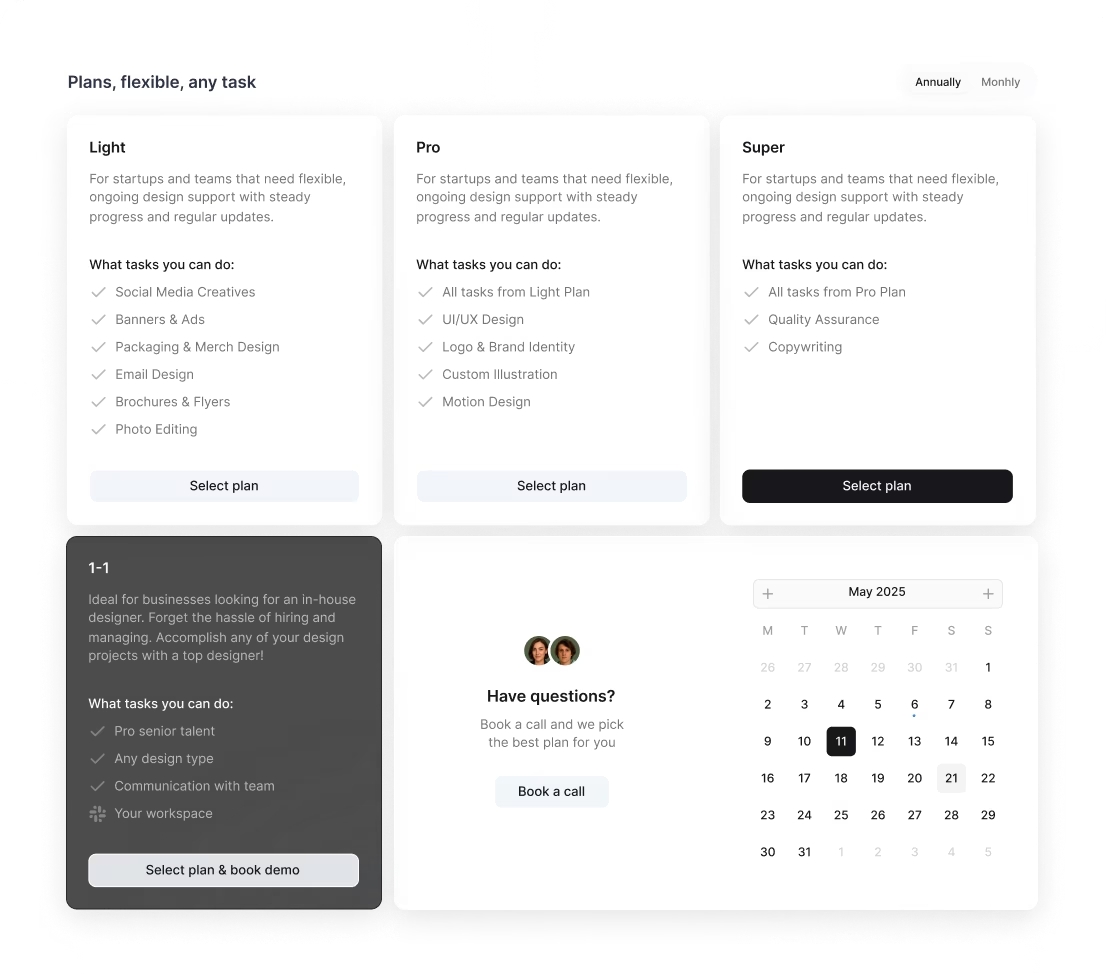
Alternatively, Awesomic offers monthly subscription plans ranging from about $990 to $4,990. These plans cut hiring overhead and include unlimited revisions and managed tasks. That often makes Awesomic cost-effective compared to freelancers or agencies, while ensuring access to top-tier talent to scale AI product designer needs.
Where can you find the right AI product designer?
Finding a skilled AI product designer means looking beyond traditional channels.
Good sources include design platforms like Dribbble or Behance, where you can filter for AI-related projects. AI-focused online communities and forums such as the AI Product Institute or Machine Learning Design Slack groups also connect you with AI-savvy designers.
Word-of-mouth referrals from industry contacts who’ve launched AI products remain valuable. Specialized AI product design agencies like IDEO or Fjord can be a good choice when you want broad consulting and design support.
Job boards like AIJobs or AngelList cater specifically to AI roles. Freelance marketplaces like Toptal or Upwork now also offer AI design filters.
The key is vetting for actual AI experience and strong portfolios.
Our platform Awesomic stands out as a highly efficient marketplace. It quickly matches you to vetted AI product designers with proven success. Plus, the quality vetting and speedy onboarding give you a huge leg up, saving you time while ensuring project readiness.
How do you evaluate an AI product designer’s portfolio?
Looking at portfolios for AI digital product designers requires a special eye.
Focus on actual projects, not just conceptual work. Look for clear explanations on how they handled AI uncertainties — for example, ambiguous outputs or model errors.
The designs should reveal thoughtful presentation of AI outputs, including transparency features like confidence intervals or explanations. Success stories involving increased user trust, positive feedback, or adoption metrics are impressive.
Check if they use prototypes or tests that involve real AI feature interactions, not just static screens. The integration of AI outputs with broader UX flows is a plus.
Also see if the designer collaborates with engineers and data scientists, bridging the gap between AI implementation and user experience.
Lastly, storytelling matters. Can they explain their design approach, ethical considerations, and how they solve challenges?
Many portfolios on Awesomic highlight real project case studies showing these qualities along with client feedback — giving you confidence in their expertise.
What questions should you ask before hiring?
Before you hire an AI product designer, ask questions that get to the heart of their experience and approach.
Here are five practical questions to guide your calls:
- What AI design projects have you worked on, and what was your specific role?
- How do you design for AI outputs that are unclear or probabilistic?
- What tools or workflows do you use when working with engineers and data teams?
- How do you handle usability testing and incorporate user feedback on AI features?
- Can you share your approach to ethical AI design and managing bias?
Add questions about how they keep learning about AI advances and how they handle design challenges or failures.
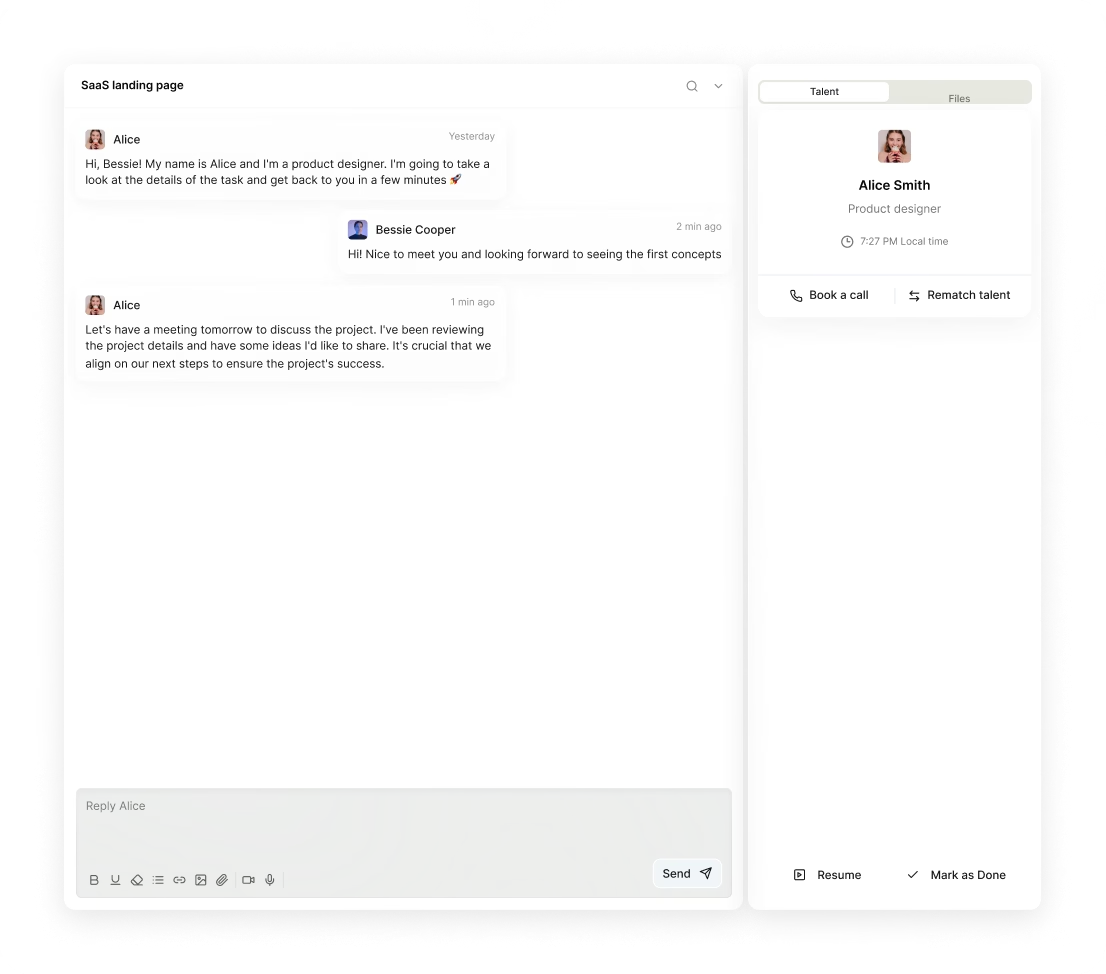
Our platform Awesomic makes this easy by providing strong communication tools to vet candidates early. Matched talent typically respond well and clarify capabilities before you commit.
How do you work successfully with an AI product designer?
To get the most out of an AI product designer, set up clear and measurable goals that include AI performance and user experience targets.
Provide early access to datasets and model outputs so the designer understands what they’re working with. Encourage regular collaboration with engineers and data scientists through stand-ups and shared documents.
Test AI feature prototypes early with users to gather real insights. Keep feedback loops going both on UX and AI accuracy. Be transparent about AI model limits and training data constraints.
Iterate often — anchor cycles in data analytics and user insights, never letting the design stagnate.
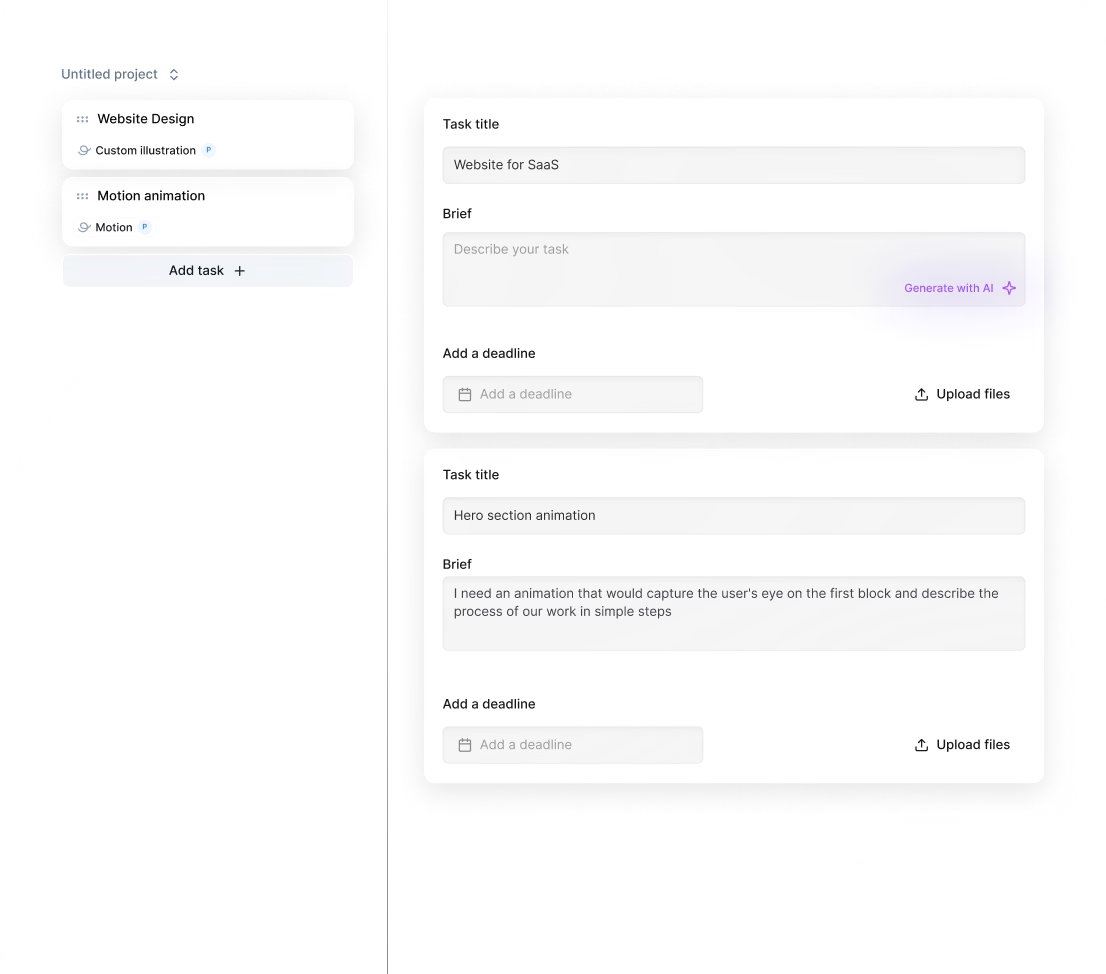
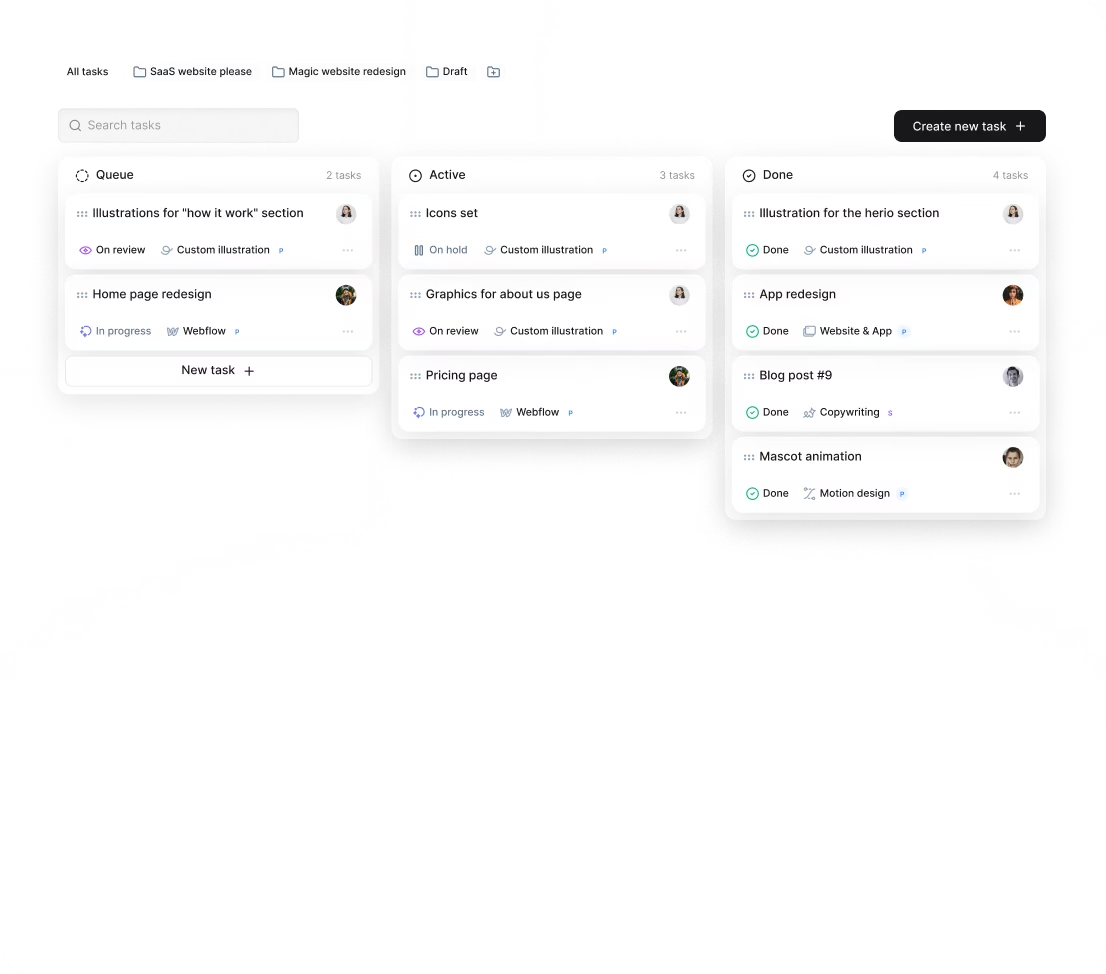
Our platform Awesomic supports this smooth collaboration with integrated task and feedback management. Daily updates and unlimited revisions keep AI product design projects moving fast and flexible to scale AI product designer needs.
How do you know you hired the right AI product designer?
You’ll know your AI-driven product designer is a great fit when:
- User trust and understanding of AI features improve, backed by surveys or behavior tracking
- Usage rates for AI-powered functions rise
- User complaints about confusing AI outputs drop significantly
- Collaboration between product, engineering, and data teams flows more smoothly
- Iteration cycles speed up with data-driven improvements
- AI features better align with business goals
- Users share positive feedback about clarity and usefulness of AI interactions
Retention of the designer and their ongoing impact on product evolution are further signs.
With Awesomic’s subscription model, you reduce hiring risks thanks to easy talent rematches and ongoing support. This flexibility ensures you always have the right AI product design expertise as your needs change.
This guide offers a practical path to hire an AI product designer who makes your AI features not just smart, but genuinely helpful and easy to use. Our platform Awesomic simplifies finding and working with these experts, letting you focus on building AI products that users love.


