Awesomic Team

Key takeaways:
- Softr's Business plan now includes 30 Team and 100 Client app users for $329 a month billed yearly ($395 monthly), and each extra Client user costs $2, billed monthly even on a yearly plan.
- A 300-client portal on Softr Business comes to $729 a month on yearly billing. Noloco's Build plan includes up to 1,000 client seats from $65 a month billed yearly, and Zite and Knack don't charge per user at all.
- What you can take with you differs widely: WeWeb exports a Vue.js app, Budibase exports whole workspaces as JSON and Lovable syncs code to GitHub, while Softr, Noloco and Bubble leave you with CSV data.
- Softr's user cuts apply to new subscriptions only, so a portal running on an older plan may cost less if you leave it where it is.
Softr is one of the quickest ways to put a client portal or internal tool on top of data you already keep in Airtable, Google Sheets or its own Softr Databases.
The trouble starts when the portal grows. Softr charges by app user, and it has cut what each plan includes twice in under a year, so a portal that cost $329 a month with room to spare can need add-ons once client logins pass 100.
This guide compares 10 Softr alternatives on three things: who you pay for as users grow, where your data lives, and whether you can leave. We read every price on the vendors' own pages on October 8, 2026, and each names its billing basis.
Why look for Softr alternatives
Most people who search for Softr alternatives aren't unhappy with the builder. They're reacting to two dated pricing changes and to what the second one does to a growing portal. A few only need public pages that clients read without logging in, and a flat-priced website builder does that job with no per-user math at all.
November 2025: the Business plan lost 2,000 users
In November 2025 Softr emailed customers about its top self-serve plan. A user posted the email on Reddit, and it read: "The number of users in the business plan will decrease from 2,500 to 500. This will only apply to new subscriptions starting November 20th." The same email added: "Prices remain the same."
A Softr staff member confirmed it in that thread: "It's true, but only affects new plans." Later, a customer reported in Softr's community forum that sales had quoted an extra 500 users at $150 a month on annual billing. That's one user's report, not a list price.
August 2026: Team users and Client users
On August 5, 2026, Softr's team announced a second change on its community forum. App users now split into Team users and Client users, extra users are billed pay-as-you-go, and the non-profit discount rose from 30% to 50%. Legacy plans closed to new subscriptions after August 20.
A new Business plan today comes with 30 Team and 100 Client users, and add-ons take it to 100 Team and 500 Client users at most.
The split matters because of who counts as what. A Team user shares a business email domain with one of your builders. Anyone who signs in with Gmail or another free address counts as a Client user, whatever their role, and Client users are the ones a portal adds by the hundred.
Data, backups and the way out
Softr launched its own Softr Databases in 2025, next to connections for Airtable, Google Sheets, Notion, HubSpot, Salesforce and SQL. Snapshots arrived in July 2026, and the pricing page now lists automated database backup from Basic up, but we found no export of the app itself, only data export.
Two plan gates matter too. The installable app is a PWA on Business only, and SSO, SCIM and audit logs are Enterprise only.
The best alternatives to Softr, compared
The third column matters most, because it decides how the bill moves as your portal grows, and Softr fills the bottom row.
| Tool | Best for | Who you pay for | Main limitation | Pricing (from) |
|---|---|---|---|---|
| Awesomic Studio | Shared dashboards your team maintains | Flat: the plan price is the month's agent budget | No app-user logins or database connector claimed | $20/month, no free plan |
| Noloco | Client portals on Airtable or SQL | Team seats (10 included, then $5-$6 each); client seats included up to 1,000 | Records capped per app (25,000 on Build) | Free; Build $65/month billed yearly ($79 monthly) |
| Airtable | Portals on bases you already run | Editor seats, plus Portals guests in blocks from 15 | Guests priced in blocks; record caps per base | Free; Team $20/seat/month billed yearly ($24 monthly) |
| Glide | Internal apps from a spreadsheet | Team members per plan (2 on Basic, 3 on Plus) | Basic apps open only to your own members | Free (no published apps); Basic $25/month, billed monthly only |
| Zite | Internal tools with many users | Flat: unlimited users on every plan | Export leaves records behind | Free; Pro $20/month billed annually |
| Knack | Role-based portals for large user lists | Flat: unlimited users and roles on every plan | Data has to move into Knack | Starter $49/month billed yearly ($59 monthly) |
| WeWeb | Front ends on a backend you control | Editor plan plus a cloud tier; unlimited end users | Two bills and a steeper learning curve | Free; Essential $20/month billed yearly ($25 monthly) |
| Budibase | Self-hosted internal apps on SQL | Cloud: creators plus $5 per end user; self-hosted: no license fee | Self-hosting means running the server | Free self-hosted; cloud Pro $19/month billed yearly ($23 monthly) |
| Bubble | Customer-facing web and mobile apps | Plan plus workload units; no per-user fee listed | No source-code export | Free; Starter $29/month billed yearly ($32 monthly) |
| Lovable | AI-built apps with code you keep | Flat plan, not priced per seat | No one-click move off Lovable Cloud | Free; Pro $21/month billed yearly ($25 monthly) |
| Softr (for reference) | Client portals and internal tools | Builders plus Team and Client app users | Extra users billed monthly, even on yearly plans | Free; Basic $19/month billed yearly ($25 monthly) |
Awesomic Studio comes first because it's our product. The other nine Softr alternatives run from the no-code swaps (Noloco first, then Airtable for teams already living there, Glide, Zite and Knack) through the more technical WeWeb and Budibase to Bubble and Lovable, which build full apps rather than portals.
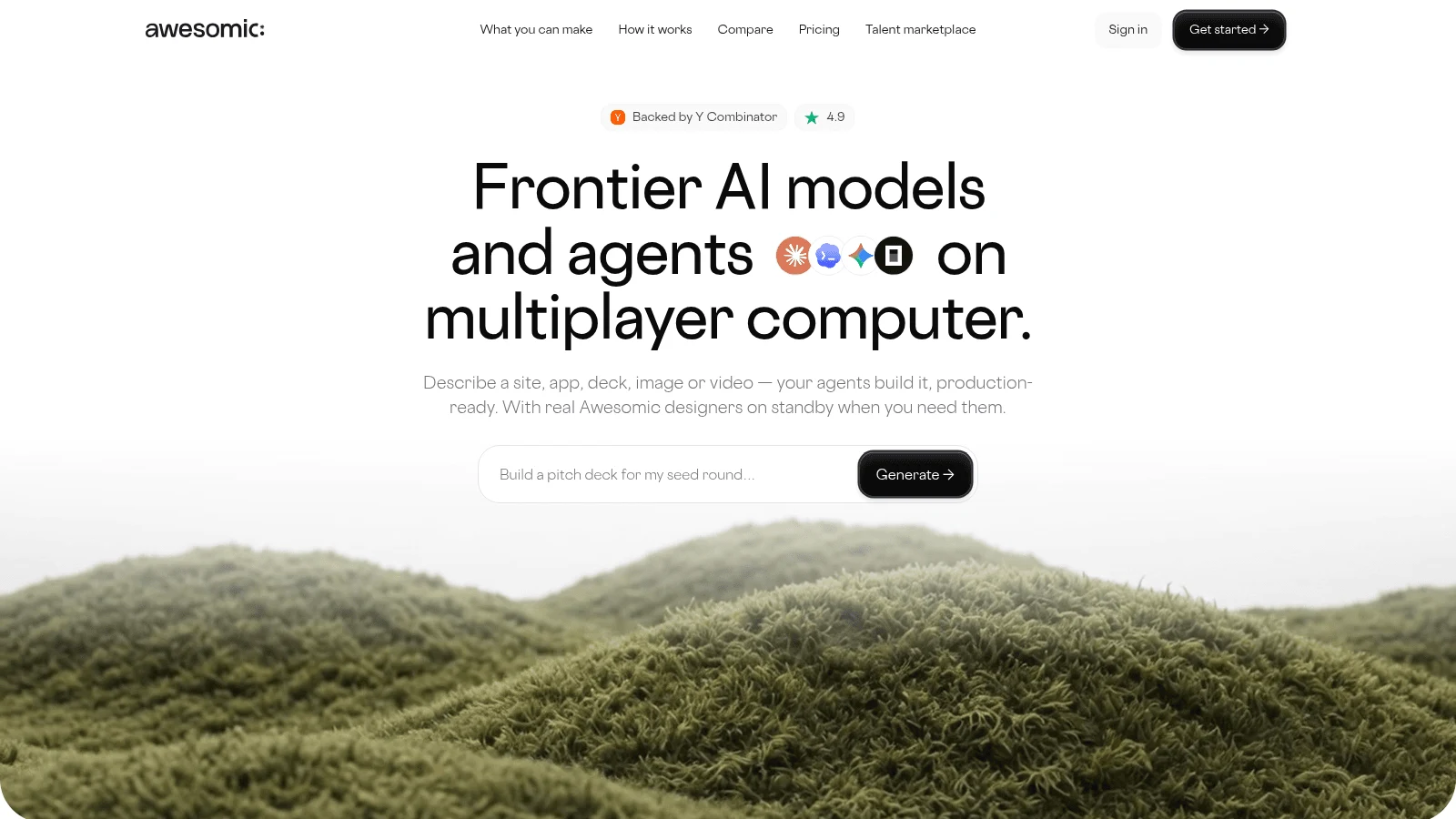
1. Awesomic Studio
Best for: Shared dashboards your team maintains
Overview: Awesomic Studio is the AI workspace we built: describe the page, dashboard or app you need, attach the files, links and notes it should use, and agents (Claude Code, Codex and OpenCode) build it. Studio then hosts the result, private to your team or public.
Studio earns a place here for one job: the status board or reporting page you'd otherwise build in a portal tool just to show people a few numbers. It doesn't replace a portal where each client signs in to see only their own records.
Studio is built by the team behind Awesomic, backed by Y Combinator, and it extends our service rather than replacing it: you can bring an Awesomic designer or developer into any project.
The setup that suits a portal team is Automated: your team comments, revises and approves in one shared workspace, and recurring work becomes reusable workflows anyone can run. Self-serve covers working alone; Assisted (a specialist reviewer) and Dedicated (a vetted expert on ongoing work) are quoted separately from the plan prices.
Key features:
- Builds from text, files or links, so last month's CSV export can be the starting brief.
- Notion, Google Drive and Slack are among its eight connections.
- Built-in hosting puts the result at a live URL that you keep private or share publicly.
- Scheduled automations run refreshes, reports and updates on their own.
- Agents keep working after you close the tab.
- Work exports to code or to other tools.
Pricing: Each plan turns its whole fee into that month's agent budget: $20 a month on Basic, $200 on Pro and $500 on Maximum. The pricing page gives no rate for how quickly a model spends it.
Pros: No per-user line on its pricing page, team review and approval in one workspace, hosting included, reusable workflows, a human takeover on request, quoted separately
Cons: No native database or Airtable connector and no app-user logins or permissions claimed, so client-by-client access needs another tool, and Studio offers neither a free plan nor a trial
How to start using it:
- Pick one read-only page your clients or team check every week.
- Start on Basic at $20 a month.
- Upload the latest export and describe the layout in plain words.
- Invite two teammates to comment and approve before you publish.
- Turn the weekly update into a workflow anyone on the team can run.
Why it's a good Softr alternative: Studio's pricing page lists plans by agent budget and no per-user charge, the opposite of Softr's Team and Client counts.
Final verdict: Use Studio for the dashboards and shared pages around a portal, and keep logins and per-client records on a portal builder from this list.
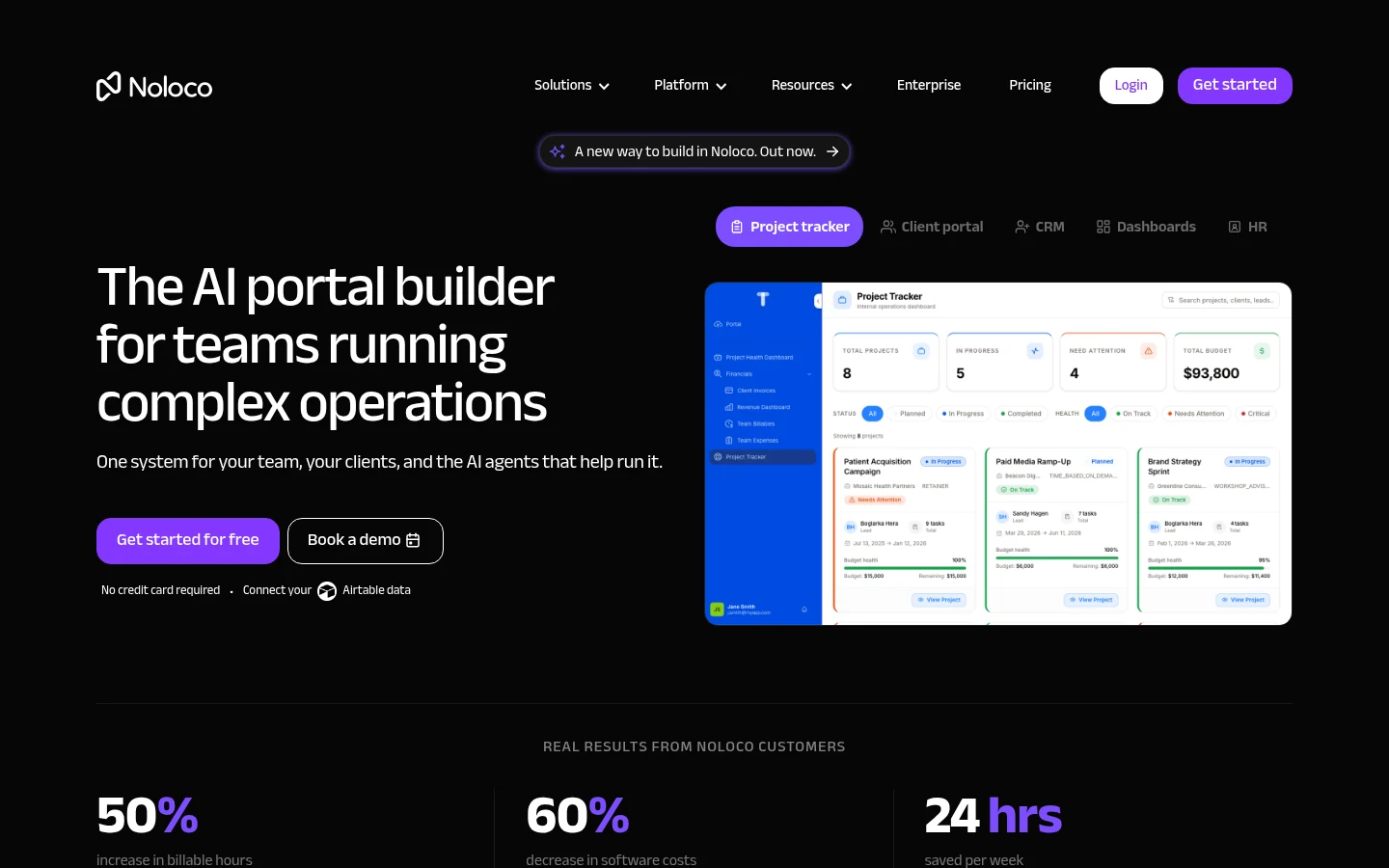
2. Noloco
Overview: Noloco calls itself an AI portal builder, and it's the closest like-for-like swap for a Softr client portal, with record-level permissions deciding what each client sees.
Build includes up to 1,000 client seats, so the client count stops driving the bill.
Key features:
- Live sync with Airtable and SmartSuite, so records stay where your team already edits them.
- Postgres, Supabase, MySQL, Xano, HubSpot and Stripe as data sources on Build.
- 60 days of record history and 3,000 workflow runs a month on Build.
Pricing: Build costs $65 a month billed yearly or $79 monthly, with 10 team seats, then $5 per extra seat yearly ($6 monthly). A free plan covers 50 active clients and 2,000 records.
Pros: Client seats up to 1,000 included, live Airtable sync, record-level permissions
Cons: 25,000 records per app on Build (add-ons run to 250,000), AI credit add-ons from $40 for 400, and exit is CSV data export with no app export we could find
Why it works as a Softr alternative: At 300 clients it costs $65 a month billed yearly, against $729 for Softr Business, with the same Airtable data underneath.
Final verdict: Start here if your portal runs on Airtable and the client count is what's hurting.
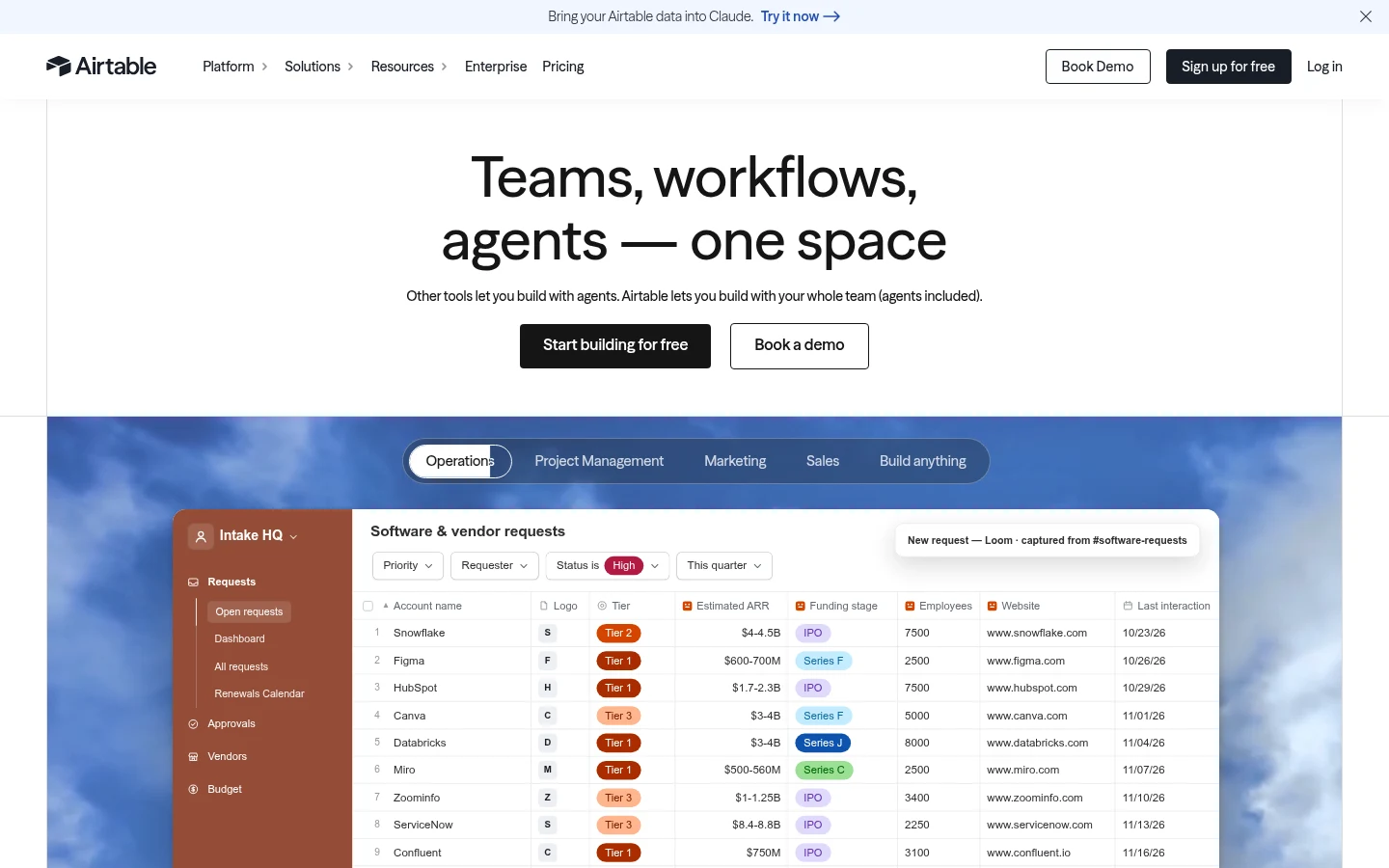
3. Airtable
Overview: If your Softr app already sits on Airtable, the shortest move is to stay inside Airtable, where Interface Designer builds dashboards and forms on your bases, even on the free plan.
Portals, an add-on, gives outside guests a login without a full seat.
Key features:
- Interfaces on the free plan, so internal views cost nothing extra.
- Portals on Team and above, with a branded sign-in, email-domain limits and admin controls on Business.
- No sync layer to break: the app and data are one tool.
Pricing: Team is $20 per seat a month billed yearly or $24 monthly, with 50,000 records per base. Portals starts at $120 a month for 15 guests on Team and $150 on Business ($127.50 on annual billing), and Team's guest blocks stop at 200.
Pros: No new tool to learn, free Interfaces, data stays native
Cons: Editors are billed per seat, guests come in blocks from 15, and a 300-guest portal needs Business, whose larger blocks aren't priced on the page
Where it fits: Small, high-value portals, such as 20 partners or 50 vendors, where a guest block is cheaper than another tool.
Final verdict: The low-effort option when your guest count is modest and your team already lives in Airtable.
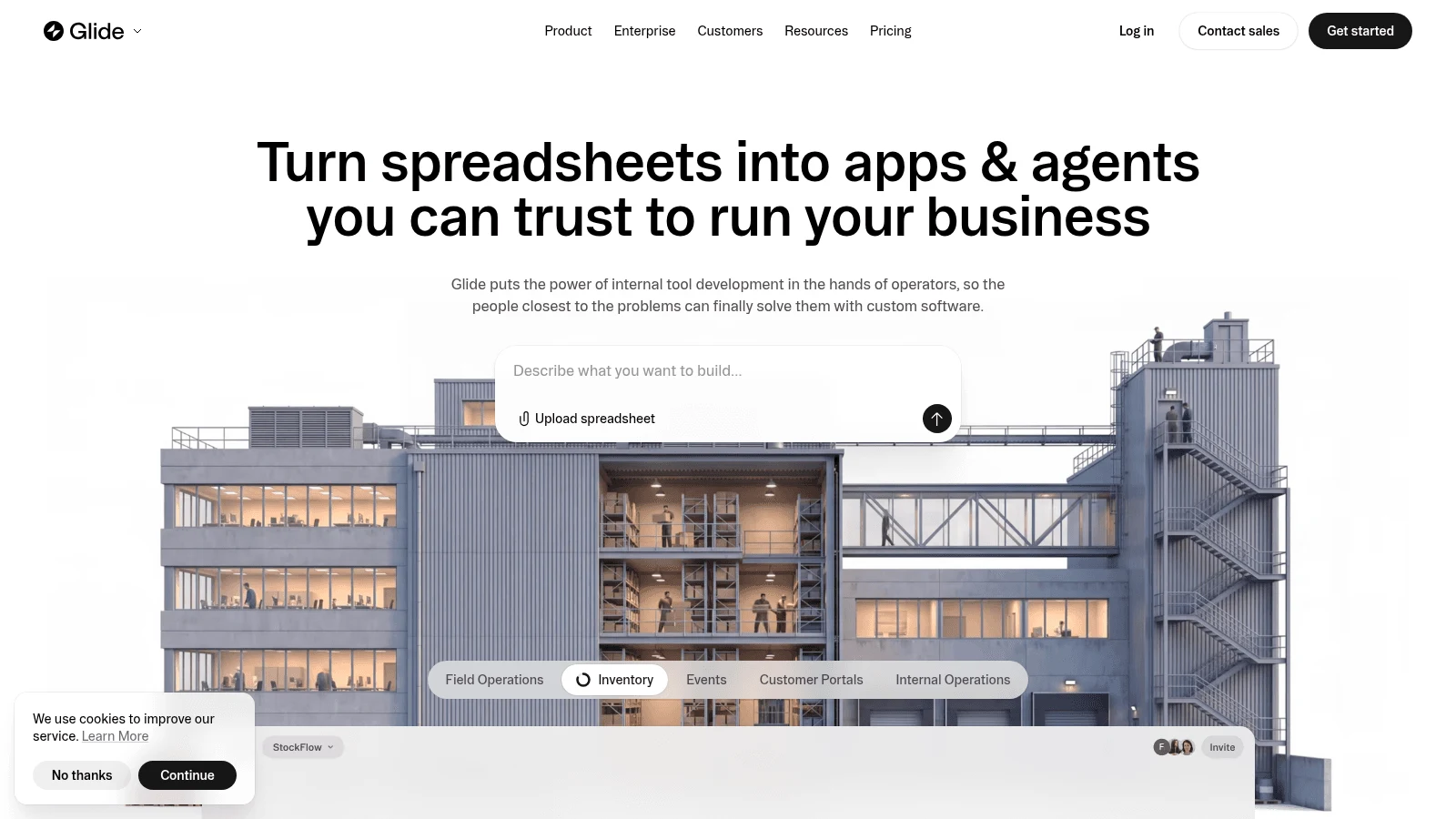
4. Glide
Overview: GlideOS, Glide's chat-driven builder for internal business apps, opened as a beta on July 14, 2026, and a project can begin from a sheet, a prompt or a file. Glide Classic needs its own subscription.
Each GlideOS project stores its data in one Postgres-compatible database, and Google Sheets imports run one way.
Key features:
- A field team's existing spreadsheet can be the first draft.
- External SQL databases connect, and Pro adds database connection strings.
- MCP on Pro lets your own AI agent do the building.
Pricing: Basic runs $25 a month for 100 credits, two team members and two published apps; Plus is $50 for 250 credits, three members and five apps. GlideOS bills monthly only. On Glide Classic, Business is $199 a month billed yearly for 30 users, plus $5 for each additional user.
Pros: A spreadsheet-first start, outside SQL connections, an app count printed on every plan
Cons: Basic apps reach only your organization's members, no published apps on Free, and code viewing reserved for Enterprise
Where it shines: Field and warehouse staff who already run their day from a spreadsheet get an app built on that same sheet.
Final verdict: A good fit for internal apps, less so for a client portal, since public access starts on Plus.
5. Zite
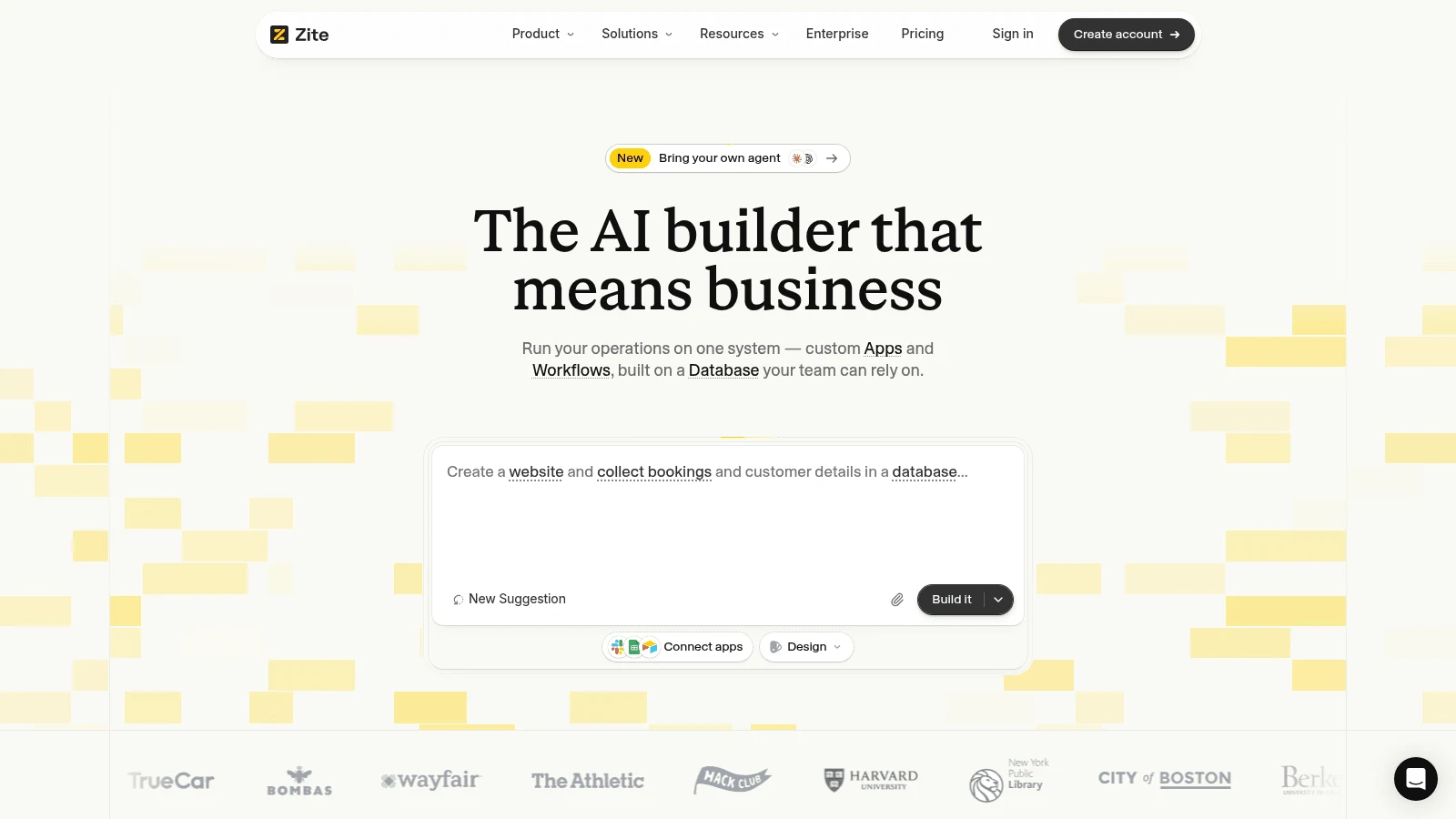
Overview: Zite is the app builder from the team behind Fillout forms, and its pricing page leads with "Unlimited users on every plan. Even free." That makes it the plainest answer to Softr's per-user math.
Apps can run on its built-in Zite Database or connect straight to Airtable or Google Sheets.
Key features:
- No per-user charge on any plan, Free included.
- Credits pay for AI work only, while published-app workflows draw on a separate run allowance (5,000 a month on Pro).
- A workspace export with code, schema, apps and forms, which imports into another Zite organization.
Pricing: Pro is billed annually at $240, or $20 a month ($25 if you pay monthly), for 100,000 records plus one custom domain. The $75-a-month Business plan, also billed annually, raises records to 250,000.
Pros: Unlimited users on every plan, a low paid entry, an export that includes code
Cons: Records and chat history stay behind in the workspace export, apps can't be exported one at a time, and Free caps you at 5,000 records
Why it made this list: A portal for 300 or 3,000 users costs the same $20 a month billed annually, so long as the records fit.
Final verdict: Pick Zite when user count is the problem and your data sits in Airtable, Sheets or its own database.
6. Knack
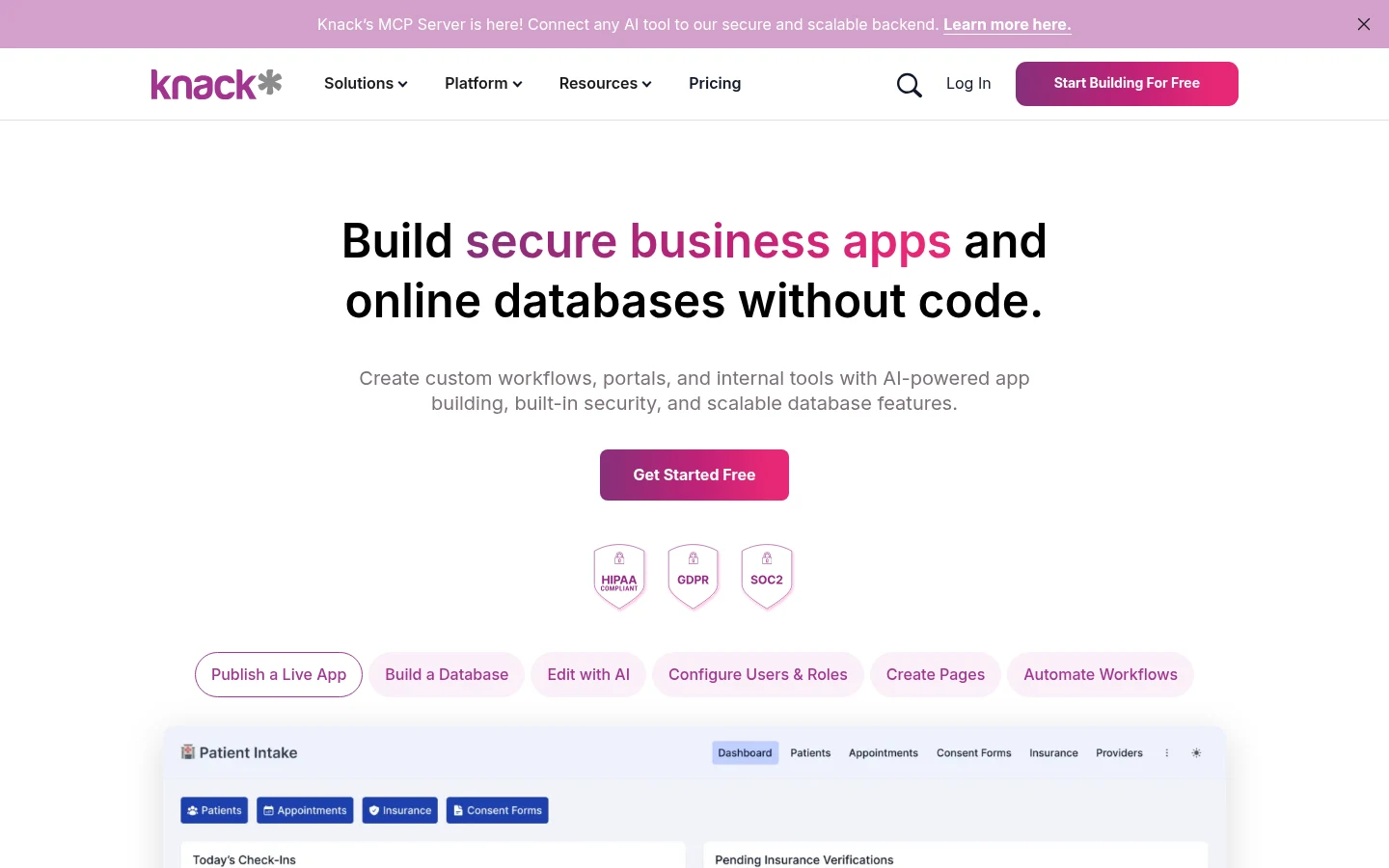
Overview: Knack is a no-code database and portal builder with unlimited users and roles on every plan, which suits directories and vendor portals with hundreds of logins.
The trade is that your data moves into Knack's own database. Knack Flows templates sync records in from Google Sheets or Airtable, but they copy them into Knack rather than reading them live.
Key features:
- Unlimited tables, fields and pages on every plan.
- 2FA for app users, a custom domain and payments from Pro.
- HIPAA and GovCloud options on Enterprise.
Pricing: Starter is $59 on monthly billing or $49 a month paid yearly, with 20,000 records, three apps and one shared builder. Pro is $110 yearly or $130 monthly, with 50,000 records and unlimited builders. A new-customer promotion discounts the first three months, so check which price you're quoted.
Pros: Unlimited users and roles at every price, mature role-based permissions, regulated-industry options
Cons: Records live in Knack even when synced from Airtable, caps are set by plan, and Advanced SSO is a $55 add-on on Pro (included from Corporate)
Where it beats Softr: On a large user list, Knack's price is set by records rather than people.
Final verdict: Choose Knack for big role-based portals where you can migrate the data once and leave it there.
7. WeWeb
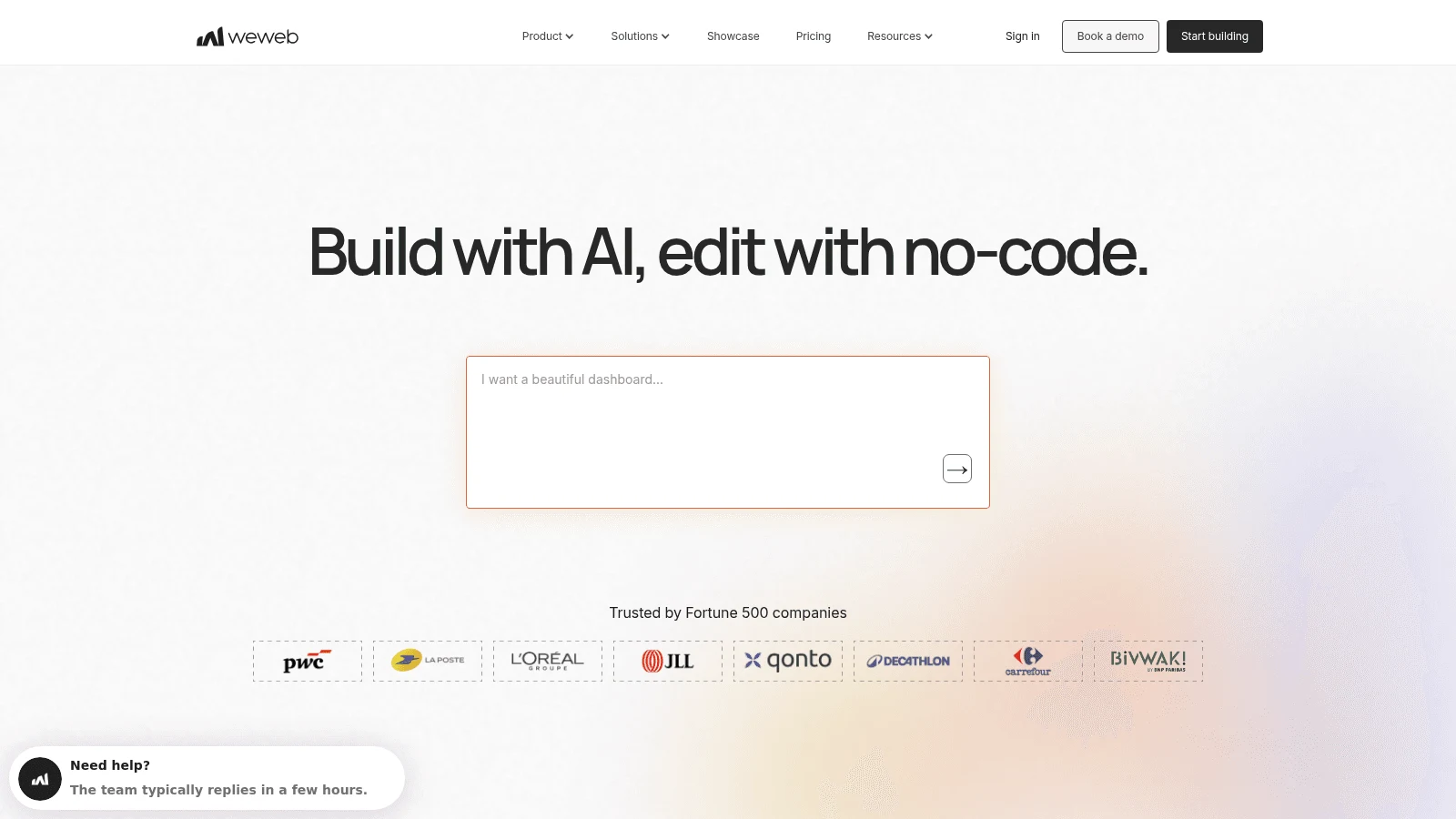
Overview: WeWeb builds the front end and leaves the backend to you. It connects to Airtable, Xano, Supabase or any REST API, and its own cloud includes a database if you'd rather not run one.
It's more technical than Softr, but you can export the whole app as a standard Vue.js single-page app and host it yourself.
Key features:
- Code export and self-hosting from Essential, with GitHub sync.
- Unlimited end users on every WeWeb Cloud tier.
- Data that can stay in a backend you already pay for.
Pricing: Essential is $25 on monthly billing or $20 a month paid yearly, and Pro is $60 monthly or $50 a month yearly, per developer. Hosting is a second bill, with WeWeb Cloud tiers listed at $0 to $208 a month.
Pros: Code you can take away, no per-end-user fees, a choice of backends
Cons: Two bills (editor and cloud), per-developer pricing on Pro, and bandwidth overage at $0.25 per GB on some tiers
Why buyers shortlist it: It removes the lock-in question entirely, because the exported app runs without WeWeb.
Final verdict: The pick for a team with someone technical who wants Softr's speed without Softr's walls.
8. Budibase
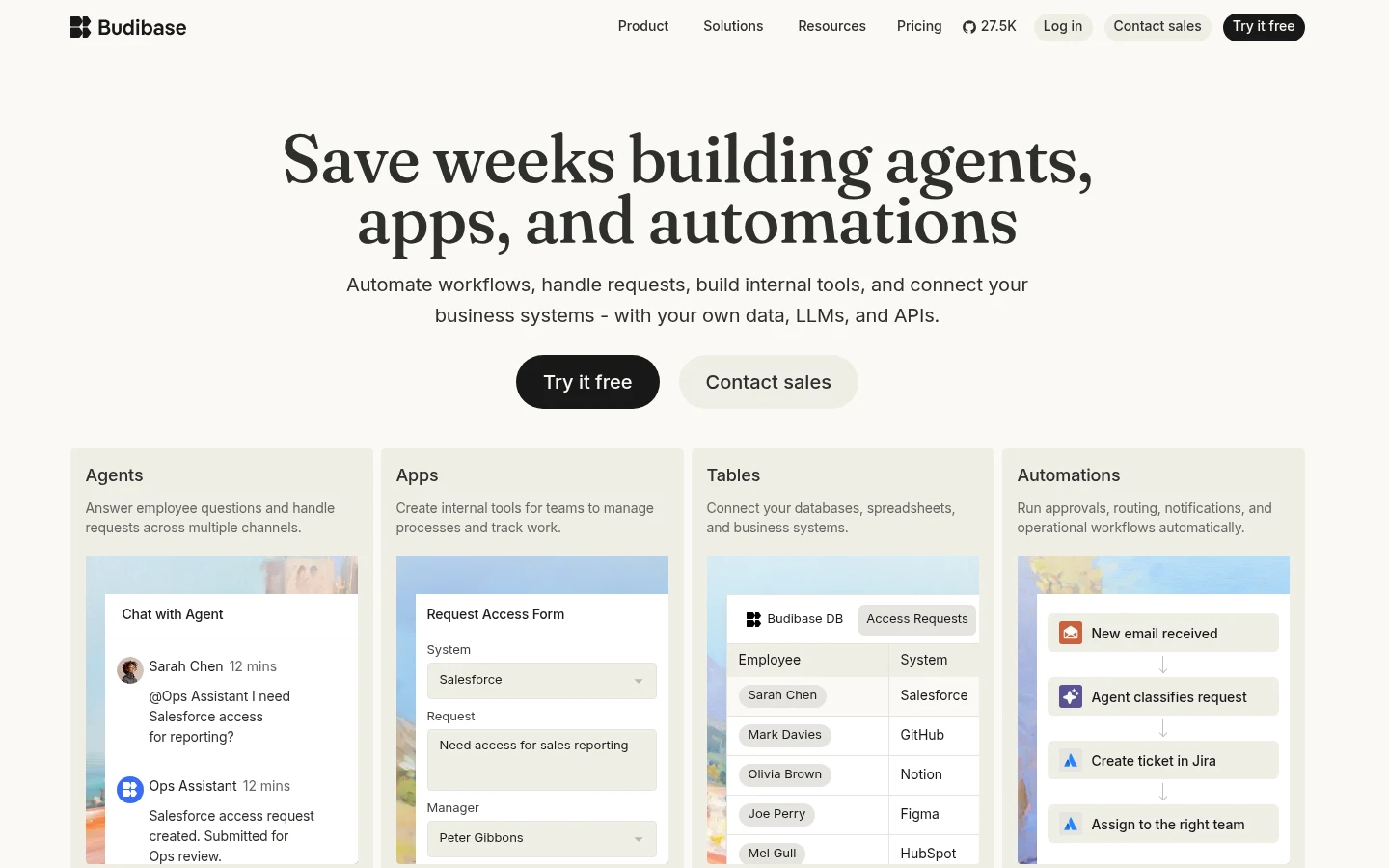
Overview: Budibase is an open-source internal-tool builder (GPL v3 core), and its open-source edition is free to self-host with unlimited users. It also connects to external SQL databases such as PostgreSQL and MS SQL.
Its cloud plans work the other way round: they include no end users, and each end user costs $5 a month.
Key features:
- Free self-hosted edition with unlimited apps, automations, users and SSO.
- Workspace export to JSON, optionally with internal database rows and password encryption, for import into any other install.
- Custom data-source plugins beside REST and SQL.
Pricing: Self-hosting the open-source plan is free. Cloud Pro is $19 a month billed yearly ($23 monthly) for one creator, plus $5 per end user. More creators means Premium at $49 billed yearly ($59 monthly), with each extra creator at $50.
Pros: No license fee self-hosted, runs on your own database, a full workspace export
Cons: Self-hosting means you run and patch the server, cloud users cost $5 each from the first one, and the UI leans toward staff tools rather than polished client portals
Its real strength: Data, app and server can all stay on your own infrastructure.
Final verdict: Choose Budibase when someone on your team can run a server and the users are mostly staff.
9. Bubble
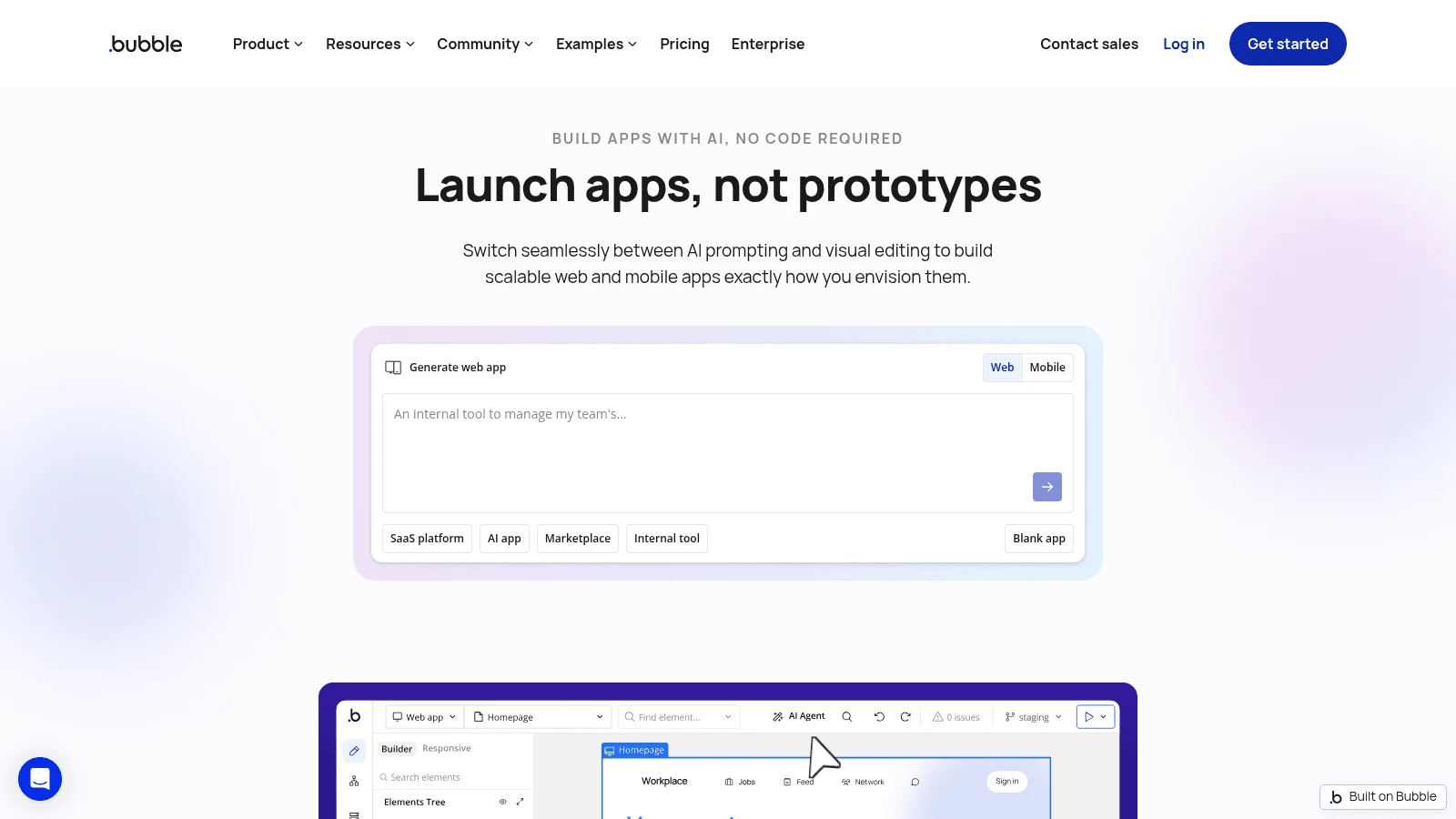
Overview: Bubble builds full web apps, and its React Native support adds native iOS and Android apps from the same project. It's where a portal goes when it turns into a product customers pay for.
You pay a plan fee plus workload units (Bubble's measure of server activity), and its pricing page lists no per-user fee.
Key features:
- Full app logic, workflows and its own database, with an API connector for outside data.
- One project ships web and native mobile apps, though app-store publishing needs a paid Mobile or Web & Mobile plan.
- CSV export per data type from the App data section.
Pricing: Web Starter is $32 billed monthly or $29 a month on a yearly plan, including 175,000 workload units plus a custom domain. Growth runs $134 monthly or $119 a month billed yearly.
Pros: Priced by usage rather than headcount, web and native mobile in one tool, deep app logic
Cons: Workload-unit bills are hard to predict, there's no source-code export, and the learning curve is steep next to Softr
Why it earns a place here: It handles the day a portal needs complex workflows and a mobile app at once.
Final verdict: Move to Bubble when the portal is becoming a product, and accept that the app stays on Bubble.
10. Lovable
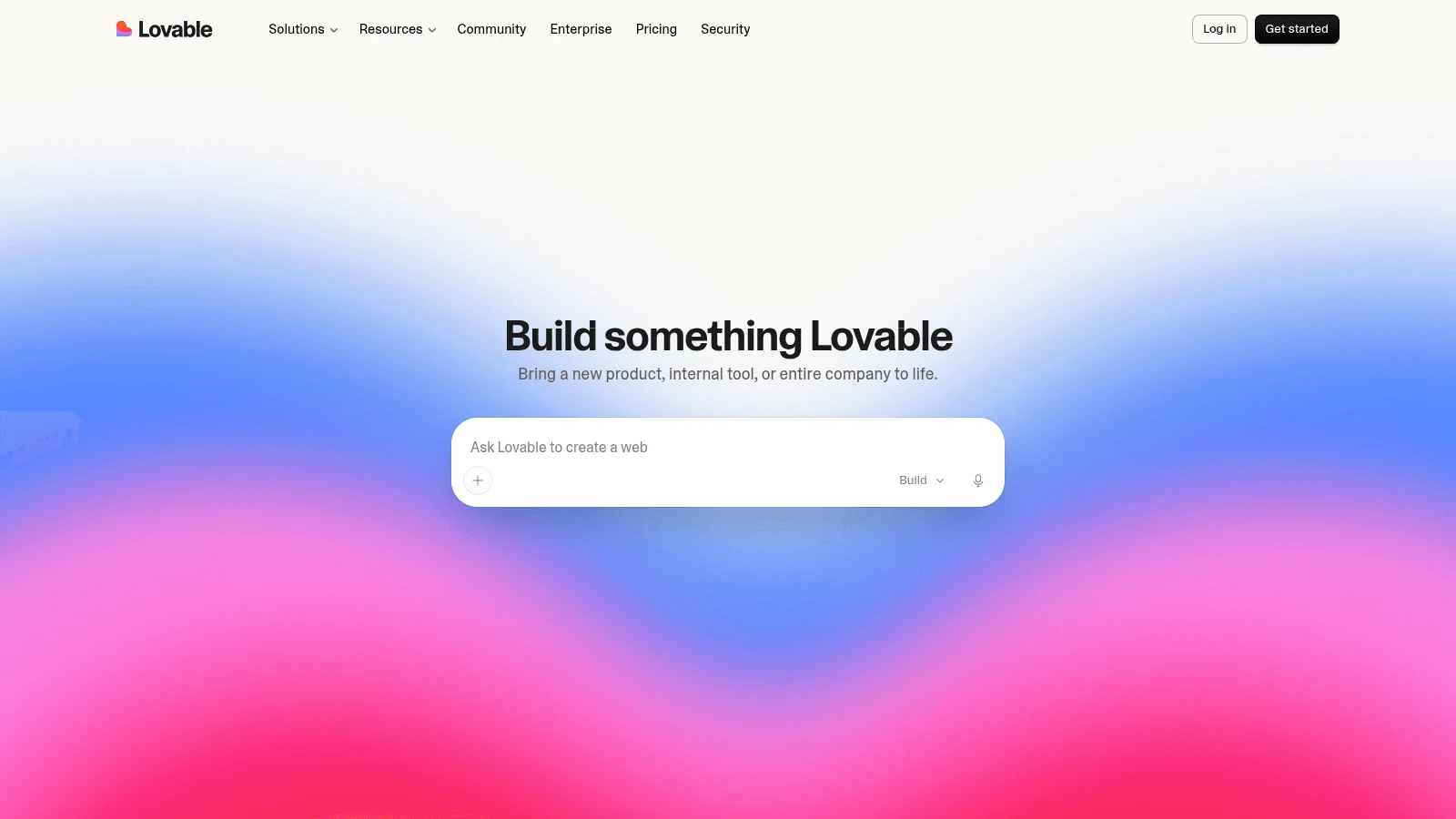
Overview: Lovable writes a full web app from a prompt, with a database, auth and storage from its Lovable Cloud backend.
Every plan, Free included, gets two-way GitHub sync, and a paid plan also lets you download the codebase as a ZIP.
Key features:
- Code in your own GitHub repository from the first sync.
- A code editor on paid plans for fixing what the AI gets wrong.
- Paid plans that aren't priced per seat.
Pricing: Pro costs $21 a month when paid yearly or $25 month to month, with 100 credits a month and custom domains. Business, which adds SSO, is $42 a month billed yearly or $50 monthly.
Pros: Code you own, a full backend in one place, no per-seat charge
Cons: No one-click move from Lovable Cloud to your own Supabase, web-only output with no native mobile, and both building and heavy app traffic spend credits
What it does well: It turns a portal into an app a developer can take over without starting from an empty repository.
Final verdict: Choose Lovable if you'd rather review code than click through a builder, and plan where the data will live long term.
What a 300-client portal costs each month
Sticker prices hide the real difference, so we priced one realistic case: 3 builders and 300 outside clients who each need their own login. Every figure below comes from the vendor's pricing page or docs, and we priced these Softr alternatives in United States dollars.
| Tool and plan | Base price | What 300 client logins add | Monthly total |
|---|---|---|---|
| Softr Business | $329 billed yearly ($395 monthly), 3 builders and 100 Client users included | 200 extra Client users at $2, billed monthly | $729 on yearly billing, $795 on monthly |
| Noloco Build | $65 billed yearly ($79 monthly), 10 team seats | Nothing: client seats included up to 1,000 | $65 or $79 |
| Zite Pro | $20 billed annually ($25 monthly) | Nothing: unlimited users | $20 or $25 |
| Knack Pro | $110 billed yearly ($130 monthly); Starter allows one shared builder | Nothing: unlimited users | $110 or $130 |
| Airtable Business + Portals | 3 seats at $45 billed yearly ($54 monthly) | 300+ guests need Business; only the 15-guest block is priced ($150 a month, $127.50 billed annually) | Not computable from the page |
| Budibase cloud Premium | $49 billed yearly ($59 monthly), plus 2 extra creators at $50 ($60) | 300 end users at $5 ($6 monthly) | $1,649 yearly, $1,979 monthly (self-hosted: no license fee) |
| Awesomic Studio Basic | $20, the month's agent budget | No app-user logins claimed | Not a like-for-like portal |
Softr Pro can't take this case: even with add-ons its Client users top out at 250, so 300 clients means Business plus per-user charges. WeWeb, Bubble, Glide and Lovable sit out of the table because their bills follow hosting tiers, workload or credits rather than logins.
Records change the picture for the cheaper rows. Knack Pro stops at 50,000 records and Noloco Build at 25,000 per app, while Zite Pro allows 100,000, so count your rows before you count your savings. Put the per-user line in your startup design budget as a cost that grows with every client you sign, not a fixed fee.
Where your data lives, and what you can take with you
The best alternatives to Softr split into two camps on data. Noloco, WeWeb, Budibase, Zite and Airtable itself work on data you already keep, whether that's an Airtable base, Supabase, Xano or a SQL database. Knack and Bubble ask you to move the records into their own database, Glide imports Sheets data one way into its project database, and Lovable keeps it in Lovable Cloud.
Moving records into a typed database has an upside that's easy to miss. Mark Ziemann and two colleagues screened 35,175 supplementary Excel files from 18 journals and reported in Genome Biology that 19.6% of papers with Excel gene lists contained gene names silently converted, with SEPT2 becoming "2-Sep."
The authors found no way to switch that conversion off permanently in Excel, LibreOffice or OpenOffice, while Google Sheets converted none. A field typed as text in a real database can't be reformatted that way, which is worth weighing if your portal still runs off spreadsheets.
Exit is where the tools differ most. WeWeb exports a Vue.js app you can host anywhere, Budibase exports a workspace as JSON, and Lovable syncs code to GitHub. Zite's workspace export carries code but not records, and it imports only into another Zite organization. Softr, Noloco and Bubble give you CSV data and no app export we could find.
When staying on Softr is the better call
Moving isn't always worth it: Softr kept existing customers on their old limits, so a Business plan bought before November 20, 2025 may still carry 2,500 users at the old price.
Softr is also hard to beat on setup time. One r/nocode commenter wrote on Reddit: "I've seen a few people move from Softr to Glide or WeWeb after the pricing changes. The tradeoff is that Softr is hard to beat for getting a client portal live quickly." It's one person's view, but it matches the trade-offs above.
Stay if your plan is grandfathered, your client count sits under 100, or nobody has time to rebuild. You can also build Softr apps over MCP from Claude or ChatGPT on every plan without spending AI credits, which eases the credit limits.
If the frustration is really the public marketing site, keep the portal on Softr and move the site to one of the Webflow alternatives, which is a smaller job than rebuilding logins and permissions.
How to move a portal off Softr
Plan a rebuild rather than an import, because no tool here imports a Softr app. Your data travels as CSV, or stays put if it lives in Airtable or SQL.
- Export every Softr Databases table to CSV and record the row counts.
- List each page, user group and permission rule in the current app.
- Rebuild the busiest page first, on a free plan or trial of the new tool.
- Invite five real clients from free email addresses and check what each one can see.
- Run both portals side by side for two weeks before you switch the login link.
Teams skip step 4, and that's where record-level permissions break. If nobody on your team has two spare weeks, one of the no-code agencies that build in these tools can run the rebuild for you.
How to choose the right Softr alternative
Pick by where your data lives and who signs in, since those two facts decide both the bill and the migration. Match your situation to one of these alternatives to Softr software:
- If your records live in Airtable and clients need their own logins, test Noloco first, then Airtable Portals for a small guest count.
- If hundreds of people log in on a small budget, try Zite or Knack, since neither charges per user.
- If your developers already run a Postgres or SQL database, self-host Budibase or put WeWeb on top of it.
- If field staff work from a spreadsheet, start with Glide.
- If customers will pay for the product on web and mobile, look at Bubble.
- If you want to own the code from day one, pick Lovable or WeWeb.
Whichever you pick, make sure clients can find answers in it. Gartner's survey of 5,728 customers found only 14% of customer service issues were fully resolved in self-service, and the most common failure, in 43% of cases, was customers not finding content relevant to their issue.
A portal that leaves clients emailing you anyway does little for customer retention, so put each client's open items and next step on the first screen they see.
Your next step: price month twelve, not month one
Take your client count today, double it, and run that number through the 300-client table for your two likeliest Softr alternatives. Then rebuild one real page on each free plan or trial and invite three clients to use it for a week.
If the portal also needs a proper public site in front of it, our web design team can build that while you test.
To have agents build the reporting views your clients check each week, Get started with Awesomic Studio on Basic at $20 a month.
FAQ
What are the Softr alternatives?
The main Softr.io alternatives are Noloco, Airtable Interfaces with Portals, Glide, Zite, Knack, WeWeb, Budibase, Bubble and Lovable. Choose by where your data lives and how many outside users sign in, because those two facts decide the bill on Softr and on most of its rivals.
What are the no-code alternatives to Softr?
Noloco, Airtable, Glide, Zite, Knack and Bubble are fully no-code. WeWeb and Budibase are visual builders too, but they expect more technical setup, such as connecting a backend or running a server.
What are the AI-first alternatives to Softr?
Lovable writes a full app with code from a prompt, Zite and GlideOS build business apps by chat, and Noloco has an AI assistant called Nola. Our own Awesomic Studio has agents build dashboards and shared pages from files and links, though it claims no app-user logins.
How many users does Softr's Business plan include now?
New Business subscriptions include 30 Team users and 100 Client users, with add-ons up to 100 Team and 500 Client. Older plans keep the limits they were bought with, including the 2,500 users some pre-November 2025 plans carry.
Can you export an app from Softr?
We found no app code export, only export of your data, though Softr Databases gets automated backups from Basic. Several Softr competitors go further: WeWeb's code export runs without WeWeb, Budibase workspaces move between installs, and Lovable code lands in your GitHub repository.