Awesomic Team

Key takeaways:
- Bubble bills a flat plan plus workload units. Starter includes 175,000 a month and charges $0.30 per 1,000 past that unless you add a workload tier, so a web app using 400,000 a month costs $99.50 on monthly billing, or $64.75 with Tier 1.
- Bubble's own FAQ says "there's no traditional codebase to export." Six of the ten third-party tools below hand you application source code, Webflow exports HTML and CSS, Adalo and Softr keep the app on their platform, and Glide shows code only on Enterprise.
- "Native mobile" means four different things on this list: compiled builds (FlutterFlow, Adalo), Expo and React Native (Bolt.new, Replit), a web-view wrapper (Base44) and installable web apps (Softr, Glide and WeWeb). Lovable's FAQ points you to a PWA or a wrapper you add yourself, and Webflow doesn't make mobile apps.
- Leaving Bubble is a rebuild. You get a JSON file describing your app's logic and CSV exports of your data, not code, so budget time to recreate every workflow.
Bubble is a visual builder for web apps, with a native mobile builder beside it, and it suits founders who want a working product without hiring a developer. The database, workflows, logins and hosting all sit in one editor.
People start searching for Bubble alternatives once the app has users. The workload bill moves with traffic, the app can't leave Bubble's runtime, and AI builders now write code you can keep from a plain-words prompt.
This list of Bubble.io alternatives judges 11 tools on the reasons people actually leave: how each one prices usage, whether you can take the code away, and what "mobile app" means on each.
Why teams look for Bubble alternatives
Four reasons keep coming up on Bubble's forum and in r/Bubbleio, and Bubble's own pages back up the first three.
Workload units make the bill hard to forecast
Every Bubble plan includes a monthly allowance of workload units (WU), which Bubble defines as "the server resources needed to host, run, and scale apps." Database searches, workflows and page interactions all draw on it, and the web and mobile versions of one app share a single pool.
Here is what each web plan costs on both billing toggles, next to the Web & Mobile bundle, and how few extra units an upgrade buys:
| Plan | Web: yearly / monthly | Web & Mobile: yearly / monthly | WU included a month |
|---|---|---|---|
| Free | $0 | $0 | 50,000 (no live site) |
| Starter | $29 / $32 | $59 / $69 | 175,000 |
| Growth | $119 / $134 | $209 / $249 | 250,000 |
| Team | $349 / $399 | $549 / $649 | 500,000 |
Past the allowance, overages cost $0.30 per 1,000 WU unless you buy a workload tier, which adds units and lowers the rate. Tier 1 adds 200,000 WU for $29 monthly or $26 billed yearly, with overage at $0.15 per 1,000.
Take a Starter web app that uses 400,000 WU in a month on monthly billing. Plain overages add $67.50 to the $32 plan, for $99.50. Tier 1 brings it to $64.75 ($32, plus $29 for the tier, plus $3.75 for the last 25,000 units), while moving up to Growth would cost $179.
You can switch overages off, but Bubble's manual says the app is then "taken offline" when it hits the limit and comes back at the start of the next billing period. Bubble emails you at 75% and 100% of the allowance, which helps once you know your usage and not much before launch.
There's no codebase to take with you
Bubble is direct about this. Its FAQ says apps "run on the Bubble platform, so there's no traditional codebase to export." For a move, Bubble offers a raw JSON file of your application logic, CSV exports of your data and API access to your records.
Bubble also pledges that if it ever shut down, it would release its source code under an open-source license so you could run your own Bubble server. That protects you if Bubble closes, not if you outgrow it.
Bubble still labels native mobile a beta
Bubble's native builder makes iOS and Android apps with React Native. Its manual still says the native mobile editor is "currently in beta" and its mobile page carries a Beta label, though the pricing FAQ no longer calls it one. Mobile also sits on a separate pricing tab: Web & Mobile Starter costs $59 a month billed yearly against $29 for web alone, with 5 app-store build submissions a month.
AI builders now write code you keep
The fourth reason is newer. In a Reddit thread asking whether Bubble still makes sense, one builder said they'd spent two to three months moving apps to code and wrote: "one of my apps on bubble is around $600/mo, the same app running on firebase as nextjs app hasn't exceeded $12/mo, and we have around 3k users on that one."
That's one person's numbers on one app, not a benchmark, so run the same sum on your own.
The best Bubble alternatives compared
Every price below is in US dollars, read off the makers' own pricing pages on October 8, 2026. The "Code you can take away?" column decides how hard your next move will be, so read it before the price. Bubble itself fills the bottom row so you can compare.
| Tool | Best for | Code you can take away? | Mobile apps | Pricing (from) |
|---|---|---|---|---|
| Awesomic Studio | App builds with an expert on call | Export to code or other tools | Mobile app work listed; no app-store publishing claimed | $20/month, no free plan |
| Lovable | Web apps with code in GitHub | Yes: GitHub sync on every plan, ZIP on paid plans | None native; its FAQ suggests a PWA | Free; Pro $21/month billed yearly ($25 monthly) |
| Bolt.new | Web or Expo apps from one prompt | Yes: two-way GitHub sync or a ZIP download | Expo (React Native) | Free; Pro $18/month billed yearly ($25 monthly) |
| Replit | Apps a developer will inherit | Yes: ZIP download and GitHub sync | iOS and Android via Agent, previewed in Expo Go | Free; Core $18/month billed yearly ($20 monthly) |
| Base44 | Simple apps with a backend included | Yes, from Builder ($40/month billed yearly): GitHub sync | Web-view wrapper, IPA and AAB from Builder | Free; Starter $16/month billed yearly ($20 monthly) |
| FlutterFlow | Native mobile apps, built visually | Yes: Flutter code download from Basic | Compiled Flutter, App Store deploy from Basic | Free; Basic $29.25/month billed yearly ($39 monthly) |
| WeWeb | Web front ends on Supabase or Xano | Yes: Vue.js app from Essential | PWA, per its own docs; no native builds | Free; Essential $20/month billed yearly ($25 monthly) |
| Adalo | Native apps without code or usage meters | No export found in its docs | Native iOS and Android builds on paid plans | Free; Starter $36/month billed yearly ($45 monthly) |
| Softr | Portals on data you already keep | No app code export found | PWA on Business | Free; Basic $19/month billed yearly ($25 monthly) |
| Glide | Internal apps from a spreadsheet | Code viewing on Enterprise only | PWA | Free; Basic $25/month, billed monthly |
| Webflow | Moving the marketing site out | HTML and CSS from a paid workspace plan | None | Free; Basic site $15/month billed yearly ($25 monthly) |
| Bubble (for reference) | Web and mobile in one editor | No: JSON logic file and CSV data | React Native builder, beta per its manual | Free; Starter $29/month billed yearly ($32 monthly) |
Awesomic Studio is at the top for a simple reason: it's our product. The other ten run from AI builders that write code (Lovable, Bolt.new, Replit, Base44), through visual builders that export it (FlutterFlow, WeWeb), to Adalo, Softr and Glide, the closest Bubble no-code platform alternatives, with Webflow last for the public website.

1. Awesomic Studio
Best for: App builds with an expert route
Overview: In Awesomic Studio, our AI workspace, Codex, Claude Code and OpenCode agents turn a plain-words description, a file or a link into a working site or app. The finished build goes live on Studio's own hosting, shared with your team only or with everyone.
The difference from Bubble shows up at the exit. Studio lists "export to code or other tools" among its workspace features, so a build isn't tied to one runtime. If the agents get stuck, a vetted Awesomic designer or developer takes over the build as it is and returns it when the fix is done.
Our team, which has served 4,000+ companies, built Studio as a first step that works alongside designers and developers, never a substitute for them. In Self-serve you build "directly with agents and leading models," and in Dedicated "a vetted specialist or multi-skill team" owns ongoing delivery. Assisted adds expert review, and Automated adds repeatable team workflows.
Key features:
- Web and mobile app work from a prompt, a file or a rough idea.
- Export to code or other tools for a developer to continue.
- Built-in hosting gives the app a live address.
- Always-on agents keep building after you close the tab.
- The Dedicated setup puts a vetted expert in charge of ongoing delivery.
- Eight connections, including GitHub, Figma, Notion and Slack.
Pricing: Basic is $20, Pro $200 and Maximum $500 a month, and what you pay becomes that month's budget for agents. How quickly each model spends that budget isn't published, the Dedicated setup and any human takeover are quoted separately, and there's no free way to try it first.
Pros: One number for the fee and the agent spend, code export, built-in hosting, a human takeover on request, quoted separately, room to grow into a dedicated team
Cons: No app-store publishing, built-in database or backend claimed, so store releases and user records need another tool, and no published draw-down rate per model
How to start using it:
- Open a Basic plan for the Bubble screen you'd rebuild first.
- Describe it and attach screenshots of the current page.
- Correct it as you'd brief a colleague, until the flow behaves.
- Publish privately and test it with two or three users.
- Bring in the Dedicated setup when the rebuild needs an accountable owner.
Why it's a good Bubble alternative: Prompting agents yourself and handing the work to an Awesomic expert happen in the same workspace, so outgrowing the agents doesn't mean moving the build again.
Final verdict: Choose Studio to rebuild screens and flows with agents while keeping a human route open, and keep user accounts and store releases on a tool that states it handles them.
2. Lovable
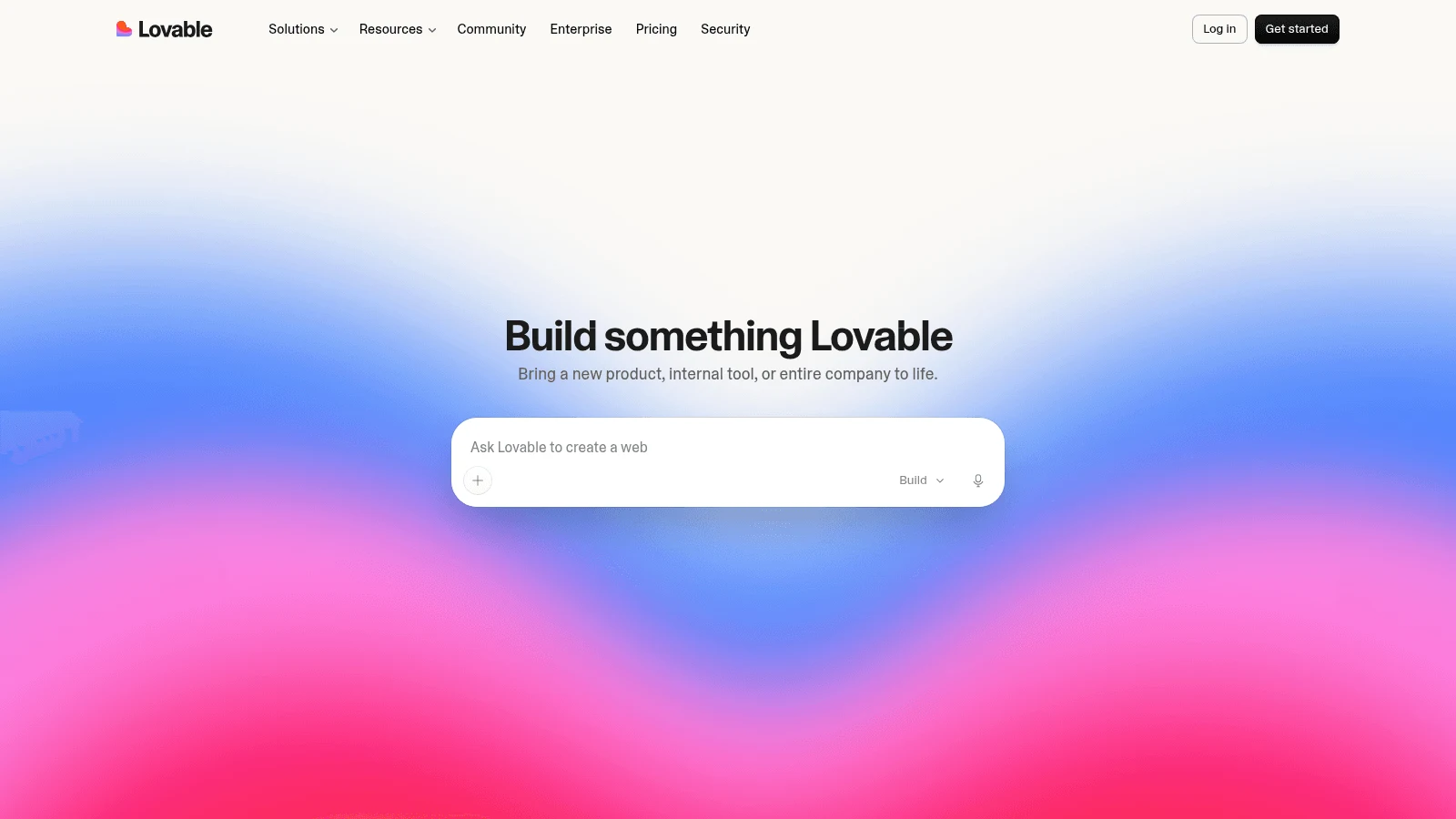
Overview: Lovable builds a web app from a prompt on its Lovable Cloud backend, which covers the database, storage, auth, realtime and edge functions. That's Bubble's all-in-one bundle, with reachable code underneath.
Key features:
- GitHub sync on every plan, Free included.
- A code editor for hand edits and a ZIP of the codebase, both on paid plans.
- Unlimited workspace members, so seats don't drive the bill.
Pricing: Pro is $21 a month billed yearly ($25 monthly) for 100 credits covering building, hosting and in-app AI. Business, with SSO, is $42 yearly or $50 monthly.
Pros: Code in your own repository from day one, one credit meter, a free plan
Cons: No native mobile (its FAQ suggests a PWA or a wrapper), monthly-plan credits lapse after two months, shifting a Lovable Cloud backend to a Supabase account you own isn't a one-click job
Who it suits: Web-first founders who want the code in GitHub, or who hire Lovable agencies to prompt for them.
Final verdict: The most direct swap for a Bubble web app, minus the mobile builder.
3. Bolt.new
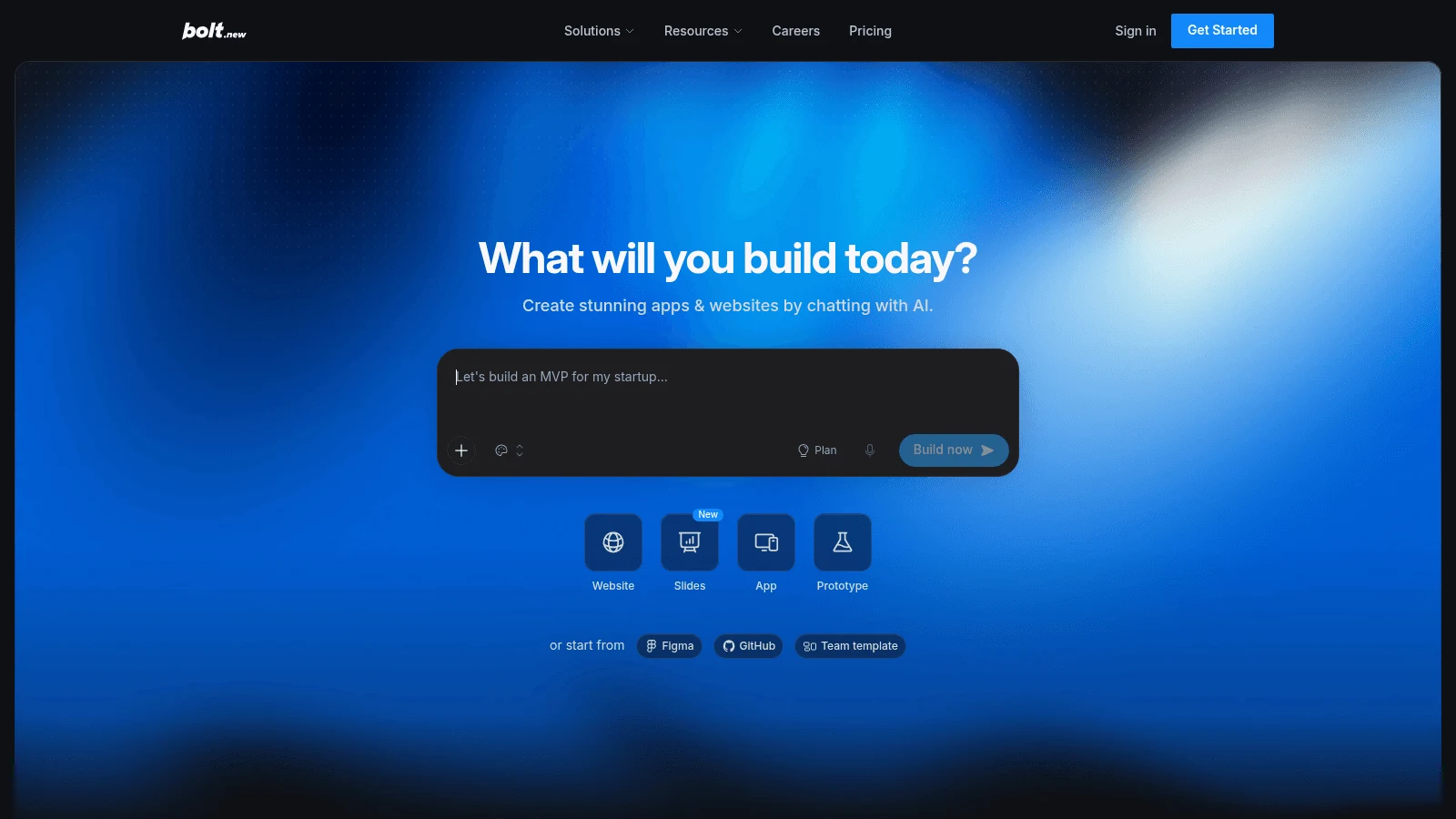
Overview: Bolt.new, from StackBlitz, writes a full-stack app in the browser from a prompt. Ask for a mobile app and it switches to Expo, with a documented path through TestFlight to the App Store and Google Play.
Key features:
- Two-way GitHub sync with branches, so a developer can share the repo.
- Imports an existing repository, with separate AI memory per branch.
- Hosting on every plan (1 million web requests on Pro).
Pricing: Pro costs $25 on monthly billing, or $18 a month paid yearly, starting at 10 million tokens a month with rollover. Teams is $27 per member yearly or $30 monthly.
Pros: Web or Expo mobile from one prompt box, code in GitHub, 1 million free tokens a month
Cons: Bigger projects burn more tokens per message, rolled-over tokens last only one extra month, Bolt branding on Free
Where it beats Bubble: Its mobile build is Expo code you own, not a beta feature on its own price tab.
Final verdict: Pick Bolt.new if your next version needs a phone app and a codebase.
4. Replit
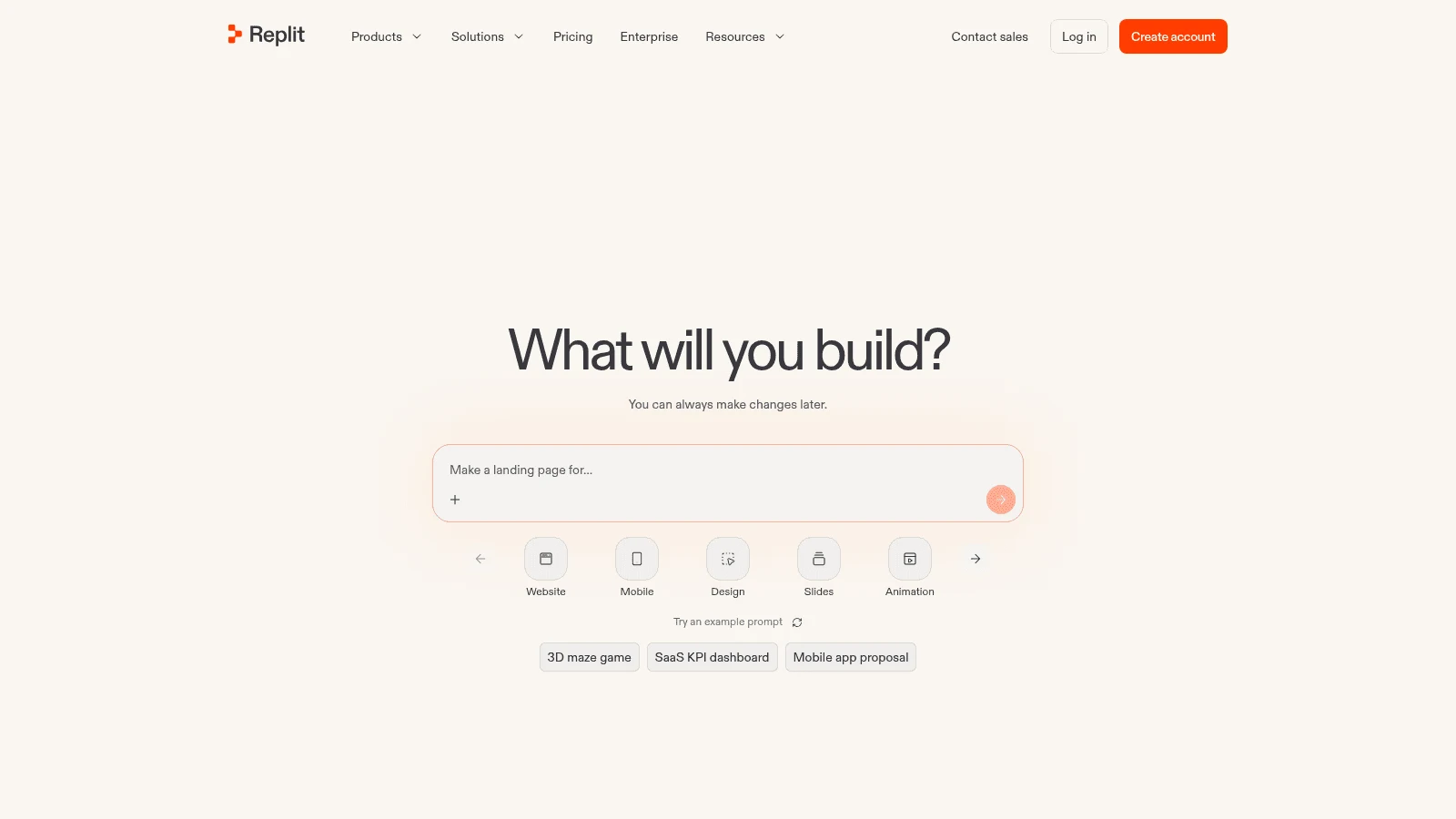
Overview: Replit's Agent builds and runs apps with hosting, a database and auth included. It also builds native iOS and Android apps, previews them in Expo Go or a streamed simulator, and guides you through store builds.
Key features:
- "Download as zip" and two-way GitHub sync.
- Free Mode for everyday agent work; paid modes bill by effort.
- Budget limits and alerts for a heavy month.
Pricing: Core is $18 a month billed yearly or $20 monthly, with up to 30 hours of Free Mode chat and $20 toward stronger models. Pro is $90 yearly or $100 monthly.
Pros: Code you can download or sync, web and mobile from one agent, spending caps you set
Cons: Published apps bill on usage once monthly credits run out (Autoscale charges $0.40 per million requests plus compute), copied projects lose their secrets and database settings, free-plan apps stop after 30 days
Why we included it: It's the code-first pick nearest to Bubble's all-in-one setup.
Final verdict: Choose Replit when you expect an engineer to own the app eventually.
5. Base44
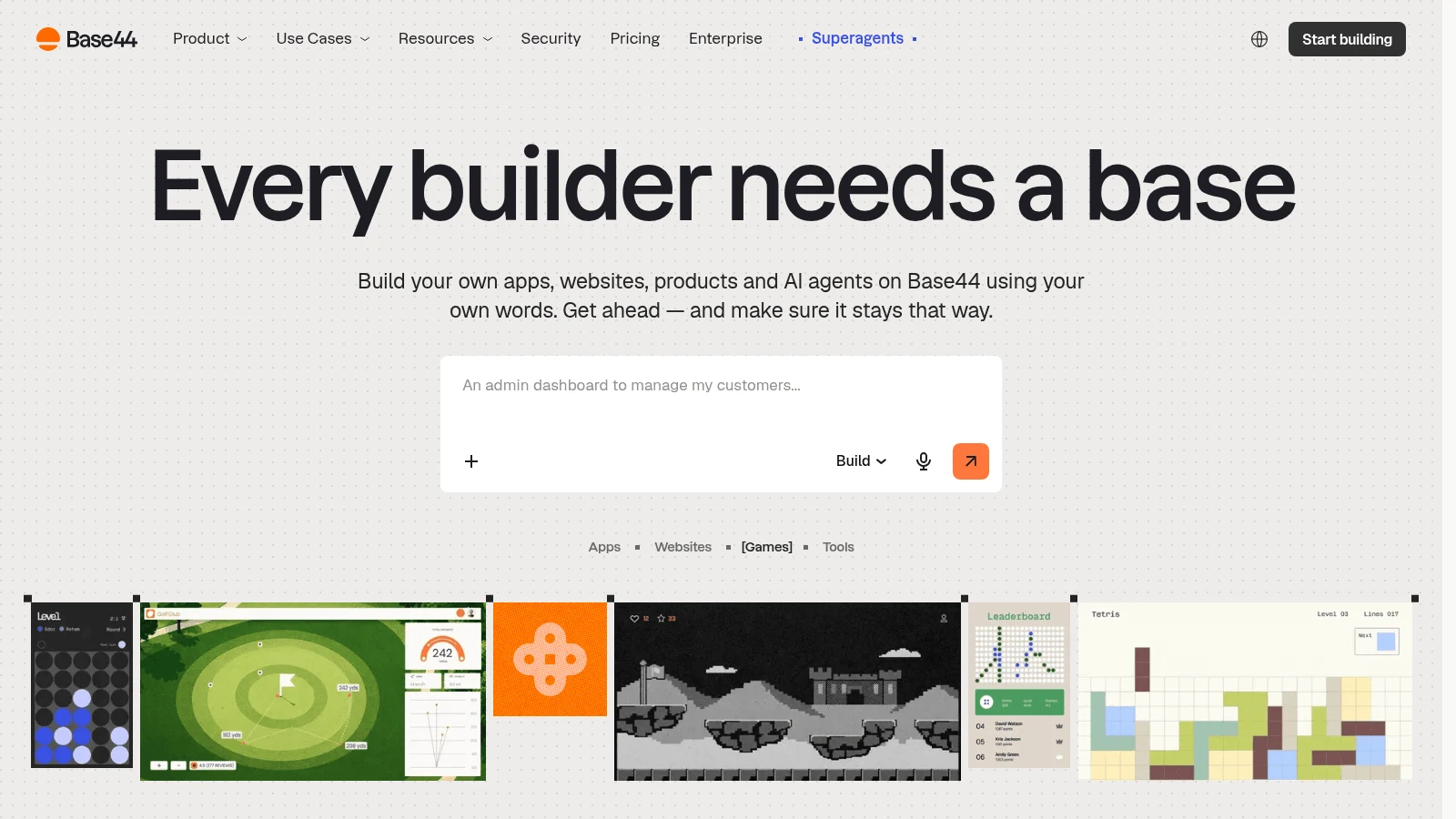
Overview: Base44, owned by Wix, turns a prompt into an app with hosting, a database and auth on every plan. For the stores, its docs say the app "runs your published Base44 app inside a secure web view," a light native wrapper that produces IPA and AAB files.
Key features:
- Two-way GitHub sync of the full source from Builder.
- Manual visual edits that don't spend credits.
- Downloadable store files from Builder up.
Pricing: Starter runs $20 monthly, or $16 a month on a yearly plan: 100 credits for building and 2,000 for the running app. Builder is $40 yearly or $50 monthly.
Pros: Backend included, the lowest yearly entry price of any app builder here, building and runtime on separate credits
Cons: Two credit meters, a web view rather than native code, synced code that runs locally through the Base44 CLI and backend
Its real strength: A store-ready wrapper on Builder costs $40 a month billed yearly, under Bubble's $59 Web & Mobile Starter.
Final verdict: Good for a simple app that needs a store listing more than native performance.
6. FlutterFlow
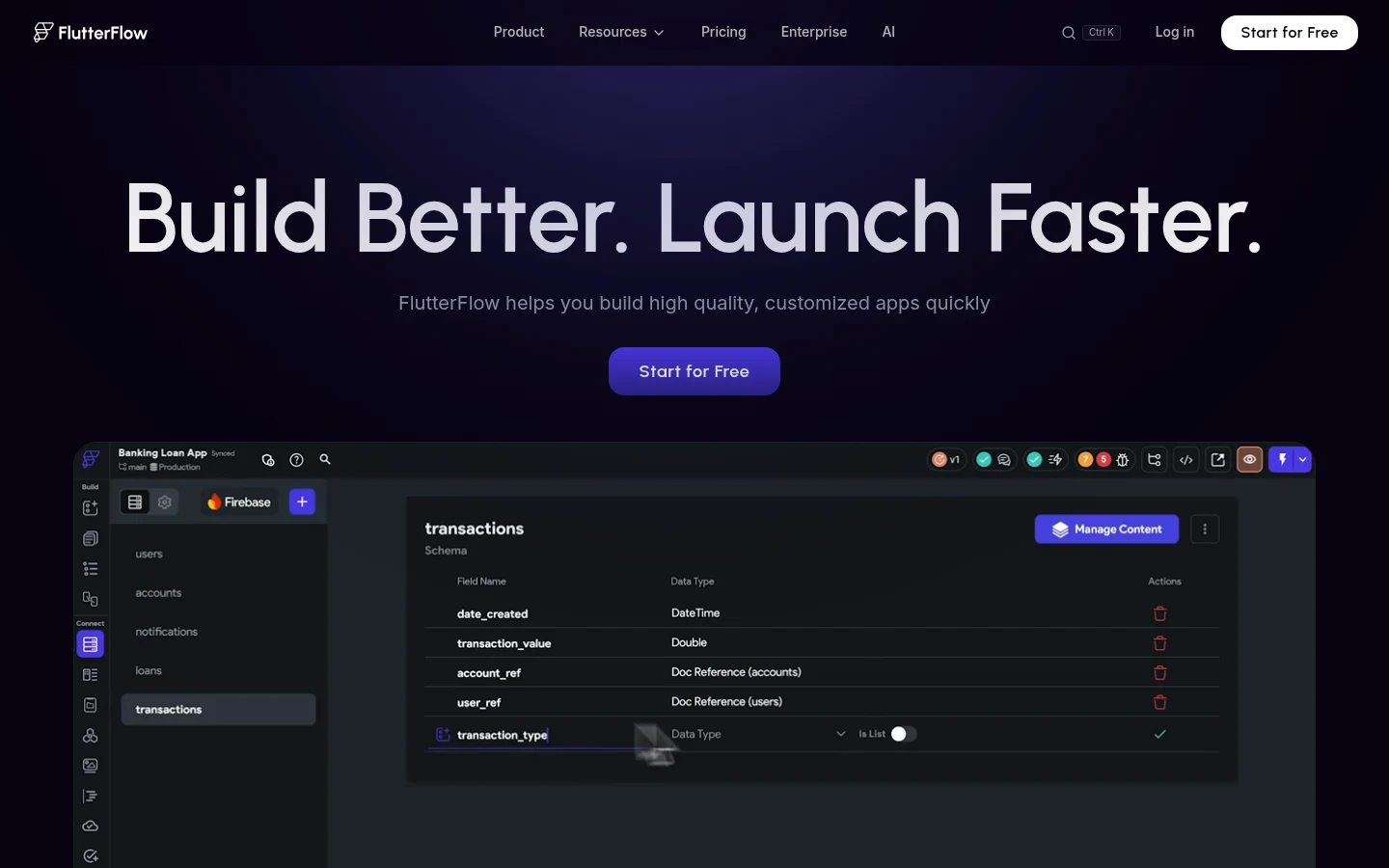
Overview: FlutterFlow is a visual builder that generates Flutter code for iOS, Android, web and desktop, on Firebase or Supabase. Of the tools that hand you code, it's the closest to Bubble's drag-and-drop editor.
Key features:
- Code download from Basic, GitHub push from Growth, CLI export on Business.
- One-click App Store deployment and APK download on Basic.
- Figma frame import on Business, for screens drawn first in app design apps.
Pricing: Basic is $29.25 a month billed yearly or $39 monthly. Growth is per seat: $60 for the first and $41.25 for the second yearly, or $80 and $55 monthly.
Pros: Compiled native apps, Flutter code from the first paid plan, a back end you own
Cons: Per-seat pricing as a team grows, one-way export (outside edits don't flow back in), a second bill for the back end
Why it works as a Bubble alternative: It keeps Bubble's visual habit and outputs native code, not a beta builder or a wrapper.
Final verdict: The pick for a mobile app you plan to ship to both stores.
7. WeWeb
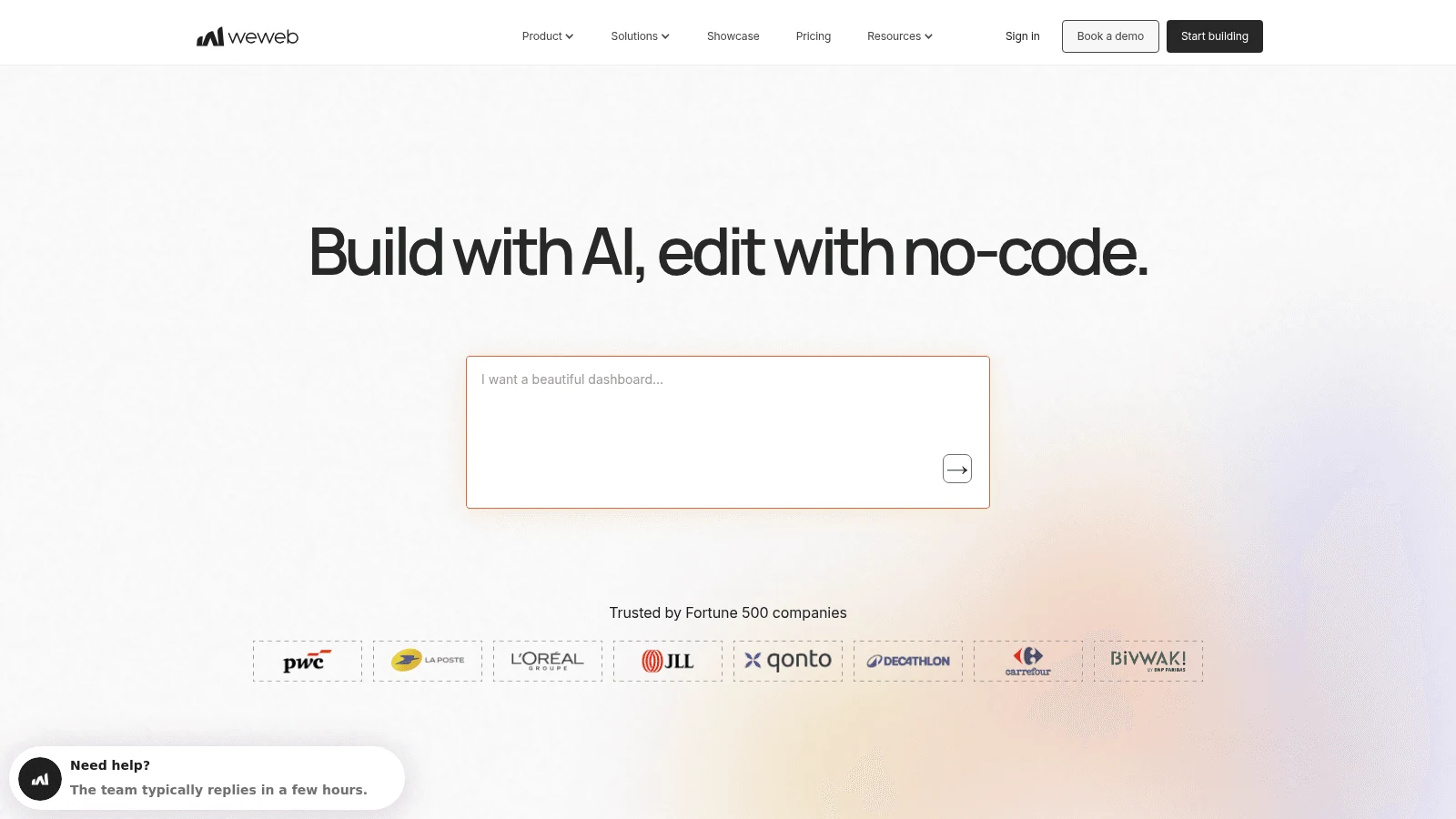
Overview: WeWeb builds the front end visually, with AI help, and exports an ordinary Vue.js single-page app you can host yourself. Data can sit in WeWeb Cloud's database or in Supabase, Xano, Airtable or your own API.
Key features:
- Export and self-hosting on Essential.
- GitHub sync on the same plan.
- Free WeWeb Cloud hosting up to 1,000 sessions.
Pricing: Essential costs $25 month to month or $20 a month paid yearly, and includes 10 million AI tokens. Pro is $50 yearly or $60 monthly, per developer.
Pros: A Vue.js app you can run anywhere, a choice of back ends, a free plan
Cons: Mobile means a PWA you switch on in its settings, not a store build, WeWeb Cloud tiers bill separately ($13 to $208 a month), Pro is per developer
What it's good at: Front ends where the web app design is fully yours and the Vue code can later pass to a developer.
Final verdict: Pick WeWeb for a web app on a back end you've already chosen.
8. Adalo
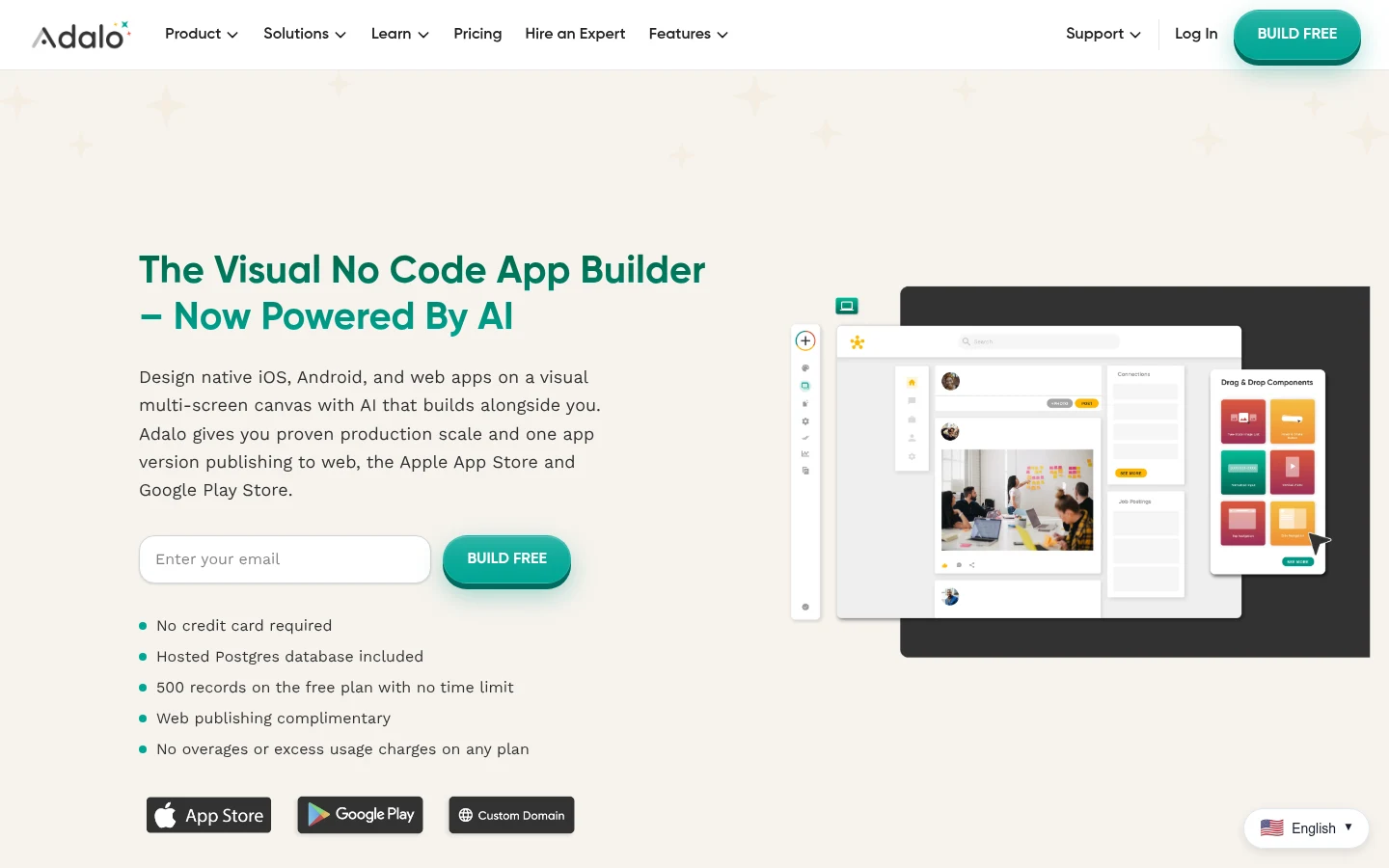
Overview: Adalo is a no-code builder for database-driven apps that compiles native iOS and Android builds through Codemagic, "not web wrappers," plus a web version. Publishing needs your own Apple and Google developer accounts.
Key features:
- Automated App Store publishing from Starter.
- A built-in database, plus Xano and the Collections API on Team.
- Push notifications and geolocation on Professional.
Pricing: Starter is $36 a month billed yearly or $45 monthly for one published app. Professional is $52 yearly or $65 monthly for 2 apps and 5 editors, and every tier says "no usage or token-based charges."
Pros: No usage meter, native builds on every paid plan, no code to maintain
Cons: No code export in its docs (it's an open request on Adalo's forum), 1 to 5 published apps by plan, storage capped at 5 to 125 GB per team
Where it fits: Teams leaving Bubble over workload bills who want a no-code phone app, with store screens from mobile app design services if nobody in-house draws them.
Final verdict: A predictable bill for a native app, with the same lock-in you have today.
9. Softr
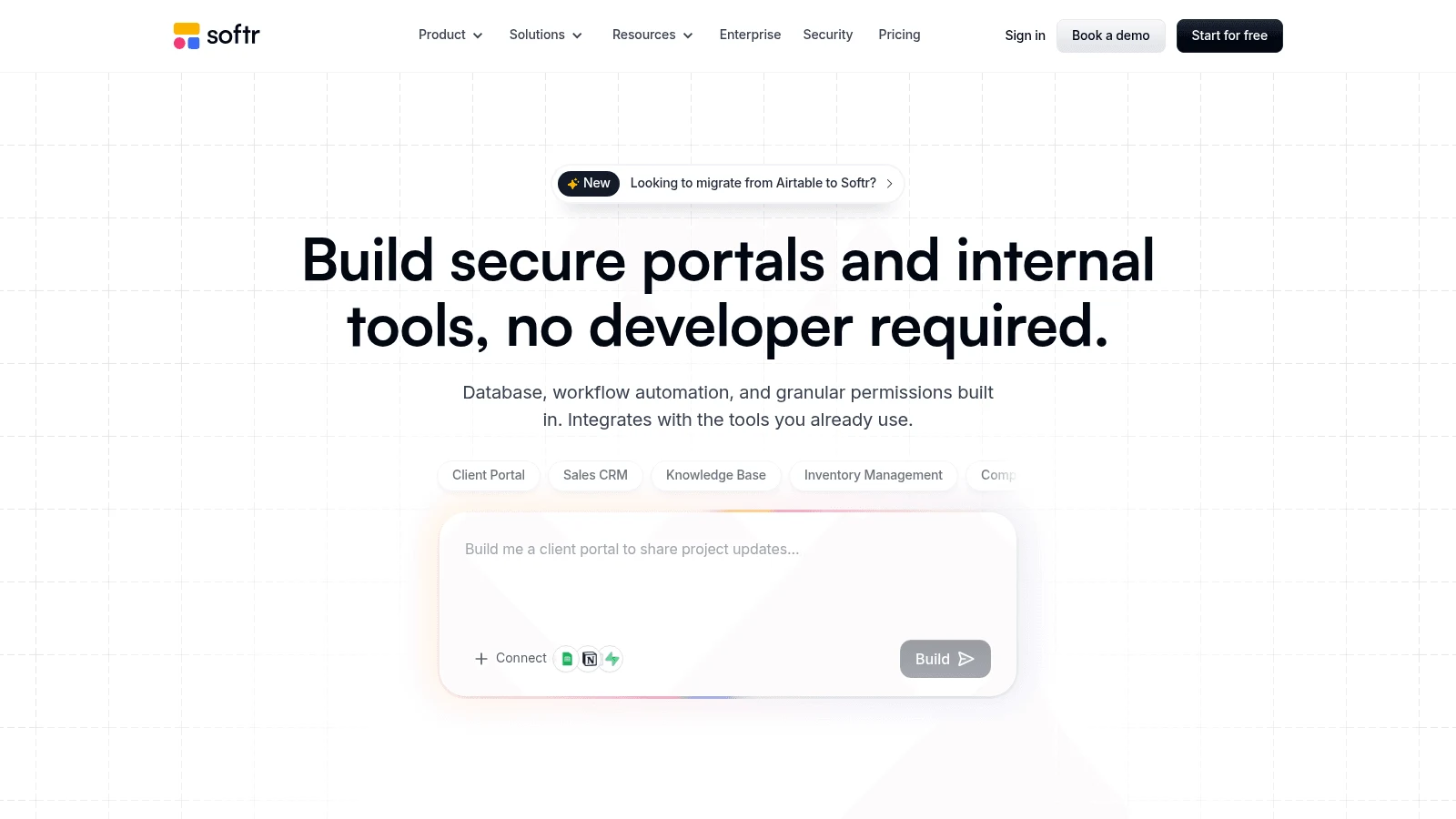
Overview: Softr turns records you already keep into portals and internal tools, reading from Softr Databases, SQL, Airtable, Notion or Google Sheets. An AI Co-Builder sets up pages, tables, user permissions and workflows from a prompt.
Key features:
- User logins with permissions, and SSO on Enterprise.
- AI credits that pause AI features when they run out instead of billing you.
- An installable PWA with push notifications on Business.
Pricing: Basic comes to $19 a month on yearly billing ($25 if you pay monthly) and includes a custom domain and 10 AI credits. Business, where the installable app starts, is $329 yearly or $395 monthly.
Pros: No surprise AI charges, records that can stay in a tool you already pay for, a free plan with up to 3 builders
Cons: Basic allows 5 team and 5 client users, no app code export found, mobile only as a PWA
Why buyers shortlist it: Leave Softr later and your records stay in Airtable or SQL; only the screens need rebuilding.
Final verdict: Right for a client portal or internal tool, wrong for a consumer app.
10. Glide
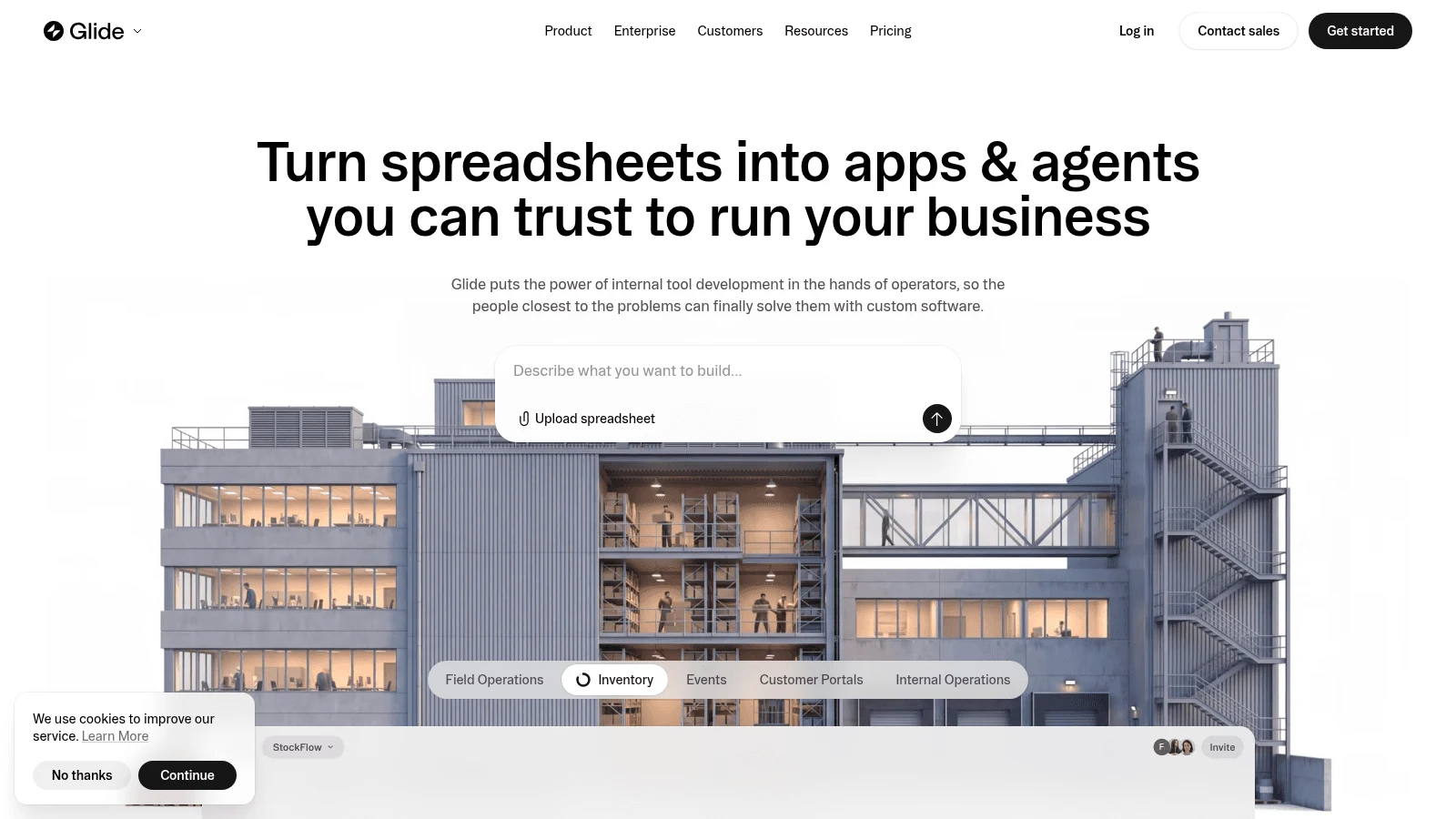
Overview: GlideOS, launched as a public beta on July 14, 2026, lets you chat an internal app into shape from a sheet, a file or a prompt. The older Glide Classic now has its own subscription, whose Business tier starts at $199 a month on annual billing.
Key features:
- A Postgres-compatible project database, plus external SQL.
- Builds from a spreadsheet your team already uses.
- MCP access on Pro, so an outside AI agent can do the building.
Pricing: Basic is $25 a month for 100 credits, two members and two live apps; Plus is $50 for 250 credits and five apps. GlideOS bills monthly only.
Pros: Starts from a sheet you already have, connects to SQL, states app counts up front
Cons: Every prompt spends credits, code is viewable only on Enterprise, and Glide's help center says its PWA-based apps "cannot be published in traditional app stores"
Its edge: Internal apps for field and ops staff who already run the work from a sheet.
Final verdict: Choose Glide for small internal tools, not a product you'll sell.
11. Webflow
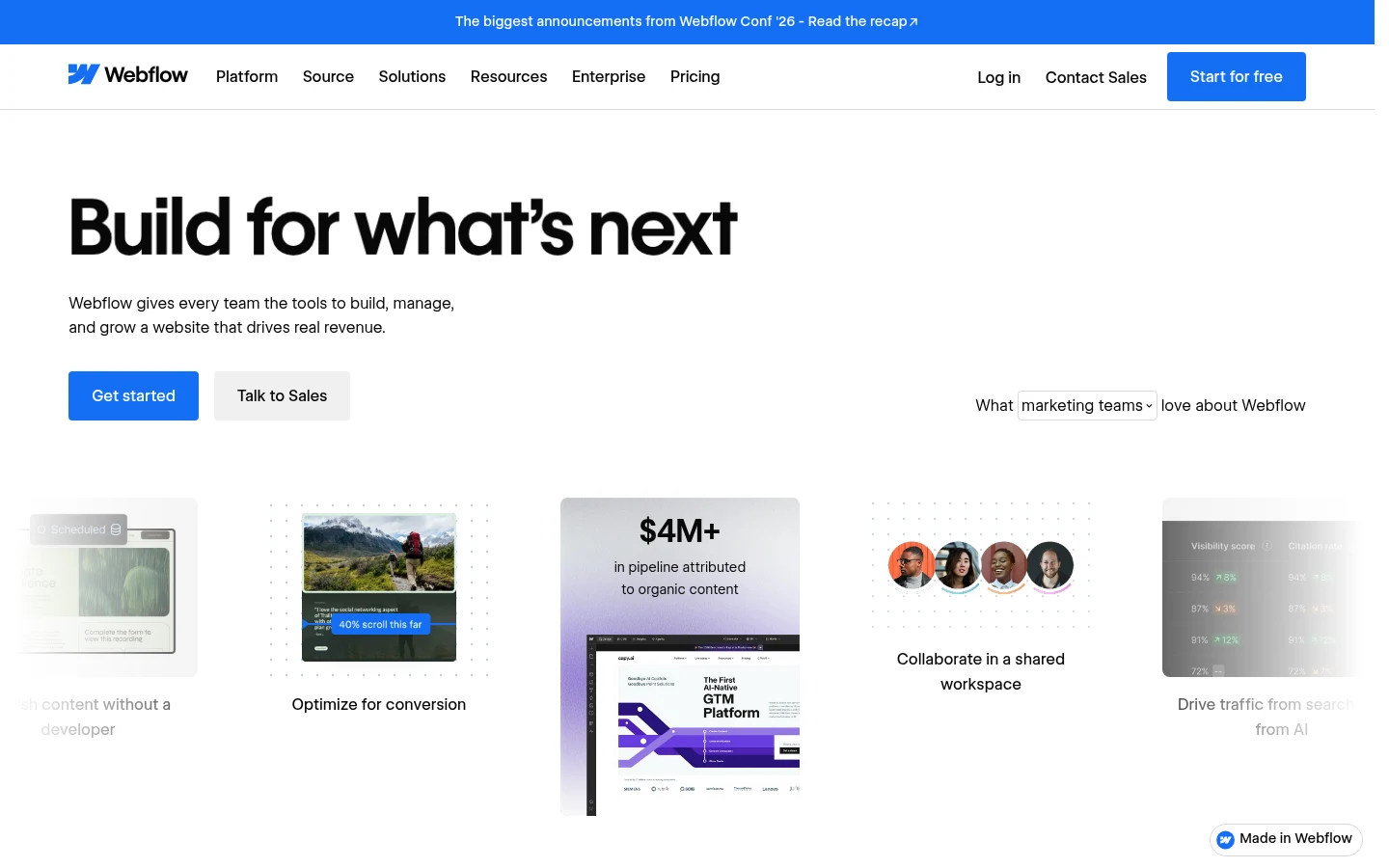
Overview: Webflow builds websites, not apps. It's here to move your public site out of Bubble, so visits to those pages stop drawing on the app's workload units. Webflow Cloud can also host a developer-written Next.js or Astro app beside it.
Key features:
- HTML and CSS export on any paid workspace plan, from Core at $19 a month billed yearly.
- CMS, code components and site search on the Premium site plan.
- Webflow Cloud for full-stack apps, billed on usage past its allowances.
Pricing: The Basic site plan is $15 a month billed yearly or $25 monthly; Premium, which adds the CMS, is $25 yearly or $39 monthly. Code export needs a separate workspace plan.
Pros: Fine design control, clean HTML and CSS export, a free Starter site
Cons: No app logic like Bubble's workflows without custom code, exported sites lose CMS behavior and working forms, and exported code "can't be reimported"
Why it's here: It takes the public site off Bubble while the app moves to whichever builder above fits.
Final verdict: Pair it with an app builder; it won't replace Bubble alone.
What "native mobile" means on each tool
Mobile is where many Bubble teams start looking, and the audience is real. Pew Research data for 2025 shows that 27% of US adults aged 18 to 29 are smartphone-dependent, meaning they own a smartphone but don't have home broadband. For those users, your app or mobile site is the whole product.
Vendors use "native" loosely, so here is what each route on this list actually ships:
- FlutterFlow and Adalo compile native iOS and Android builds.
- Bolt.new and Replit generate Expo apps, built on React Native, with a guided route to the stores.
- Base44 wraps your published web app in a native shell around a web view.
- Softr, Glide and WeWeb make installable web apps (PWAs), which WeWeb enables from a settings toggle.
- Lovable makes web apps; for a phone, its FAQ suggests an installable PWA or a wrapper you build yourself, while Webflow builds no mobile apps at all.
A wrapper or a PWA can be enough when you mainly need a store listing or a home-screen icon. Apps that lean on device features or have to feel smooth on cheap phones are better served by compiled builds, and a mobile app designer can map those screens before you commit to a builder.
Alternatives to Bubble for scalability: what changes after a move
Bubble's FAQ says it has "no hard limits on users, traffic volume, or data storage," and concedes that apps built on real-time graphics, games, 3D or heavy computation may need to go beyond its native features, which it supports through JavaScript plugins. Community reports split on performance.
In a Reddit thread about leaving Bubble, one builder replied: "Depends on how you build. You can make very efficient Bubble workflows if you know what you're doing." It's one person's view, and Bubble's own manual makes a similar point: building with performance in mind gives "the best user experience and most cost-efficient operation," so a wasteful workflow costs you in speed and in WU.
Speed is worth money on any platform. A Deloitte study for Google, covering 37 brands and about 30 million mobile sessions, found that a 0.1-second faster mobile site went with 8.4% more retail conversions. The study tracked natural swings in speed, so it shows a correlation, not proof that speed caused the gain.
Moving doesn't make an app fast by itself. Once the code is exported from Lovable, Bolt.new, Replit, Base44, FlutterFlow or WeWeb, a developer can profile a slow page and fix the query behind it. On Adalo, Softr and Glide, as on Bubble, the vendor's platform sets the limits.
How to move an app off Bubble
Plan a rebuild, not an import. Bubble's exit kit is a JSON file of your app's logic, CSV exports and its API, and the JSON documents your workflows rather than running them anywhere else. Work through the move in this order:
- Export each data type to CSV from the App data tab and note its row count.
- Ask Bubble for the JSON export and use it to list every workflow, privacy rule and API call to rebuild.
- Rebuild the flow your users touch most, on a free plan, before you pay anyone.
- Import the CSVs and compare the row counts with Bubble's.
- Decide how existing users will get access, for example with a password-reset email at launch.
- Keep Bubble live until the new app has handled a full week of real use.
Before step 3, it's cheaper to agree on the new flow as a clickable mock-up in one of the prototyping tools than to argue about it inside a half-built app.
How to choose the right Bubble alternative
Start with the reason you're leaving, because Bubble alternatives fix different problems. If you want affordable alternatives to Bubble without a usage meter, Adalo lists no usage charges on any tier, and Softr's AI credits pause rather than bill. Base44 has the lowest yearly entry price among the app builders here, at $16 a month.
The best alternatives to Bubble for web apps depend on who maintains the app next: Lovable or Bolt.new if you'll keep prompting, WeWeb if a developer will own the front end, and Replit if a developer will own all of it.
For a phone app, FlutterFlow gives you native code and Adalo gives you native builds with no code to touch. If you've built on Bubble for years and want to stay no-code, Glide, Softr and Adalo will feel most familiar, because none of them asks you to read code. Webflow is the answer if the marketing site is what's eating your workload units.
Which Bubble alternative to try first
Pick the two Bubble alternatives from the table that match your reason for leaving, and rebuild the same screen on each free plan. Note how long it took, what it cost and whether you can see the code afterward.
If you'd rather have agents do that rebuild with an Awesomic expert on call, the $20-a-month Basic plan of Awesomic Studio is where to Get started.
FAQ
What are the best alternatives to Bubble?
For code you can keep, Lovable, Bolt.new and Replit build from a prompt, while FlutterFlow and WeWeb export code from a visual editor. Adalo, Softr and Glide stay no-code, and Webflow covers the marketing site.
Can you export code from Bubble?
Not as source code. Bubble apps run on Bubble's own runtime, and what it hands over for a move is a JSON description of the logic plus your records as CSV or through its API. Leaving means rebuilding the app.
Which are the best Bubble alternatives for Supabase integration?
FlutterFlow, WeWeb and Lovable all connect to a Supabase project you control, so the data stays yours. FlutterFlow suits mobile apps, WeWeb suits web front ends, and Lovable links Supabase on every plan, Free included.
How much does Bubble cost compared with its alternatives?
Bubble's Starter web plan is $29 a month billed yearly or $32 monthly, plus any workload overages. Most tools here start lower on yearly billing: Base44 at $16, Bolt.new and Replit at $18, Softr at $19 and WeWeb at $20. FlutterFlow ($29.25) and Adalo ($36) start at or above it.
Do Bubble alternatives have free plans?
Every tool on this list has a free plan except Awesomic Studio. The limits differ: Adalo's and Glide's free plans publish no apps, a published app on Replit's free plan stops after 30 days, and Bubble's own free plan can't publish a live site, though a new Bubble app can try Starter free for 14 days.