Awesomic Team
Key takeaways:
- Codex cloud tasks need ChatGPT Plus or higher. Free and Go get the desktop app only, and an API key drops cloud features.
- Of the ten Codex alternatives below, three run only in the cloud, two only on machines you control, and five do both, so choose where the work happens before comparing prices.
- Several ride on a plan you may already pay for: Claude Pro includes Claude Code, Google AI Pro covers Jules in Pro and Antigravity, and OpenCode, Amp and Devin can run on a ChatGPT subscription.
- Agent pull requests still need a person. In a study of 456,535 agent PRs, every agent's acceptance rate trailed the 76.8% human baseline.
This guide covers OpenAI's Codex coding agent (in ChatGPT, the Codex CLI and the IDE extension), not the deprecated GPT-5.3-Codex model or Codex Security, which several "codex alternatives" pages in search results describe.
Codex suits developers who already pay for ChatGPT and want to hand a task to a cloud sandbox, then review a diff. People look past it when five-hour limits run out mid-task, when their team works on Bitbucket or in Jira, or when they want a model OpenAI doesn't make.
We judged these Codex alternatives on where the agent runs, whether a plan you already pay for includes it, how it hands work back, and what stops it acting alone. Every price was read off the vendor's own site on October 8, 2026, with the billing basis given wherever the vendor states one.
Why developers look for Codex alternatives
Most complaints trace back to plans and limits.
Cloud tasks start at Plus
OpenAI's help center says Codex Cloud is available to Plus, every Pro tier, Business, Enterprise, Healthcare and Education accounts, and "not included with Free or Go." Those two plans get GPT-6 Luna at standard speed in the desktop app, subject to rollout.
An API key doesn't get around it: Codex's pricing page says API-key use covers the CLI, SDK and IDE extension with "no cloud-based features," so GitHub code review and Slack drop away.
Limits you can't plan a sprint around
On Plus and standard Business seats, OpenAI publishes local message estimates per five hours as wide ranges: 15 to 160 for GPT-6.1 Sol and 350 to 3,000 for GPT-6 Luna. Cloud tasks "may use more of your allowance than local messages," weekly limits may also apply, and ChatGPT Work and ChatGPT for Excel draw on the same pool.
The top search result for this keyword is a Reddit thread from September 17, 2026, where a developer spending over $500 a month on Codex and Claude plans wrote that "lately the usage limits have become unsustainable" and that they'd "noticed a real, drastic cut." That's one person's report, though OpenAI's changelog shows the rules changing several times since October 2025.
One model family, on OpenAI's schedule
Codex runs OpenAI models, so model changes are OpenAI's call. OpenAI set October 14, 2026 as GPT-5.5's retirement date in ChatGPT and Codex on every plan, so anything tuned to it moves to a newer model.
Integrations matter too. The cloud integrations OpenAI lists for Codex are GitHub, Slack, Linear and GitLab (in beta), so a team on Bitbucket, or one that assigns work in Jira, has a reason to look elsewhere.
Cloud task or local agent: the split that matters
A coding agent either works in a sandbox on someone else's machine and returns a pull request, or runs in your terminal against the repository on your laptop. Codex does both.
Cloud agents let you queue work and walk away. GitHub's Copilot cloud agent, Google Jules and our own Awesomic Studio run only that way. Local agents, here OpenCode and Antigravity CLI, run on hardware you control, such as a laptop, a server or your own CI runner, so the work stops when that machine does.
The other five Codex alternatives (Claude Code, Cursor, Devin, Amp and Factory) can do either. Recurring jobs such as dependency bumps, weekly reports or nightly test fixes suit agents that run on a schedule, the same idea marketing teams use in content creation automation for repeatable posts.
The best OpenAI Codex alternatives compared
Each pick's run location sits beside its entry price, and Codex itself fills the bottom row as a benchmark.
| Tool | Best for | Where the agent runs (cloud, local, both) | Main limitation | Pricing (from) |
|---|---|---|---|---|
| Awesomic Studio | Codex plus two more agents, hosted, with a human backup | Cloud (hosted workspace) | No per-model rate published; no local-repo workflow | $20/month, no free plan |
| GitHub Copilot (cloud agent) | Issue-to-PR inside GitHub | Cloud (GitHub-hosted environment) | 59-minute sessions, one repository per task | Pro $10/month |
| Google Jules | Free async tasks, counted per day | Cloud (short-lived VM) | Paid tiers only for personal @gmail.com accounts | Free, 15 tasks a day |
| Claude Code | One agent on your laptop and in the cloud | Both | Not on Claude's free plan; Claude models only | Pro $17/month billed yearly ($20 monthly) |
| Cursor | Multi-repo PRs with video and screenshot proof | Both | Cloud agents billed at API rates on top of the plan | Pro $16/month billed yearly ($20 monthly) |
| Devin | GitLab, Bitbucket and Jira teams | Both | Allowances refresh daily and weekly, with no numbers published | Pro $20/month |
| Amp | Reusing a ChatGPT subscription with cloud runs | Both | You still pay for tokens somewhere | Free (Hobby); Megawatt $20/month |
| Factory | Admin controls over agent autonomy | Both | Pricing pages disagree on which plan includes managed cloud computers | Pro $20/month |
| OpenCode | Any model, including local ones | Local | No hosted cloud; unattended runs need your own GitHub Actions | Free; Go $10/month |
| Antigravity CLI | Google AI Pro subscribers | Local (terminal) | Own key: a Gemini API key only | Free (Individual); Google AI Pro $19.99/month (US) |
| OpenAI Codex (for reference) | ChatGPT subscribers | Both | Cloud tasks start at Plus | Free (desktop app); Plus $20/month |
Awesomic Studio is at the top because it's our product, and since Codex is one of the agents inside it, it earns a place as a way to keep Codex while changing where the work happens. The other nine are grouped by where they run: cloud-only first, then the tools that do both, then local agents, with no ranking inside each group.

1. Awesomic Studio
Best for: Delegating builds without running infrastructure
Overview: Awesomic Studio is our hosted AI workspace, and Codex is one of its agents, next to Claude Code and OpenCode. That's why a list of alternatives to Codex includes a product that runs it: the agent stays, and the workspace, hosting and people around it change.
You describe a site, app or deck, attach files or links, and the agents build it and publish it to a live URL.
Studio comes from the team behind Awesomic, which Y Combinator backs, and it extends our human service rather than replacing a designer or developer. This list suits Self-serve ("Create with AI"), where you drive the agents yourself. Assisted adds a specialist's review, Dedicated puts a vetted specialist or team on ongoing work, and Automated lets your team comment and approve in one place.
Key features:
- Codex, Claude Code and OpenCode in one workspace, so trying a second agent doesn't mean a second subscription.
- Always-on agents that carry on once the browser is closed.
- Scheduled automations, so a recurring refresh or report runs without you.
- Built-in hosting that puts each build at a live URL, private or public.
- Eight connections, including GitHub, Linear, Slack and Notion.
- A vetted Awesomic developer who can take the project over when the agents miss, then hand it back.
Pricing: Plans run $20, $200 and $500 a month (Basic, Pro, Maximum), and each fee is spent as that month's agent budget. How fast Codex or any other model uses it up isn't published, and Studio offers no free plan or trial. The human setups and a developer takeover are quoted separately.
Pros: Three agents behind one login, work that continues with the tab closed, hosting included, a person to call in the same workspace
Cons: No published per-model rate, so you can't price a task in advance, and no local-repo or terminal workflow to replace Codex CLI
How to start using it:
- Buy the $20 Basic plan and choose one job you'd normally send to Codex cloud.
- Describe it and attach the files, links or spec it needs.
- Let the agents build it, and close the tab if you want.
- Review it at its live URL and ask for changes in plain words.
- Switch to the Assisted setup when the work needs a specialist's review.
Why it's a good Codex alternative: You keep Codex and add two more agents, hosting and a human route, and usage is metered against a dollar budget you picked instead of a five-hour message estimate.
Final verdict: Pick Studio to delegate a build and have it hosted, with an expert within reach. Keep a terminal agent for local-repository work.
2. GitHub Copilot
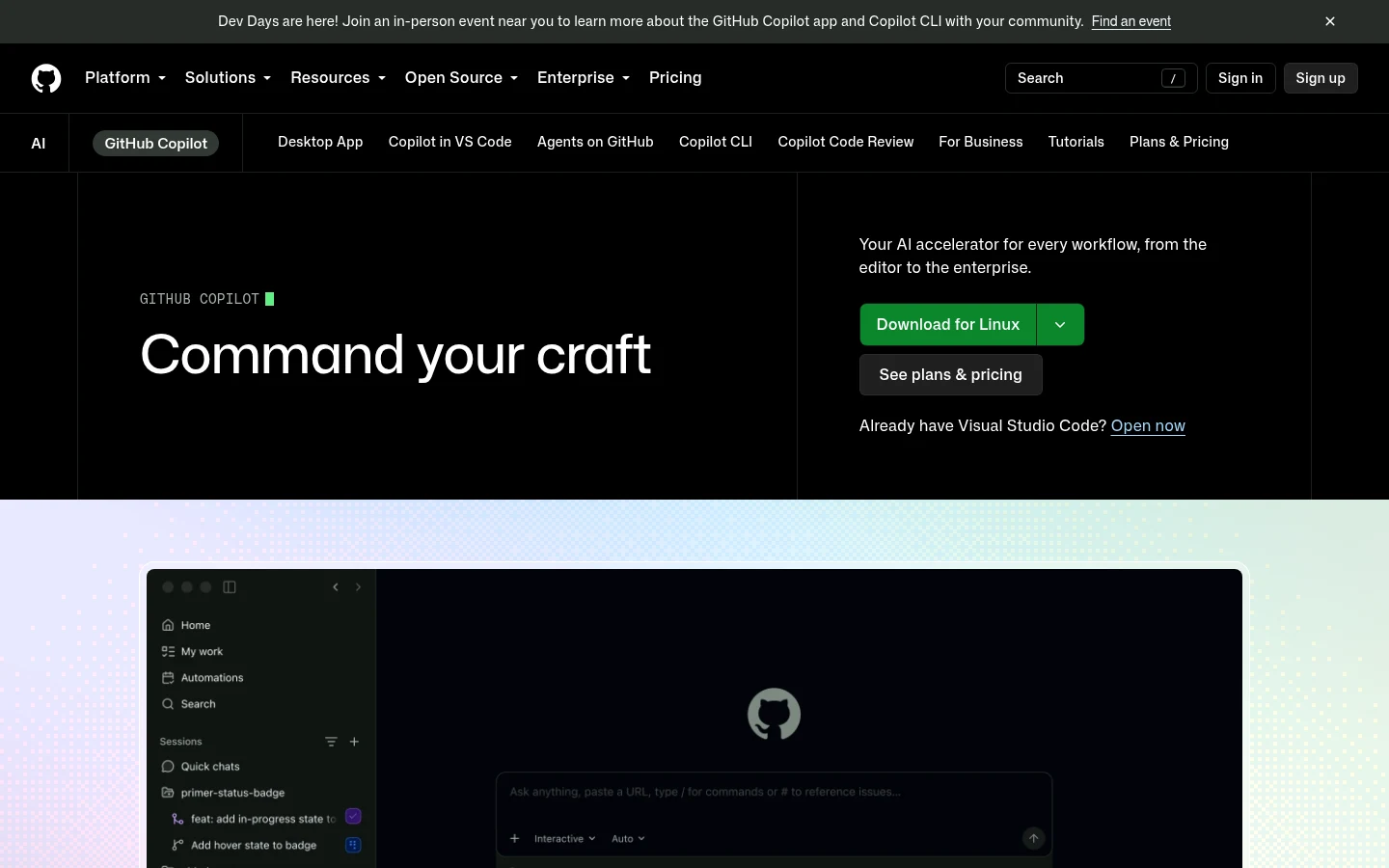
Overview: Copilot's cloud agent (the "coding agent" in older GitHub docs, and separate from agent mode in your editor) works in an ephemeral cloud environment and turns an issue or chat request into a draft PR.
Its merge rules are the best documented we found: it pushes to a single branch, usually its own copilot/ one, can't mark its PR ready, approve or merge it, and by default Actions workflows wait for someone with write access to approve them.
Key features:
- Start a task from an issue, the agents panel, Slack, Teams, Jira, Linear or Azure Boards.
- A firewall restricts the agent's internet access while it works.
- Security checks and Copilot code review run before the agent hands back.
Pricing: Copilot Free leaves the cloud agent out. Pro costs $10 a month and includes 1,500 AI credits ($0.01 each), Pro+ is $39 with 7,000, and Business is $19 per seat with 1,900 credits each, pooled across the organization.
Pros: Tied with OpenCode Go for the lowest paid price of the ten, merging kept in human hands, and tasks that start from your issue tracker
Cons: GitHub-hosted repositories only, one repository, branch and PR per task, and a 59-minute session cap that "cannot be extended"
Where it fits: GitHub teams that want agent work to pass the same review gate as a junior developer's.
Final verdict: A cautious first cloud agent, if each task fits inside an hour.
3. Google Jules
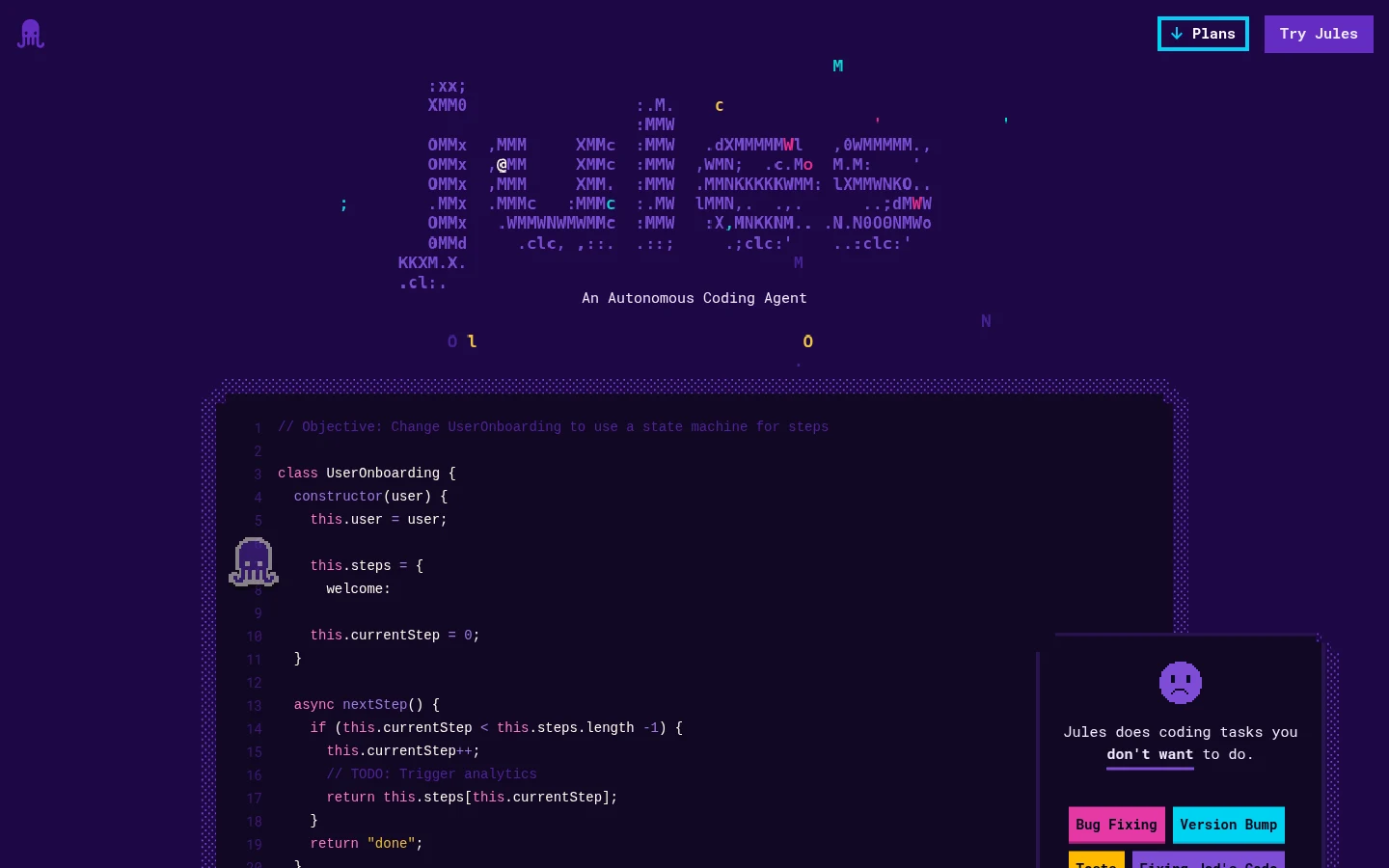
Overview: Jules is Google's asynchronous coding agent. It clones your repository into a short-lived virtual machine, shows a plan to approve, then a diff, then opens a pull request.
Assign work with a "jules" label on a GitHub issue, or through its CLI and REST API. Its changelog last moved on March 9, 2026, so don't expect frequent updates.
Key features:
- A plan-approval step that catches a wrong approach before any code exists.
- Scheduled and suggested tasks, plus a CI Fixer.
- Commits can carry your authorship.
Pricing: The free tier gives 15 tasks per rolling 24 hours, 3 at a time. Jules in Pro (100 tasks, 15 concurrent) comes with Google AI Pro ($19.99 a month in the US), and Google AI Ultra subscribers (from $99.99 a month) get 300 tasks with 60 at once.
Pros: A real free tier, usage counted in whole tasks, and plan approval before code
Cons: Paid tiers are only for personal @gmail.com accounts (business users get an interest form), and we found only GitHub support
Why it made this list: One Reddit commenter who hit Codex rate limits in November 2025 wrote, "At this point I just switched to Jules AI," adding that "you get 15 free tasks a day." It's one user's view, though Jules' limits page still lists 15.
Final verdict: A free way to try cloud delegation, if a personal Google account is acceptable.
4. Claude Code
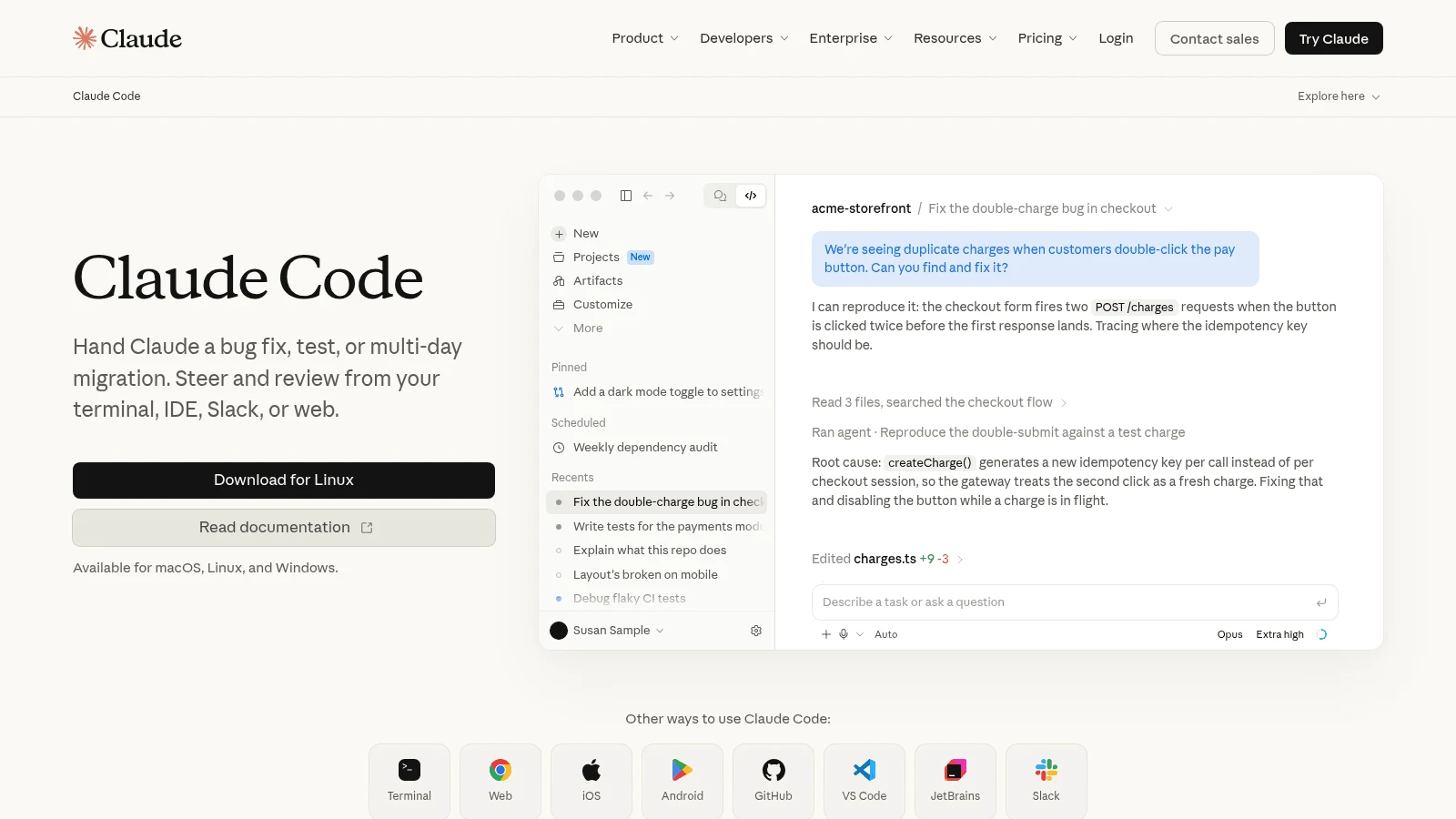
Overview: Claude Code is Anthropic's agent and the closest like-for-like swap: it runs in your terminal, IDE or desktop app, and in cloud sessions on Anthropic-managed machines or your organization's own environment.
A finished cloud session can open a pull request from claude.ai/code or "teleport" to your terminal so you carry on locally.
Key features:
- Each cloud environment sets its own network access, environment variables and setup scripts.
- On Anthropic's machines, GitHub credentials "never enter a session's VM," because a proxy handles them.
- Auto-fix for pull requests through the Claude GitHub App.
Pricing: Claude Pro includes it for $20 on monthly billing, or $17 a month when you pay $200 for the year, and Max plans begin at $100 a month. Team Standard is $25 a seat monthly or $20 on yearly billing.
Pros: Bundled into a plan many developers already have, one agent locally and in the cloud with handoff both ways, and credentials kept out of the sandbox
Cons: Limits not published as numbers, Claude models only, and nothing on the free plan
Why it's a good Codex alternative: It matches Codex's local-plus-cloud shape almost exactly, so your habits carry over while the model, vendor and usage pool change.
Final verdict: Test it first if you're leaving Codex over limits or model quality, not workflow.
5. Cursor
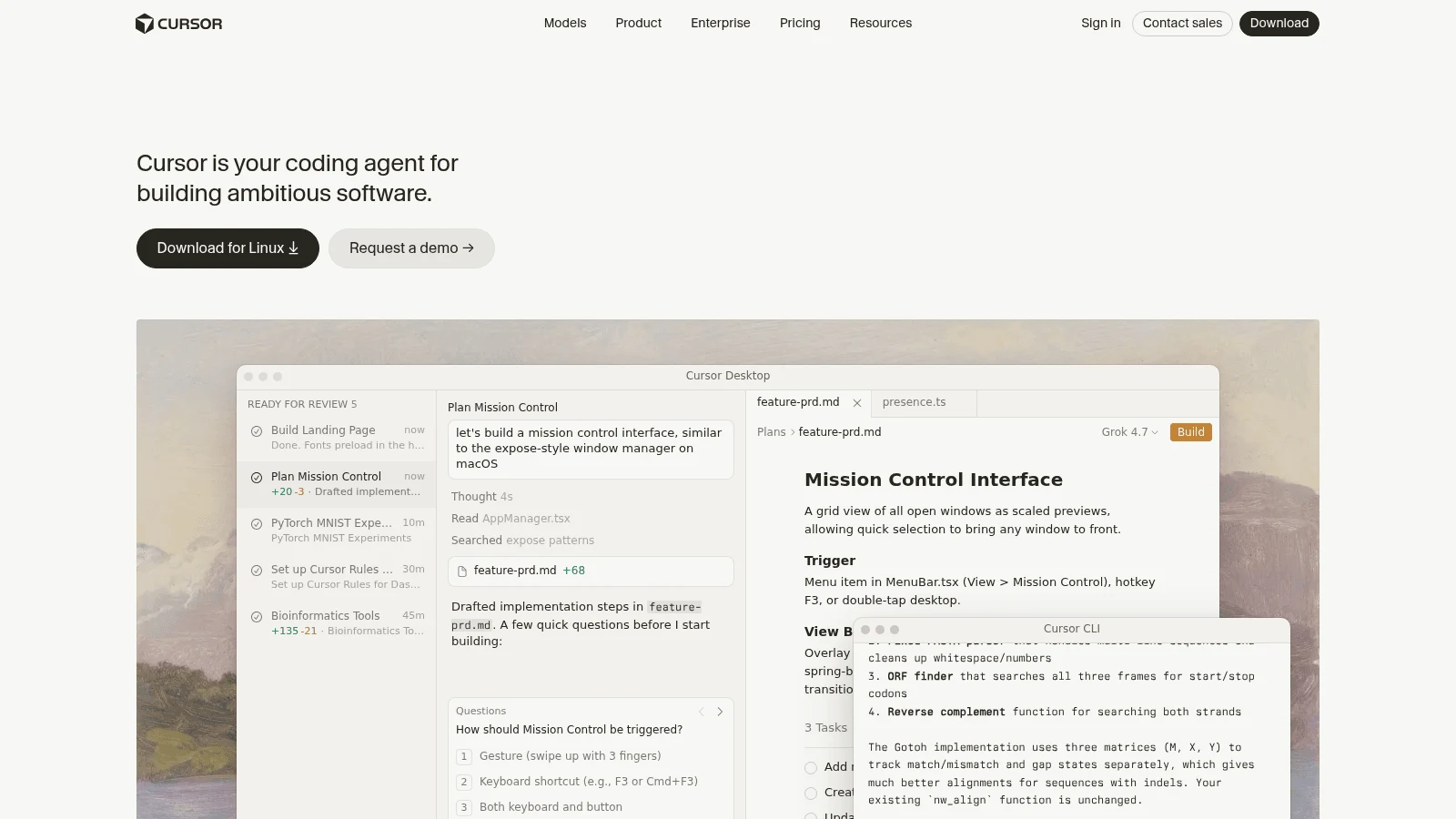
Overview: Cursor's cloud agents, not its editor, are what compete with Codex cloud. Each runs in an isolated VM with your cloned repositories, dependencies and secrets, and returns PRs with screenshots, videos and logs.
Two changes matter if you're leaving Codex: Cursor became part of SpaceX on August 14, 2026, and OpenAI has proposed cutting its models off in Cursor on November 12, 2026.
Key features:
- Multi-repo environments that open a PR in every repository they change.
- Clones from GitHub, GitLab, Azure DevOps and Bitbucket Cloud.
- Outbound domain restrictions, Tailscale and self-hosted machines for locked-down teams.
Pricing: Pro is $20 on monthly billing or $16 a month on a yearly plan, and Teams Standard runs $40 a user monthly or $32 yearly. Cloud agents bill at API pricing for the model you pick, and Cursor asks for a spend limit on first use.
Pros: Video and screenshot evidence on each PR, four git hosts, Azure DevOps included, and tasks started from Slack, Linear, iOS or @cursor on GitHub
Cons: Cloud runs bill on top of the subscription, OpenAI models are scheduled to leave, and new ownership adds uncertainty
What it's good at: Multi-repo changes, where a video of the result saves a reviewer checking out three branches.
Final verdict: Strong for multi-repo teams, though not a lasting route to OpenAI models.
6. Devin
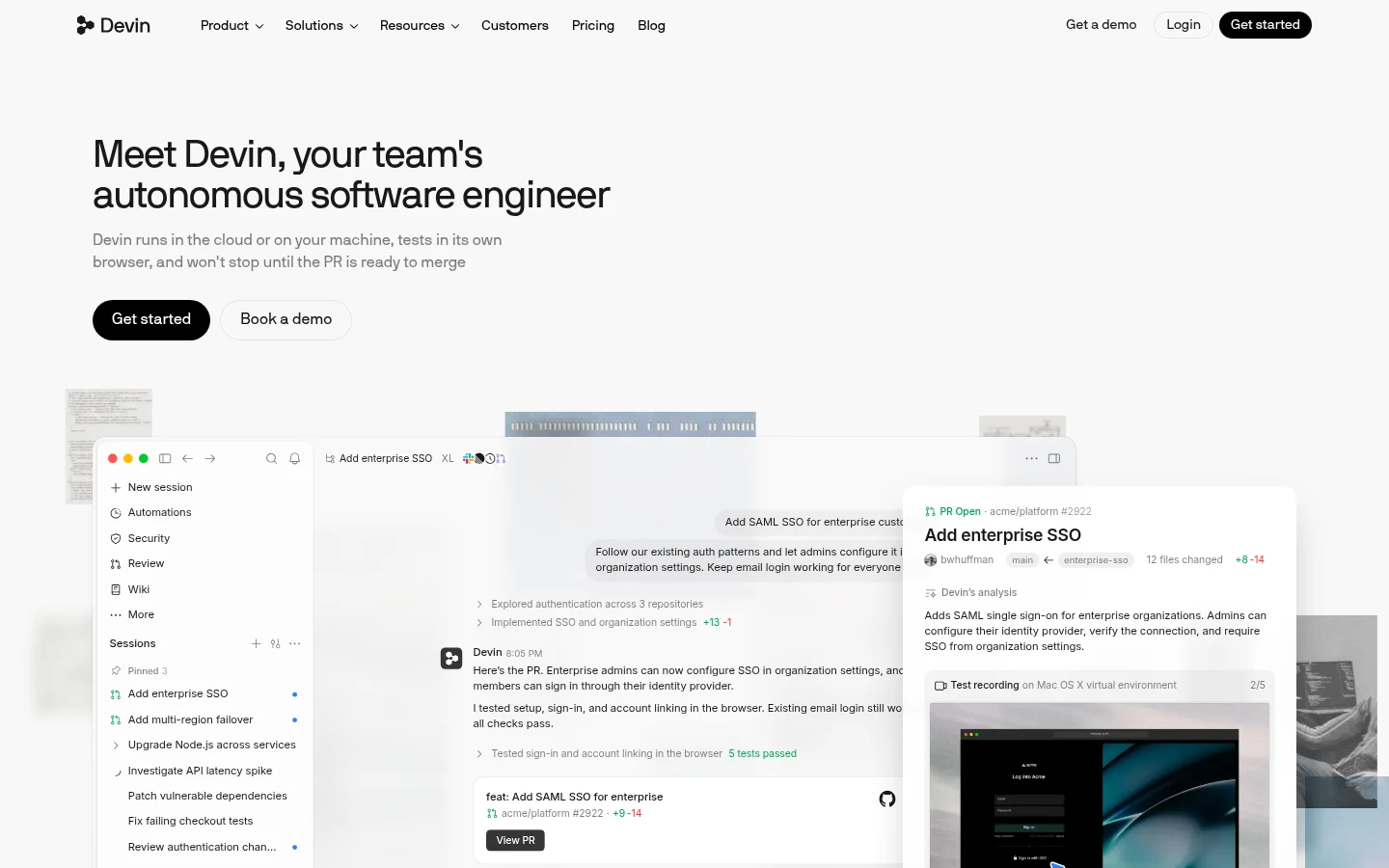
Overview: Devin is Cognition's agent, and Windsurf became Devin Desktop on June 2, 2026. Devin's site says it "runs in the cloud or on your machine, tests in its own browser, and won't stop until the PR is ready to merge."
Every session runs in its own VM, and a large task can be split across parallel cloud agents.
Key features:
- Tag @Devin in Slack or Teams, or assign from Linear or Jira.
- Works with GitHub, GitLab and Bitbucket, plus Azure DevOps on Enterprise.
- Frontier models from OpenAI, Anthropic, Google and SpaceXAI, plus open models.
Pricing: Pro costs $20 a month and lists access to Devin Cloud, with extra usage at API pricing. Max is $200 a month, and Teams is $80 a month plus $40 per full developer seat.
Pros: A cloud agent from $20, support beyond GitHub, and models from several vendors
Cons: Allowances refresh "on a daily and weekly basis" with no numbers published, we found no annual billing option, and older reviews still call the desktop app Windsurf
Why buyers shortlist it: It covers the gap Codex leaves for teams on Bitbucket who assign work in Jira.
Final verdict: Worth a trial for non-GitHub teams that want a cloud agent with its own test browser.
7. Amp
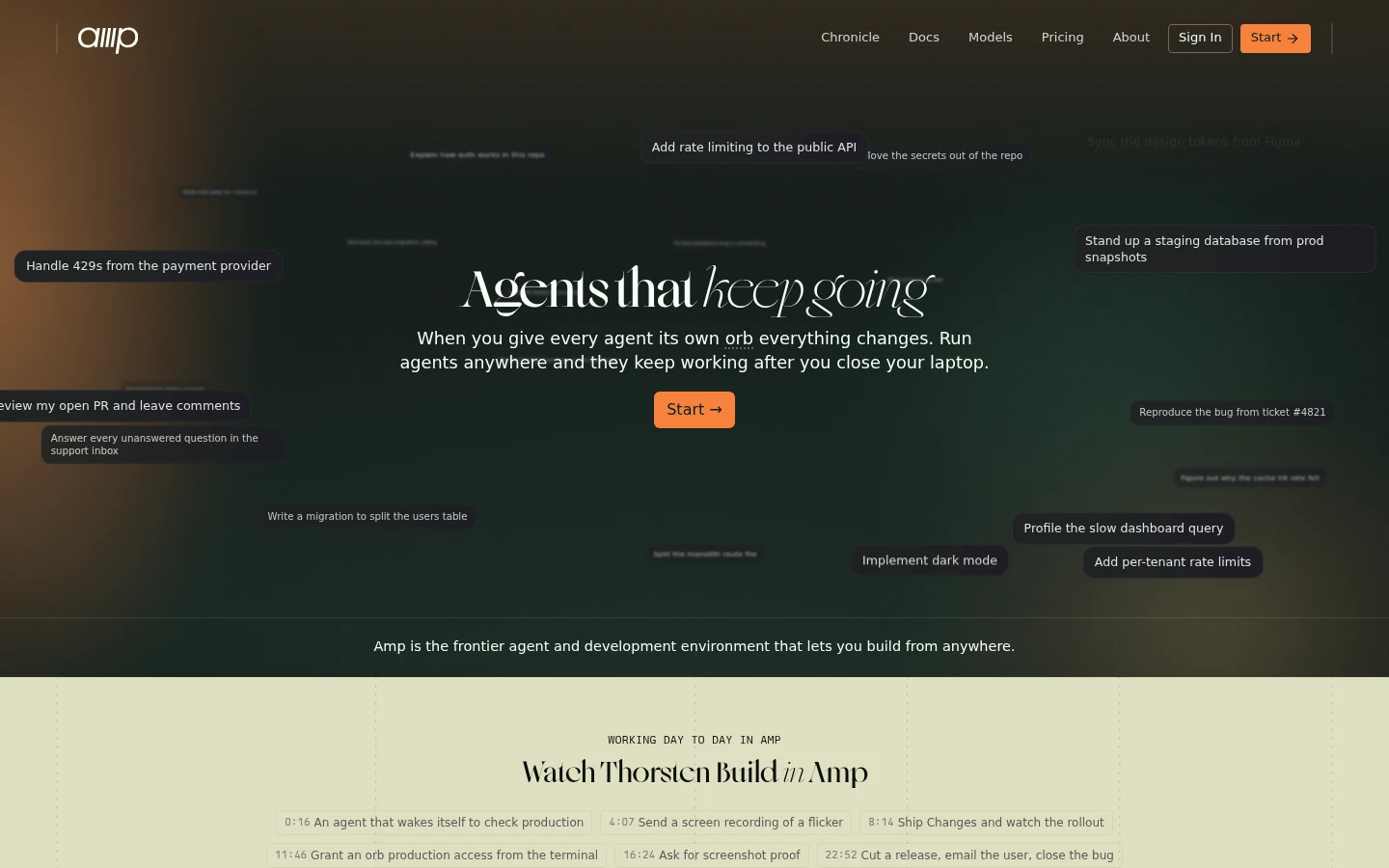
Overview: Amp runs "orbs," which its manual describes as "Machines that Amp creates per thread." The pitch is simple: "Send a prompt, close your laptop, and the agent keeps working."
Amp can also run on a ChatGPT subscription you already have, so the model bill stays where it is.
Key features:
- Clients for the web, macOS, iOS and the terminal.
- Bring your own API keys, with "No Amp token fees or limits" on Hobby.
- Teams at "No extra charge," with SSO and pooled credits.
Pricing: Hobby is free, and you pay for orbs as you use them unless you bring your own runners. The Megawatt plan costs $20 a month and includes 45,000 minutes of orb time.
Pros: Reuses a ChatGPT plan, no token markup, and background runs that don't need your laptop
Cons: You still pay a model provider somewhere, the code is closed source, and Amp Frontier Corporation, its maker, says it won't "check every procurement box"
Its real strength: Keeping ChatGPT for the model while moving the agent and machines elsewhere.
Final verdict: A good fit if you like Codex's models but not its limits or its cloud.
8. Factory
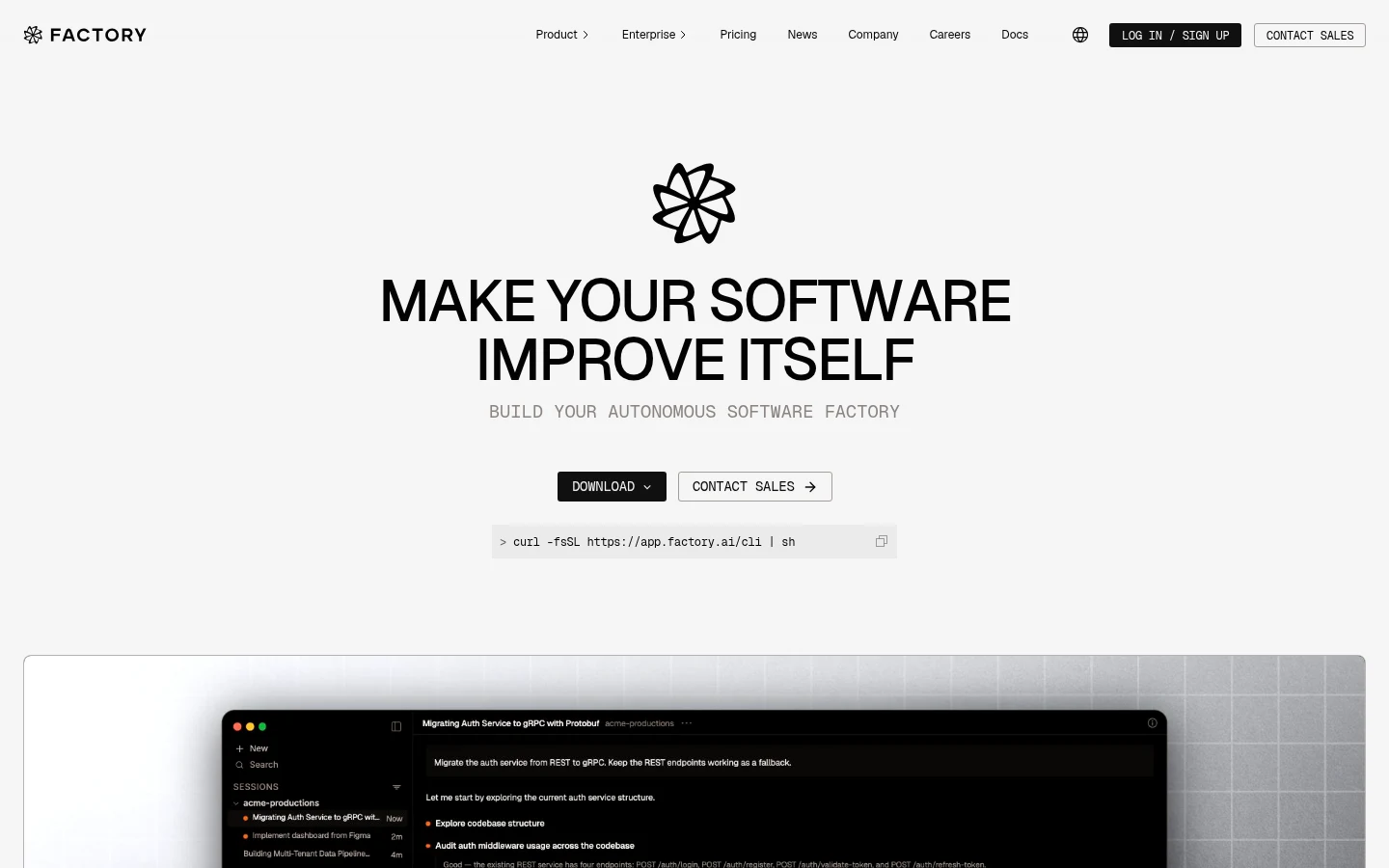
Overview: Factory sells "Droids," background agents that run in the cloud or locally through its app, CLI and SDK, with Missions that split a large project into milestones you track in Mission Control.
Usage runs in five-hour, seven-day and 30-day windows. When standard usage runs out, work falls back to Droid Core, a free pool of open-weight models with its own limits.
Key features:
- Prepaid extra usage from $10 that never expires.
- Autonomy levels, network policy and org deny lists on the Business plan.
- Bring your own key free up to an allowance.
Pricing: Pro costs $20 a month, Plus $100 (about 5x Pro usage) and Max $200 (about 10x). Teams is $60 a month per team plus $40 per seat, up to 10 seats, while SSO and audit logs sit on the quote-only Business plan.
Pros: A free fallback model pool, credits that don't expire, and admin control over how far agents act alone
Cons: Factory's pricing page lists managed Droid Computers on Plus while its docs put them on Pro, Missions need extra usage switched on, and the feature set leans toward larger teams
Where it beats the alternatives: It gives admins a dial for how much an agent does before asking, the control OWASP's guidance calls for.
Final verdict: A strong pick for team leads who want agent autonomy set by policy.
9. OpenCode
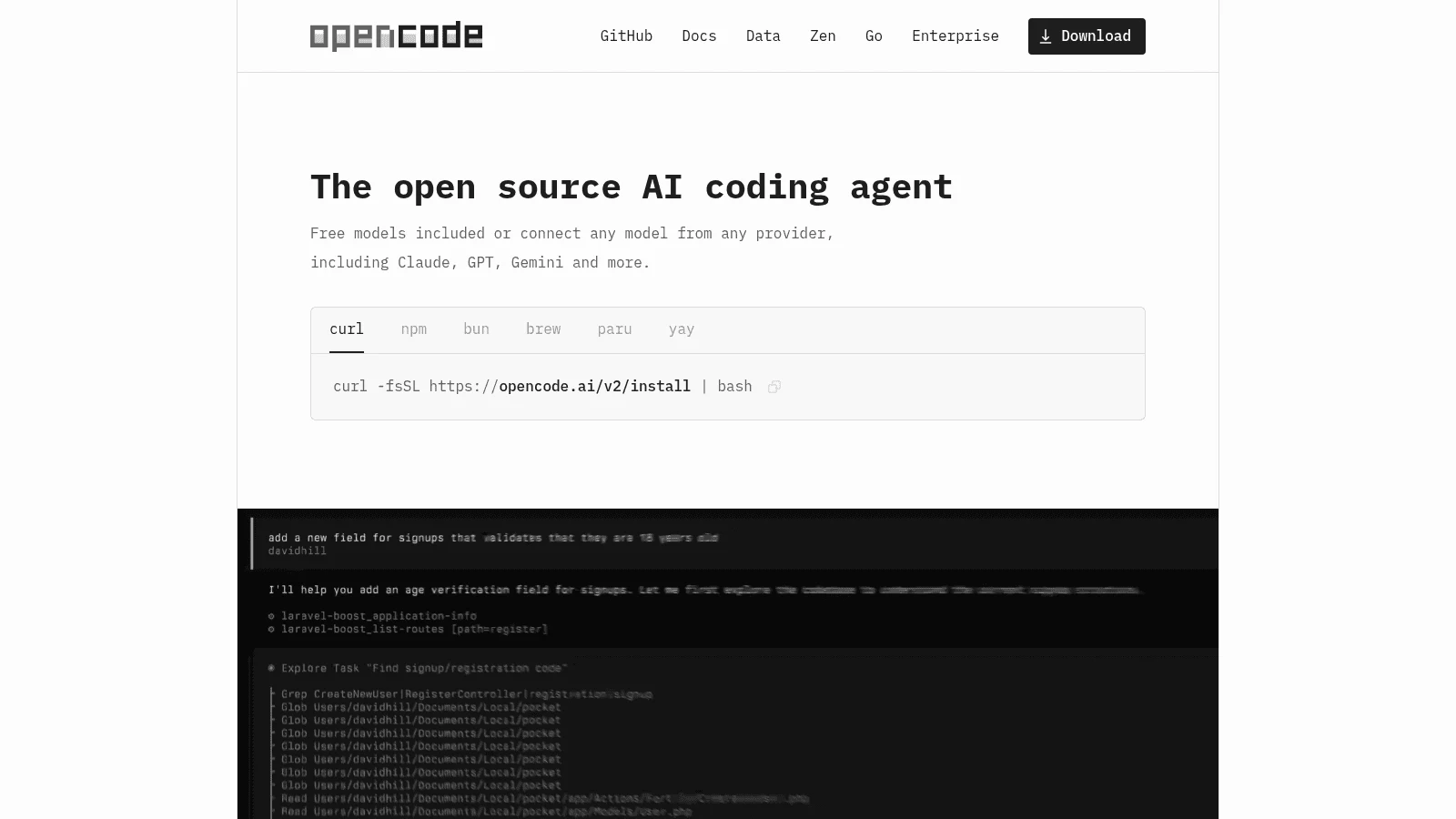
Overview: OpenCode is an MIT-licensed agent you run from a terminal UI, a desktop app or an IDE extension. It talks to 75+ model providers, local ones included, and accepts a ChatGPT Plus or Pro login (or a GitHub Copilot one), so a Codex user can keep ChatGPT and swap only the agent.
Key features:
- Bring your own API keys from any supported provider.
- Free models included, so you can start without a key.
- Optional Zen pay-as-you-go credits, starting with a $20 top-up.
Pricing: OpenCode is free with your own keys or its included free models. Its Go plan costs $10 a month and Go Plus $40 a month, both with usage caps on a curated set of mostly open models.
Pros: Open source, works with a ChatGPT plan you already pay for, and runs fully local models
Cons: No hosted cloud of its own (unattended runs go through your GitHub Actions runners), you manage keys and sandboxing yourself, and Go plans cap usage
What it does best: It separates the agent from the model vendor, so a limit change at one provider doesn't stop your work.
Final verdict: Choose OpenCode to keep the model and the code under your control, on hardware you run.
10. Antigravity CLI
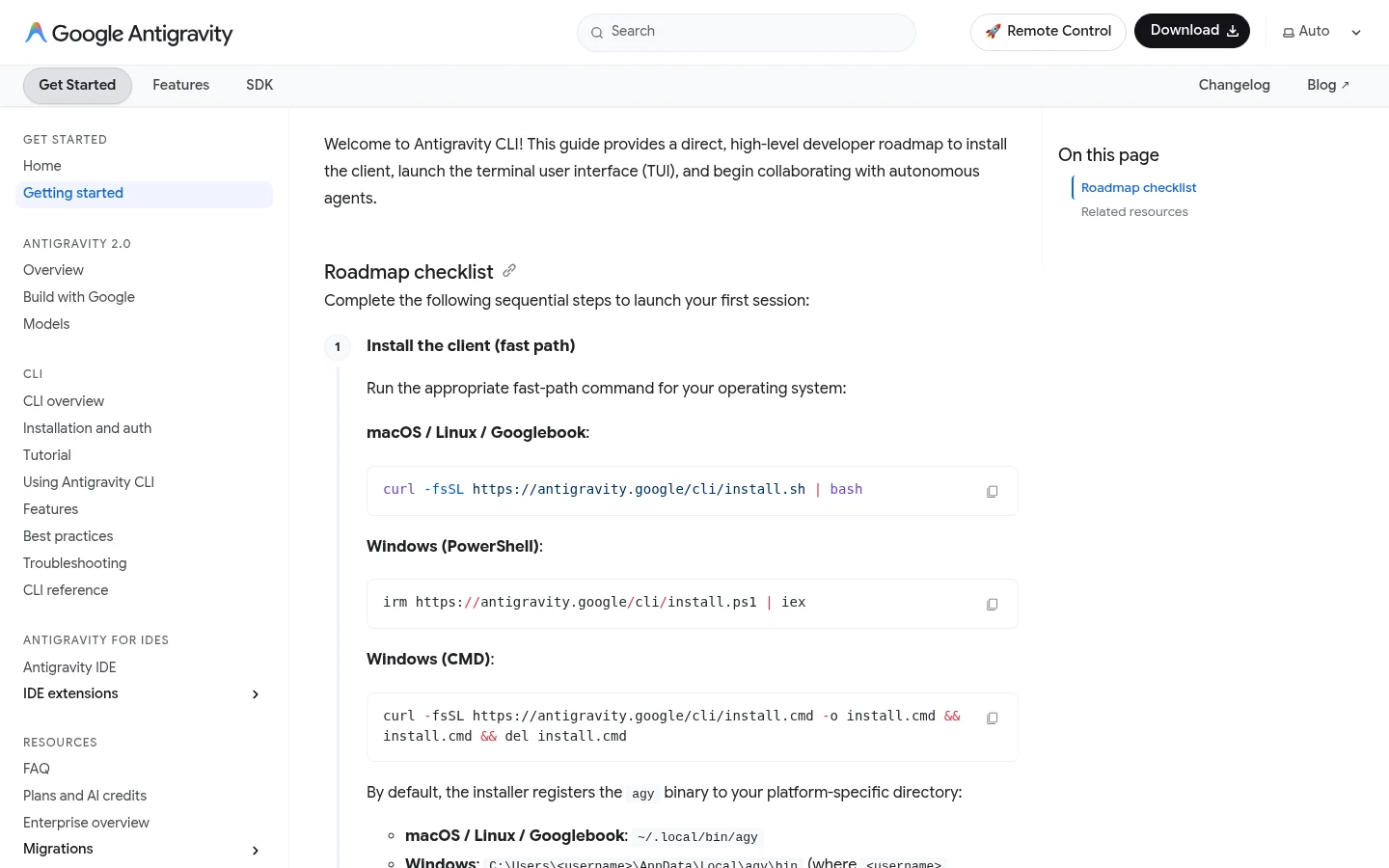
Overview: Antigravity CLI is Google's terminal agent. Since June 18, 2026, it has replaced Gemini CLI for individuals, covering free users and Google AI Pro and Ultra subscribers.
It's part of Antigravity 2.0, which also covers a desktop IDE, an SDK and extensions for VS Code, Visual Studio, JetBrains, Zed and Xcode.
Key features:
- Claude Sonnet 5.5 and Opus 5.5 on Google AI Pro (non-trial) and Ultra.
- Paid-plan quota that refreshes every five hours, up to weekly limits.
- The same subscription also covers Jules in Pro.
Pricing: The Individual plan is free with basic weekly rate limits, Google AI Pro is $19.99 a month (US pricing), and Ultra starts at $99.99 a month. Those plans cover Antigravity as a whole; we found no separate CLI price.
Pros: A free individual tier, Claude models on a Google plan, and one subscription that also pays for Jules
Cons: A Gemini API key is the only own key it accepts, closed source, and Gemini CLI users were moved over on a month's notice
Why people pick it: A Google AI Pro subscriber gets a local agent and a cloud agent from one bill.
Final verdict: The natural pick for Google AI Pro subscribers who want a terminal agent.
What Codex alternatives cost
Sticker prices compare badly here because each vendor meters something different, so the table adds the unit.
| Tool | Bundled with | What you're metered on | Cheapest paid plan |
|---|---|---|---|
| Awesomic Studio | Its own plans | A dollar budget equal to the plan price | Basic, $20/month |
| GitHub Copilot | A Copilot plan | AI credits at $0.01 each | Pro, $10/month (1,500 credits) |
| Google Jules | Google AI Pro or Ultra | Tasks per rolling 24 hours | Jules in Pro, via Google AI Pro at $19.99/month (US) |
| Claude Code | Claude Pro, Max or Team | Shared five-hour and weekly limits, no fixed count | Pro, $17/month billed yearly ($20 monthly) |
| Cursor | A Cursor plan | Usage pools at API rates; cloud agents at API pricing | Pro, $16/month billed yearly ($20 monthly) |
| Devin | A Devin plan | Daily and weekly allowances, unpublished | Pro, $20/month |
| Amp | Can use a ChatGPT subscription | Orb minutes, or your own runners | Megawatt, $20/month (45,000 minutes) |
| Factory | A Factory plan | Five-hour, seven-day and 30-day windows | Pro, $20/month |
| OpenCode | Can use ChatGPT Plus/Pro or Copilot | Your provider's tokens, or Go caps | Go, $10/month |
| Antigravity CLI | Google AI Pro or Ultra | Five-hour quota up to weekly limits | Google AI Pro, $19.99/month (US) |
| OpenAI Codex (reference) | ChatGPT | Estimated messages per five hours, plus weekly limits | Plus, $20/month |
Most Codex alternatives start at $10 to $20 a month, so the unit decides the real cost. Jules is the easiest to forecast, because a task is a task, while metered cloud runs on Cursor and Devin scale with the model you pick, so set a spend cap before the first long run.
For a founder, the real comparison is an agent plan against paid developer hours, where the trade-offs between freelancers, agencies and subscriptions decide the cost per shipped feature.
Reviewing what an agent hands back
Researchers at Queen's University built the AIDev dataset of 456,535 agent-authored pull requests across 61,453 repositories, published as a preprint on arXiv. Their Table 5 puts accepted shares at 65.3% for Codex, 52.5% for Claude Code, 51.4% for Cursor, 48.9% for Devin and 38.2% for Copilot, against 76.8% for human PRs.
Codex's accepted PRs closed in a median 18 minutes, against 3.9 hours for humans. The authors warn that fast acceptance raises questions about review depth, and the data is from the first half of 2025, with small Cursor and Claude Code samples (144 and 101 PRs).
What stops an agent acting on its own
OWASP's Top 10 for LLM applications names Excessive Agency as the risk that an AI takes damaging actions after a hallucination or a prompt injection. Its mitigations translate into a buyer's checklist:
- Give the agent only the repositories and tools the task needs.
- Avoid open-ended tools, such as unrestricted shell commands or URL fetches.
- Use a token scoped to the task instead of an admin's credentials.
- Keep approval of merges and deploys with a person.
- Log every run and limit how many can start at once.
The vendors cover different parts of that list. Codex blocks internet access during the agent phase by default, Copilot can't merge its own PRs, Cursor restricts outbound domains, Claude Code keeps GitHub credentials out of its hosted VMs, and Factory lets admins set autonomy levels.
Tests won't catch a confusing screen
An agent can pass every test and still ship a form nobody can fill in. Interface review is a separate skill, which is why some teams pair their agents with AI product design agencies rather than trusting the diff alone. Add a person who checks the screens to your review step.
Open source alternatives to OpenAI Codex
Before you shortlist open source alternatives to Codex, check the license on Codex itself: its CLI is Apache-2.0, so the terminal client is already open even though the models and cloud aren't.
OpenCode is the open-source pick in this list, under MIT, and can use any provider, including models on your own machine. Aider is also Apache-2.0, though its last release was v0.86.2 on February 12, 2026.
Antigravity CLI and Amp are closed source, and Claude Code's repository reserves all rights to Anthropic. Any of these open source alternatives to OpenAI Codex still needs a model, so decide whether you want an open client, an open model, or both.
What to carry over when you switch
Move your instructions file first: Codex reads AGENTS.md, and Claude Code falls back to it when a repo has no CLAUDE.md, so check what each tool loads. If Codex's default of no internet during the agent phase mattered, set the same restriction in the new tool's environment settings before the first cloud run.
When staying on Codex makes sense
Stay if you already pay for Plus or Pro and rarely hit a limit. Pro plans currently have no five-hour limit, and Codex had the highest acceptance rate and fastest review time of any agent in the AIDev data.
Its sandbox defaults are also good. Each cloud task runs in its own isolated workspace with internet blocked during the agent phase, and you can recover saved VM state for up to seven days.
If the friction is rolling agents out across a team rather than the tool itself, AI consulting services can help set permissions and review rules first, whichever agent you use.
How to choose the right Codex alternative
Sort Codex alternatives by where you want the work to run. If you want to queue tasks and walk away, pick a cloud agent: Copilot for GitHub teams, Jules for free daily tasks, Devin for Bitbucket or Jira.
If you want one agent for laptop and cloud, Claude Code is the closest match to Codex, and Cursor suits multi-repo changes. If the agent is building a whole product rather than closing tickets, the hard calls are the SaaS product development decisions no agent makes for you.
For local work with your choice of model, OpenCode leads, and Antigravity CLI suits Google AI Pro subscribers. Amp fits if you'd rather keep paying for ChatGPT, and Factory suits teams that need autonomy set by policy.
Which Codex alternative to try first
Run the same ticket through two tools from the table this week, one cloud agent and one that also runs locally, and time the review on each.
If the PRs pass but the screens look generic, you can hire an AI UI designer to set the patterns agents follow.
To keep Codex while adding hosting and a human route, Get started on Awesomic Studio's $20 Basic plan.
FAQ
What are the best alternatives to OpenAI Codex?
Claude Code is the closest swap, since it runs locally and in the cloud. GitHub Copilot's cloud agent suits GitHub teams, Google Jules has a free tier of 15 tasks a day, Devin covers Bitbucket and Jira, and OpenCode is the open-source option for any model.
Are there open source alternatives to Codex?
Yes. OpenCode is MIT-licensed and works with 75+ providers, including local models, and Aider is Apache-2.0, though its last release shipped in February 2026. The Codex CLI is Apache-2.0 too, which makes OpenAI's own client open source.
Is there a free Codex alternative for macOS?
Yes. Amp has a macOS app and a free Hobby plan, Jules runs in the browser with 15 free tasks a day, OpenCode's terminal agent is free with its included models or your own keys, and Antigravity CLI runs natively on macOS, free on its Individual plan.
Are ChatGPT Codex alternatives cheaper than ChatGPT Plus?
Some are. GitHub Copilot Pro is $10 a month, OpenCode Go is $10, and Claude Pro is $17 a month billed yearly ($20 monthly), against $20 a month for Plus. Cursor's cloud agents and Devin's extra usage add API-rate charges, so compare a month of real use.
Can I use my ChatGPT subscription with another coding agent?
Yes. OpenCode and Devin can sign in with ChatGPT Plus or Pro, and Amp's free Hobby plan says you can use your ChatGPT subscription. You keep OpenAI's models and change the agent and, with Amp, the machines it runs on.