




12 Best AI Product Design Agencies for Tech Companies

Key takeaways:
- AI product design is a distinct discipline because the interface has to set expectations for a system that is brilliant and unreliable in the same session.
- Stanford's 2026 AI Index captures the problem exactly: a top model took gold at the International Mathematical Olympiad while reading analog clocks correctly just 50.1% of the time.
- NIST's AI Risk Management Framework names seven trustworthiness characteristics, and explainability, transparency and accountability all have to be expressed through the interface.
- Verify any shortlist yourself, because practitioners and our own checks both found current agency roundups recommending firms that closed years ago.
Designing a conventional product means designing something predictable. Press the button, get the result, every time. AI products break that contract: the same prompt can return something excellent on Monday and something confidently wrong on Tuesday, and no amount of visual polish hides it.
That is why AI product design has separated into its own practice. The hard problems are not layout and color. They are how to show uncertainty, how to let someone correct the model, what to display during a ten-second wait, and how to fail without destroying trust.
The twelve firms below all work on those problems for tech companies. We're first, and since we build AI products as well as design them, which our case studies show, we've been specific about where a specialist studio is the better hire.
Why AI product design is its own discipline
The clearest way to understand the design challenge is to look at how uneven AI capability actually is.
Stanford HAI's 2026 AI Index reports that Gemini Deep Think earned a gold medal at the International Mathematical Olympiad, while the top model reads analog clocks correctly just 50.1% of the time. Agent performance on real computer tasks jumped from 12% to around 66% in a year, which is a huge leap and still means one task in three fails.
A user cannot predict which side of that line they are on. Your interface has to, and that is a design job rather than a model job.
The second force is trust. The same report finds 73% of experts expect AI to have a positive impact on how people do their jobs, against just 23% of the public, a 50-point gap. Your users are much closer to the 23%, so an interface designed by people who sit in the 73% will consistently overestimate how much benefit of the doubt it gets.
Everything that follows in this article comes back to those two facts: capability is jagged, and trust is scarce. Neither shows up in the conventional types of product design, which is why hiring on general UX credentials alone tends to disappoint here.
The 12 best AI product design agencies
The table groups by the kind of AI work each firm is set up for, which matters more than portfolio polish when the design problem is behavioral rather than visual.
| Agency | AI focus | Best for | Pricing | Location |
|---|---|---|---|---|
| Awesomic | Applied AI design and AI-built products | Ongoing AI product and marketing design in one queue | $1,490 or $2,995 a month | San Francisco, remote team |
| MetaLab | Interfaces for frontier AI products | Flagship AI products where the interface is the brand | Quote only | Victoria, Canada, and global |
| Work & Co | Large-scale digital products with AI inside | Enterprises embedding AI into an existing product | Quote only | Brooklyn, with global offices |
| Punchcut | Emerging interfaces and applied AI | Multimodal, voice and next-generation interaction | Quote only | San Francisco, California |
| Glow Team | Product design built for AI startups | Early AI companies optimizing activation and retention | Quote only | Remote, Europe-based |
| NineTwoThree | AI engineering plus product design | Teams that need the model built as well as designed | Quote only | Boston, Massachusetts |
| VAULT | AI features inside a wider product build | Teams adding AI to a product that still needs the rest built | Quote only | Chicago, Illinois |
| Fuselab Creative | Dedicated design-for-AI practice | AI dashboards and data-heavy interfaces | Quote only | Orlando, Florida |
| Fuego UX | Research-led design for AI software | Teams that need user research before building | Quote only | United States |
| 925Studios | Applied AI and Web3 product work | Founders shipping in fast-moving, uncertain categories | Quote only | Remote, Europe-based |
| Neuron | Enterprise software UX with AI | Complex internal and enterprise AI tools | Quote only | San Francisco, California |
| Intechnic | Predictive modeling and AI decision support | Healthcare AI where clinical decisions are involved | Quote only | Chicago, Illinois |
Only one firm here publishes a price, which is normal for this category. What varies far more than rate is whether a studio can reason about model behavior or only about screens.
1. Awesomic
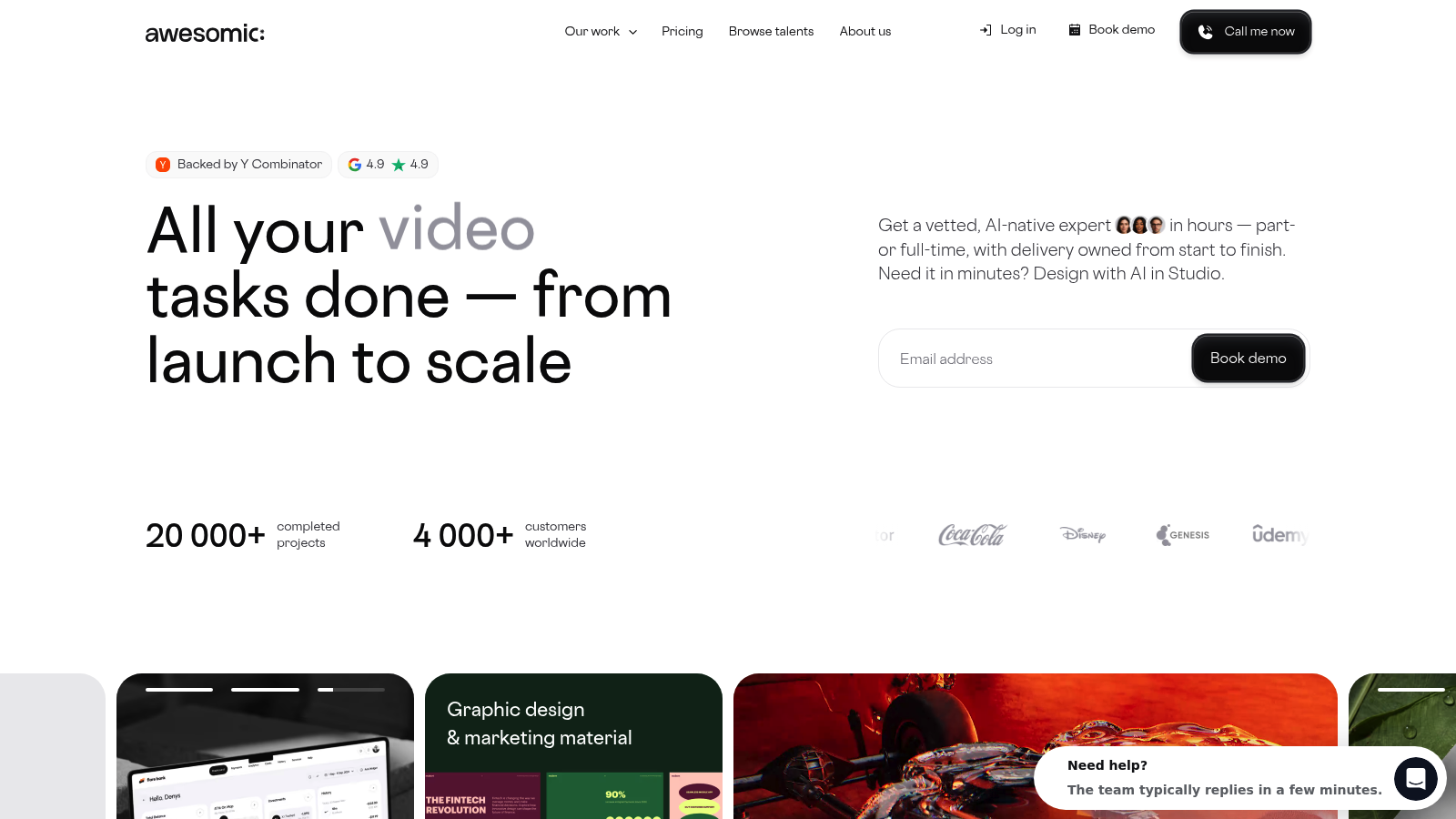
Best for: AI companies that need product interface work and the marketing design around a launch, continuously.
We design AI products and build with AI, which turns out to matter when the two inform each other. A designer who has watched a model return a confident wrong answer designs different empty states than one who has only seen the demo.
The subscription runs the interface work and everything a launch drags along, so the product UI, the site, the demo video and the deck share a visual language instead of arriving from three vendors.
Core services: AI product and interface design, UX for data-heavy and agentic tools, web design in Webflow and Framer, brand, AI video and motion, decks, copy and QA on All-in-One.
How a product engagement runs:
- Walk us through the model's actual behavior, including where it fails.
- Work with a designer matched to that problem, normally within a day.
- Work through flows, states and failure paths in your Slack, revising freely.
- Pull the launch assets from the same queue when the feature ships.
Pricing: All-in-One costs $2,995 per month, Graphic Pack $1,490, and quarterly billing takes 20% off whichever you pick. Above them sits Dedicated Talent, supplying a full-time designer alongside a project manager, quoted individually.
Proof, with the caveat attached: during Anthropic's "Built with Opus 4.6" hackathon we built Claude Design in five days, a swarm of agents that behave like a creative team, with an infinite canvas where comments are actioned by agents in real time. It was selected among 500 participants and shown at Claude Code's first birthday event in San Francisco. It is a research project from that hackathon rather than an official Anthropic product, and we say so plainly.
Where a specialist wins: if you are designing one frontier interface that defines your company, MetaLab or Punchcut will give it more concentrated senior attention than a subscription does.
Want to talk through an AI product problem? Book demo.

2. MetaLab
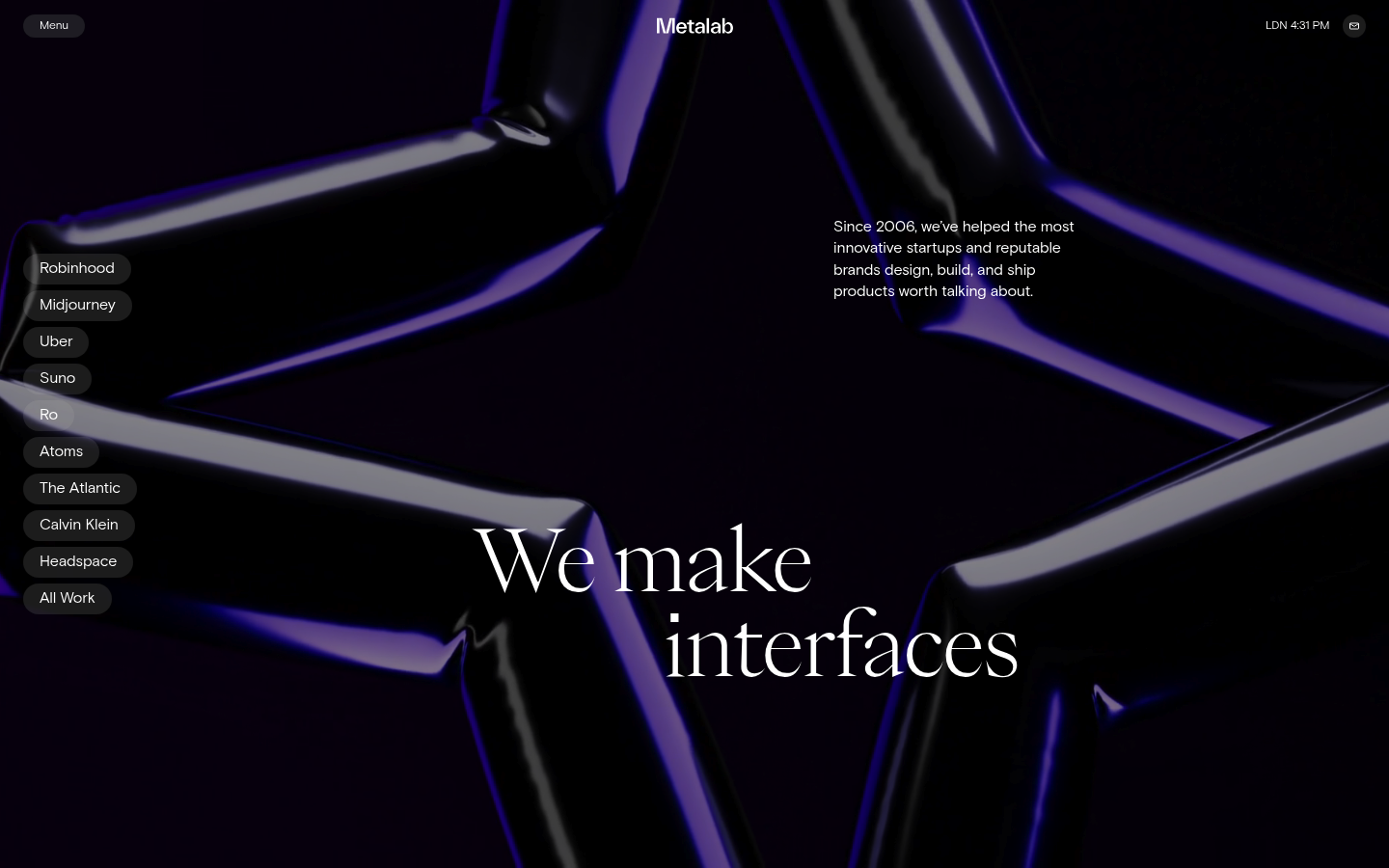
Best for: AI companies whose interface has to carry the entire product story.
MetaLab is the studio behind Slack's original interface, and its recent client list reads like a map of the current AI wave, with Midjourney and Suno alongside Robinhood, Uber and Headspace. Its site states the position simply: it makes interfaces.
Core services: product design, interface design, design systems, brand, AI product design.
Pricing: no public figures, project-scoped and premium.
Its real strength: taking a technically strange product and making it feel obvious, which is the whole job in generative tools where the input is a blank box. Expect a project engagement with a defined end, not an ongoing arrangement.
3. Work & Co
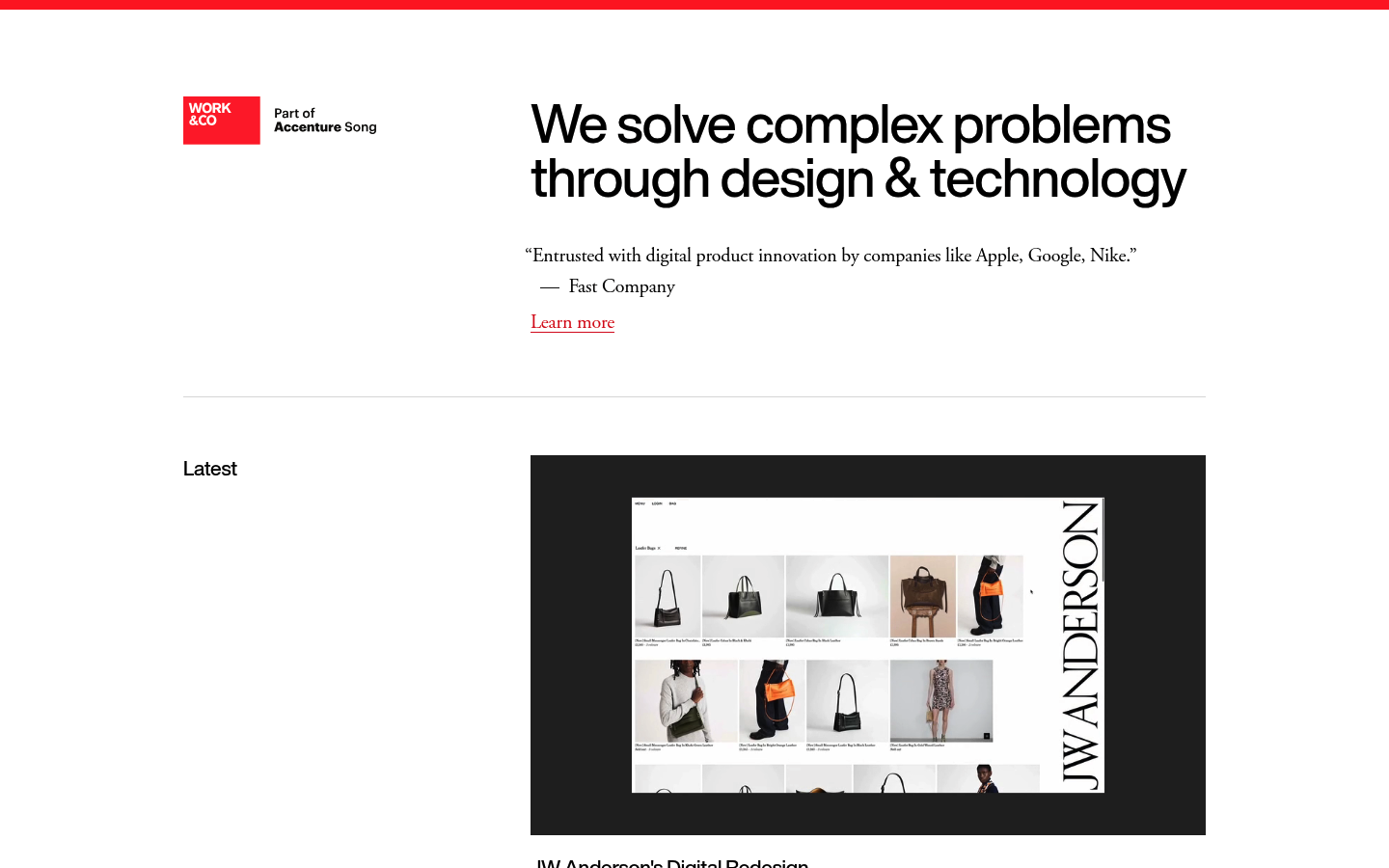
Best for: established companies adding AI to a product millions of people already use.
Work & Co describes itself as solving complex problems through design and technology, and Fast Company has credited it with being entrusted with digital product innovation by companies including Apple, Google and Nike. The relevant capability here is scale: adding AI to a mature product is mostly a question of not breaking what already works.
Core services: digital product design, engineering, product strategy, design systems.
Pricing: not published, enterprise-scoped.
Why buyers shortlist it: it has shipped at a scale where a bad AI feature would be a public event, and it designs accordingly. Early-stage teams will find both the process and the price heavier than they need.
4. Punchcut
Best for: products where the interaction model itself is unsettled.
Punchcut is a San Francisco design and innovation firm that calls itself a design accelerator, and it maintains a dedicated AI practice rather than treating AI as a line item. Its longer history in multimodal and next-generation interfaces is directly useful now that products are mixing chat, voice, canvas and agent behavior.
Core services: AI experience design, multimodal and voice interfaces, product design, design strategy.
Pricing: no rate card.
Where it beats the alternatives: when nobody has settled what the interface for your product should even be. If your product is a fairly conventional dashboard with a model behind it, this is more exploration than you need.
5. Glow Team
Best for: AI startups where activation and retention are the immediate problem.
Glow describes itself as a product design partner for growing SaaS and AI companies, helping teams improve UX and optimize complex products for activation, retention and growth, from a first MVP through to larger-scale work. That framing is refreshingly commercial: it is aimed at the metric rather than the artifact.
Core services: AI product design, UX optimization, MVP design, design systems.
Pricing: not published.
Why it earns a place here: many AI startups have a capable model and a terrible first-run experience, and that is a solvable design problem rather than a modeling one. This is a team that treats it that way.
6. NineTwoThree
Best for: companies that need the AI built, not only designed.
NineTwoThree is an AI studio spanning enterprise AI solutions, custom software and machine learning alongside product design. When the interface question and the model question are entangled, which they usually are, having both under one contract removes the most common source of finger-pointing.
Core services: AI development and machine learning, custom software, product and UX design, AI strategy.
Pricing: quotes only, scoped per engagement.
What to know before hiring: this is an engineering-led firm with design attached rather than the reverse, so if you already have a strong engineering team and only need design, a design-led studio will give you more.
7. VAULT

Best for: teams whose AI feature is one part of a product that still needs the rest built.
VAULT, which trades as Vault Innovation Group, is a Chicago studio that has been running since 2012 and puts its own count at more than 60 products launched. Design and engineering sit in one team, with a head of design alongside the senior engineers, and the AI work shows up inside ordinary products rather than as a separate practice: its Madden Academy project is an AI-powered coaching app, not a demo.
Core services: product discovery, UI/UX design, prototyping, custom software and mobile development, AI and machine learning implementation.
Pricing: not published.
Where it fits: the build where AI is a feature rather than the whole product. If the model already works and the interface is the entire differentiator, a design-led studio higher on this list will go deeper.
8. Fuselab Creative
Best for: data-heavy AI interfaces where the challenge is making output legible.
Fuselab runs a named "design for AI" practice alongside its broader UI/UX work, spanning design, engineering, and research and strategy. Its strength is in dashboards and complex data visualization, which is where a lot of applied AI actually lands once the chat novelty wears off.
Core services: AI UX design, data visualization and dashboards, product design, front-end engineering.
Pricing: no published rates.
Its real strength: turning model output into something a non-technical operator can act on, which is a different skill from designing a conversational interface.
9. Fuego UX
Best for: teams that want research before anyone opens a design tool.
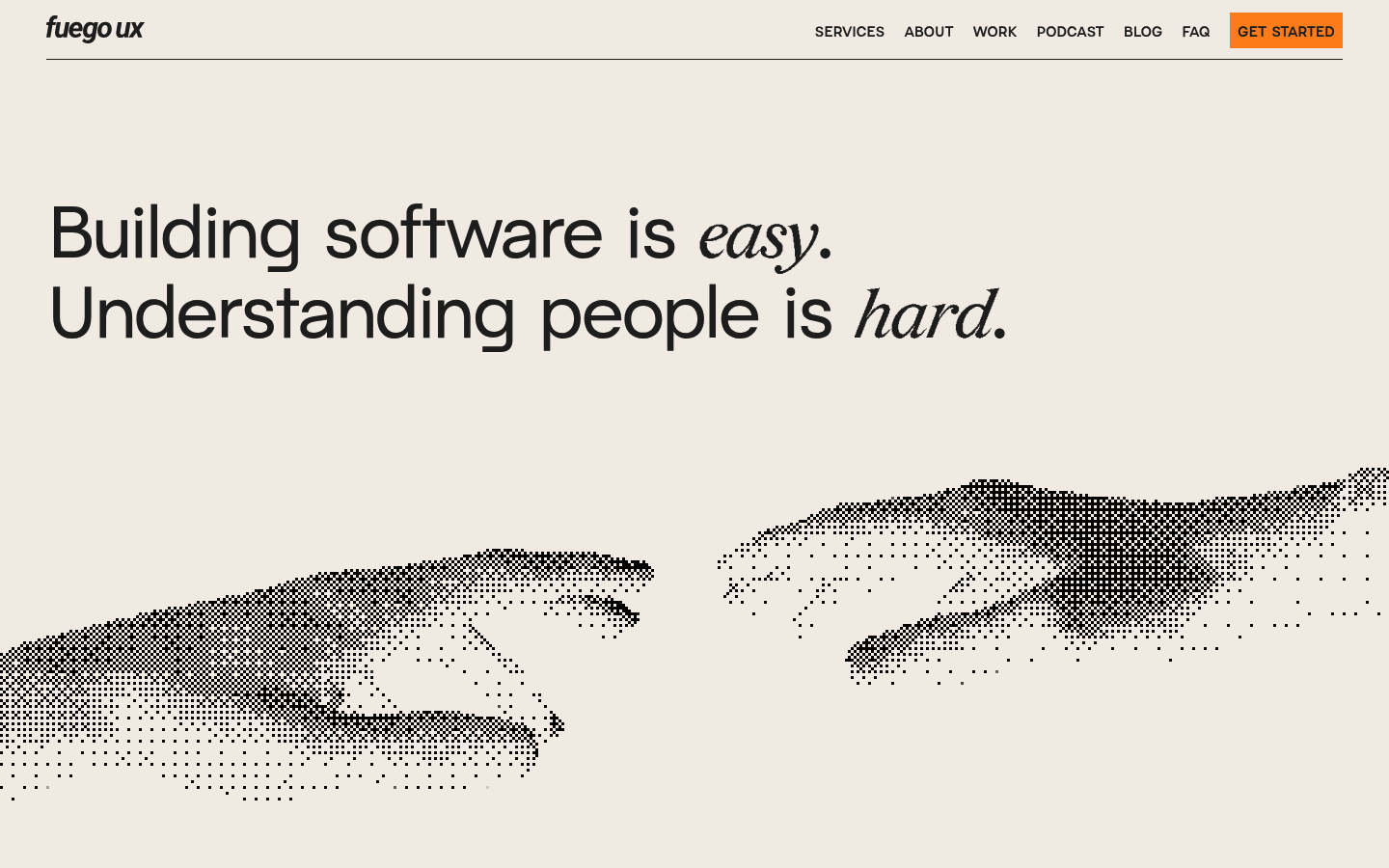
Fuego UX frames the problem well on its homepage: building software is easy, understanding people is hard. It leads with research, then design, then build, and it applies that sequence to AI and generative products rather than treating them as a special case exempt from user testing.
Core services: UX research, product design, usability testing, front-end development.
Pricing: not published, scoped per project.
Why buyers shortlist it: AI features are unusually prone to being built on assumptions about how people will use them, and research is the cheapest correction available. Teams needing visible design output next week will find the sequencing slow.
10. 925Studios
Best for: founders shipping fast in categories that have not settled yet.
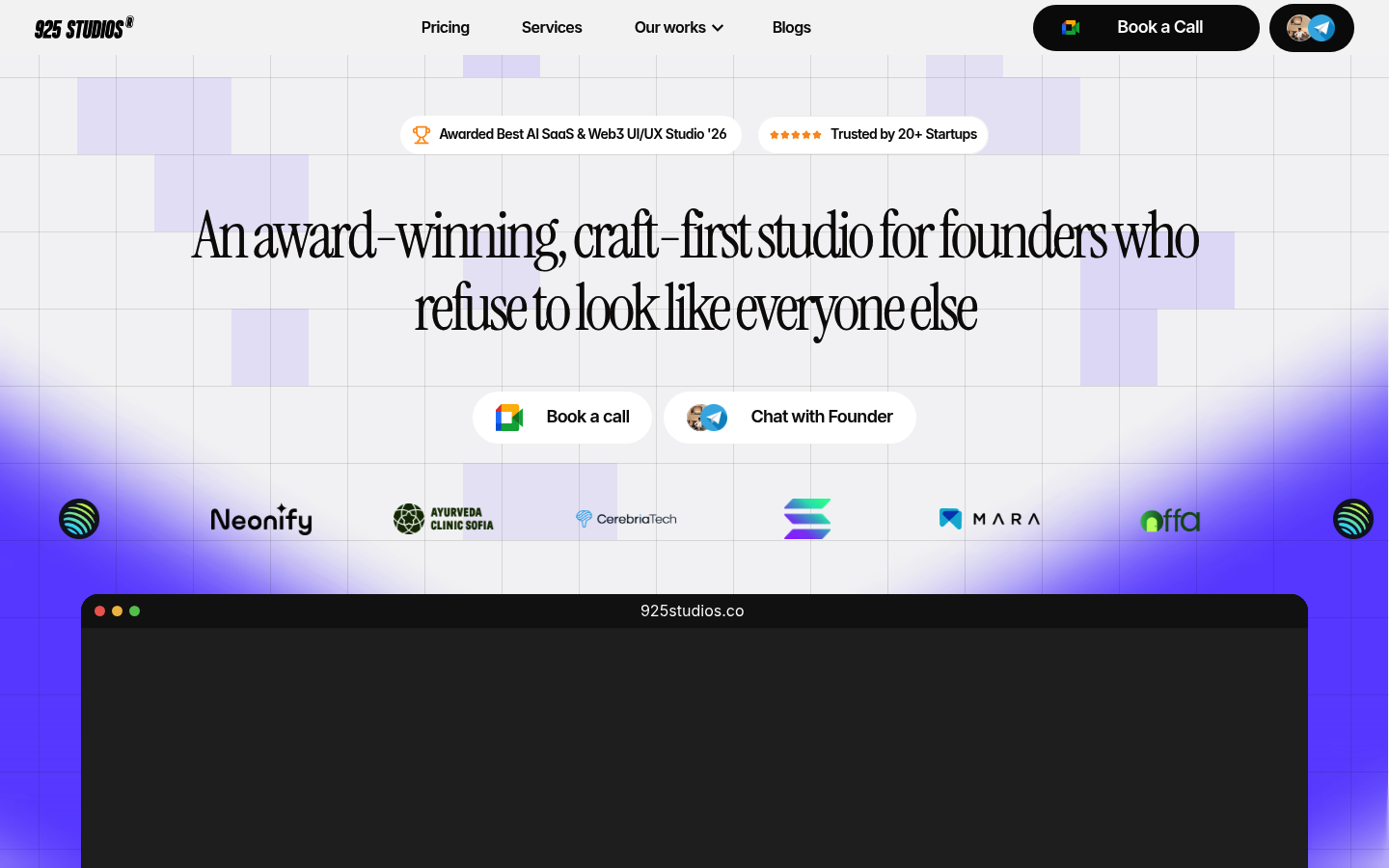
925Studios works with founders and product leaders across Web3 and AI, and it describes itself as thriving in uncertainty and moving fast, combining applied AI with a structured but flexible process. For a category where the product definition changes quarterly, that flexibility is a genuine service rather than a slogan.
Core services: brand and product design, applied AI, web design, design systems.
Pricing: not published.
Where it fits: early-stage AI and Web3 companies that value speed and adaptability. The dual Web3 focus will be irrelevant to many buyers, so ask to see AI-specific work.
11. Neuron
Best for: enterprise software teams putting AI into tools people use all day.
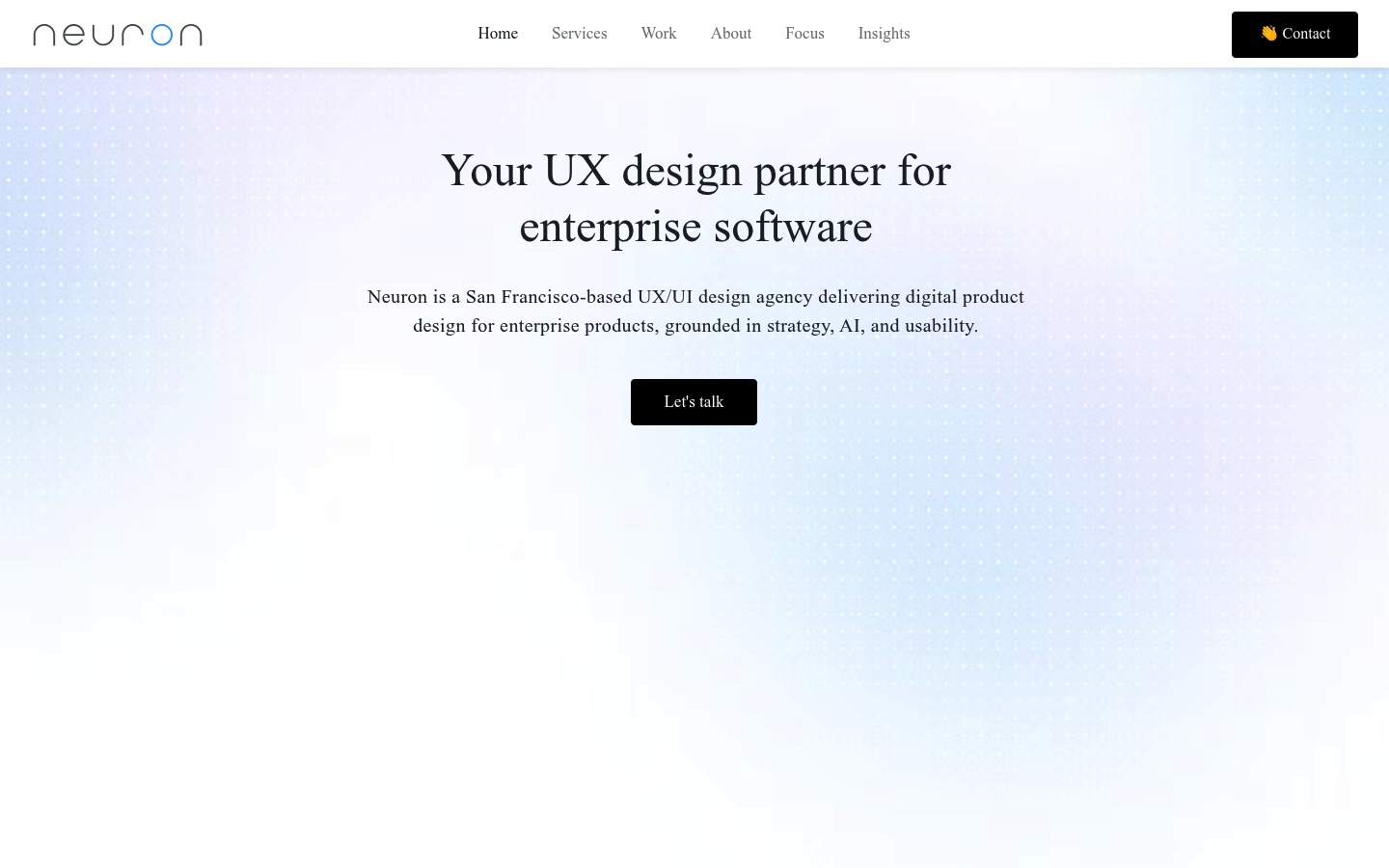
Neuron is a San Francisco UX/UI agency delivering digital product design for enterprise products, grounded in strategy, AI and usability. Enterprise AI is its own problem: the users did not choose the tool, cannot switch away from it, and are measured on output, so a slow or unreliable AI feature is worse than none.
Core services: enterprise UX and UI design, product strategy, AI interface design, usability.
Pricing: no public figures.
Why it made this list: most AI design attention goes to consumer-facing products while the majority of deployments are internal. This is a team pointed at the second group.
12. Intechnic
Best for: healthcare organizations building AI into clinical and operational decisions.
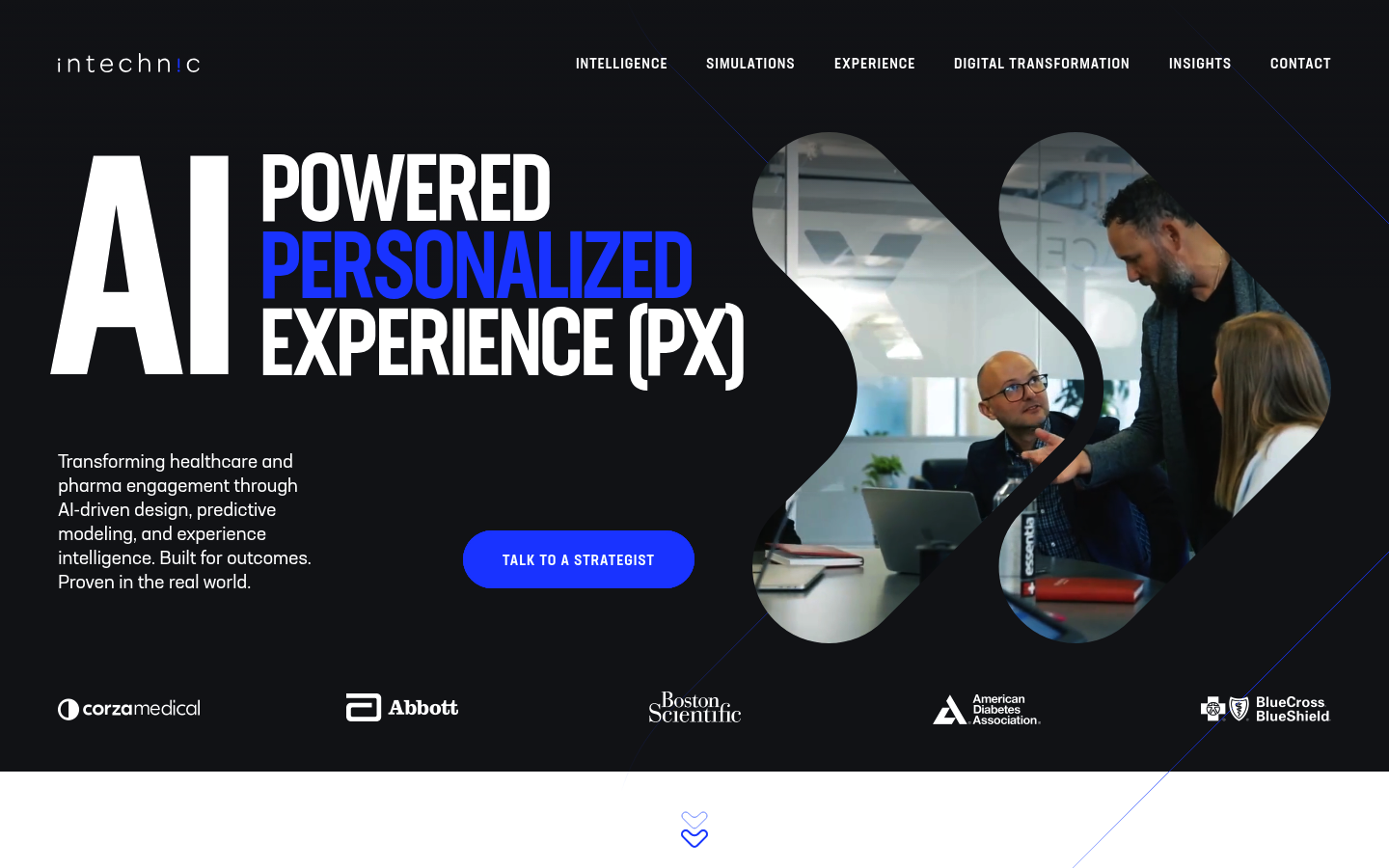
Intechnic works on predictive modeling and AI decision support for healthcare, which is the highest-stakes version of every problem in this article. When a model's output influences care, explainability stops being a design nicety and becomes the core requirement.
Core services: predictive modeling, AI decision support, UX design, healthcare digital products.
Pricing: not published.
What to know before hiring: deep specialization is the point here, so the healthcare context is an advantage if you are in it and largely irrelevant if you are not.
How we built this list, and why you should check it
We gathered every firm named across the current AI product design roundups, then verified each one independently. That verification changed the list substantially.
More than half the initial candidates turned out not to be AI product design firms at all. One widely cited roundup listed a Russian-language e-commerce studio; others named a 3D web design shop, a branding agency and a graphic design consultancy with no product UX practice. We dropped all of them.
Practitioners notice the same thing. In an r/userexperience thread asking for the best product design agencies, a commenter pushed back on Reddit that the list offered was badly out of date, pointing out that Razorfish had not existed since 2016 and questioning whether a famous brand consultancy did UX at all. That is one designer's view rather than research, and it matches what we found: these lists get copied forward without anyone opening the links.
There is a related trap. Building the companion lists for this series turned up firms still being pitched to buyers on current pages whose websites had quietly become domain-sale listings. We loaded every site here ourselves this month, and each firm had to show AI or applied-AI work as a genuine practice rather than a keyword dropped into a services menu.
We also drew a line between design and advice. Several candidates were really AI consulting services, selling strategy and model selection rather than shipped interfaces, and useful as that is, it is a different purchase from product design.
The five interface problems every AI product has to solve
NIST's AI Risk Management Framework lists the characteristics of trustworthy AI as valid and reliable, safe, secure and resilient, accountable and transparent, explainable and interpretable, privacy-enhanced, and fair with harmful bias managed. Several of those are only ever experienced through the interface, which makes them design work. Use these five as your brief.
- Show confidence honestly, so a shaky answer does not look identical to a certain one.
- Cite sources inline, because explainability that requires a support ticket is not explainability.
- Design the wait, since a blank ten seconds reads as broken while streaming output reads as thinking.
- Make correction cheap, letting people steer, edit and rerun rather than restart.
- Fail gracefully, with a specific recoverable message instead of a generic apology.
Ask any agency to show you how it handled these five in shipped work. The answers separate teams that have designed a real AI product from teams that have designed a chat box, and the difference shows up in retention rather than in screenshots.
Worth separating from all of this is the question of whether a studio uses AI for design internally. That affects their speed and cost, not your users' experience, and the two get conflated constantly in sales conversations.
What AI product design costs
Rates are almost universally private in this category, so treat the ranges below as engagement shapes rather than quotes. The honest anchor is that AI product work costs more than equivalent conventional design, because the exploration is genuinely harder.
| Engagement | Typical cost | What it covers | Best when |
|---|---|---|---|
| Design subscription | $1,490 or $2,995 a month | Continuous interface, web and launch design | AI features ship constantly |
| Boutique studio project | $30,000 to $120,000 | A defined product or feature design engagement | One significant surface to get right |
| AI studio with engineering | $80,000 to $300,000 | Design plus model integration and build | The model and interface are entangled |
| Premium product studio | $150,000 and up | Flagship interface design with senior leadership | The interface is the company's differentiator |
| In-house AI product designer | $130,000 to $200,000 a year | One person with deep product context | The work is permanent and full-time |
Only the first row comes from a published rate. The others reflect how firms at each tier describe their engagements, plus the salary range you would be comparing against, so confirm every number on a call before planning around it.
The cost trap specific to AI is redesign. Products built around a model's current behavior get invalidated when the model improves, which argues for continuous design capacity over a single large project, and it's one reason hiring a product designer full-time appeals to teams shipping weekly.
Agency, embedded team, or your own hire?
The most upvoted advice in that Reddit thread was blunt: if you would spend six figures with an agency, hire a full-time designer instead, because UX is ongoing rather than one and done. That is right for some teams and wrong for others, and the deciding factor is whether your AI product is still being defined.
If you're figuring out what the product is, an agency that has designed several AI interfaces has seen failure modes your first hire has not. Buying that pattern recognition is worth real money, and it's the same logic behind hiring a product design agency at any stage.
If the product is defined and shipping weekly, a full-time designer with deep model context will beat any external team on everyday decisions. The catch is that one designer covers one discipline, and AI launches need interface work plus a site, a demo video and a deck.
A subscription sits between the two, which is the argument we make for ourselves: one queue covering the interface, the site, the launch video and the deck. It is not the right answer when you need one senior team obsessing over a single flagship interface for a quarter.
Choosing for the product you're actually building
Match the firm to your stage and your risk, not to the most impressive logo wall.
Building a frontier consumer AI product where the interface is the differentiator? MetaLab and Punchcut are the tier to call. Adding AI to an established product at scale? Work & Co and Neuron. Early-stage and fighting activation? Glow Team or 925Studios. Need the model built too? NineTwoThree. AI as one feature of a product that still needs the rest built? VAULT. Regulated or clinical? Intechnic.
Whoever you shortlist, ask one question that cuts through every portfolio: show me a screen where your model was wrong, and tell me how you designed for that. Studios that have shipped real AI products answer it immediately. The rest change the subject to visual style, and that answer tells you what you need to know about how AI will change design work inside your own team too.
FAQs
What makes AI product design different from regular product design?
Conventional products behave predictably, so the design job is making functions findable. AI products are probabilistic, so the design job is setting expectations, showing uncertainty, and making errors recoverable. Stanford's 2026 AI Index illustrates the gap neatly: the top model won a gold medal at the International Mathematical Olympiad while reading analog clocks correctly only 50.1% of the time. Designing for something that capable and that uneven is a distinct skill.
How much does it cost to hire an AI product design agency?
Almost nobody publishes rates. Boutique studio projects commonly run $30,000 to $120,000, firms that bundle AI engineering with design run higher, and premium product studios start around $150,000 for flagship work. Design subscriptions are the exception with public pricing, at $1,490 or $2,995 a month. Expect AI work to price above equivalent conventional design because the exploration takes longer.
Do I need an AI-specialist agency or will a good product design studio do?
If your product simply has a model somewhere in the backend, a strong general product studio is fine. If users interact with model output directly, hire a team that has designed for uncertainty before, because confidence display, source citation, steering and failure states are learned through shipping rather than reasoned from first principles. Ask for shipped AI work, not an AI page on their site.
How do I check an AI design agency is legitimate?
Open the website yourself before anything else. Roundups in this category are copied forward without verification, and both our own checks and practitioner complaints turned up recommended firms that had closed, been repositioned, or never did UX at all. Then look for shipped AI products with named clients, ask which team members will work on your project, and request a case study where the model behaved badly.
Should we design the AI feature before or after the model works?
Design alongside it, not after. Teams that finish the model first almost always discover that the interface cannot express what it does, and teams that design first build for behavior the model never delivers. The workable sequence is to prototype the interaction against the real model as early as possible, including its failure cases, so the design reflects actual behavior rather than the demo.
One subscription and your hiring problems solved

FAQ


Awesomic is a revolutionary app that matches companies with vetted professionals across 30+ skill sets, from design and development to marketing and product. Based in San Francisco with a global core team, we offer a faster and more flexible alternative to traditional hiring through a subscription-based model. Awesomic delivers high-quality talent on demand, without the delays of recruiting.
We function as a subscription-based service that matches you to top-tier, vetted talent. Submit a project in just a few clicks and start receiving deliverables in as little as 24 hours. Scale your Awesomic plan up or down as your business needs change.
Every Awesomic subscription comes with unlimited revisions. You receive daily progress updates via the app, and you can provide feedback or request iterations as needed. If your project requires a different approach, you can request a talent rematch at any time, at no extra cost. You can also add teammates to collaborate and streamline feedback
A talent marketplace is a platform that utilizes data and intelligent matching algorithms to connect professionals with projects based on their skills, experience, and availability. While often used internally by large companies, Awesomic applies this model at scale, matching vetted global talent to your most critical business needs.
Hiring is time-consuming, expensive, and risky. Awesomic eliminates that problem. We rigorously vet all talent for technical ability, communication, and soft skills, ensuring only senior-level professionals work on your projects. You skip the job posts, interviews, and delays, and get straight to results.
No, Awesomic goes beyond design. While many clients utilize us for branding, UI/UX design, or motion graphics, we also provide vetted talent in no-code web development, product design, marketing, and more. Think of us as an extension of your team. A flexible, high-performing creative partner from planning to execution, whether you're building awesome products or scaling your team.
You can talk directly with your matched talent via the Awesomic app, connect via Slack, email, or schedule video calls. No matter the plan, you’ll receive daily updates in the app for every active task. You can also tag us in for any issues through our in-app customer chat.


