




12 Best SaaS Web Design Agencies in 2026

Key takeaways:
- A SaaS website has to match the product it sells, so the agency you hire needs to design marketing pages and product UI without the two drifting apart.
- Published rates run from $1,490 a month on a subscription to $11,999 a month for two dedicated designers, and most of the category still quotes privately.
- Since 28 June 2025 the European Accessibility Act has applied to e-commerce services, while WebAIM found detectable accessibility failures on 95.9% of the top million home pages.
- Pick by operating model first: a dedicated designer, an unlimited queue, a scoped project or a growth retainer are four genuinely different purchases.
Most website advice assumes you sell something a visitor already understands. SaaS doesn't work that way. You're asking someone to grasp an abstract product from a screenshot, trust you with their data, and start a trial before anyone has spoken to them.
That puts unusual weight on a handful of pages, and it means your marketing site and your product interface are judged as one thing. A slick homepage in front of a dated dashboard reads as a bait and switch.
This list covers the SaaS web design agencies worth your shortlist in 2026, sorted by the operating model they actually sell rather than by a star rating. We're first, and we've said plainly which jobs the others do better. If you'd rather bring the work in-house, the same criteria apply when you hire a SaaS designer directly.
Why SaaS websites are a different design problem
Three constraints separate SaaS web design from ordinary web design.
The first is that you have two interfaces. The marketing site sells the promise and the product delivers it, and when their visual languages diverge, activation suffers. Agencies that only do marketing sites hand you a beautiful front door attached to someone else's house.
The second is that the site never stabilizes. You ship features continuously, so pages need adding and rewriting every few weeks, which is a poor fit for an agency that works in three-month scoped projects and then disappears.
The third is that the pricing page carries more revenue weight than anything else on the site, and it is genuinely hard to design. It has to express tiers, usage limits, seat math and an upgrade path without making a prospect feel trapped.
Any agency you shortlist should be able to talk fluently about all three. If the conversation stays on visual style, you're talking to a studio that will treat your SaaS product like a brochure, which is the difference between a marketing vendor and a genuine SaaS design service.
The 12 best SaaS web design agencies
The table sorts by operating model, because that decides more about your experience than portfolio quality does. Published prices appear where a firm actually publishes them, and "quote only" is the honest answer everywhere else.
The pattern worth noticing is that only three of eleven publish a number, and those three all sell recurring models. Project agencies price on discovery, so expect a call before a figure.
1. Awesomic
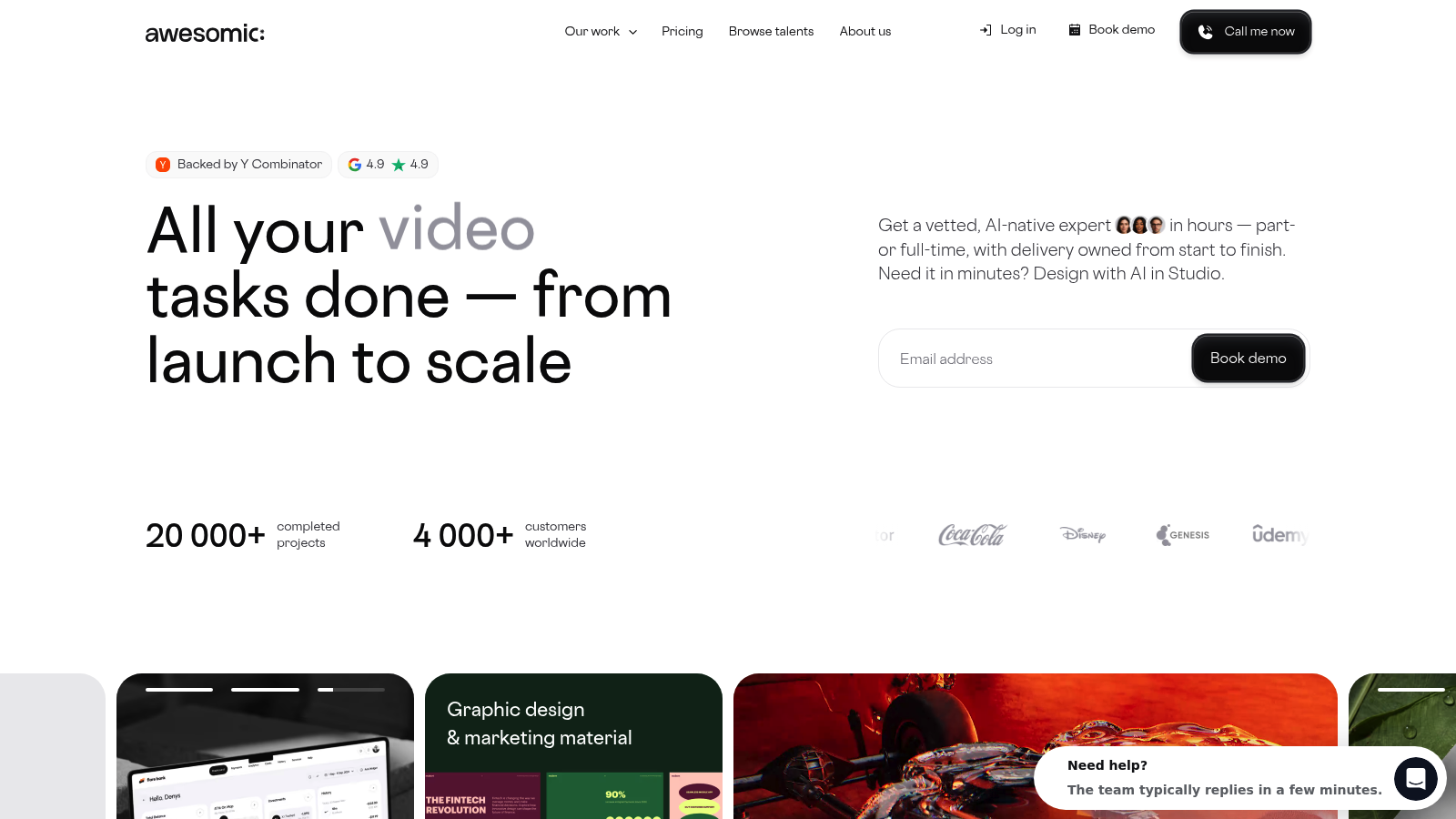
Best for: SaaS teams whose website and product both need design attention, without hiring for each.
The two-interface problem is the one we're built for. The same matched designer can take your pricing page on Monday and a settings screen on Thursday, which is how the marketing site and the product stay recognizably the same product. You send work to a queue instead of scoping a new engagement each time.
That suits how SaaS actually ships. Feature launches arrive with a landing page, a changelog entry, an in-app announcement and a deck, and those are four different disciplines that usually mean four different vendors.
Core services: SaaS marketing sites and landing pages, product UI/UX, Webflow and Framer builds, brand identity, pitch decks, video and motion, copywriting and QA on All-in-One.
How it works:
- Describe the job, from a pricing page rebuild to an ongoing design queue.
- A vetted designer suited to that work picks it up, typically inside a day.
- Review in Slack and request unlimited revisions.
- Keep adding tasks as the roadmap moves, with no per-task pricing.
Pricing: Graphic Pack sits at $1,490 a month and All-in-One at $2,995, with quarterly billing taking 20% off either. Dedicated Talent pairs a full-time talent with a PM and is priced on request.
Honest limits: we're a design subscription, not a growth retainer, so we won't run your paid acquisition or own your SEO strategy the way SimpleTiger or Market8 will. What we can show is range on real SaaS work. For Mercoa, which sells embedded bill payments to B2B fintech platforms through a single API, we handled UI/UX design and the Webflow build together.
Want to see whether the model fits your roadmap? Get started.

2. Bricx
.png)
Best for: SaaS and AI companies that want one team to handle the website, product design, branding, and other creative work.
Bricx is a design studio focused on venture-backed AI and SaaS companies. It has worked with 50+ teams, including Writesonic, Sybill, CAMB.AI, and other YC-backed startups. Instead of splitting the work between several agencies, you can use Bricx for both your SaaS website and the product itself.
Core services: SaaS web design, product UI/UX, brand design, motion and video, and development. For product work, the team can handle everything from early research and user flows to prototypes, final screens, design systems, and developer handoff.
Pricing: not published. You need to book a call to get a quote.
Its real strength: having several types of design work under one roof. Bricx can redesign your marketing site, improve the product UI, refresh the brand, and help with development without making you manage several separate teams. The company also keeps the setup relatively lean, with a small team and direct communication rather than layers of account managers.
3. Eleken
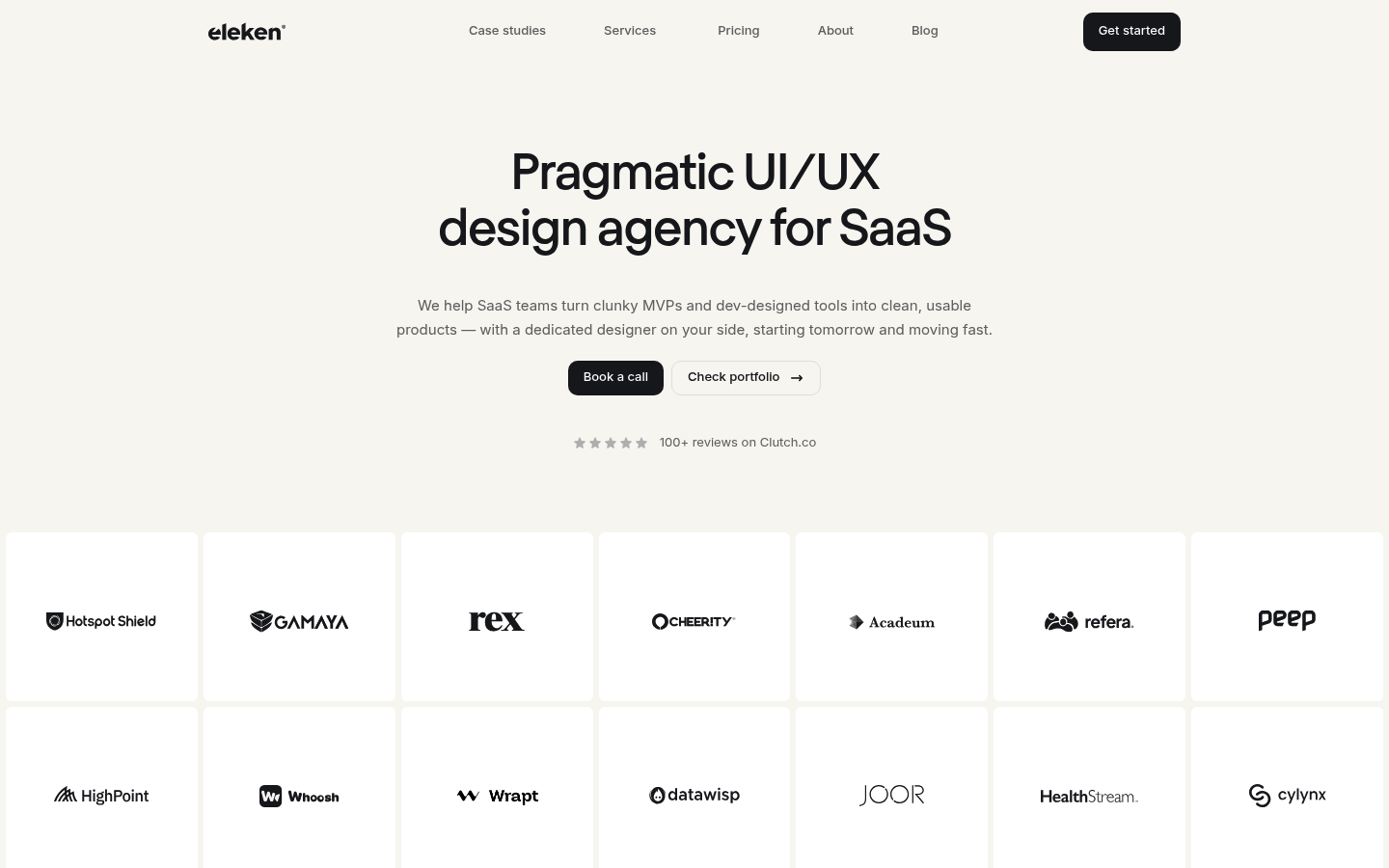
Best for: SaaS companies whose product UI is the bottleneck, not the marketing site.
Eleken describes itself as a pragmatic UI/UX agency for SaaS, and its pitch is turning clunky MVPs and developer-designed tools into usable products. You get one dedicated designer working your queue, with a Head of Design overseeing quality rather than a project manager relaying messages.
Core services: SaaS product UI/UX, product redesign, design from scratch, team extension, design systems.
Pricing: published and unusually specific. $4,599 a month for a part-time designer, $6,599 for a full-time designer, $11,999 for two. Two-month minimum, three-day free trial, pause or cancel anytime.
Its real strength: depth on one product. A designer who spends months inside your app makes better decisions than one who visits it quarterly. The tradeoff is scope, because this is product UI/UX only, with no branding, video or marketing collateral in the package.
4. Wavespace
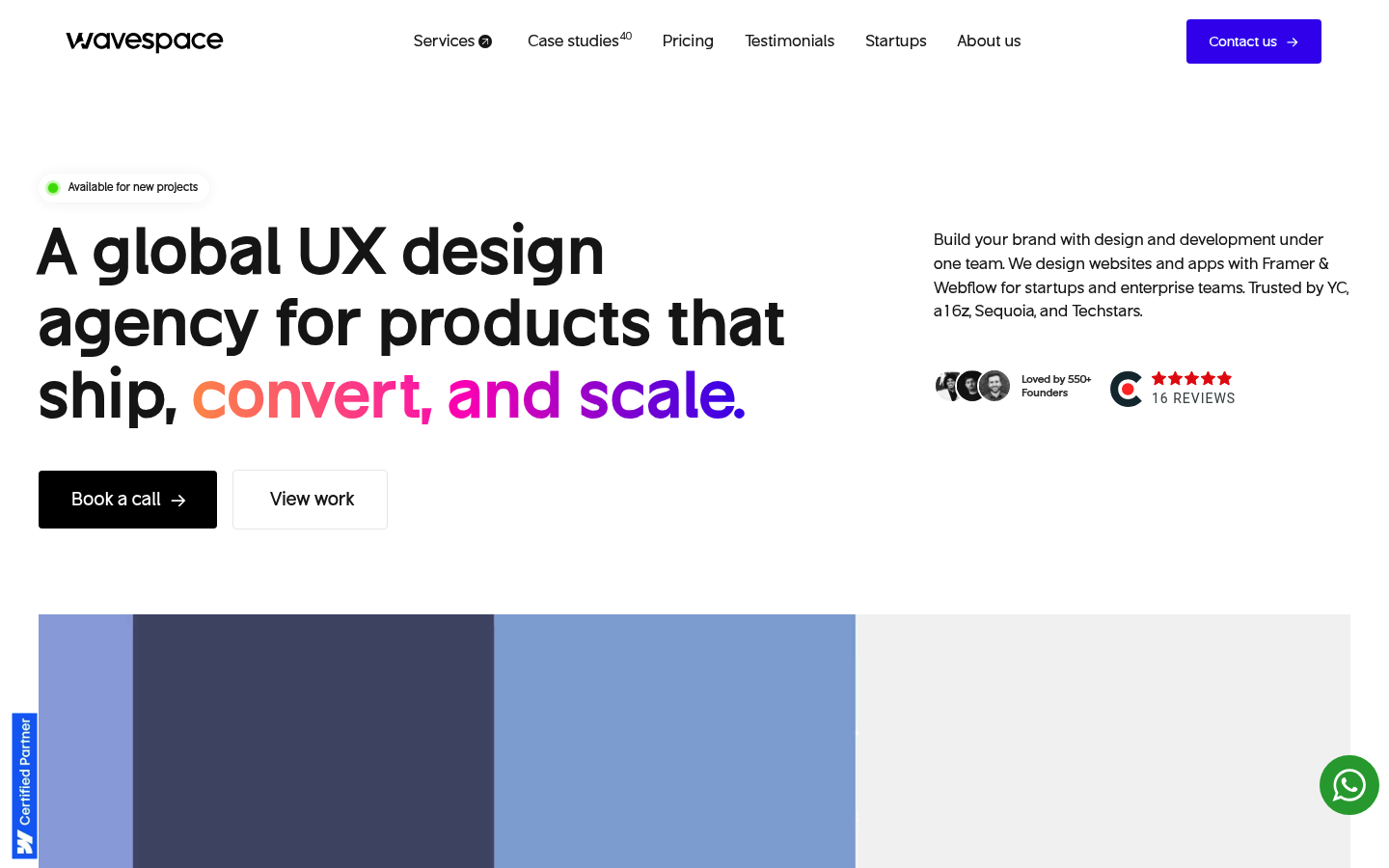
Best for: funded startups that want design and front-end build from a single team.
Wavespace positions as a global UI/UX agency for startups and enterprises, building websites and apps in Framer and Webflow with design and development under one roof. Its homepage claims work with companies backed by Y Combinator, a16z, Sequoia and Techstars, and says more than 550 founders have used it.
Core services: UI/UX design, Framer and Webflow development, brand, product design.
Pricing: nothing public; a number follows the scoping call.
Why buyers shortlist it: the single-team model removes the handoff gap where a design gets approved and then quietly gets worse during build. Treat the investor logos as an indication of the market it serves rather than a quality guarantee.
5. CodeTheorem

Best for: SaaS teams adding AI capability and needing the interface to make it legible.
CodeTheorem pairs UI/UX design with custom development, and its stated focus is helping founders design and build AI-powered products ready for growth. That combination is genuinely useful right now, because most SaaS products are bolting AI features onto interfaces designed before those features existed.
Core services: UI/UX design, custom software and AI development, product design for SaaS founders and product teams.
Pricing: unpublished.
Where it fits: best when the design question and the engineering question are the same question. If you only need a marketing site refresh, this is more capability than the job needs.
6. Arounda
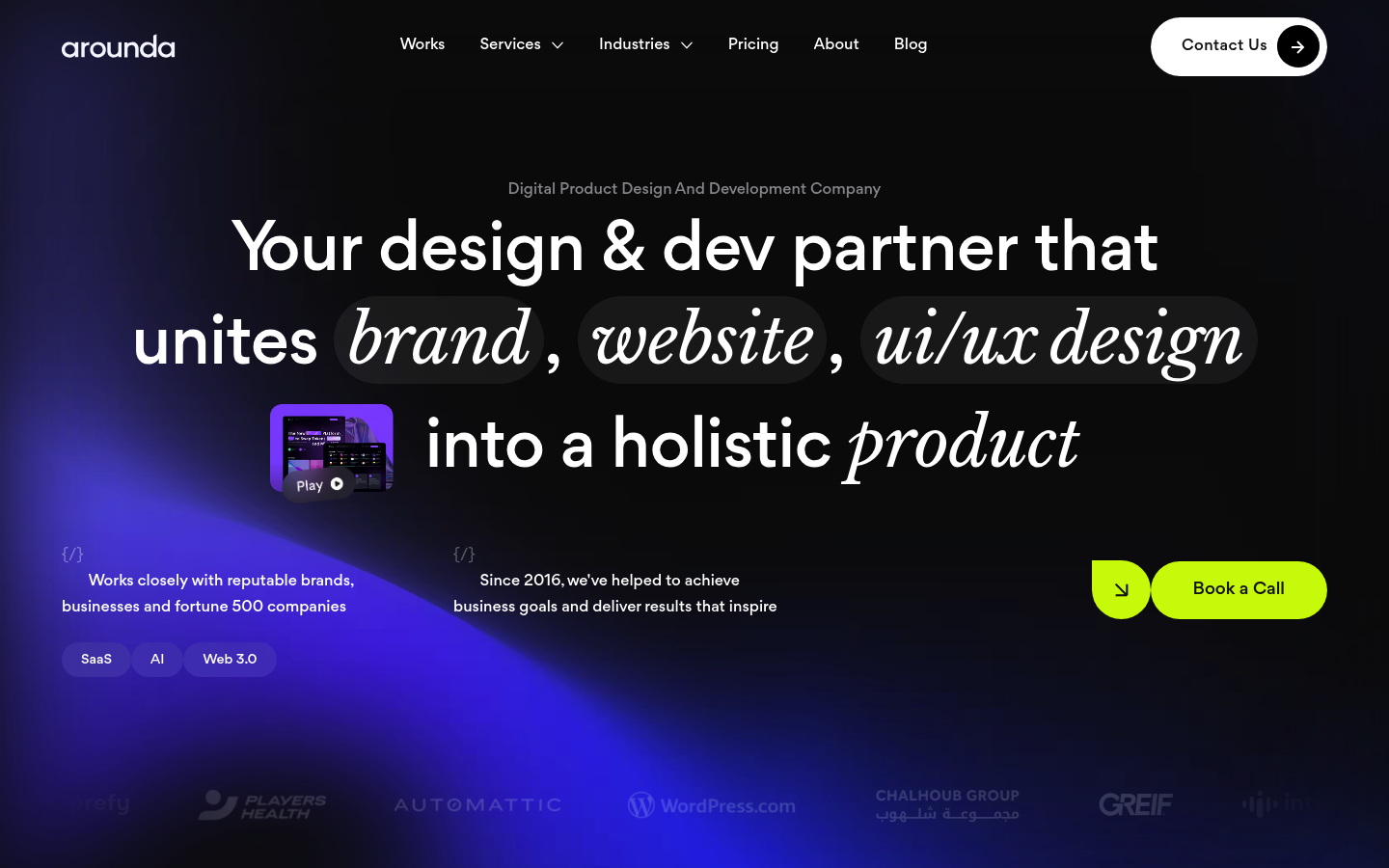
Best for: SaaS companies that want brand, website and product treated as one system.
Arounda describes itself as a design and development studio uniting brand identity, web development and UI/UX into a single product, and it has worked with recognized brands and Fortune 500 companies alongside startups. The holistic framing is the point: it's aimed at teams tired of a logo from one vendor, a site from another and an app from a third.
Core services: brand identity, UI/UX design, web development, product design, team extension.
Pricing: nothing public, and the estimate tracks how many surfaces you need.
What it's genuinely good at: consistency across surfaces, which is the exact failure mode SaaS companies hit when they grow through separate vendors.
7. SimpleTiger
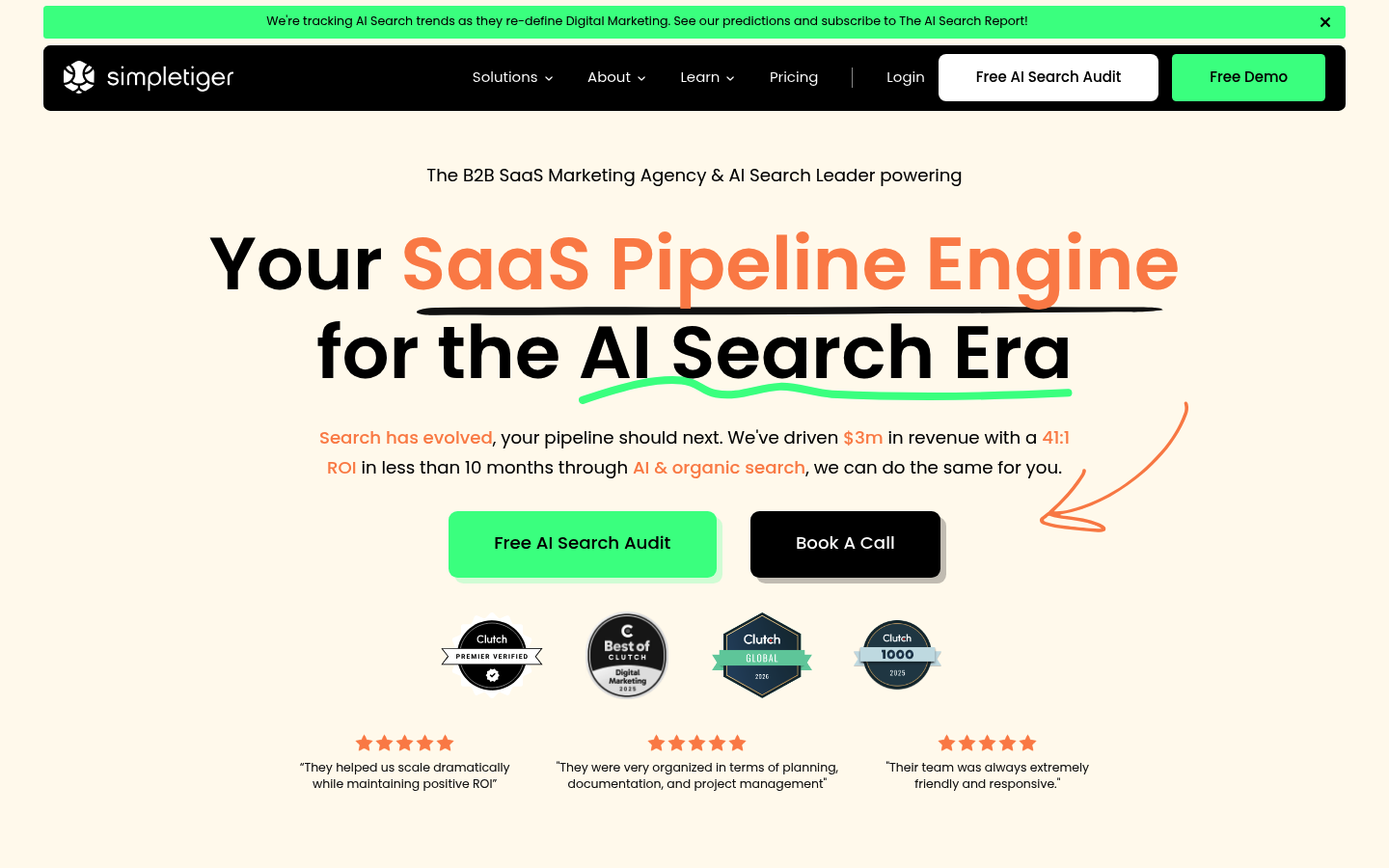
Best for: SaaS companies where organic search is the primary acquisition channel.
SimpleTiger is a B2B SaaS marketing agency, and web design sits inside a practice built around search. Webflow is its build platform of choice, and the argument for hiring it is that the site architecture, the content model and the keyword strategy get decided together instead of in sequence.
Core services: SaaS SEO, web design and Webflow development, paid search, content.
Pricing: unpublished, and sold as a retainer rather than a one-off build.
Why it earns a place here: redesigns are the most common way SaaS companies accidentally destroy their organic traffic, and a team that owns both sides has an obvious incentive not to. Be clear that you are buying a marketing retainer with design inside it, not a design studio.
8. Koombea
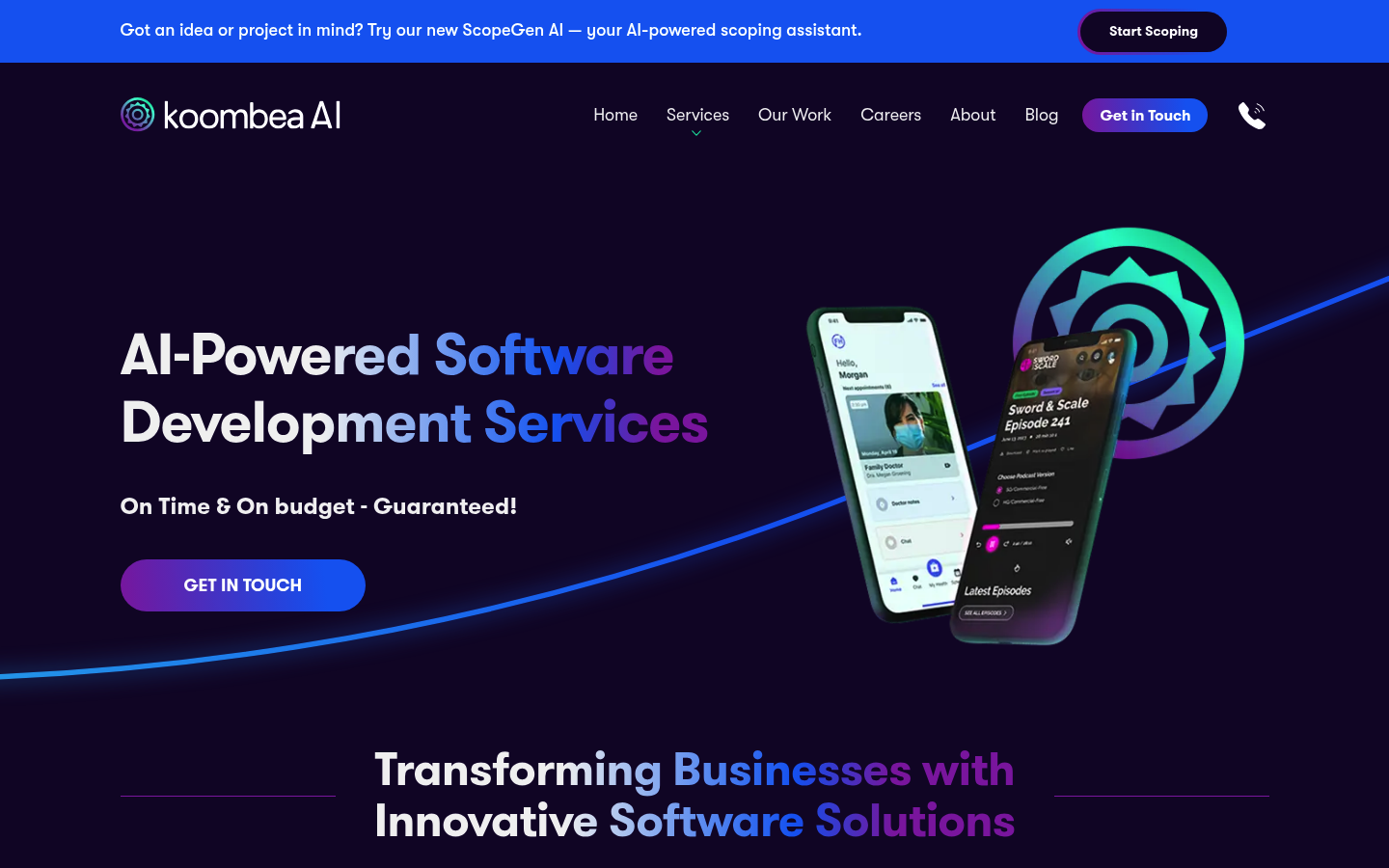
Best for: SaaS products where the web app itself needs building, not just the site around it.
Koombea is a software development firm with dedicated web app design, web development and website redesign practices, and it holds Clutch Premier Verified status. It runs project-based and team-extension engagement models, so it can take a defined build or embed alongside your engineers.
Core services: web and mobile app development, web app design, website redesign, product strategy.
Pricing: nothing public. Estimates come out of its own scoping process.
Where it beats the alternatives: when the hard part is the application rather than the pages selling it. For a pure marketing-site refresh, the lighter teams on this list will move faster.
9. Flowout
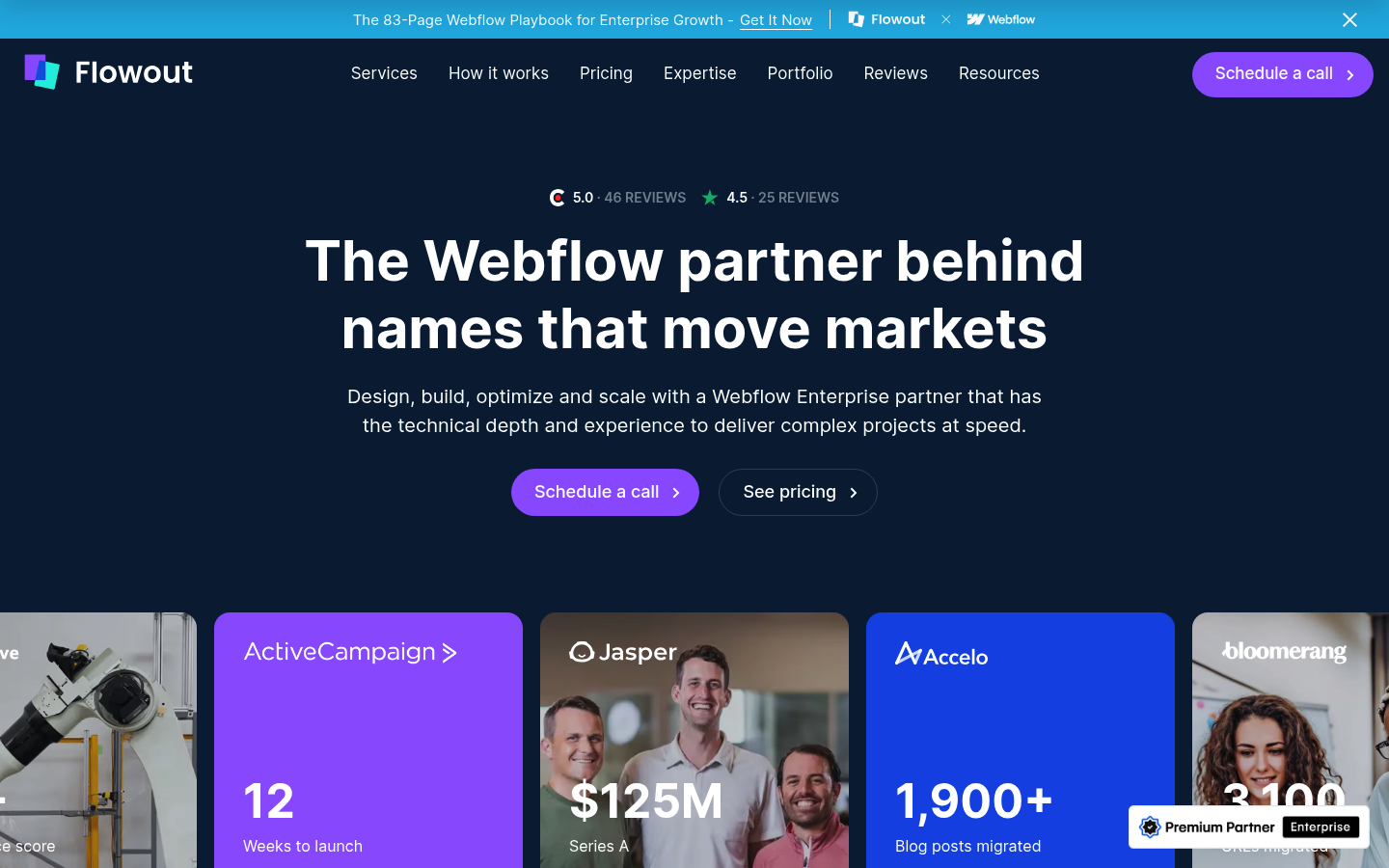
Best for: SaaS marketing teams that want Webflow work at a fixed monthly rate.
Flowout sells unlimited Webflow design and development on a subscription, and it holds Webflow Premium Partner status at the enterprise tier. Plans stack by scope rather than by seat, and it also sells SEO, conversion rate optimization and blocks of hours for teams with irregular demand.
Core services: Webflow development, UX/UI design, custom development and interactions, conversion-focused copywriting, project management.
Pricing: published. From $5,900 a month for development, $7,900 with design, and $9,900 with design and copywriting, on monthly, quarterly or yearly billing. Hourly packages come in 25, 50 and 100-hour blocks.
Why buyers shortlist it: the pricing is genuinely transparent for this category, and the hourly blocks are a sensible way to keep a Webflow specialist available without a full retainer. It is Webflow-only, so it is not the team to ask about platform choice.
10. Pony Studio
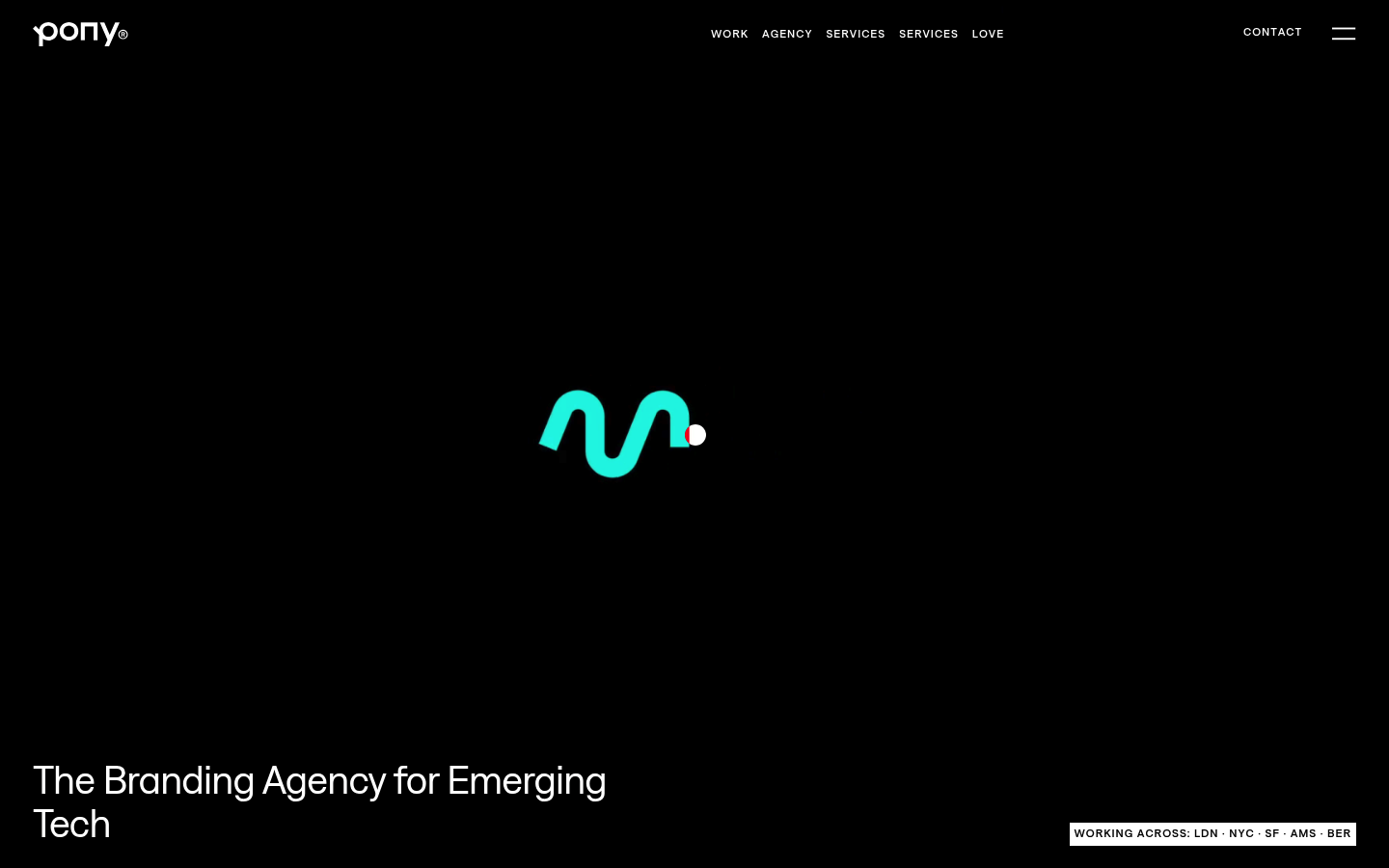
Best for: SaaS companies whose brand needs to catch up with the product.
Pony calls itself the branding agency for emerging tech, working out of London and across New York, San Francisco, Amsterdam and Berlin. It runs three connected practices: brand strategy and identity, interfaces spanning websites through to native and web apps, and ongoing creative support for marketing teams. That last one matters for SaaS, where demand after launch is steady rather than occasional.
Core services: brand strategy, visual identity and logo, website and app interfaces, decks and campaigns, ongoing creative support.
Pricing: unpublished.
Its real strength: identity work that carries through into product screens rather than stopping at a brand book. If your visual identity is already settled and you only need pages built, you would be paying for strategy you don't need.
11. Grafit Agency
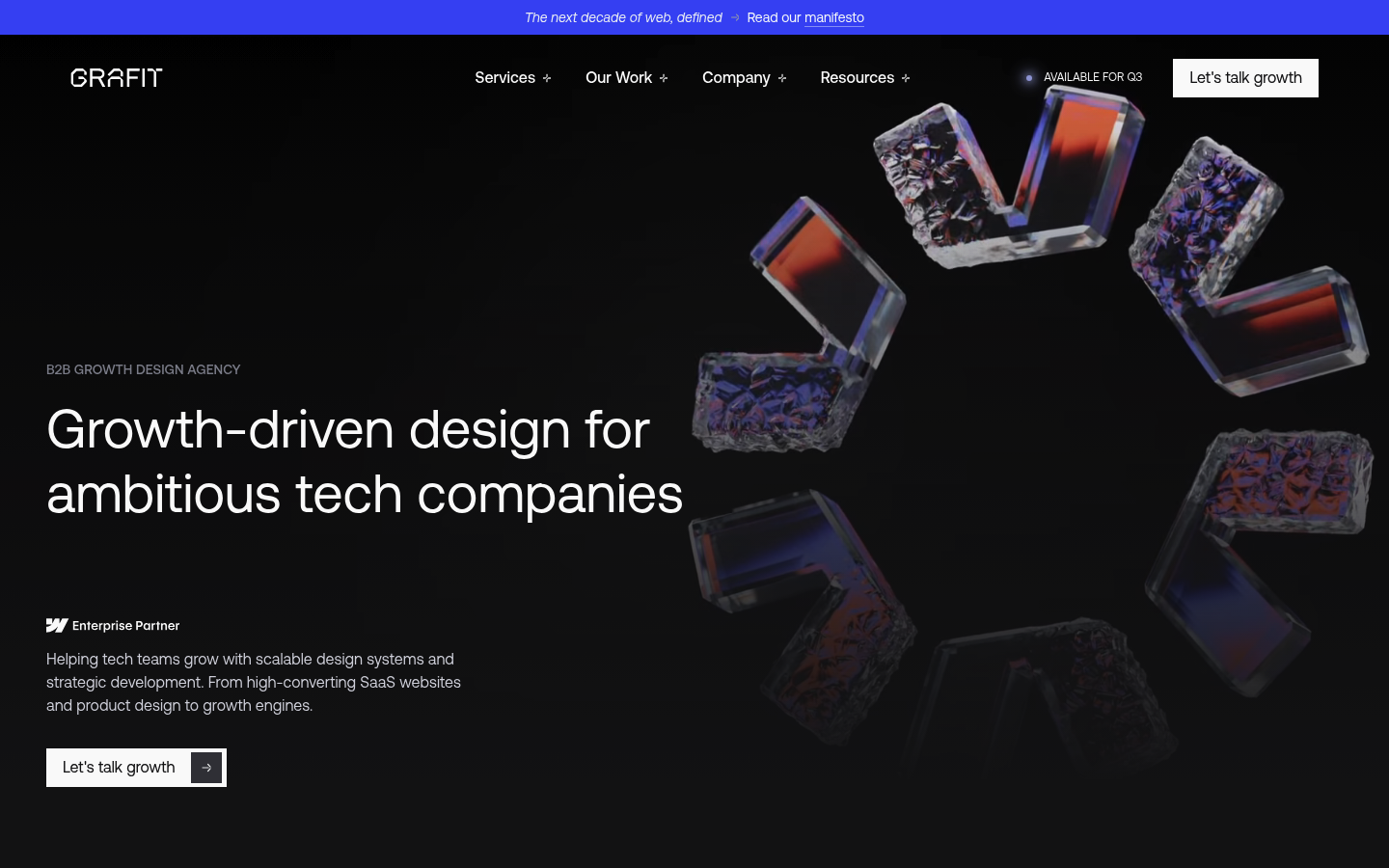
Best for: tech companies that want a conversion-focused rebuild inside a tight window.
Grafit sells growth-driven design across design, development and growth, and it leads with outcomes rather than aesthetics. Its featured case study is a component-based build for Callstack delivered in six weeks that it reports lifted conversions by 176%.
Core services: web design, component-based development, conversion optimization, growth support.
Pricing: nothing public, though it does post current availability.
What to know before hiring: the component-based approach is the useful detail, because it leaves your marketing team able to assemble new pages without going back to the agency. Treat the 176% figure as one project's reported result rather than a benchmark.
12. Market8
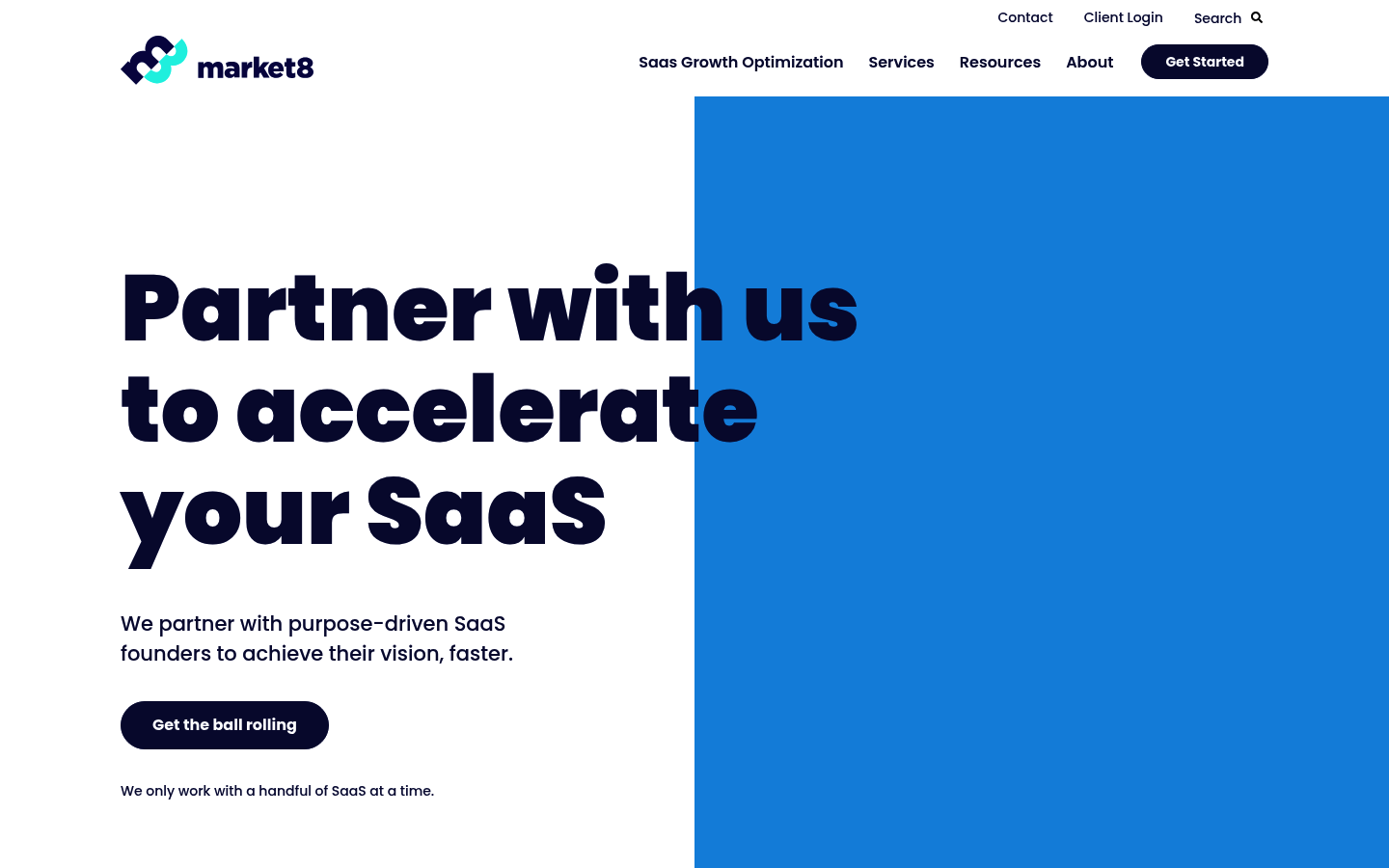
Best for: early-stage SaaS founders who need positioning resolved before design starts.
Market8 works with a deliberately small number of SaaS companies at a time and frames its offer around growth strategy and B2B web design together. It says outright that it does not think of itself as an agency, which reads as positioning but does describe the engagement: fewer clients, more strategic involvement.
Core services: SaaS growth strategy, positioning and messaging, B2B web design, demand generation.
Pricing: unpublished.
Where it fits: valuable if your real problem is that nobody can explain what you do in a sentence, since no amount of design fixes that. Less relevant if your messaging is settled and you need execution volume.
How we vetted this list
We pulled every agency named across the current search results for SaaS web design, then cut the list down with four tests.
The first was whether the agency exists. Four firms named in live 2026 SaaS roundups could not have taken the work. BX Studio, listed at number six in one current article, is now a parked domain, and Spot On Agency is openly for sale at $299. MakeBuild and FlowTrix do not resolve at all. Open every link in every list, this one included.
The second was whether the agency actually serves SaaS. One widely cited roundup lists Barrel as a top SaaS web design agency; Barrel's own homepage describes it as a CPG commerce agency working with Shopify DTC brands. Good agency, wrong list.
The third was whether web design is a real service rather than a keyword. We dropped several B2B marketing agencies whose sites never mention design work, and kept SimpleTiger and Market8 because both name it as a service and we've flagged the retainer context in their entries.
The fourth was usefulness at different budgets and stages, so the list spans a $1,490 subscription and a $11,999 two-designer engagement rather than eleven versions of the same offer.
The four pages that decide whether a SaaS site converts
Most SaaS redesigns spread effort evenly across thirty pages. Traffic and revenue do not distribute that way, and a good agency will push back on an even split.
- Homepage: name the category, the buyer and the outcome above the fold, then show the product interface rather than an abstract illustration.
- Pricing: publish real numbers wherever you can, define what a seat or a credit means, and make the upgrade path visible.
- Product or feature pages: one job per page, with a screenshot of the actual screen and the specific limitation it removes.
- Signup or demo: strip every field you do not need on day one, and make clear what happens next.
Ask any agency to walk you through how it would handle those four before you discuss visual direction. The answers separate teams that understand SaaS from teams that build attractive sites, and they surface fast whether the agency has ever designed a web app interface as well as pages about one.
The failure modes here are consistent enough to be predictable. A developer offering free teardowns on Reddit, off the back of a decade building SaaS marketing sites, told one founder he had to read the whole page and watch the demo before working out the product was even a web app, then found the hero's "Get Started" button dropped him on a login screen. That's one reviewer's opinion rather than research, but both faults are cheap to check on your own site this afternoon.
Accessibility stopped being optional in 2025
This is the change most SaaS teams have not priced in. The European Accessibility Act, Directive 2019/882, has applied since 28 June 2025 to services provided to consumers in the EU, and e-commerce is explicitly named in its scope. If you sell subscriptions into Europe, the accessibility of your purchase flow is now a legal question rather than a design preference.
The gap between that requirement and the state of the web is enormous. The 2026 WebAIM Million analysis of the top one million home pages found detectable WCAG 2 failures on 95.9% of them, up from 94.8% the year before, at an average of 56.1 errors per page.
The failures are mundane rather than exotic. Low contrast text appeared on 83.9% of pages, missing image alternative text on 53.1%, and missing form input labels on 51%, and that last one lands squarely on your signup form.
Practically, ask a prospective agency two questions: what contrast standard they design to, and whether they test forms with a keyboard and a screen reader before handing over. An agency that treats this as a developer's problem at the end of the build will leave you with the errors above.
What SaaS web design actually costs
Published rates are rare, so anchor on the three firms here that do publish and treat everything else as a starting point for negotiation.
Only the first three rows come from published prices. The project and retainer ranges describe how these firms characterize their engagements rather than rates they publish, so confirm before you plan around them.
The more useful comparison is against the alternative of hiring. One mid-level product designer costs a full salary and covers one discipline, which is why the freelancers versus agencies versus subscriptions question usually resolves on breadth rather than headline rate.
Agency, subscription, or in-house?
Three models, three different failure modes.
A scoped project agency gives you senior strategic attention and a defined outcome, and it leaves. That's correct for a rebrand or a funding-round refresh, and wrong when the site needs weekly attention, which is when teams start queueing changes for a redesign that never comes.
A subscription gives you continuous capacity and no scoping overhead, and it works when the volume of small work is high. It's the weaker choice when you need a named strategist running research workshops with your executive team.
An in-house designer gives you the deepest product context of any option, and caps out at one person's skill set. Most SaaS companies discover this when the designer who is excellent at product UI is asked to cut a launch video, which is the gap outsourced product design usually fills alongside a hire rather than instead of one.
The mistake to avoid is picking a model to match your budget and then being surprised by how it behaves. Match it to the shape of your demand instead, then find the best firm inside that model.
Running your shortlist
Take three agencies, not eight. Give each the same brief, with your actual traffic numbers and the specific pages you think underperform, and ask what they would change first and why.
Two answers tell you most of what you need. Ask what they would do about your pricing page, since it exposes whether they understand SaaS economics or just layout. Then ask who maintains the site ninety days after launch, because the honest answers split neatly between the project firms and the recurring ones, and the design agency checklist we use covers the rest of the diligence.
If your answer is that the site and the product both need steady attention and you would rather not hire twice, that's the case for a subscription, and it's the case we make for ourselves. If you need one deep, senior engagement with a clear finish line, several firms above will serve you better than we will, and we'd rather say so than win the wrong project.
FAQs
Do I need a SaaS web design agency or a product design agency?
A SaaS web design agency builds the marketing site that turns a visitor into a trial or a demo. A product design agency designs the application itself. Several firms here cross that line deliberately, including Eleken on the product side and Arounda across both, but most specialize. Decide which surface is your bottleneck before you brief anyone, because the strongest marketing-site agency may have never designed a dashboard.
How much does a SaaS website redesign cost?
It depends entirely on the model. Subscriptions start at $1,490 a month, dedicated-designer arrangements run $4,599 to $11,999 a month, and Webflow-focused subscriptions sit between $5,900 and $9,900. Scoped project rebuilds commonly land between $20,000 and $120,000 depending on page count and integrations. Only a minority of agencies publish rates, so expect a discovery call before a number.
Does my SaaS website need to meet accessibility standards?
If you sell to consumers in the EU, the European Accessibility Act has applied since 28 June 2025 and names e-commerce in its scope, so your purchase flow is covered. Beyond compliance, the common failures are things that hurt every user, and WebAIM found missing form input labels on 51% of the top million home pages, which directly affects signup completion.
Should we use Webflow or a custom build for a SaaS site?
Webflow suits most SaaS marketing sites because it lets marketing publish without a developer, which matters when you ship features monthly, and it is the platform behind much of our own Webflow work. A custom build earns its cost when you need deep application integration, unusual performance requirements, or content structures Webflow's CMS cannot model. Be aware that Webflow-only agencies will always recommend Webflow, so ask a platform-neutral team if the choice is genuinely open.
How long does a SaaS website project take?
A scoped redesign typically runs two to four months: discovery and messaging, then design, then build and QA. Grafit publishes a six-week component-based build as a featured case study, which is fast and depends on decisions being made quickly. Subscriptions work differently, shipping a page at a time from within a day or two of starting, which suits teams that would rather improve continuously than relaunch.
One subscription and your hiring problems solved

FAQ


Awesomic is a revolutionary app that matches companies with vetted professionals across 30+ skill sets, from design and development to marketing and product. Based in San Francisco with a global core team, we offer a faster and more flexible alternative to traditional hiring through a subscription-based model. Awesomic delivers high-quality talent on demand, without the delays of recruiting.
We function as a subscription-based service that matches you to top-tier, vetted talent. Submit a project in just a few clicks and start receiving deliverables in as little as 24 hours. Scale your Awesomic plan up or down as your business needs change.
Every Awesomic subscription comes with unlimited revisions. You receive daily progress updates via the app, and you can provide feedback or request iterations as needed. If your project requires a different approach, you can request a talent rematch at any time, at no extra cost. You can also add teammates to collaborate and streamline feedback
A talent marketplace is a platform that utilizes data and intelligent matching algorithms to connect professionals with projects based on their skills, experience, and availability. While often used internally by large companies, Awesomic applies this model at scale, matching vetted global talent to your most critical business needs.
Hiring is time-consuming, expensive, and risky. Awesomic eliminates that problem. We rigorously vet all talent for technical ability, communication, and soft skills, ensuring only senior-level professionals work on your projects. You skip the job posts, interviews, and delays, and get straight to results.
No, Awesomic goes beyond design. While many clients utilize us for branding, UI/UX design, or motion graphics, we also provide vetted talent in no-code web development, product design, marketing, and more. Think of us as an extension of your team. A flexible, high-performing creative partner from planning to execution, whether you're building awesome products or scaling your team.
You can talk directly with your matched talent via the Awesomic app, connect via Slack, email, or schedule video calls. No matter the plan, you’ll receive daily updates in the app for every active task. You can also tag us in for any issues through our in-app customer chat.


