




12 Best Video Animation Agencies in 2026

Key takeaways:
- Animation earns its cost when a product is hard to photograph, because narration and visuals load into separate mental channels and explain faster together than either does alone.
- Yans Media's survey of 110 studios puts the average 60-second explainer at $8,746, with quotes running from $950 to $250,000 for the same brief.
- US studios averaged $12,667 against $5,662 in Europe for the same deliverable, so location is one of the biggest levers on your quote.
- Motion designers report the format is alive but the generic style is dead, so treat flat-illustration-plus-ukulele pitches as a warning sign.
Animation is the format you reach for when there is nothing to film. Software has no moving parts, a chemical process happens inside a sealed tank, and a financial product is an abstraction. A camera cannot help you, and a wall of text will not be read.
The agencies below all make that kind of work, but they are not interchangeable. A studio that makes broadcast-grade brand films for a global launch is a poor fit for twelve product clips a quarter, and the reverse is just as true.
We're first on this list, and we've been specific about the jobs where a dedicated animation house will beat a subscription. Sometimes the honest answer is to hire one of the other eleven, and sometimes what you actually need is closer to ongoing video marketing than a single commissioned film.
What a video animation agency actually makes
"Video animation" covers at least five distinct products, and mixing them up is the most common reason a project costs double what the client expected.
The explainer sits at the center: 60 to 120 seconds, narrated, usually 2D, aimed at making an abstract product legible. Around it sit product demo animation built from real interface recordings, motion graphics and kinetic typography for social and ads, brand films that carry emotional weight rather than information, and technical or 3D animation for physical products and processes.
Each one has a different cost base. A 3D technical animation involves modeling and rendering that a 2D explainer never touches, which is why a single "animated video" line item in a brief is close to meaningless.
Before you contact anyone, write down which of the five you actually need, how long it runs, and where it will play. Studios quote wildly differently on the same brief, and a large part of that spread comes from them guessing at answers you did not give.
Naming the format also tells you which kind of supplier to approach, since a specialist animation house and a broader video production service are priced and staffed for different work.
The 12 best video animation agencies
The table sorts by the kind of work each studio is built for, since that predicts fit better than a rating does. Only one firm here publishes a rate card, so treat the pricing column as an indication of tier.
| Studio | Built for | Signature strength | Pricing | Location |
|---|---|---|---|---|
| Awesomic | Ongoing video plus the design around it | Video, motion and design on one subscription | $1,490 or $2,995 monthly | San Francisco, remote team |
| Vidico | SaaS and tech explainers at pace | Embedded creative team model | Quote only | Melbourne, with US presence |
| Demo Duck | Explainers with a collaborative process | Animation and live action under one roof | Quote only | Chicago, Illinois |
| BUCK | Global brand campaigns | Art, design and technology at broadcast scale | Quote only | New York, Los Angeles, Amsterdam, Sydney |
| Oddfellows | Story-led brand animation | Visual strategy before execution | Quote only | Portland, Oregon |
| Ordinary Folk | Character-driven motion design | A documented, transparent process | Quote only | Vancouver, Canada |
| Explainify | Complex ideas simplified for B2B | Message clarity ahead of visual flourish | Quote only | Fayetteville, Arkansas |
| Yum Yum Videos | Enterprise-grade animated explainers | Long track record with large brands | Quote only | Buenos Aires, Argentina |
| Cub Studio | Sports, brands and content providers | Animation with genuine character design | Quote only | Bristol, United Kingdom |
| Yans Media | Explainers with transparent cost guidance | Publishes real market pricing research | Quote only | Yerevan, Armenia |
| MotionCue | Marketers wanting a low-friction process | Animated explainers plus live action | Quote only | Remote, US-facing |
| Content Beta | B2B SaaS teams shipping constant creative | Embedded team across video, design and web | Quote only | Remote, US time zones |
The spread here is deliberate. A one-person startup and a global brand should not shortlist the same four studios, and the table is arranged so you can rule out two thirds of it quickly.
1. Awesomic
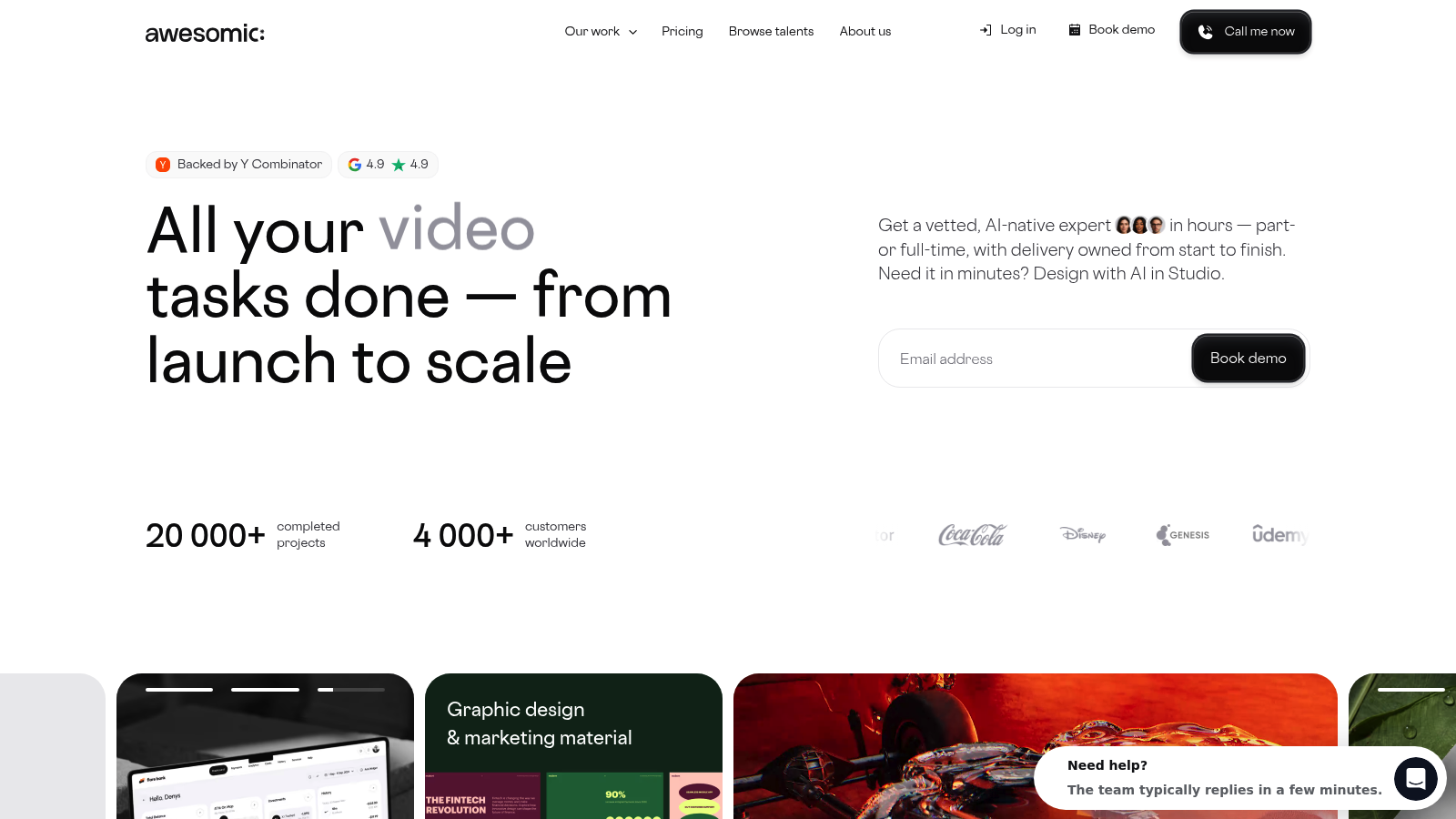
Best for: teams that need video regularly, alongside the design work that surrounds every video.
A launch video is never just a video. It arrives with a landing page, social cutdowns, a thumbnail, an in-app banner and a deck, and those normally mean a studio plus a designer plus a freelancer. Our subscription puts video, motion and design in one queue with matched talent, so the whole launch has one visual language.
That's the tradeoff to understand up front. You get breadth and continuity rather than a dedicated animation director obsessing over one flagship film for three months.
Core services: video production and editing, motion design, VFX, AI video, plus web design, branding, decks and copy on the same subscription.
How a video job runs:
- Brief the piece, including length, channel and the one idea it must land.
- We match talent to that style, usually inside a day.
- Review script, then storyboard, then animation, revising without a change-order conversation.
- Order the cutdowns and supporting assets from the same queue.
Pricing: two monthly tiers, Graphic Pack at $1,490 and All-in-One at $2,995, each 20% cheaper billed quarterly. Dedicated Talent brings a full-time talent and a PM, quoted on request.
Where a dedicated studio beats us: if you're commissioning one broadcast-grade brand film with a director, an original score and a six-figure budget, hire BUCK or Oddfellows. Where we do compete is turnaround on launch-critical work. Parcha, an AI company automating compliance research for banks and fintechs, needed a launch video for its Grep research engine, and we delivered the final approved cut in 27 days using a hybrid AI production, with creative direction that kept it feeling like a short film rather than a feature list.
Curious whether the queue model fits your calendar? Get started.

2. Vidico
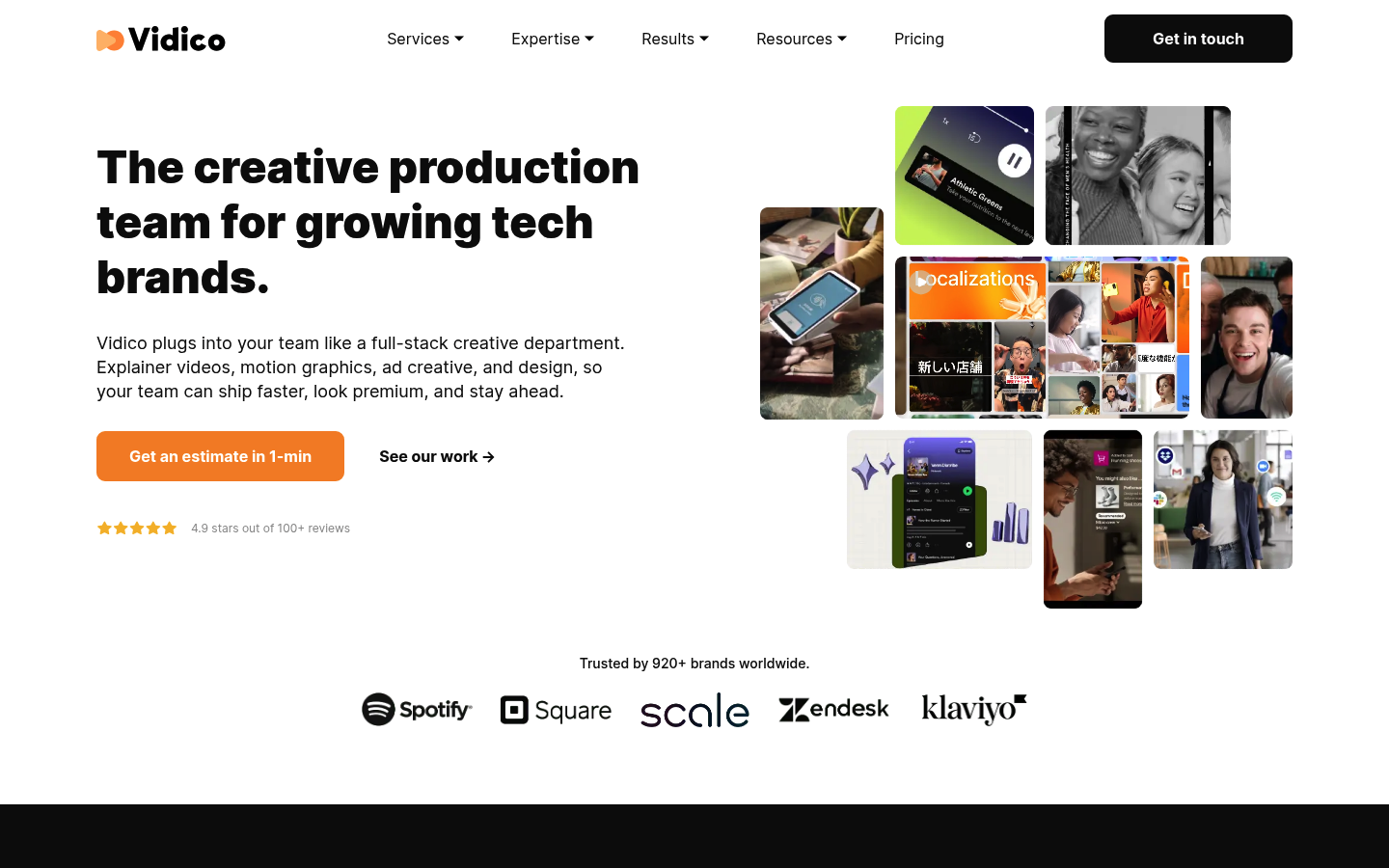
Best for: SaaS and tech companies that need a steady stream of explainers and ad creative.
Vidico describes itself as plugging into your team like a full-stack creative department rather than taking one-off commissions, covering explainers, motion graphics, ad creative and design. Its homepage cites 4.9 stars across more than 100 reviews.
Core services: explainer video, product demo animation, motion graphics, paid ad creative, brand video.
Pricing: no public rate card; scoped per engagement.
Why buyers shortlist it: it is one of the few studios genuinely set up for volume in tech, which matters if your roadmap produces four launches a year rather than one. The embedded framing also means it expects to learn your product rather than treat each video as a fresh brief.
3. Demo Duck
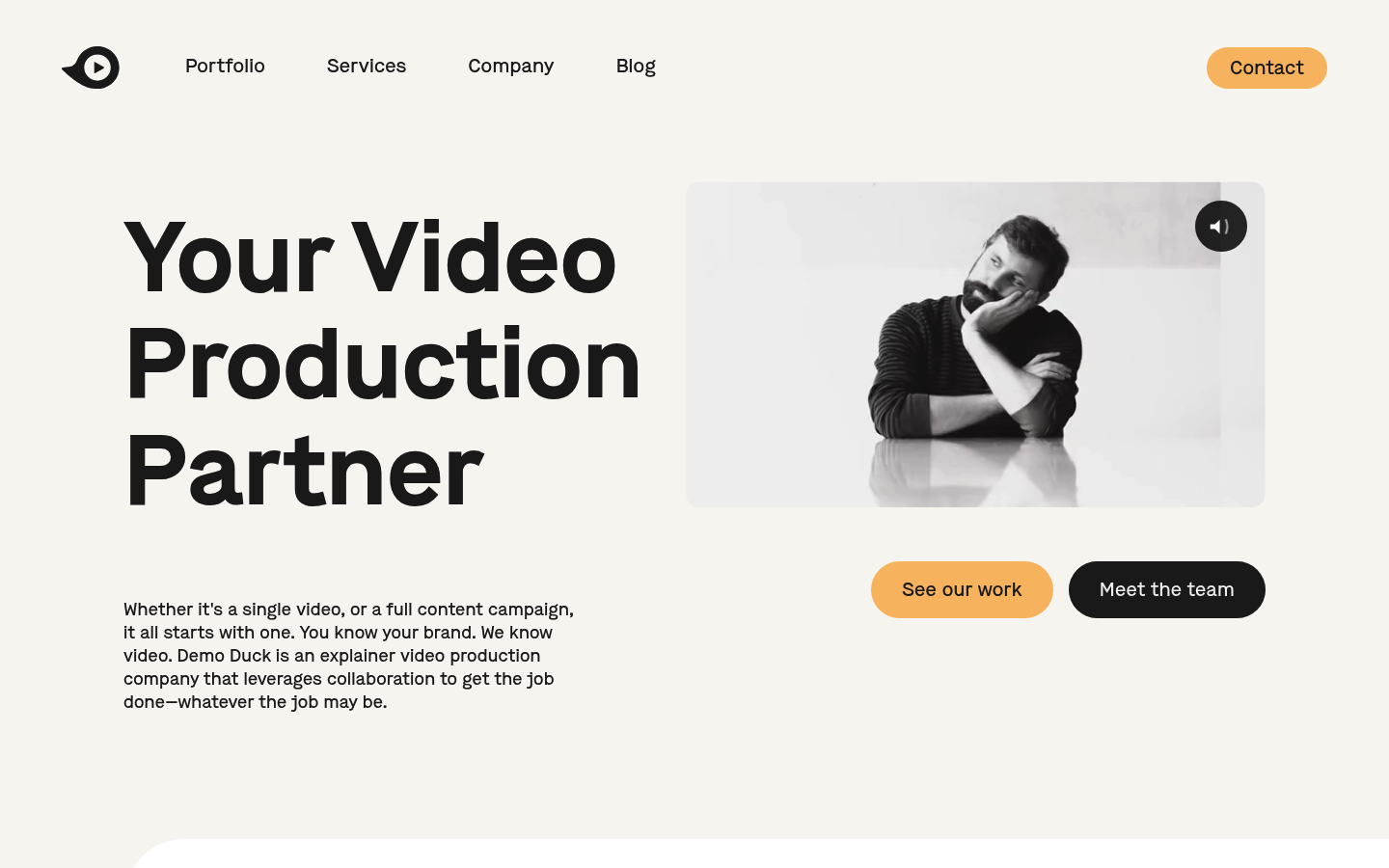
Best for: companies that want an unusually collaborative production process.
Demo Duck is a Chicago explainer video company that works across animation and live action, and it leads on collaboration rather than a signature house style. Its animated work spans character animation, motion graphics and kinetic text, with the look decided per client instead of applied from a template.
Core services: animated explainers, live action production, motion graphics, video campaigns.
Pricing: not published, quoted per project.
Its real strength: flexibility across formats, so a single studio can handle the animated explainer and the customer testimonial shoot. If you want a studio with a strong, opinionated aesthetic, more distinctive shops on this list will suit you better.
4. BUCK
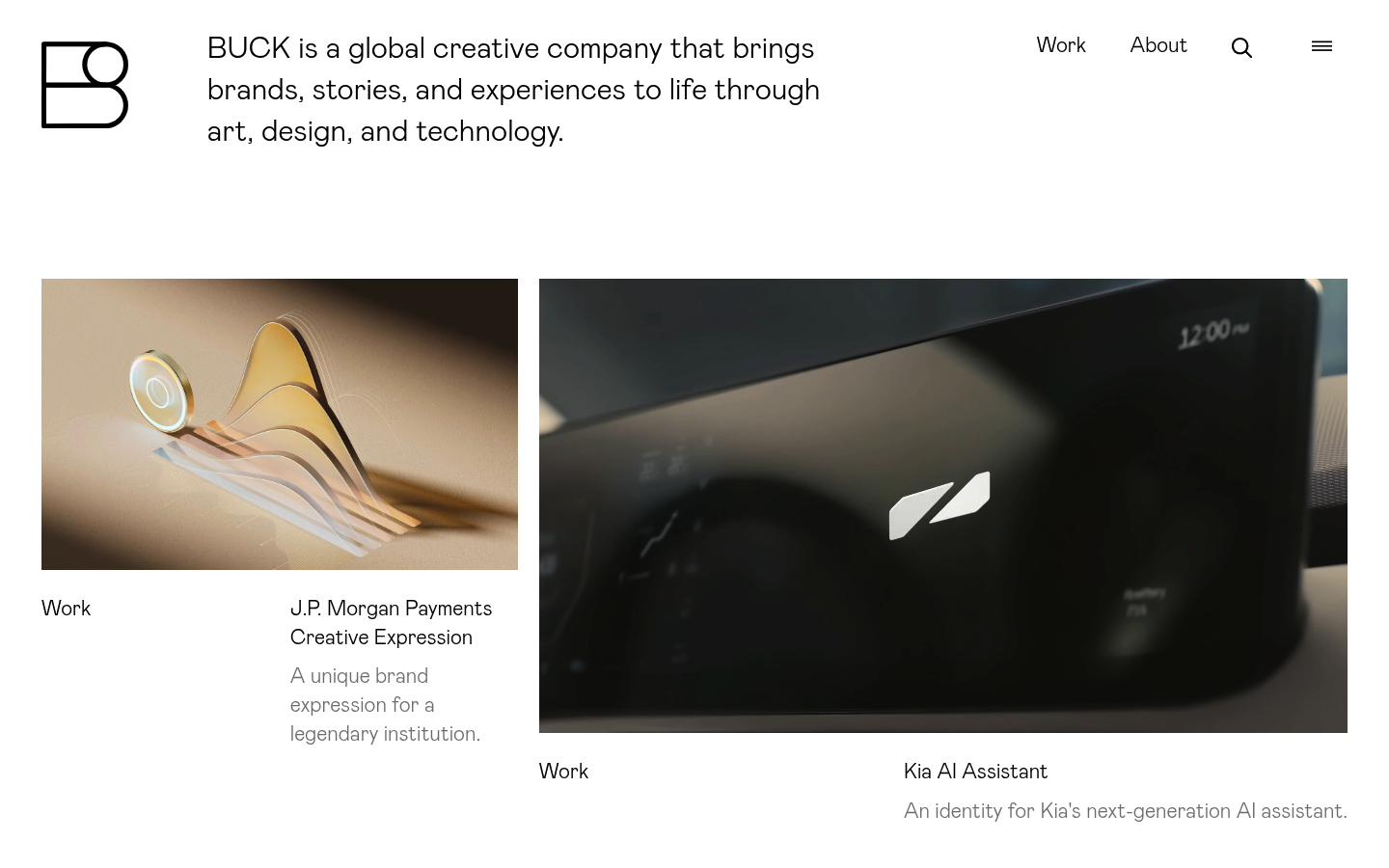
Best for: global brands running campaign-scale work where craft is the point.
BUCK is a global creative company working across art, design and technology, with offices spanning New York, Los Angeles, Amsterdam and Sydney. It operates at the top of the industry on brand campaigns, title sequences and large-scale motion work.
Core services: brand campaigns, design and animation, experiential and interactive, creative direction.
Pricing: no rate card, and engagements are campaign-sized.
Why it earns a place here: when the animation itself has to be the reason people talk about the campaign, this is the tier that delivers it. For a 90-second product explainer on a startup budget, it is the wrong call by an order of magnitude.
5. Oddfellows
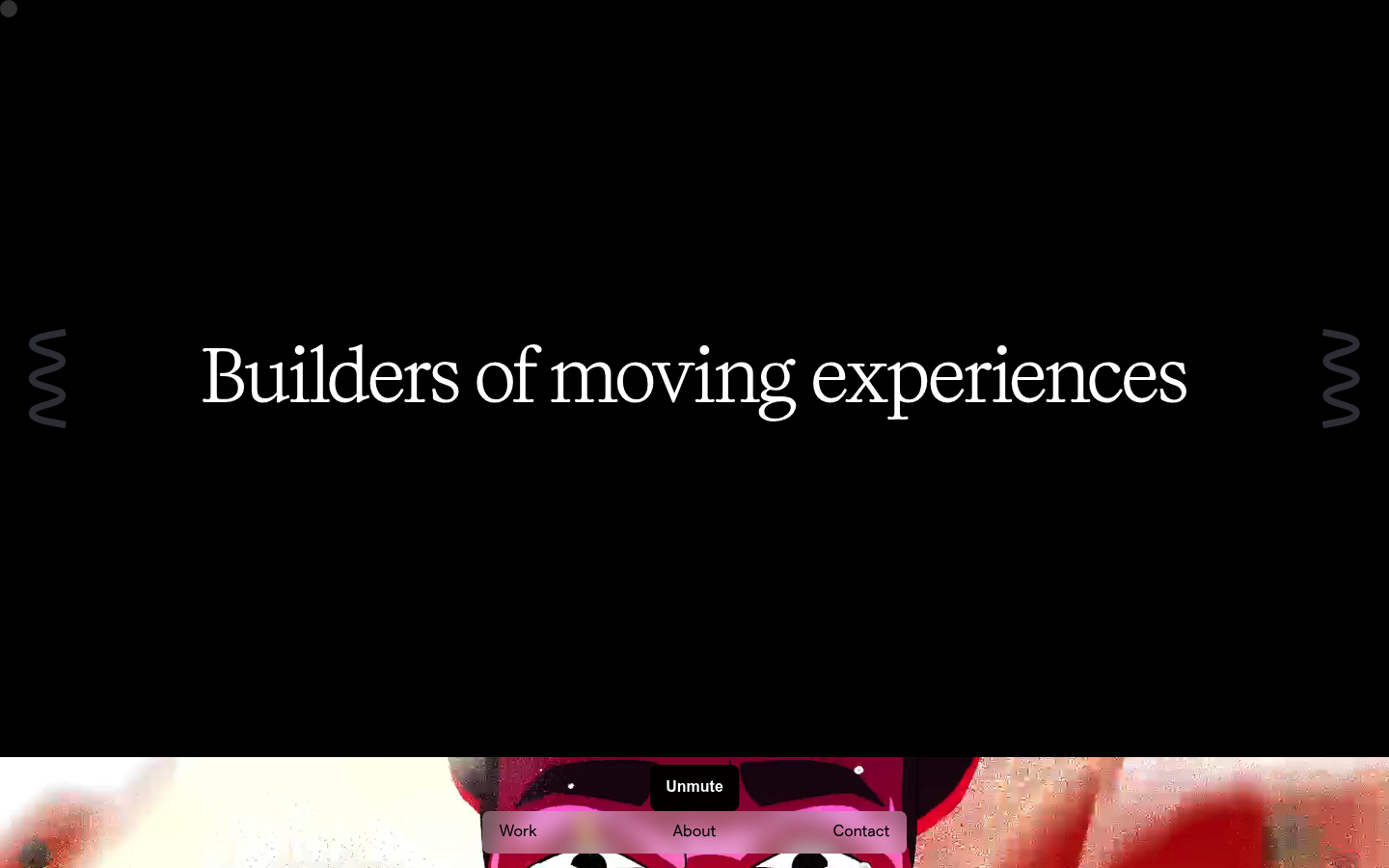
Best for: brands that want the story worked out before anything is animated.
Oddfellows calls itself a visual strategy and storytelling studio with over a decade shaping ambitious brands, and its site leads with "builders of moving experiences." Strategy sits ahead of execution in how it describes the work, which shows in output that tends to carry a narrative rather than list features.
Core services: brand storytelling, animation and motion design, art direction, visual strategy.
Pricing: no published rates.
What it's genuinely good at: emotional register. If your problem is that nobody remembers your brand rather than that nobody understands your product, this is the right kind of studio.
6. Ordinary Folk
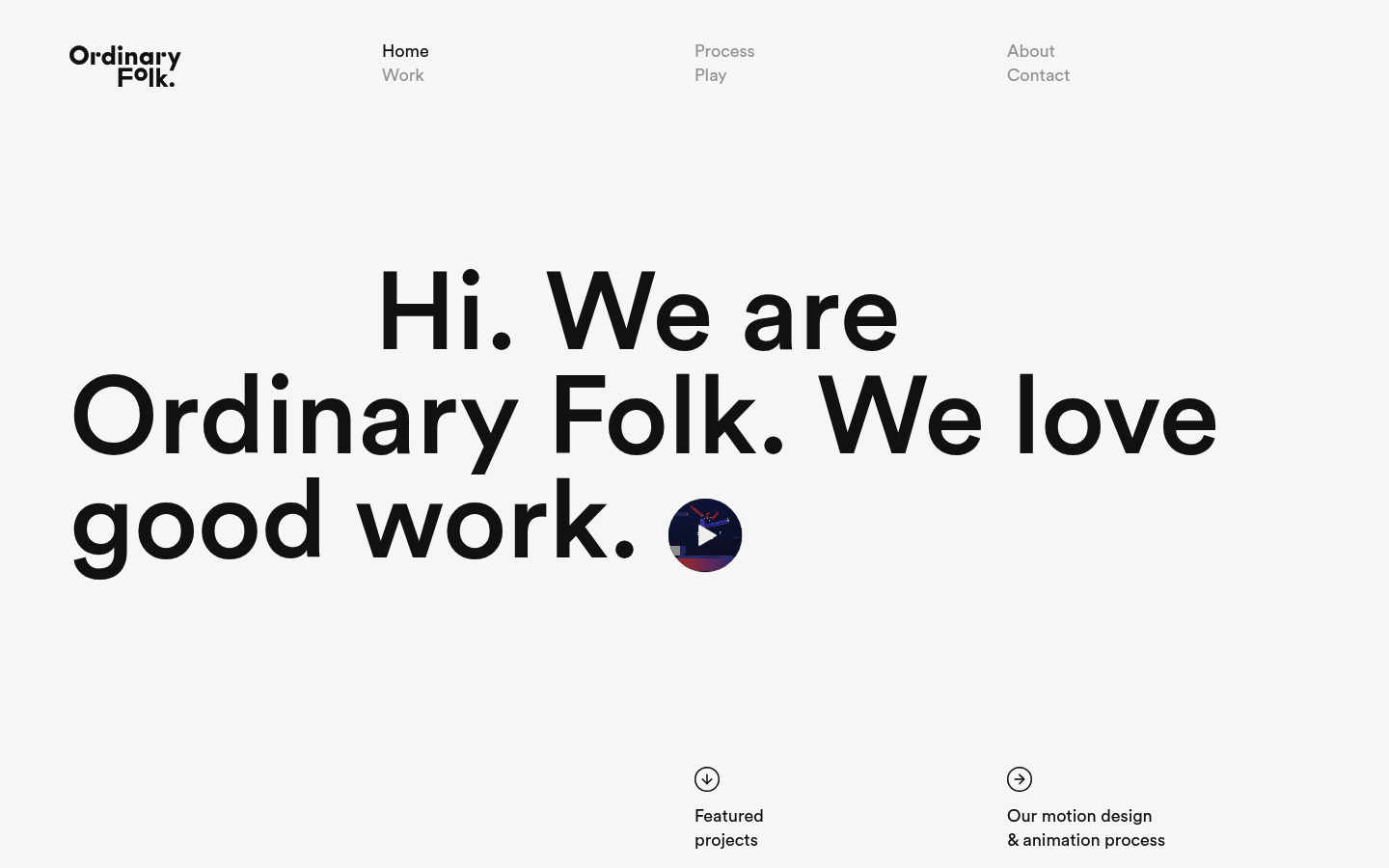
Best for: teams that want character-led animation and a process they can follow.
Ordinary Folk is a motion design and animation studio that publishes its process openly alongside its work, which is more useful than it sounds when you are commissioning your first animated piece. The work leans warm and character-driven rather than corporate.
Core services: motion design, character animation, art direction, brand animation.
Pricing: not published.
Where it fits: consumer-facing and brand-led animation where personality carries the message. Dense technical explainers are not its natural territory.
7. Explainify
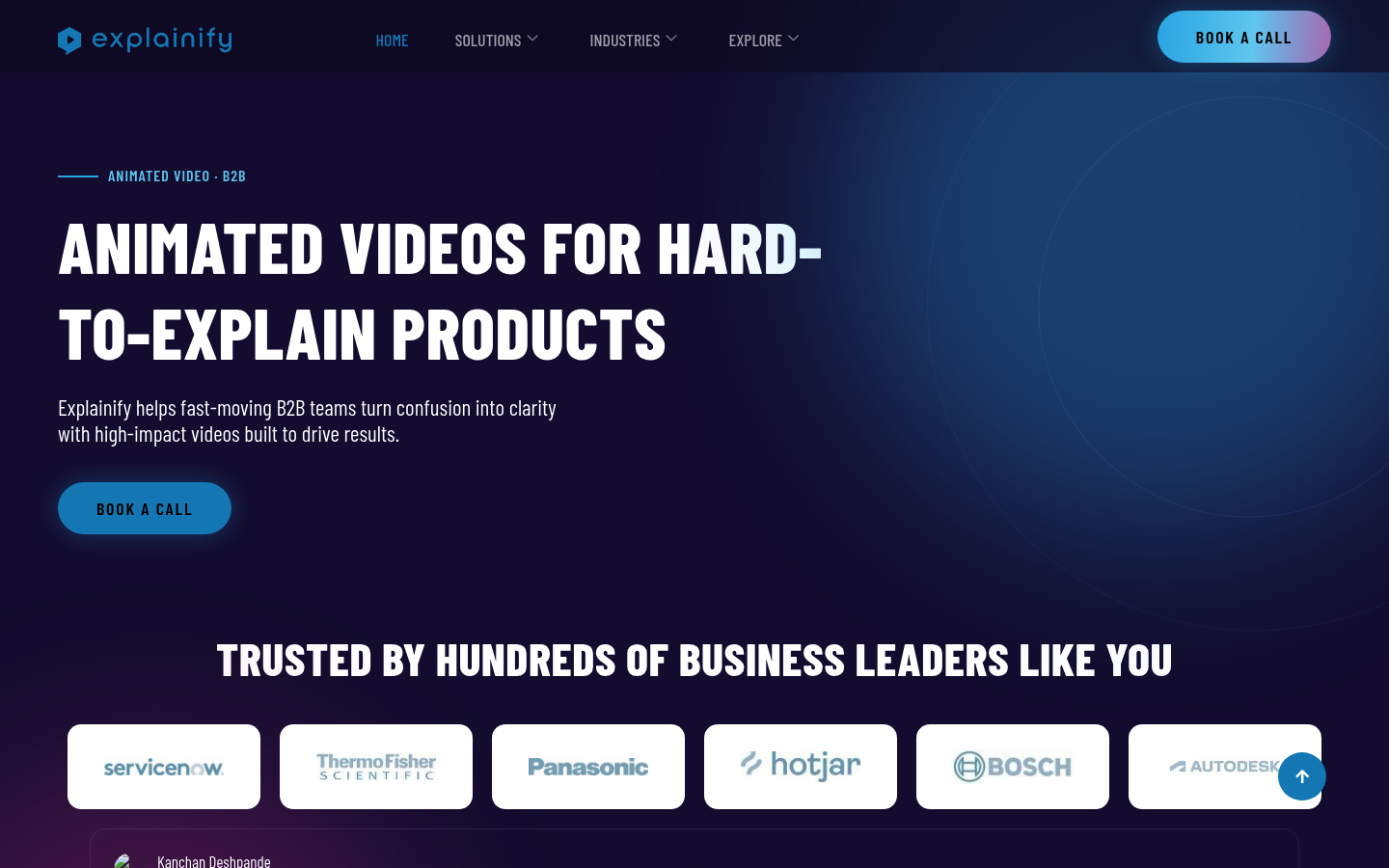
Best for: B2B companies whose product genuinely is hard to explain.
Explainify positions on outcomes rather than aesthetics, with a stated focus on simplifying complex ideas, adding a human element to brands, and producing scroll-stopping social and paid creative. The emphasis lands on message clarity, which is the part most explainer projects get wrong before a single frame is drawn.
Core services: explainer video, brand video, social and paid ad creative, video strategy.
Pricing: quotes only, following a scoping conversation.
Why buyers shortlist it: the hardest part of an explainer is deciding what to leave out, and a studio that leads with messaging is buying down that risk. Expect less visual experimentation in exchange.
8. Yum Yum Videos
Best for: larger organizations that want a safe pair of hands on a standard explainer.
Yum Yum Videos is an animated explainer company that names Google, Amazon and McKesson among its clients, and it has been producing this format long enough to have a repeatable pipeline. The work is polished and conventional in the best sense: it does the job without surprises.
Core services: animated explainers, product videos, educational and how-to animation, character animation.
Pricing: not published.
Where it beats the alternatives: procurement-friendly delivery on a well-understood format. If you want work that stands out stylistically, look at the character-led studios above.
9. Cub Studio
Best for: brands in sports, entertainment and content who need animation with a personality.
Cub Studio is a Bristol animation and motion graphics studio working with sports organizations, brands and content providers, and its pitch is that getting noticed is easy while being remembered is hard. Character design is a genuine strength rather than a decorative layer.
Core services: 2D animation, motion graphics, character design, brand animation.
Pricing: no rate card.
Its real strength: distinctiveness. This is a studio you hire when a generic explainer would actively hurt you, and a poor fit when you need a straight functional walkthrough.
10. Yans Media
Best for: buyers who want to understand explainer pricing before they start calling studios.
Yans Media has produced explainer videos for over 13 years, with Cisco, VISA and DoorDash among its named clients. It is also unusually open about money, publishing a cost study built from quotes across 110 studios, which is the most useful thing any vendor in this category has put on the public internet.
Core services: animated explainers, product videos, app demo videos, whiteboard animation.
Pricing: project-quoted, but its published research gives you real anchors before the call.
Why it made this list: transparency about cost is rare enough here to be a differentiator in itself. Bear in mind that the research is its own, so read it as an informed vendor view rather than neutral analysis.
11. MotionCue
Best for: marketing teams that care as much about the process as the output.
MotionCue produces animated explainers and live action, and it sells the experience as much as the film, promising videos delivered without the usual friction. For a marketer who has been through a painful production once, that is a real proposition.
Core services: animated explainer video, live action production, product video, video ads.
Pricing: no public figures.
Where it fits: mid-size marketing teams that need reliable delivery on a schedule. It is not positioned as an award-chasing creative studio, and does not claim to be.
12. Content Beta
Best for: B2B SaaS teams whose creative demand is constant rather than occasional.
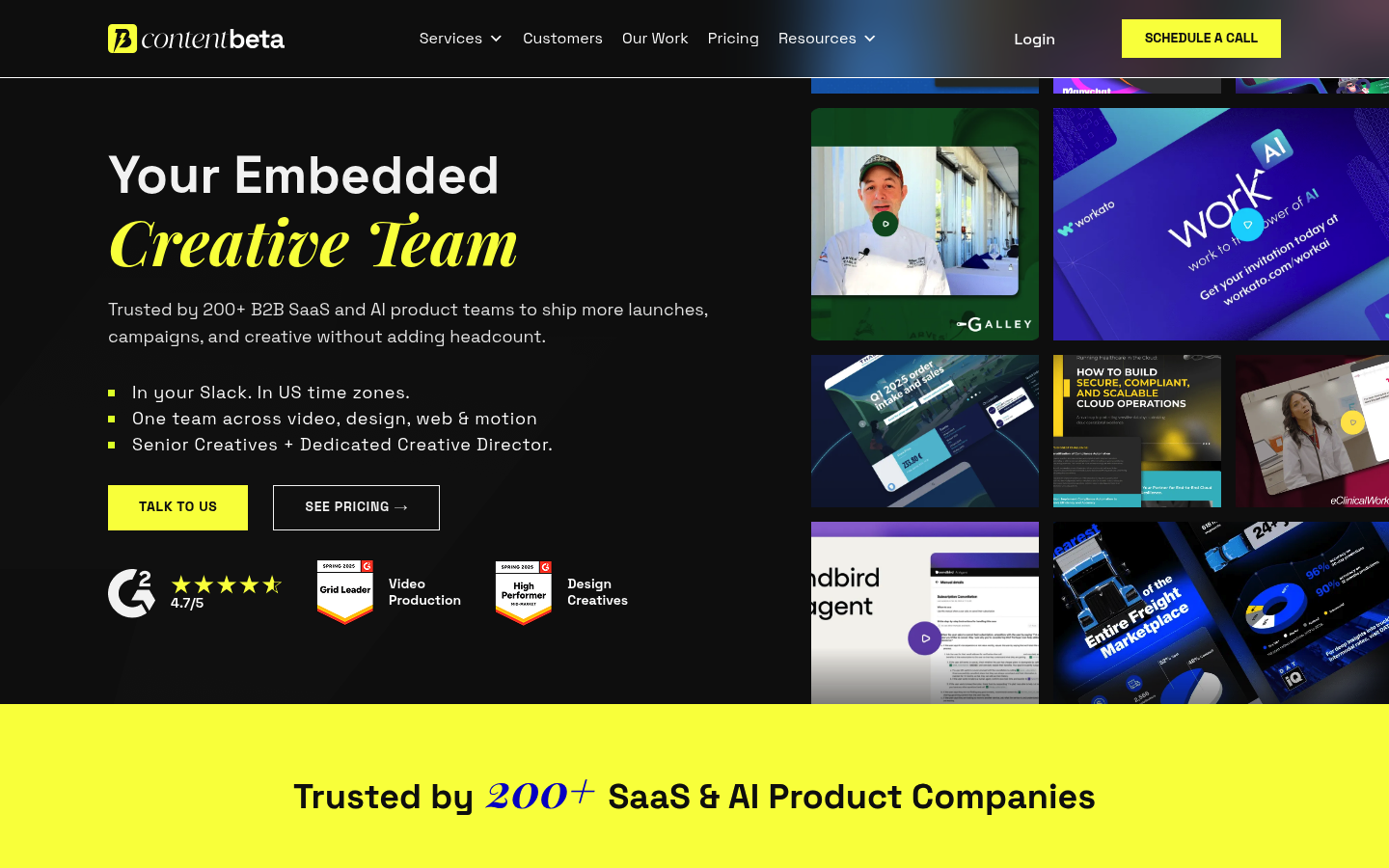
Content Beta works as an embedded creative team for B2B SaaS and AI product companies, spanning video, design, web and motion, and it says more than 200 such teams use it. It works inside your Slack and on US time zones, which is the operational detail that decides whether an offshore team actually functions.
Core services: product video, motion graphics, design, web, creative operations.
Pricing: not published.
Why buyers shortlist it: it solves the same problem we do, from a SaaS-only angle. If your demand is one video a year, both models are the wrong shape and you want a project studio instead.
How we picked these twelve
We pulled the studios named across the current animation and explainer roundups, then cut on four criteria.
Every studio had to be reachable and actively working, which is not a given: while building the companion lists for this batch, we found several agencies recommended in live 2026 articles whose domains had lapsed into parking pages. Every site above was opened and checked in August 2026.
Each had to make animation as a core discipline rather than as one line in a full-service marketing menu. We also required visible recent work, since animation portfolios date faster than almost any other design discipline, and a distinct reason to exist on the list, so no two entries serve exactly the same buyer.
We deliberately did not rank by star ratings. Review volumes in this category are small and inconsistent, and a five-review average tells you far less than ten minutes on a studio's showreel.
Why animation explains things text cannot
There is real cognitive science behind the explainer format, and understanding it changes how you brief one.
In Educational Psychologist, Richard Mayer and Roxana Moreno set out three findings about how people process multimedia: we have separate channels for verbal and visual material, each channel holds only a limited amount at once, and learning requires active processing in both. Narration and animation together use two channels in parallel, which is why a well-made 90-second video can land an idea that a page of text does not.
The same research explains the most common way explainer videos fail. If your narrator reads text that is simultaneously on screen, you are loading the same information into both channels and crowding out the actual explanation.
So the brief matters more than the style. Ask your studio to keep on-screen text minimal where narration is carrying the point, and to use the visual channel to show the thing being described rather than to repeat the words.
Reach is the other half of the argument. The Pew Research Center's social media fact sheet puts YouTube in front of 84% of US adults, ahead of every other platform it tracks, so video is where your audience already is even in unglamorous B2B categories.
How to brief an animation studio without paying twice
Rework is where animation budgets die, and almost all of it traces to approvals given too late. Lock each stage before the next one starts.
- Write the single idea the video must land, in one sentence, before you contact anyone.
- Approve the script in full, because changing a line after animation begins means re-recording and re-timing.
- Approve the storyboard and style frames, since this is the last cheap moment to change the look.
- Record final voiceover only after the script is signed off, then animate to that track.
- Reserve your revisions for the animation stage, and ask up front how many rounds are included.
That sequence is the actual product a good studio sells you, and it's the discipline we apply to video production work too. If an agency offers to skip storyboarding to move faster, treat it as a cost risk rather than a favor.
One thing worth checking before you approve any style direction: whether the aesthetic already looks dated. In a r/MotionDesign discussion on whether the format has run its course, a designer working in-house at a large B2B company said their team still relies on explainers to get complex solutions across, while the top reply noted on Reddit that clients no longer want "generic animated explainers with a ukulele playing in the background." That's practitioner opinion rather than research, but a pitch built on flat corporate illustration and stock acoustic backing is a fair signal to keep looking.
What video animation costs
Almost no studio in this category publishes rates, which is why Yans Media's research is worth reading before you brief anyone. Across quotes from 110 studios it puts the average 60-second explainer at $8,746, with a full range from $950 to $250,000 for the same deliverable.
| Tier | Typical cost per 60 seconds | What you get | Best when |
|---|---|---|---|
| AI-assisted production | $1,500 to $2,500 | Studio-quality output using AI workflows | Budget is tight and the concept is simple |
| Startup and SMB range | $4,000 to $7,000 | Custom script, storyboard and 2D animation | A first explainer with a real production process |
| Market sweet spot | $4,000 to $10,000 | Bespoke art direction and a full revision cycle | Most business explainers |
| Premium and brand film | $20,000 to $250,000 | Directors, original score, broadcast craft | The film itself carries the campaign |
| Design subscription | $1,490 or $2,995 monthly | Continuous video plus surrounding design assets | Video demand recurs every month |
The tiers in that table are our reading of the study's spread rather than bands Yans Media publishes; only the subscription row and the study's own averages are quoted figures. Two of those are worth carrying into a negotiation. US studios averaged $12,667 while European studios averaged $5,662 for the same deliverable, and the researchers found the quality gap between a $7,000 video and a $20,000 one is often unnoticeable. Since the study comes from a studio on this list, treat it as an informed vendor perspective rather than neutral data, though the spread it documents matches what buyers report anywhere you look.
The cheapest tier deserves a caveat. AI-assisted pricing is real, and it is what let us turn the Parcha film around quickly, but it depends on the concept suiting a hybrid AI production workflow rather than needing bespoke character animation frame by frame.
How long an animated video takes
A standard 60 to 90-second explainer runs four to eight weeks with most studios: roughly one to two weeks on script, one to two on storyboard and style frames, two to three animating, and a final week for revisions and delivery.
Brand films and 3D technical work run longer, often three to four months once modeling, sound design and multiple review layers are involved. At the other end, our Parcha launch video reached final approval in 27 days by running a hybrid AI production, and studios using similar workflows now quote comparable timelines.
The variable you control is approval speed. A studio can hold a four-week schedule only if script and storyboard sign-off come back in days, which is why naming a single decision-maker at kickoff shortens projects more reliably than paying a rush fee, something worth settling before you hire a motion design expert or an outside studio.
Matching the studio to the video you actually need
The shortlist gets short quickly once you're honest about which job you're buying.
For one flagship film where craft is the point, BUCK, Oddfellows and Cub Studio are the tier to call, and the budget should start with a two in front of it. For a clear, well-run explainer at a sensible price, Explainify, Yum Yum Videos, Yans Media, Demo Duck and MotionCue all deliver that reliably.
For continuous output, Vidico and Content Beta run embedded models built for tech companies, and we run a subscription that covers video alongside the web and brand work each launch drags behind it. That last point is the honest case for us: not that we out-animate a specialist studio on a single film, but that most video needs six other things made at the same time, which is the same argument behind startup video content generally.
Whichever tier you pick, ask for two things before signing: a recent piece in your format, not just their best-looking work, and the name of the person who will actually animate it.
FAQs
How much does a 60-second animated explainer video cost?
Yans Media's survey of 110 studios found an average of $8,746, with real quotes spanning $950 to $250,000. Most businesses land between $4,000 and $10,000, and startups typically find the best value between $4,000 and $7,000. Location moves the number more than most buyers expect, with US studios averaging $12,667 against $5,662 in Europe for the same brief.
How long does it take to produce an animated video?
Budget four to eight weeks for a standard 60 to 90-second explainer, split across script, storyboard, animation and revisions. Brand films and 3D technical animation commonly run three to four months. Studios using AI-assisted workflows are delivering faster, and our own Parcha launch video was approved in 27 days, but the real limiter is usually how quickly your team signs off each stage.
Should I hire an animation studio or a design subscription?
It depends on frequency. A project studio gives you a director's attention on one film and is the right buy for a flagship piece. A subscription makes more sense when video recurs monthly and each one drags a landing page, social cutdowns and a deck along with it, a pattern visible across our case studies. Teams commissioning one video a year should almost always use a studio.
What is the difference between an explainer video and motion graphics?
An explainer is a narrated piece, usually 60 to 120 seconds, built to make a product or idea understood. Motion graphics is a technique, animated type and graphic elements, used inside explainers, ads, social posts and title sequences. You can buy motion graphics without buying an explainer, and studios price them very differently, so name the one you mean in your brief.
How do I judge an animation studio's portfolio?
Look for work in your specific format and your level of complexity rather than the most beautiful thing on their reel. A studio with stunning brand films may never have made a software walkthrough. Check that recent work is genuinely recent, ask which pieces the team assigned to you personally animated, and be wary of a reel built on a single visual style if that style does not suit your brand.
One subscription and your hiring problems solved


FAQ


Awesomic is a revolutionary app that matches companies with vetted professionals across 30+ skill sets, from design and development to marketing and product. Based in San Francisco with a global core team, we offer a faster and more flexible alternative to traditional hiring through a subscription-based model. Awesomic delivers high-quality talent on demand, without the delays of recruiting.
We function as a subscription-based service that matches you to top-tier, vetted talent. Submit a project in just a few clicks and start receiving deliverables in as little as 24 hours. Scale your Awesomic plan up or down as your business needs change.
Every Awesomic subscription comes with unlimited revisions. You receive daily progress updates via the app, and you can provide feedback or request iterations as needed. If your project requires a different approach, you can request a talent rematch at any time, at no extra cost. You can also add teammates to collaborate and streamline feedback
A talent marketplace is a platform that utilizes data and intelligent matching algorithms to connect professionals with projects based on their skills, experience, and availability. While often used internally by large companies, Awesomic applies this model at scale, matching vetted global talent to your most critical business needs.
Hiring is time-consuming, expensive, and risky. Awesomic eliminates that problem. We rigorously vet all talent for technical ability, communication, and soft skills, ensuring only senior-level professionals work on your projects. You skip the job posts, interviews, and delays, and get straight to results.
No, Awesomic goes beyond design. While many clients utilize us for branding, UI/UX design, or motion graphics, we also provide vetted talent in no-code web development, product design, marketing, and more. Think of us as an extension of your team. A flexible, high-performing creative partner from planning to execution, whether you're building awesome products or scaling your team.
You can talk directly with your matched talent via the Awesomic app, connect via Slack, email, or schedule video calls. No matter the plan, you’ll receive daily updates in the app for every active task. You can also tag us in for any issues through our in-app customer chat.


